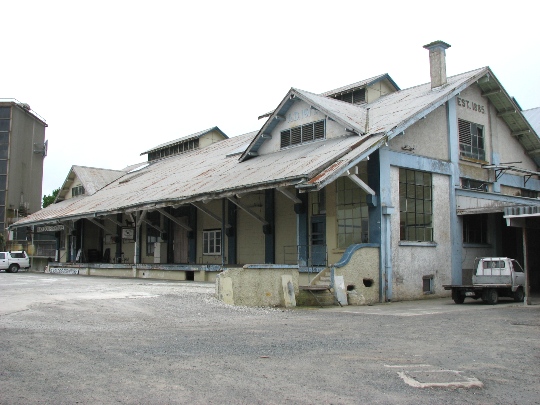
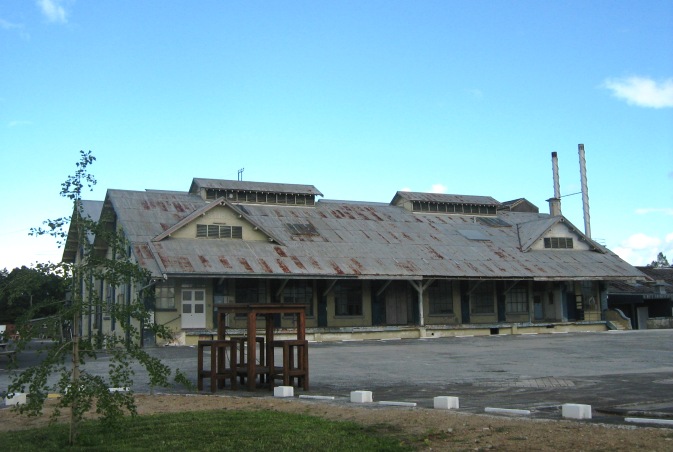
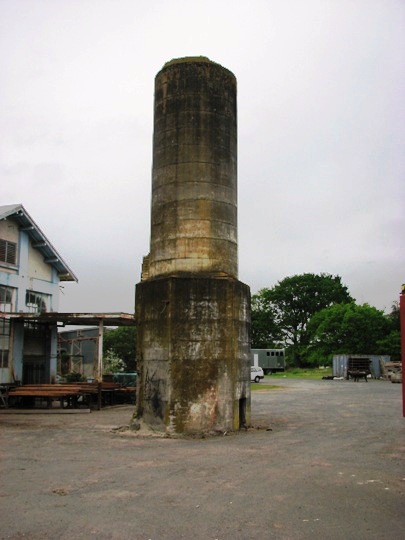
The New Zealand Co-operative Dairy Company Limited Factory (Former) located in Matangi, the heart of the Waikato dairy country, was opened in 1919. Designed by the well-known Hamilton architect Frederick Charles Daniell (1879-1953), the building is architecturally significant for its use of new materials and techniques of construction in reinforced concrete. Grand in its scale and attention to detail, the factory stood as a symbol of the growth and investment in the dairy industry and the production of new products like milk powder that would become an important commodity for New Zealand’s export market in the wake of World War One.
The factory was built by the New Zealand Co-operative Dairy Company Limited (NZCDC) and leased to Joseph Nathan and Company for the production of ‘Glaxo’ milk powder products. NZCDC had been formed through the amalgamation of the New Zealand Dairy Association, the Waikato Co-operative Dairy Company and the Waihou Valley Co-operative Dairy Company. At the head of the NZCDC was Sir William Goodfellow (1880-1974). Goodfellow was managing director of the NZCDC from 1919 to 1932 and under his management the company continued subsume most of the smaller cooperatives of the region. By 1920 the company was the largest cooperative in New Zealand. NZCDC would go on to merge with ‘Kiwi’ which merged with other companies to form Fonterra Co-operative Group in 2001 - the world’s largest dairy exporter.
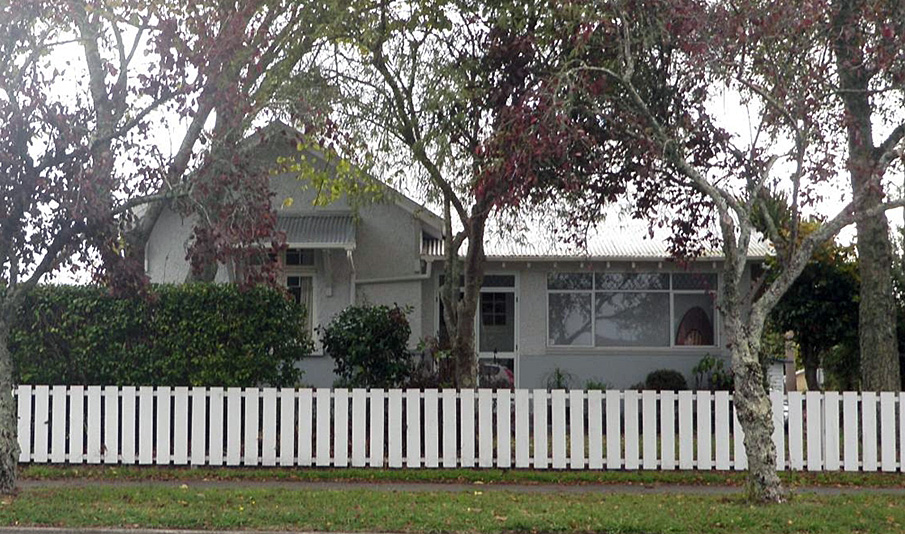
The Matangi factory was regarded as a model factory and showplace to overseas visitors, and it had extensive gardens. Architecturally designed and purpose-built for milk powder production, the plan also included a number of workers’ houses and single-men’s accommodation located on Matangi Road. Construction of the factory began in 1917 and was overseen by the builder R. Sanders. The factory was officially opened by the Prime Minister, William Massey, on 12 November 1919. It was reported at the time that the factory was ‘to handle the largest quantity of milk under one roof in the world.’ Its construction represented a major investment; the factory and employee accommodation cost £40,000 and the machinery £45,000.
Architect Frederick Charles Daniell had a practice in Hamilton for 27 years and designed many buildings in concrete. He experimented with different methods, including the use of ‘Camerated Concrete’ and the design of reinforced concrete. The design of the Matangi factory includes reinforced concrete ‘column and beam construction with concrete panel walls and timber trussed roofs…’. Daniell was engaged by the NZCDC to design a number of dairy factories and conversions to milk powder production. The Matangi dairy factory is by far the largest and best example of his work.
The contract between Glaxo and the NZCDC ceased in 1936 and the factory reverted back to the NZCDC. A number of milk products continued to be produced in the factory and were sold under the brand Anchor. Mowbray and Mowbray note that ‘Matangi was an extraordinarily versatile site’ with its ability to produce a range of products from canned evaporated milk, technical rennet caseinates (soluble salts of milk proteins), and whey powder to baby milk powder. This versatility also led Matangi to become one of the key research and development laboratories for the NZCDC. The New Zealand Co-operative Dairy Company Limited Factory (Former) ceased operations on 31 May 1987. Since 2004 the site has been home to a number of small businesses.