DonateSupporterVisit Heritage
  • Tūrangawaewae
    Places
  • Tira Māori
    Māori Heritage
  • Poutairangahia
    Archaeology
  • Rauemi
    Resources
  • Mō Tātou
    About Us
  • New Zealand Heritage List
  • Nominate and submit
  • Explore the List
  • National Historic Landmarks
  • Plaques
  • Rainbow List Project
  • Lost heritage
  • Visit Heritage
  • Our properties
  • Turnbull House Project
  • Collections
  • Shop
  • Tohu Whenua
  • Tira Māori
  • Conserving Māori heritage
  • Marae built heritage
  • Māori heritage on the List
  • Hinemihi—Te Hokinga Mai
  • What is archaeology?
  • Is there a site on my property?
  • What are my legal requirements?
  • Affecting an archaeological site
  • Declaring an archaeological site
  • Archaeology FAQs
  • Archaeology Digital Library
  • Archaeology guidelines and templates
  • Resources
  • Funding
  • Publications
  • Sustainable management guides
  • Disaster recovery
  • Podcasts & digital resources
  • Education Hub
  • Conservation plans
  • About
  • Board
  • Māori Heritage Council
  • Senior Staff
  • Offices
  • Contact us
  • Careers
  • Covenants
  • Fast-track
  • Corporate documents
  • Currently consulting on
  • Our submissions
  • News
  • Covid-19 response
Quick links
Rārangi Kōrero | The List
Explore the List
National Historic Landmarks
Ngā Manawhenua o Aotearoa me ōna Kōrero Tūturu
Quick links
Tapuwae
A Vision for Places of Māori Heritage
Funding for Māori Heritage
Resources
Quick links
Archaeological Authority Portal
Applying for an archaeological authority
Archaeology FAQs
Browse the most frequently asked questions about archaeological authorities and the archaeological process.
Quick links
Quick links
Contact us
Offices
DonateSupporterVisit Heritage
  • Tūrangawaewae
    Places
  • Tira Māori
    Māori Heritage
  • Poutairangahia
    Archaeology
  • Rauemi
    Resources
  • Mō Tātou
    About Us
  • New Zealand Heritage List
  • Nominate and submit
  • Explore the List
  • National Historic Landmarks
  • Plaques
  • Rainbow List Project
  • Lost heritage
  • Visit Heritage
  • Our properties
  • Turnbull House Project
  • Collections
  • Shop
  • Tohu Whenua
  • Tira Māori
  • Conserving Māori heritage
  • Marae built heritage
  • Māori heritage on the List
  • Hinemihi—Te Hokinga Mai
  • What is archaeology?
  • Is there a site on my property?
  • What are my legal requirements?
  • Affecting an archaeological site
  • Declaring an archaeological site
  • Archaeology FAQs
  • Archaeology Digital Library
  • Archaeology guidelines and templates
  • Resources
  • Funding
  • Publications
  • Sustainable management guides
  • Disaster recovery
  • Podcasts & digital resources
  • Education Hub
  • Conservation plans
  • About
  • Board
  • Māori Heritage Council
  • Senior Staff
  • Offices
  • Contact us
  • Careers
  • Covenants
  • Fast-track
  • Corporate documents
  • Currently consulting on
  • Our submissions
  • News
  • Covid-19 response
Quick links
Rārangi Kōrero | The List
Explore the List
National Historic Landmarks
Ngā Manawhenua o Aotearoa me ōna Kōrero Tūturu
Quick links
Tapuwae
A Vision for Places of Māori Heritage
Funding for Māori Heritage
Resources
Quick links
Archaeological Authority Portal
Applying for an archaeological authority
Archaeology FAQs
Browse the most frequently asked questions about archaeological authorities and the archaeological process.
Quick links
Quick links
Contact us
Offices
  • Places
  • Nominate and submit
  • National Historic Landmarks
  • Places
  • Nominate and submit
  • National Historic Landmarks
  • Tira Māori
  • Conserving Māori heritage
  • Marae built heritage
  • Tira Māori
  • Conserving Māori heritage
  • Marae built heritage
  • Archaeological authorities
  • Archaeology Digital Library
  • Archaeological authorities
  • Archaeology Digital Library
  • All resources
  • Publications
  • Funding
  • All resources
  • Publications
  • Funding
  • FAQs
  • FAQs
Follow us on:
Places
  • Places
  • Nominate and submit
  • National Historic Landmarks
Tira Māori
  • Tira Māori
  • Conserving Māori heritage
  • Marae built heritage
Archaeology
  • Archaeological authorities
  • Archaeology Digital Library
Resources
  • All resources
  • Publications
  • Funding
FAQs
  • FAQs
Follow us on
HomePrivacyTerms and conditionsAbout this site
© Heritage New Zealand Pouhere Taonga 2026.
 
New Zealand Co-operative Dairy Company Limited Factory (Former)

452 Tauwhare Road, MATANGI

Private

Historic Place Category 2

List No. 4935

Quick links:
List GalleryLocationDetails
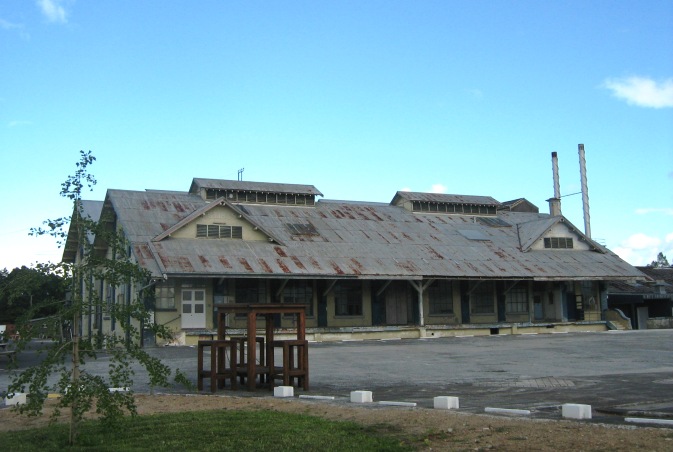
The New Zealand Co-operative Dairy Company Limited Factory (Former) located in Matangi, the heart of the Waikato dairy country, was opened in 1919. Designed by the well-known Hamilton architect Frederick Charles Daniell (1879-1953), the building is architecturally significant for its use of new materials and techniques of construction in reinforced concrete. Grand in its scale and attention to detail, the factory stood as a symbol of the growth and investment in the dairy industry and the production of new products like milk powder that would become an important commodity for New Zealand’s export market in the wake of World War One.

The factory was built by the New Zealand Co-operative Dairy Company Limited (NZCDC) and leased to Joseph Nathan and Company for the production of ‘Glaxo’ milk powder products. NZCDC had been formed through the amalgamation of the New Zealand Dairy Association, the Waikato Co-operative Dairy Company and the Waihou Valley Co-operative Dairy Company. At the head of the NZCDC was Sir William Goodfellow (1880-1974). Goodfellow was managing director of the NZCDC from 1919 to 1932 and under his management the company continued subsume most of the smaller cooperatives of the region. By 1920 the company was the largest cooperative in New Zealand. NZCDC would go on to merge with ‘Kiwi’ which merged with other companies to form Fonterra Co-operative Group in 2001 - the world’s largest dairy exporter.

The Matangi factory was regarded as a model factory and showplace to overseas visitors, and it had extensive gardens. Architecturally designed and purpose-built for milk powder production, the plan also included a number of workers’ houses and single-men’s accommodation located on Matangi Road. Construction of the factory began in 1917 and was overseen by the builder R. Sanders. The factory was officially opened by the Prime Minister, William Massey, on 12 November 1919. It was reported at the time that the factory was ‘to handle the largest quantity of milk under one roof in the world.’ Its construction represented a major investment; the factory and employee accommodation cost £40,000 and the machinery £45,000.

Architect Frederick Charles Daniell had a practice in Hamilton for 27 years and designed many buildings in concrete. He experimented with different methods, including the use of ‘Camerated Concrete’ and the design of reinforced concrete. The design of the Matangi factory includes reinforced concrete ‘column and beam construction with concrete panel walls and timber trussed roofs…’. Daniell was engaged by the NZCDC to design a number of dairy factories and conversions to milk powder production. The Matangi dairy factory is by far the largest and best example of his work.

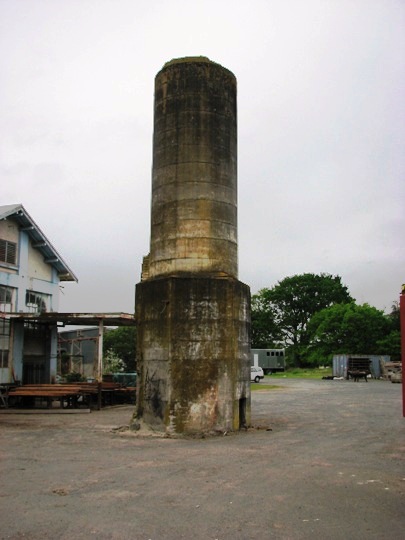
The contract between Glaxo and the NZCDC ceased in 1936 and the factory reverted back to the NZCDC. A number of milk products continued to be produced in the factory and were sold under the brand Anchor. Mowbray and Mowbray note that ‘Matangi was an extraordinarily versatile site’ with its ability to produce a range of products from canned evaporated milk, technical rennet caseinates (soluble salts of milk proteins), and whey powder to baby milk powder. This versatility also led Matangi to become one of the key research and development laboratories for the NZCDC. The New Zealand Co-operative Dairy Company Limited Factory (Former) ceased operations on 31 May 1987. Since 2004 the site has been home to a number of small businesses.
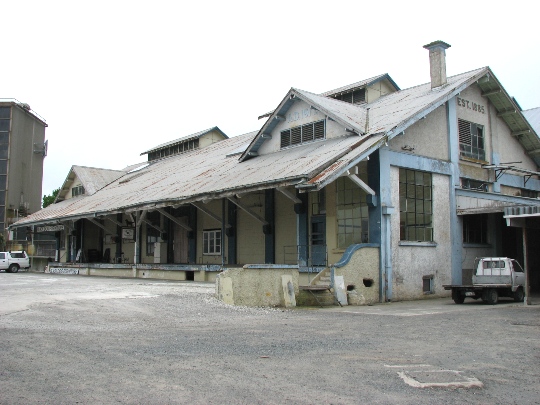
NZ Co-operative Dairy Company Limited Factory | M Vincent | 16/10/2008 | NZ Historic Places Trust
null | Raymond McNickle | Raymond McNickle
null | M Vincent | 16/10/2008 | NZ Historic Places Trust
NZ Co-operative Dairy Company Limited Factory | M Vincent | 16/10/2008 | NZ Historic Places Trust
null | Raymond McNickle | Raymond McNickle
null | M Vincent | 16/10/2008 | NZ Historic Places Trust

List Entry Information

Overview

Status
Listed

List Entry Status
Historic Place Category 2

Access
Private/No Public Access

List Number
4935

Date Entered
5th September 1985

Date of Effect
5th September 1985

City/District Council
Waikato District

Region
Waikato Region

Extent of List Entry

Extent includes part of the land described as Lot 2 DP 319280 (RT 75851), South Auckland Land District and the building known as the New Zealand Co-operative Dairy Company Limited Factory (Former) thereon.

Legal description

Lot 2 DP 319280 (RT 75851), South Auckland Land District

Detailed List Entry

Construction Professional

Name

Daniell, Frederick Charles

Type

Architect

Biography

Fred C Daniell was born in Wales and came to New Zealand as an infant in 1879. His father Charles operated a large timber mill in Masterton and after being educated at Wellington College Daniell joined the family business. At various stages he managed another sawmill in competition with his father, was involved in the survey of the Napier-Taupo Road and was a corporal in the Masterton Mounted Rifles. Of the eight children born to FC Daniell and his wife Helen Gordon-Donald, Trevor Hamilton Daniell also became an architect. In 1908 Daniell established a practice in Hamilton, where he opened an office in the Waikato Times Building. At various times he was in partnerships with local architects J. Anderson (1912), T.S. Cray (1914-17) and T.Y. Lusk (1920-26), although the specifications for Knightstone are under his name alone. Daniell became a member of the New Zealand Institute of Architects in 1915 and, having helped to establish the South Auckland Branch of the NZIA, became its first secretary in1923-7. Among the many buildings he designed in Hamilton, Daniell is best known for Wesley Chambers (1924, NZHPT Category II Register # 5301), St Andrew's Presbyterian Church (1914) and his own home 'Ingleholm' at 11 O'Neill Street (1911), both in Hamilton East. The 1911-12 Parr house (now the YWCA) on Pembroke Street in Hamilton West is very similar to Knightstone in its current form, suggesting that Daniell was also responsible for the design of the latter's 1919 addition. His prolific output included designs for residences as well as shops, commercial premises, churches, farm buildings and dairy industry buildings. Winston Daniell recalled in a 2002 interview that his father 'was always keen on concrete'. In his survey of early concrete construction in New Zealand, Geoffrey Thornton lists Daniell amongst those New Zealand architects using Camerated Concrete in the early twentieth century and he goes on to observe that 'no doubt FC Daniell is typical of a number of lesser known architects of the first two decades of the twentieth century who worked quietly in the design of reinforced concrete without the services of a structural engineer'. Thornton also records that Daniell designed a number of dairy factories for the NZ Co-operative Dairy Company, including the 1917 Matangi Dairy Factory just outside Hamilton (Category II, Reg # 4935, see also reg #4302 former Matangi Dairy Co. house). Despite the evident success of his Hamilton practice in the 1910s and early 1920s, Daniell's financial situation became increasingly precarious. A farm at Te Mawhai, south-west of Te Awamutu, was at first a secondary occupation but in the mid-1920s the family moved out to the farm and Daniell effectively stopped practicing architecture. In 1935 he returned to Masterton and thereupon resumed his architectural career. Here Daniell was also involved in community and local body affairs, serving on the boards of Wairarapa College and the Electricity and Catchment Boards. Daniell's Masterton practice was continued by his son Trevor after his death in 1953.

Name

Sanders, R.

Type

Builder

Biography

No biography is currently available for this construction professional

Construction Details

Start Year

1917

Finish Year

1919

Type

Original Construction

Construction Materials

Reinforced concerete, timber

Reference

Completion Date

18th June 2013

Report Written By

Natasha Naus

Information Sources

Thornton, 1996

Geoffrey Thornton, Cast in Concrete: Concrete Construction in New Zealand 1850-1939, Auckland, 1996

Millen, 1997

Millen, Julia, Glaxo: from Joseph Nathan to Glaxo Wellcome: the history of Glaxo in New Zealand, Glaxo Wellcome New Zealand, Auckland, 1997.

Gallagher, 1985

Gallagher, Virginia, Matangi Primary School 75th Jubilee 1910-1985: A School and District History, 1985.

Mowbray and Mowbray, 2005

Mowbray, Harry and Andrew Mowbray, Matangi Factory Historic Places Trust Restoration Proposal (unpublished), 2005.

Report Written By

This place was identified as significant under previous legislation with different information requirements. It remains significant under the current legislation. There is opportunity under our legislation and policies to add to this information. Further information about this place may be available from the Lower Northern Office of Heritage New Zealand Pouhere Taonga. A fully referenced Upgrade Report is available from the Lower Northern Area office of NZHPT. Please note that entry on the New Zealand Heritage List/Rarangi Korero identifies only the heritage values of the property concerned, and should not be construed as advice on the state of the property, or as a comment of its soundness or safety, including in regard to earthquake risk, safety in the event of fire, or insanitary conditions.

Further Information

Current Usages

Uses: Manufacturing

Specific Usage: Factory/workshop

Former Usages

General Usage:: Manufacturing

Specific Usage: Dairy factory

Themes

Web Links

Overview

Status

Listed

List Entry Status

Historic Place Category 2

Access

Private/No Public Access

List Number

4935

Date Entered

5th September 1985

Date of Effect

5th September 1985

City/District Council

Waikato District

Region

Waikato Region

Extent of List Entry

Extent includes part of the land described as Lot 2 DP 319280 (RT 75851), South Auckland Land District and the building known as the New Zealand Co-operative Dairy Company Limited Factory (Former) thereon.

Legal description

Lot 2 DP 319280 (RT 75851), South Auckland Land District

Status

Listed

List Entry Status

Historic Place Category 2

Access

Private/No Public Access

List Number

4935

Date Entered

5th September 1985

Date of Effect

5th September 1985

City/District Council

Waikato District

Region

Waikato Region

Extent of List Entry

Extent includes part of the land described as Lot 2 DP 319280 (RT 75851), South Auckland Land District and the building known as the New Zealand Co-operative Dairy Company Limited Factory (Former) thereon.

Legal description

Lot 2 DP 319280 (RT 75851), South Auckland Land District

Construction Information

Construction Professional

Name

Daniell, Frederick Charles

Type

Architect

Biography

Fred C Daniell was born in Wales and came to New Zealand as an infant in 1879. His father Charles operated a large timber mill in Masterton and after being educated at Wellington College Daniell joined the family business. At various stages he managed another sawmill in competition with his father, was involved in the survey of the Napier-Taupo Road and was a corporal in the Masterton Mounted Rifles. Of the eight children born to FC Daniell and his wife Helen Gordon-Donald, Trevor Hamilton Daniell also became an architect. In 1908 Daniell established a practice in Hamilton, where he opened an office in the Waikato Times Building. At various times he was in partnerships with local architects J. Anderson (1912), T.S. Cray (1914-17) and T.Y. Lusk (1920-26), although the specifications for Knightstone are under his name alone. Daniell became a member of the New Zealand Institute of Architects in 1915 and, having helped to establish the South Auckland Branch of the NZIA, became its first secretary in1923-7. Among the many buildings he designed in Hamilton, Daniell is best known for Wesley Chambers (1924, NZHPT Category II Register # 5301), St Andrew's Presbyterian Church (1914) and his own home 'Ingleholm' at 11 O'Neill Street (1911), both in Hamilton East. The 1911-12 Parr house (now the YWCA) on Pembroke Street in Hamilton West is very similar to Knightstone in its current form, suggesting that Daniell was also responsible for the design of the latter's 1919 addition. His prolific output included designs for residences as well as shops, commercial premises, churches, farm buildings and dairy industry buildings. Winston Daniell recalled in a 2002 interview that his father 'was always keen on concrete'. In his survey of early concrete construction in New Zealand, Geoffrey Thornton lists Daniell amongst those New Zealand architects using Camerated Concrete in the early twentieth century and he goes on to observe that 'no doubt FC Daniell is typical of a number of lesser known architects of the first two decades of the twentieth century who worked quietly in the design of reinforced concrete without the services of a structural engineer'. Thornton also records that Daniell designed a number of dairy factories for the NZ Co-operative Dairy Company, including the 1917 Matangi Dairy Factory just outside Hamilton (Category II, Reg # 4935, see also reg #4302 former Matangi Dairy Co. house). Despite the evident success of his Hamilton practice in the 1910s and early 1920s, Daniell's financial situation became increasingly precarious. A farm at Te Mawhai, south-west of Te Awamutu, was at first a secondary occupation but in the mid-1920s the family moved out to the farm and Daniell effectively stopped practicing architecture. In 1935 he returned to Masterton and thereupon resumed his architectural career. Here Daniell was also involved in community and local body affairs, serving on the boards of Wairarapa College and the Electricity and Catchment Boards. Daniell's Masterton practice was continued by his son Trevor after his death in 1953.

Name

Sanders, R.

Type

Builder

Biography

No biography is currently available for this construction professional

Construction Details

Start Year

1917

Finish Year

1919

Type

Original Construction

Construction Materials

Reinforced concerete, timber

Construction Professional

Name

Daniell, Frederick Charles

Type

Architect

Biography

Fred C Daniell was born in Wales and came to New Zealand as an infant in 1879. His father Charles operated a large timber mill in Masterton and after being educated at Wellington College Daniell joined the family business. At various stages he managed another sawmill in competition with his father, was involved in the survey of the Napier-Taupo Road and was a corporal in the Masterton Mounted Rifles. Of the eight children born to FC Daniell and his wife Helen Gordon-Donald, Trevor Hamilton Daniell also became an architect. In 1908 Daniell established a practice in Hamilton, where he opened an office in the Waikato Times Building. At various times he was in partnerships with local architects J. Anderson (1912), T.S. Cray (1914-17) and T.Y. Lusk (1920-26), although the specifications for Knightstone are under his name alone. Daniell became a member of the New Zealand Institute of Architects in 1915 and, having helped to establish the South Auckland Branch of the NZIA, became its first secretary in1923-7. Among the many buildings he designed in Hamilton, Daniell is best known for Wesley Chambers (1924, NZHPT Category II Register # 5301), St Andrew's Presbyterian Church (1914) and his own home 'Ingleholm' at 11 O'Neill Street (1911), both in Hamilton East. The 1911-12 Parr house (now the YWCA) on Pembroke Street in Hamilton West is very similar to Knightstone in its current form, suggesting that Daniell was also responsible for the design of the latter's 1919 addition. His prolific output included designs for residences as well as shops, commercial premises, churches, farm buildings and dairy industry buildings. Winston Daniell recalled in a 2002 interview that his father 'was always keen on concrete'. In his survey of early concrete construction in New Zealand, Geoffrey Thornton lists Daniell amongst those New Zealand architects using Camerated Concrete in the early twentieth century and he goes on to observe that 'no doubt FC Daniell is typical of a number of lesser known architects of the first two decades of the twentieth century who worked quietly in the design of reinforced concrete without the services of a structural engineer'. Thornton also records that Daniell designed a number of dairy factories for the NZ Co-operative Dairy Company, including the 1917 Matangi Dairy Factory just outside Hamilton (Category II, Reg # 4935, see also reg #4302 former Matangi Dairy Co. house). Despite the evident success of his Hamilton practice in the 1910s and early 1920s, Daniell's financial situation became increasingly precarious. A farm at Te Mawhai, south-west of Te Awamutu, was at first a secondary occupation but in the mid-1920s the family moved out to the farm and Daniell effectively stopped practicing architecture. In 1935 he returned to Masterton and thereupon resumed his architectural career. Here Daniell was also involved in community and local body affairs, serving on the boards of Wairarapa College and the Electricity and Catchment Boards. Daniell's Masterton practice was continued by his son Trevor after his death in 1953.

Name

Sanders, R.

Type

Builder

Biography

No biography is currently available for this construction professional

Construction Details

Start Year

1917

Finish Year

1919

Type

Original Construction

Construction Materials

Reinforced concerete, timber

Reference

Historical and Associated Iwi / Hapū / Whānau

Completion Date

18th June 2013

Report Written By

Natasha Naus

Information Sources

Thornton, 1996

Geoffrey Thornton, Cast in Concrete: Concrete Construction in New Zealand 1850-1939, Auckland, 1996

Millen, 1997

Millen, Julia, Glaxo: from Joseph Nathan to Glaxo Wellcome: the history of Glaxo in New Zealand, Glaxo Wellcome New Zealand, Auckland, 1997.

Gallagher, 1985

Gallagher, Virginia, Matangi Primary School 75th Jubilee 1910-1985: A School and District History, 1985.

Mowbray and Mowbray, 2005

Mowbray, Harry and Andrew Mowbray, Matangi Factory Historic Places Trust Restoration Proposal (unpublished), 2005.

Other Information

This place was identified as significant under previous legislation with different information requirements. It remains significant under the current legislation. There is opportunity under our legislation and policies to add to this information. Further information about this place may be available from the Lower Northern Office of Heritage New Zealand Pouhere Taonga. A fully referenced Upgrade Report is available from the Lower Northern Area office of NZHPT. Please note that entry on the New Zealand Heritage List/Rarangi Korero identifies only the heritage values of the property concerned, and should not be construed as advice on the state of the property, or as a comment of its soundness or safety, including in regard to earthquake risk, safety in the event of fire, or insanitary conditions.

Historical and Associated Iwi / Hapū / Whānau

Completion Date

18th June 2013

Report Written By

Natasha Naus

Information Sources

Thornton, 1996

Geoffrey Thornton, Cast in Concrete: Concrete Construction in New Zealand 1850-1939, Auckland, 1996

Millen, 1997

Millen, Julia, Glaxo: from Joseph Nathan to Glaxo Wellcome: the history of Glaxo in New Zealand, Glaxo Wellcome New Zealand, Auckland, 1997.

Gallagher, 1985

Gallagher, Virginia, Matangi Primary School 75th Jubilee 1910-1985: A School and District History, 1985.

Mowbray and Mowbray, 2005

Mowbray, Harry and Andrew Mowbray, Matangi Factory Historic Places Trust Restoration Proposal (unpublished), 2005.

Other Information

This place was identified as significant under previous legislation with different information requirements. It remains significant under the current legislation. There is opportunity under our legislation and policies to add to this information. Further information about this place may be available from the Lower Northern Office of Heritage New Zealand Pouhere Taonga. A fully referenced Upgrade Report is available from the Lower Northern Area office of NZHPT. Please note that entry on the New Zealand Heritage List/Rarangi Korero identifies only the heritage values of the property concerned, and should not be construed as advice on the state of the property, or as a comment of its soundness or safety, including in regard to earthquake risk, safety in the event of fire, or insanitary conditions.

Further Information

Current Usages

Uses: Manufacturing

Specific Usage: Factory/workshop

Former Usages

General Usage: Manufacturing

Specific Usage: Dairy factory

Current Usages

Uses: Manufacturing

Specific Usage: Factory/workshop

Former Usages

General Usage: Manufacturing

Specific Usage: Dairy factory

Location

Loading
Related listings
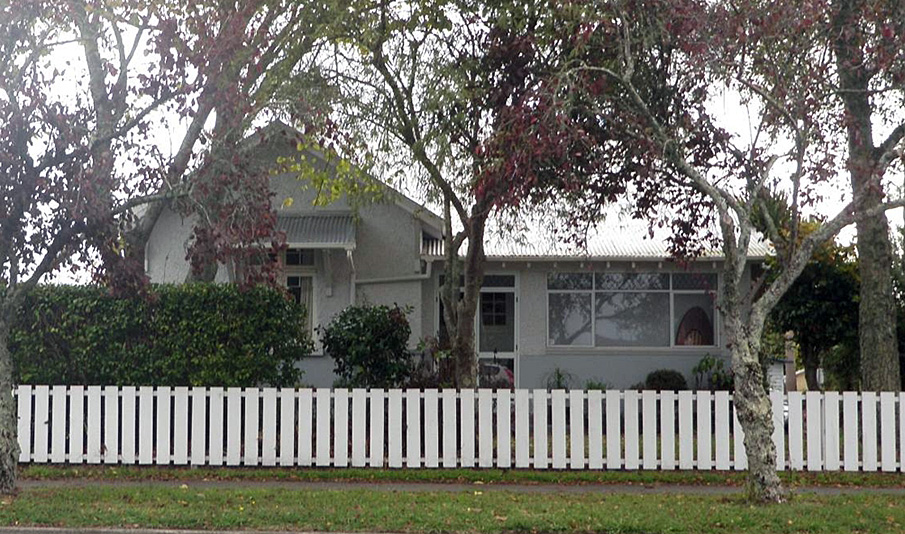
New Zealand Co-operative Dairy Company Limited House (Former)
NZ Co-operative Dairy Company Office Building, Hamilton. 2012
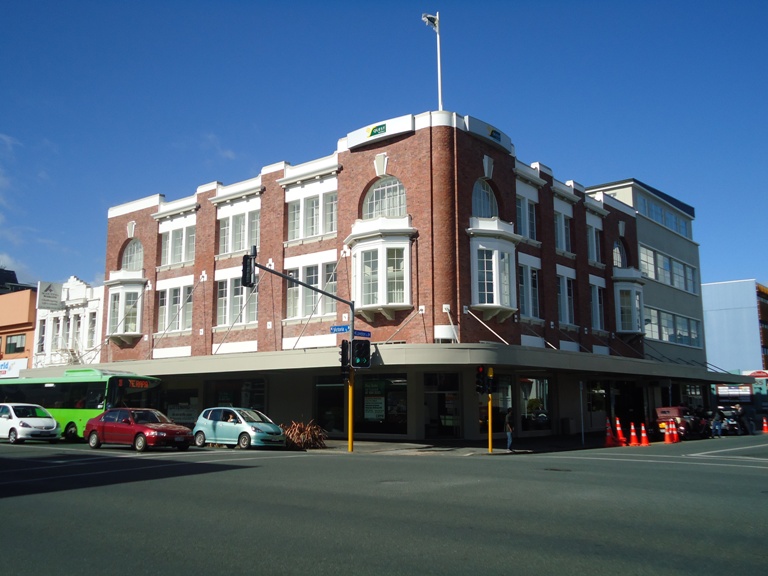
New Zealand Co-operative Dairy Company Head Office (Former)
NZ Co-operative Dairy Company Office Building, Hamilton. 2012
New Zealand Co-operative Dairy Company Head Office (Former)
New Zealand Co-operative Dairy Company Limited House (Former)
Sign up to hear more

Get the latest heritage news, features and events delivered
straight to your inbox.

Subscribe