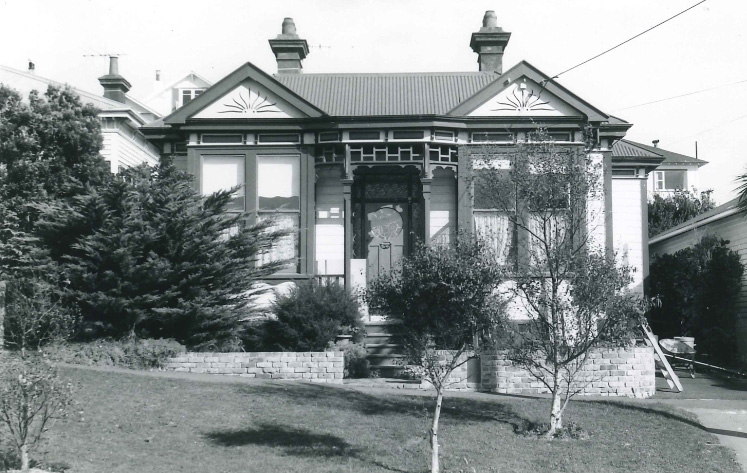
Built circa 1910, the house at 13 Farm Road has architectural significance as a fine example of a bay villa design that was popular at the time. The use of Queen Anne Eastlake influences adds to the architectural value and helps to create a sense of place in Northland. The building is also historically significant for its association with Edmund Platt and Sons, master plasterers and builders who worked on many of Wellington’s commercial buildings around the turn of the century, some of which are now considered iconic parts of Wellington’s streetscape. The internal plaster work demonstrates the skill of the Platt family, and the house is an important contributor to the historical landscape of Northland houses they developed.
Te Whanganui-a-Tara/Wellington was first settled by the people of the chief Tara, from whom the area gets its name. From the seventeenth century onwards their descendants, Ngāi Tara, were joined in occupying the area by other tribes including Ngāti Ira, Rangitāne, Ngāti Kahungunu, Ngāti Māmoe, and Ngāi Tahu. The 1820s and early 1830s was a period of massive upheaval attributed to the introduction of European muskets to Aotearoa, causing the migration south of Ngāti Toa and Ngāti Raukawa from the Waikato, and Te Āti Awa, Ngāti Tama, and Ngāti Mutunga from Taranaki. Part of the area now known as Northland was originally a cultivation site known as Orangi-kaupapa, associated with Te Matehou hapu. This area was later sold to neighbouring farmers who had already been using the land for grazing cattle.
Edmund Platt moved to Wellington from England in 1876. Having arrived with previous plastering experience, he joined the Jonathon Burton and Sons firm in 1880 and was made a partner in 1884. His first job for this company was to cast the columns and capitals for the Supreme Court building. In 1890 Edmund struck out on his own and began his own decorative plastering firm. Some of his notable work from this period includes the Harbour Board Offices and Bond Store (now Wellington Museum), the Bank of New Zealand Head Office, and the Government Life Insurance Building. Late nineteenth century advances in mass-produced, pre-cast plaster ornaments led to a decline in business for small family firms such as Edmund Platt and Sons, and in 1905 the Platt family turned to property speculation, focusing on the new subdivisions of Northland.
The area of Northland where the house is located was once a part of Charles Pharazyn’s estate. This parcel of land was subdivided, and most of the sections were sold at auction in March 1900 by Harcourt and Co, with some sections being secured in advance. The Platt family purchased a number of these sections and proceeded to build homes for themselves and neighbours throughout the subdivision. No original plans exist for 13 Farm Road, so the exact construction date is not confirmed, though upgrades to private drainage show it must have been sometime between 1900 and 1912.
The house at 13 Farm Road is a fine example of a single-storey wooden double-bay villa, typical of the early twentieth century. What makes it stand out from other villas of the same era is the use of Queen Anne Eastlake style in its construction, as well as a fine attention to detail. Of particular note is the sunburst detailing on the gables above the double-hung sash windows, and the geometric design in both the verandah frieze and the eave frieze board, the latter of which is enhanced by the stylised arrangement of the modillions. The chimney stacks were completed in a style that has been described as ‘peculiar to the Platts’ and the same style can be seen at 10 and 11 Farm Road, two other houses attributed to the family. Fine examples of plasterwork cornices, ceiling roses, and archways, plus elaborate fireplaces, can be observed internally.
The property was purchased by D'Arcy Allan Tuckwell in 1904 and has changed hands many times since. The back half of the house was significantly altered in 1980 to modernise the kitchen and bathrooms. The chimneys were removed around 2013. Distinguished writers Harvey McQueen and Dr Anne Else (MNZM) owned the property between 1992-2007, and McQueen’s 2004 memoir This Piece of Earth: A Life In My New Zealand Garden interweaves his life story with the seasons they experienced there.
Te Whanganui-a-Tara/Wellington was first settled by the people of the chief Tara, from whom the area gets its name. From the seventeenth century onwards their descendants, Ngāi Tara, were joined in occupying the area by other tribes including Ngāti Ira, Rangitāne, Ngāti Kahungunu, Ngāti Māmoe, and Ngāi Tahu. The 1820s and early 1830s was a period of massive upheaval attributed to the introduction of European muskets to Aotearoa, causing the migration south of Ngāti Toa and Ngāti Raukawa from the Waikato, and Te Āti Awa, Ngāti Tama, and Ngāti Mutunga from Taranaki. Part of the area now known as Northland was originally a cultivation site known as Orangi-kaupapa, associated with Te Matehou hapu. This area was later sold to neighbouring farmers who had already been using the land for grazing cattle.
Edmund Platt moved to Wellington from England in 1876. Having arrived with previous plastering experience, he joined the Jonathon Burton and Sons firm in 1880 and was made a partner in 1884. His first job for this company was to cast the columns and capitals for the Supreme Court building. In 1890 Edmund struck out on his own and began his own decorative plastering firm. Some of his notable work from this period includes the Harbour Board Offices and Bond Store (now Wellington Museum), the Bank of New Zealand Head Office, and the Government Life Insurance Building. Late nineteenth century advances in mass-produced, pre-cast plaster ornaments led to a decline in business for small family firms such as Edmund Platt and Sons, and in 1905 the Platt family turned to property speculation, focusing on the new subdivisions of Northland.
The area of Northland where the house is located was once a part of Charles Pharazyn’s estate. This parcel of land was subdivided, and most of the sections were sold at auction in March 1900 by Harcourt and Co, with some sections being secured in advance. The Platt family purchased a number of these sections and proceeded to build homes for themselves and neighbours throughout the subdivision. No original plans exist for 13 Farm Road, so the exact construction date is not confirmed, though upgrades to private drainage show it must have been sometime between 1900 and 1912.
The house at 13 Farm Road is a fine example of a single-storey wooden double-bay villa, typical of the early twentieth century. What makes it stand out from other villas of the same era is the use of Queen Anne Eastlake style in its construction, as well as a fine attention to detail. Of particular note is the sunburst detailing on the gables above the double-hung sash windows, and the geometric design in both the verandah frieze and the eave frieze board, the latter of which is enhanced by the stylised arrangement of the modillions. The chimney stacks were completed in a style that has been described as ‘peculiar to the Platts’ and the same style can be seen at 10 and 11 Farm Road, two other houses attributed to the family. Fine examples of plasterwork cornices, ceiling roses, and archways, plus elaborate fireplaces, can be observed internally.
The property was purchased by D'Arcy Allan Tuckwell in 1904 and has changed hands many times since. The back half of the house was significantly altered in 1980 to modernise the kitchen and bathrooms. The chimneys were removed around 2013. Distinguished writers Harvey McQueen and Dr Anne Else (MNZM) owned the property between 1992-2007, and McQueen’s 2004 memoir This Piece of Earth: A Life In My New Zealand Garden interweaves his life story with the seasons they experienced there.