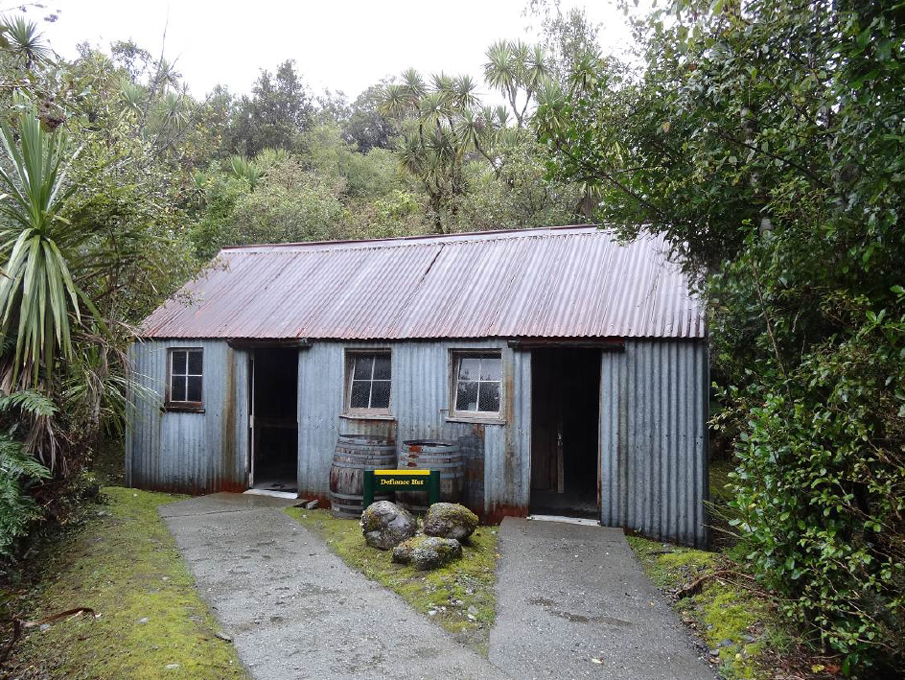
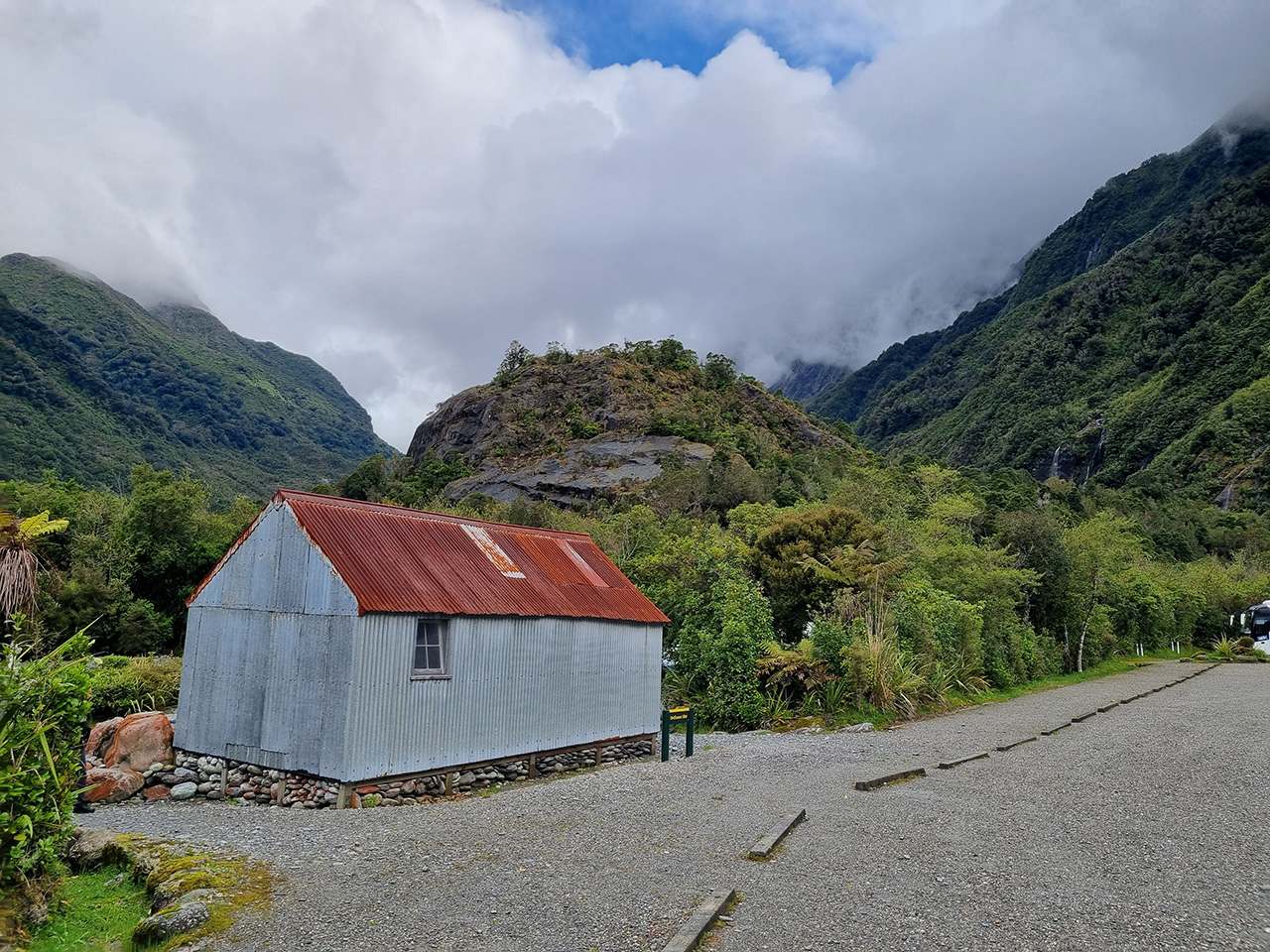
Defiance Hut, now located at the Franz Josef Glacier road-end carpark, was originally constructed in 1912-13 to enable greater tourist and mountaineer excursions to Franz Josef Glacier and is the earliest high-level mountain hut remaining in New Zealand. The hut’s design became the standard design for mountain huts for approximately 50 years. Now in its fourth location - the most recent re-siting in 2020 bringing it back closer to the glacier it historically relates to - the building’s history of relocation is part of its wider story.
Poutini Māori names for the glacier include Te Tai-o-Wawe and Kā Roimata-o-Hinehukatere (the frozen tears of the snow-girl Hinehukatere after the death of her lover, Wawe). Julius von Haast of the Canterbury Provincial Government renamed it Franz Josef Glacier in 1866, after the Austrian emperor of his home country. Adventurers and visitors had admired the beauties of the glacier country, and in the early twentieth century active steps were taken to promote Westland and its Franz Josef and Fox Glaciers as the scenic wonderland of New Zealand. In 1911, the well-known guiding and mountaineering brothers, Jim and Alex (Alec) Graham, purchased the first hotel at Waiho (Waiau) Gorge at Franz Josef, and this became a base for their mountain guiding business and led to growth of tourism and mountaineering in the area. In response to the Graham brothers’ offer to build a hut, the Department of Tourist and Health Resorts made available a sum of £160 for the project and provided sketch plans and specifications. The materials were carried up by hand to the alpine hut’s first site, a moraine terrace above Harpers Creek on the west side of the Franz Josef Glacier Valley, at 2,657 feet (809 metres), where the hut commanded excellent views of the main icefall.
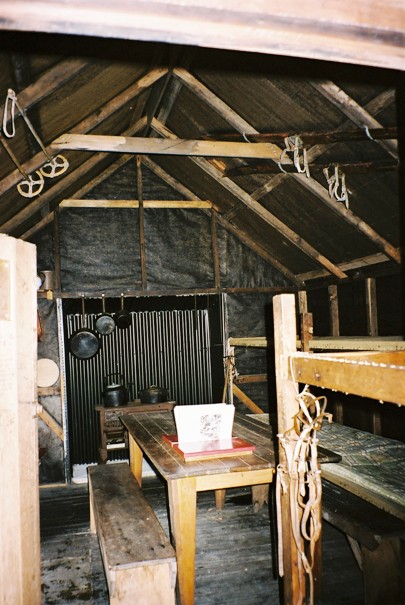
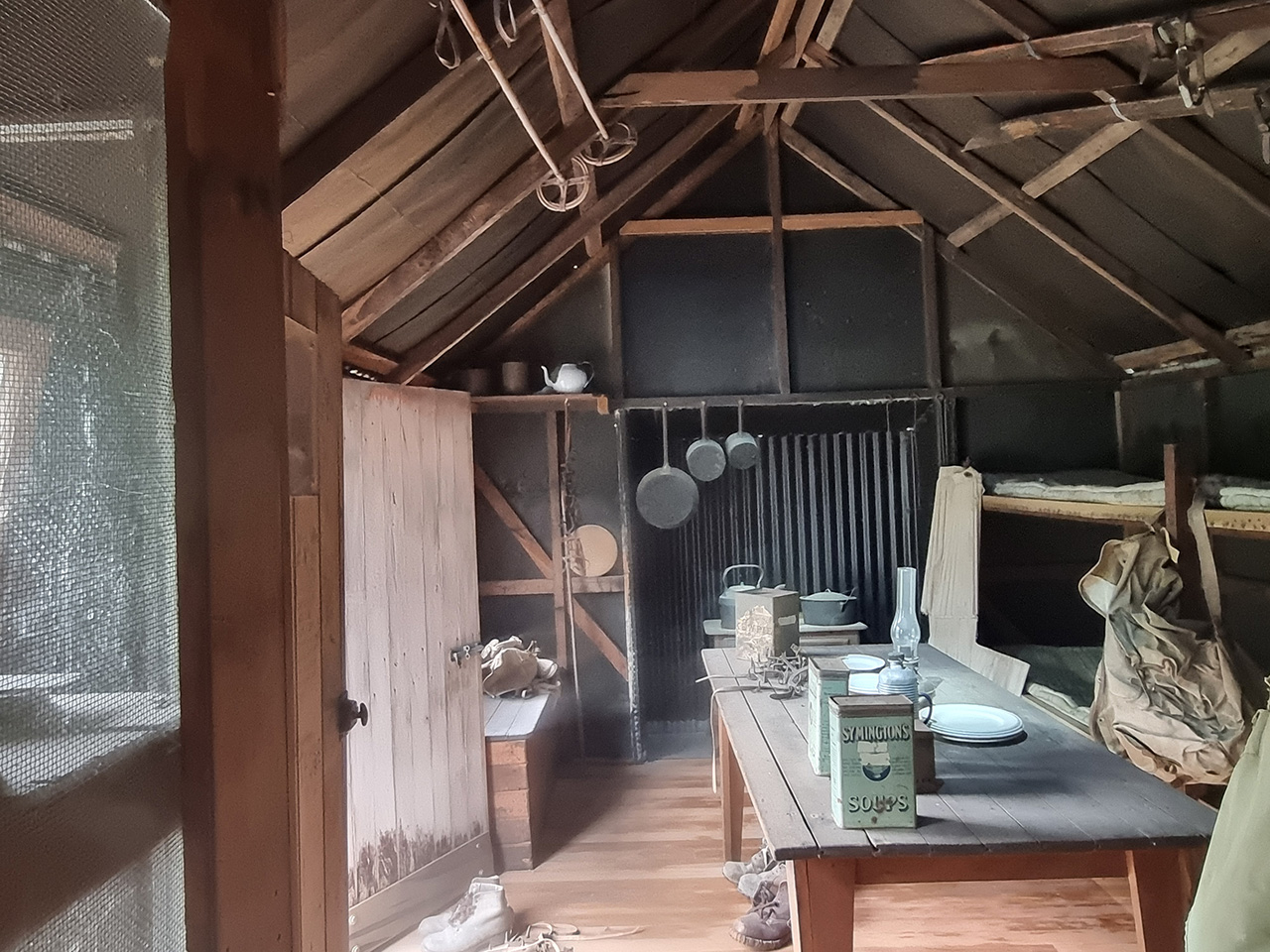
Defiance Hut is rectangular in plan, 7.4 metres by 3.9 metres, with the ridge of its gabled roof form running north-east to south-west. The height to the eaves is approximately two metres and approximately 3.5 metres to the ridge. The exterior cladding is vertical corrugated steel, lapped on the gable ends at the level of the eaves, and corrugated steel to the roof. At each end, the roofing material is wrapped down onto the face of the gable walls. A projection on the north-east elevation signifies where the fireplace originally was on the interior. The front or south-east elevation has three timber-framed windows and two door openings, one to each of its two rooms. The interior plan arrangement includes a large room (originally for cooking and sleeping for men) and a smaller room (originally for women). The south-western larger room now has clear glazing in place at the place of its opened exterior door, allowing an additional outside view of that room set out with old equipment. The north-eastern door allows access to the smaller north-east room, and a fenced opening from there provides an additional view into the larger room.
The Defiance Hut extended the available tourist excursion to the glacier. The hut offered night shelter to visitors and mountaineers, enabling them to make ascents of some of the peaks on the western side of the glacier, including Mount Moltke, which became very popular. The Graham brothers’ good relationship with Poutini Māori led them, from the 1920s, to employ Joseph Puruti (Fluerty) first as a porter to carry supplies up the ice, including to Defiance Hut, and then as an expert glacier climbing guide, where he was particularly well regarded. As the glacier receded and the ice pressure diminished the terrace, Defiance Ridge began to crumble and erode. In December 1936 it was decided to move the hut to the safety of the crest of the Defiance Ridge. The hut was pulled apart and the two tons of material, which had originally been carried to the site by hand, was moved. The hut was re-assembled and remained in constant use until the 1950s when the site was again threatened by erosion and access became a problem. A replacement hut was built at Castle Rocks, 650 metres high up the ridge, in 1974. In 1978 the Defiance Hut was rescued from its precarious position, flown out in sections, and reassembled and restored behind the then Westland National Park Visitors Centre at Franz Josef township to serve as an example of an old-style mountain hut. After a new Visitors Centre was built in circa 2016, the hut’s location was no longer deemed appropriate. In 2020 it was shifted again, this time back to a location that is a little closer to its original high-level locations, at the road-end carpark for visitors going to see the Franz Josef Glacier.