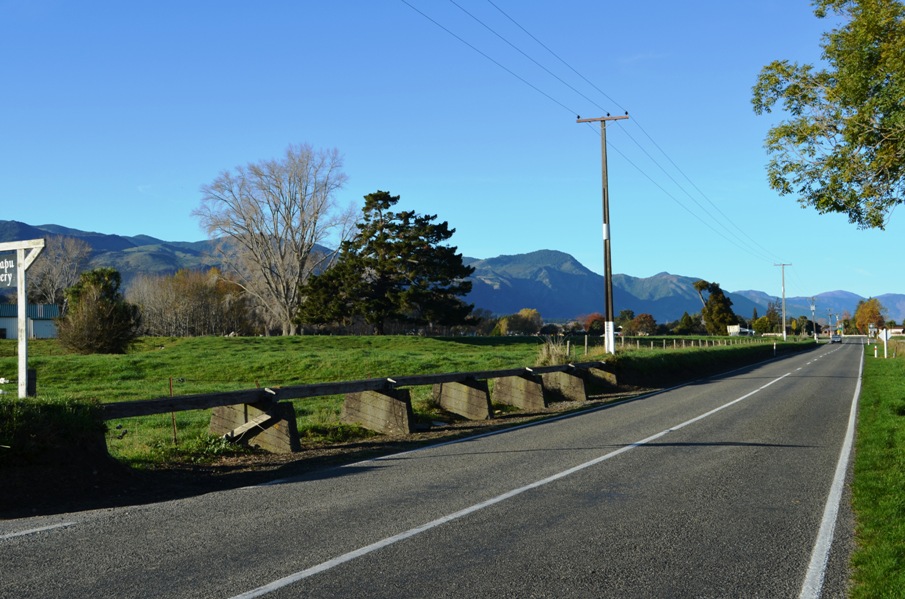
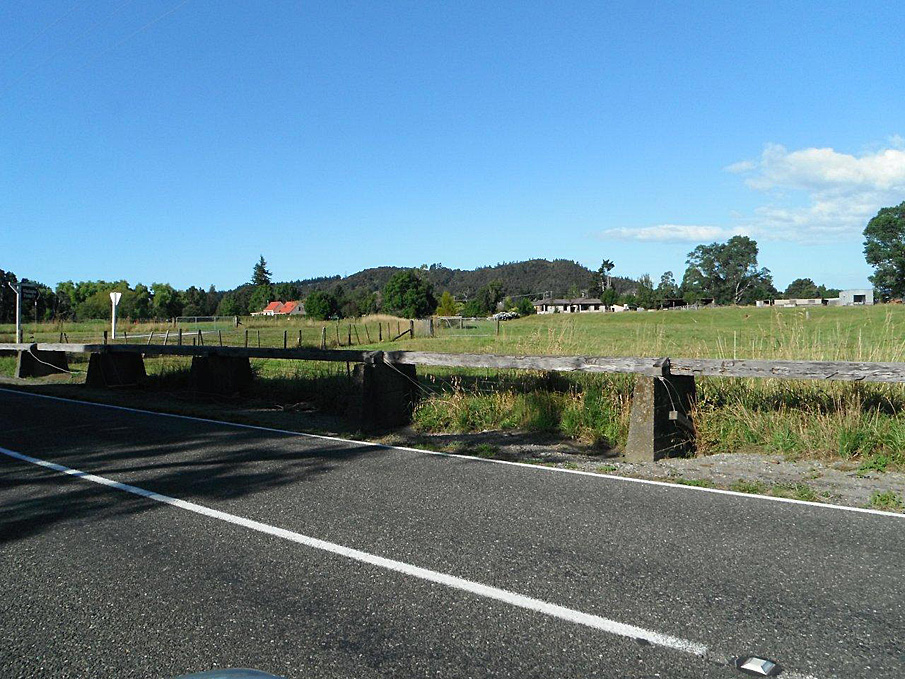
Operational between 1882-1905, the 205 metres of embankment and rail bridge alongside Waitapu Road (State Highway 60), north of Tākaka, are a rare remainder of the Takaka Tramway. Built to transport timber from sawmills to the port, the tramline was a significant investment in infrastructure for a young settlement. It has historical and archaeological value for showing the importance of the timber industry to the area’s colonial development.
The northern South Island is known as Te Tau Ihu in Māori narratives: the prow of the waka from which the demigod Māui fished up Te Ika-a-Māui, the North Island. People have lived in the Tasman region since the 1300s. In the Golden Bay / Mohua district alone, archaeologists have recorded around 300 places where Māori were building pā, gardens, fishing settlements, urupā and middens. Placenames such as Tākaka, Parapara and Motueka are a legacy of the peoples’ Pacific Island ancestry.
In 1642, when Dutch explorer Abel Tasman’s ships arrived in Mohua, Ngāti Tūmatakōkiri were dominant in the area, having displaced earlier tribes. This first recorded encounter between Māori and Europeans, when 22 waka met Tasman’s two ships on the water, resulted in a violent clash and Tasman’s departure. Around 1800, Ngāti Tūmatakōkiri were displaced by Ngāti Apa, Ngāti Kuia and Ngāi Tahu, with Ngāti Apa dominating the Golden Bay / Mohua district. Further changes occurred between 1828 and 1832, when taua (war parties) of Tainui and Taranaki iwi arrived. A subsequent division of territory was determined, with Te Ātiawa, Ngāti Tama and Ngāti Rārua settling in Mohua.
The Tākaka River catchment provided numerous taonga resources for Māori. New Zealand Company colonists, who established the Nelson settlement in 1842, were also keen to capitalise on the region’s natural assets. The Tākaka valley’s beautiful stands of native timber attracted sawmillers and settlers from the 1850s. Numerous sawmills were set up by the 1870s, and the townships of Tākaka and East Tākaka naturally formed to service the communities. As the industry grew, a tramline was built to transport the logs over swampy ground from East Tākaka to the wharf at Waitapu. Waitapu is named for the mouth of the Waitapu River, a tributary formerly known as ‘Ngā Waitapu o Uruao (the sacred waters of the Uruao)’, recognising the sacred carved prow of the waka ‘Uruao’ invested there.
The tramway was instituted by the Takaka Road Board with funding raised via the Tramways Act 1872. John Rochfort surveyed the route, 8 miles and 25 chains long (13.4 kilometres), in 1880. The Takaka Tramway Company was established to build the line in exchange for eventual ownership rights. From late 1881 Manson Brothers constructed the formation, and John McCullock and Edward Christian did the plate-laying. The rails were 2-foot 6-inch gauge, and a locomotive, the Pioneer, was specially built by the Anchor Foundry.
Completed in 1882, the tramline serviced at least six sawmills. The sawmillers and timber merchants were company directors, involved in operations and responsible for maintenance of the line. A morning and an afternoon train ran each day, carrying passengers as well as freight at a speed of 6-8 miles per hour – slow enough for people to run alongside and climb on. The route ran through Tākaka along the main street and the tram became a regular fixture of daily life. Children found great amusement trying to derail the locomotive with stones on the tracks; the tram was also fondly remembered as transport for group excursions.
As the forest was cleared, land use transitioned to farming and the tramway became less economically viable. By 1896 the owners had already started removing the upper section for use in repairing other parts of the line. By 1903 some of the leases through private properties had not been renewed. Two years later, after a devastating flood had further weakened prospects, all tram operations ceased.
The tramline was dismantled and assets, including the Pioneer, sold. The old engine shed stood until 1926; most of the formation has gradually disappeared. Two noticeable stretches of embankment survive, north (the subject of this report) and south of Tākaka, and cuttings are visible along the Paines Ford walkway (which follows the tramline route).
A number of bridges were built to carry the line, including one near the wharf that made the news when it gave way in 1886. The timber bridge supports across flood-prone ground near the intersection of Waitapu Road and Maori Road, adjoining the embankment that runs for 205 metres alongside Waitapu Road, are now marked with signage as one of the few prominent remains of the Takaka Tramway. The bridge timber was partly removed in the 1980s.
The northern South Island is known as Te Tau Ihu in Māori narratives: the prow of the waka from which the demigod Māui fished up Te Ika-a-Māui, the North Island. People have lived in the Tasman region since the 1300s. In the Golden Bay / Mohua district alone, archaeologists have recorded around 300 places where Māori were building pā, gardens, fishing settlements, urupā and middens. Placenames such as Tākaka, Parapara and Motueka are a legacy of the peoples’ Pacific Island ancestry.
In 1642, when Dutch explorer Abel Tasman’s ships arrived in Mohua, Ngāti Tūmatakōkiri were dominant in the area, having displaced earlier tribes. This first recorded encounter between Māori and Europeans, when 22 waka met Tasman’s two ships on the water, resulted in a violent clash and Tasman’s departure. Around 1800, Ngāti Tūmatakōkiri were displaced by Ngāti Apa, Ngāti Kuia and Ngāi Tahu, with Ngāti Apa dominating the Golden Bay / Mohua district. Further changes occurred between 1828 and 1832, when taua (war parties) of Tainui and Taranaki iwi arrived. A subsequent division of territory was determined, with Te Ātiawa, Ngāti Tama and Ngāti Rārua settling in Mohua.
The Tākaka River catchment provided numerous taonga resources for Māori. New Zealand Company colonists, who established the Nelson settlement in 1842, were also keen to capitalise on the region’s natural assets. The Tākaka valley’s beautiful stands of native timber attracted sawmillers and settlers from the 1850s. Numerous sawmills were set up by the 1870s, and the townships of Tākaka and East Tākaka naturally formed to service the communities. As the industry grew, a tramline was built to transport the logs over swampy ground from East Tākaka to the wharf at Waitapu. Waitapu is named for the mouth of the Waitapu River, a tributary formerly known as ‘Ngā Waitapu o Uruao (the sacred waters of the Uruao)’, recognising the sacred carved prow of the waka ‘Uruao’ invested there.
The tramway was instituted by the Takaka Road Board with funding raised via the Tramways Act 1872. John Rochfort surveyed the route, 8 miles and 25 chains long (13.4 kilometres), in 1880. The Takaka Tramway Company was established to build the line in exchange for eventual ownership rights. From late 1881 Manson Brothers constructed the formation, and John McCullock and Edward Christian did the plate-laying. The rails were 2-foot 6-inch gauge, and a locomotive, the Pioneer, was specially built by the Anchor Foundry.
Completed in 1882, the tramline serviced at least six sawmills. The sawmillers and timber merchants were company directors, involved in operations and responsible for maintenance of the line. A morning and an afternoon train ran each day, carrying passengers as well as freight at a speed of 6-8 miles per hour – slow enough for people to run alongside and climb on. The route ran through Tākaka along the main street and the tram became a regular fixture of daily life. Children found great amusement trying to derail the locomotive with stones on the tracks; the tram was also fondly remembered as transport for group excursions.
As the forest was cleared, land use transitioned to farming and the tramway became less economically viable. By 1896 the owners had already started removing the upper section for use in repairing other parts of the line. By 1903 some of the leases through private properties had not been renewed. Two years later, after a devastating flood had further weakened prospects, all tram operations ceased.
The tramline was dismantled and assets, including the Pioneer, sold. The old engine shed stood until 1926; most of the formation has gradually disappeared. Two noticeable stretches of embankment survive, north (the subject of this report) and south of Tākaka, and cuttings are visible along the Paines Ford walkway (which follows the tramline route).
A number of bridges were built to carry the line, including one near the wharf that made the news when it gave way in 1886. The timber bridge supports across flood-prone ground near the intersection of Waitapu Road and Maori Road, adjoining the embankment that runs for 205 metres alongside Waitapu Road, are now marked with signage as one of the few prominent remains of the Takaka Tramway. The bridge timber was partly removed in the 1980s.