

Te Tau Ihu (Nelson-Marlborough) has a long history of Māori settlement over hundreds of years, reflecting successive waves of migration through to the early 1820s-1830s. The region’s rich and layered Māori history is reflected by the eight recognised iwi – Ngāti Kuia, Ngāti Apa and Rangitāne (Kurahaupō tribes), Ngāti Toarangatira, Ngāti Koata and Ngāti Rārua (Tainui tribes), and Ngāti Tama and Te Ātiawa (Taranaki tribes). Land purchases commenced from 1839 and a New Zealand Company Settlement was established at Whakatū (Nelson), with the first immigrant ships arriving in 1842. Colonial settlement slowly developed and Whakatū became a city in 1858, at which time it had just over 5000 inhabitants. Early discussions about a rail link to the rest of the South Island rail network led to the authorisation of the Nelson railway in 1871. The first 30.4-kilometre section to Foxhill opened in 1876 but further progress was slow and by 1908 the railway had only been built as far as Kiwi. The next section to Glenhope Station was officially opened by Minister of Railways W.H. Herries on 2 September 1912.
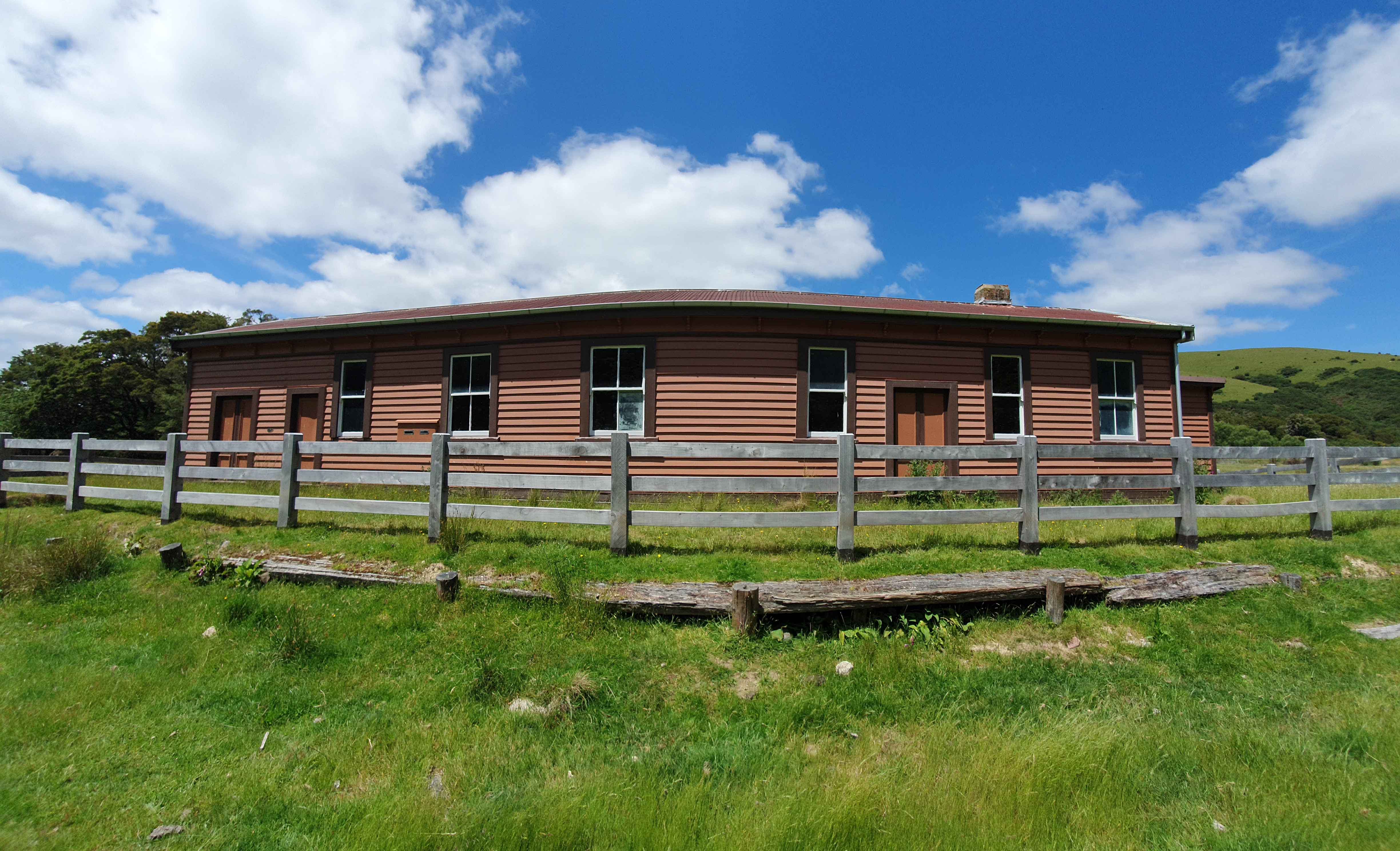
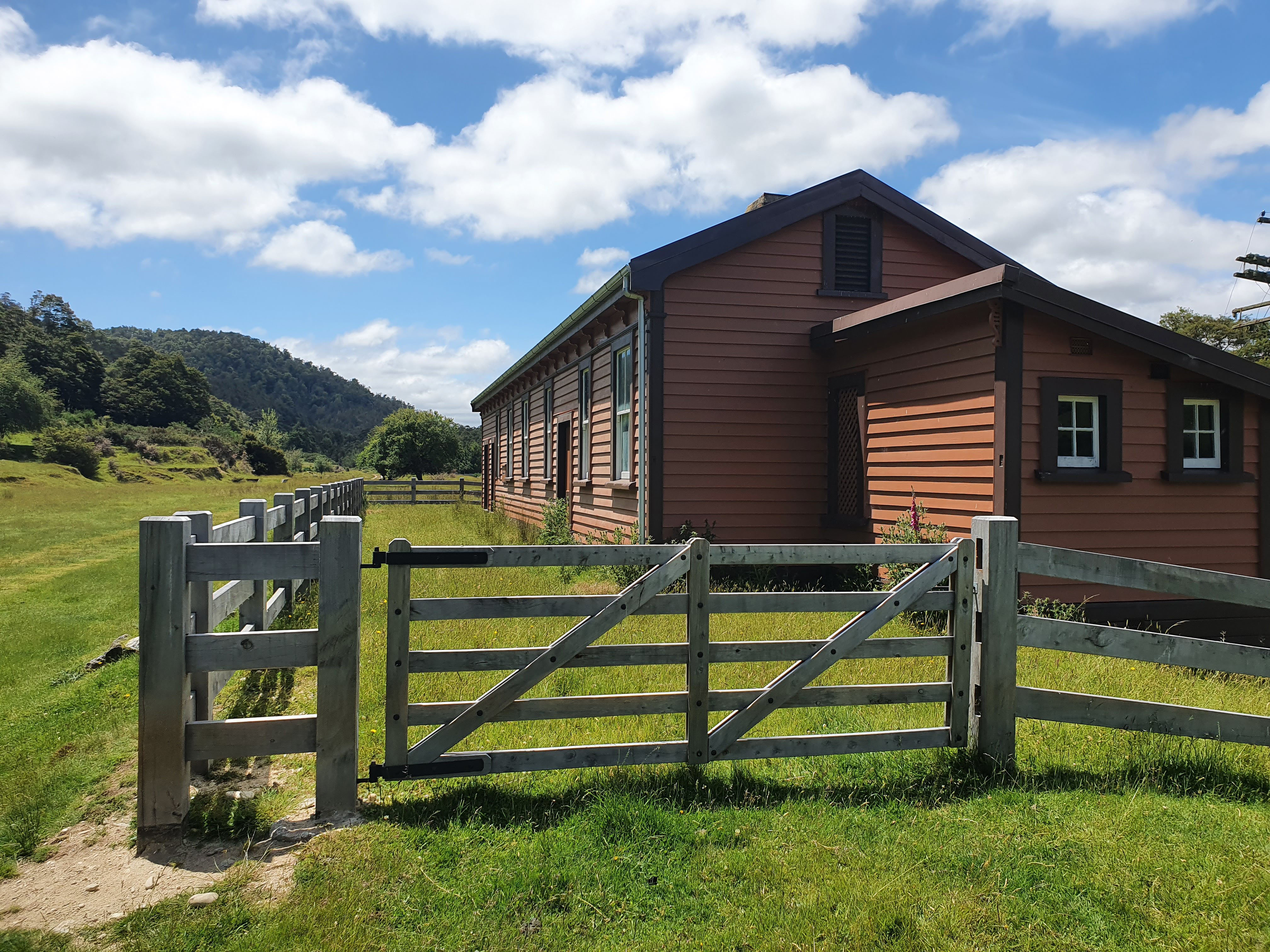
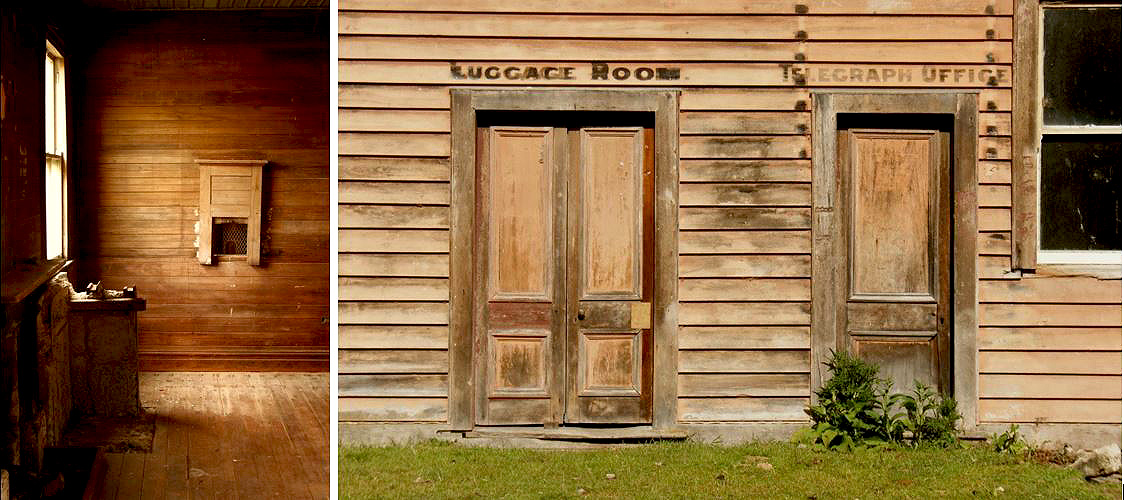
Glenhope Station was designed by architect George Alexander Troup (1863-1941), who was at that time Designing Engineer for New Zealand Railways, and constructed by Nelson builder Sydney Melville Galbraith. It has been described as a ‘simplified version’ of the Queen Anne style of the classic Troup stations and was a variation of the Troup ‘B’ class design. It was 17 feet (5. 2 metres) wide and 75 feet (22.9 metres) long and had a low-pitched gable roof with a simple truss gable screen and finial at either end. The building was clad in shiplap weatherboards and had double hung sash windows and panelled doors. Running north to south, the building comprised a luggage room, postal lobby, postal and station master room, lobby, ladies’ waiting room and ladies’ toilet (in a lean-to). Fireplaces were located in the station master room, lobby and ladies’ waiting room (the latter two rooms served by a back-to-back fireplace). A free-standing Troup type 2 platform verandah with open ends was added to the northern end of the station in 1919/early 1920 in anticipation of a visit by the Prince of Wales in May 1920.
Kawatiri became the new terminus of the Nelson Railway in 1926 but in 1931 the Kawatiri to Glenhope section closed and all further work was suspended due to the Great Depression. Glenhope Station was ‘the end of the line’ until the permanent closure of the Nelson railway on 3 September 1955, a decision which was met with considerable public outcry. The Glenhope station complex was dismantled over a week in November 1955, though the station building remained and was purchased by neighbouring farmer Newton McConochie in 1957. A.J and M.C Pettigrew took over the property in 1965 and the Pettigrew family used the building as part of their farming operation for many years, adding a lean-to roof to the western elevation for hay storage. In 2011 ownership of the wider Glenhope Station site transferred to the Department of Conservation and it was declared a historic reserve. In recent years the station building has undergone significant restoration.
List Entry Information
Status
Listed
List Entry Status
Historic Place Category 2
Access
Private/No Public Access
List Number
5172
Date Entered
15th February 1990
Date of Effect
15th February 1990
City/District Council
Tasman District
Region
Tasman Region
Extent of List Entry
Extent includes part of the land described as Sec 1 SO 409328 (RT 550773, NZ Gazette 2011, p.776; RT 563990), Nelson Land District and the building known as Glenhope Railway Station (Former) thereon, and its remaining platform. Refer to the extent map tabled at the Rārangi Kōrero Committee meeting on 6 October 2022.
Legal description
Sec 1 SO 409328 (RT 550773, NZ Gazette 2011, p.776; RT 563990), Nelson Land District
Location Description
Located on the north-west side of Kohatu-Kawatiri Highway (State Highway 6) near the intersection with Moonlight Road, Glenhope. The Railway Station is visible from the roadside.
Status
Listed
List Entry Status
Historic Place Category 2
Access
Private/No Public Access
List Number
5172
Date Entered
15th February 1990
Date of Effect
15th February 1990
City/District Council
Tasman District
Region
Tasman Region
Extent of List Entry
Extent includes part of the land described as Sec 1 SO 409328 (RT 550773, NZ Gazette 2011, p.776; RT 563990), Nelson Land District and the building known as Glenhope Railway Station (Former) thereon, and its remaining platform. Refer to the extent map tabled at the Rārangi Kōrero Committee meeting on 6 October 2022.
Legal description
Sec 1 SO 409328 (RT 550773, NZ Gazette 2011, p.776; RT 563990), Nelson Land District
Location Description
Located on the north-west side of Kohatu-Kawatiri Highway (State Highway 6) near the intersection with Moonlight Road, Glenhope. The Railway Station is visible from the roadside.
Construction Professional
Name
Troup, George Alexander
Type
Architect
Biography
G A Troup (1863-1941) was born in London in 1863 and educated in Scotland. He trained as an architect and engineer under C E Calvert of Edinburgh and came to New Zealand in 1884. After a short time with the Survey Department in Otago he became a draughtsman for New Zealand Railways in Dunedin and then, from 1888, in Wellington. Troup became Chief Draughtsman in 1894. He designed many station buildings throughout the county, some of which are still in use today; these buildings form an important part of New Zealand's landscape. His best known building is the Dunedin Railway Station (1904-07). He also designed the head office building in Wellington for Railways (1901, now demolished). Troup became a Fellow of the Royal Institute of British Architects in 1907. After World War I he was promoted to head the newly established Architectural Branch of New Zealand Railways. On retirement from Railways in 1925 he entered local body politics and was Mayor of Wellington from 1927 to 1931. Troup was prominent in the Presbyterian Church and founded the Presbyterian Young Men's Bible Class Union. He was an elder of the church for 47 years and also served on the governing bodies of several Wellington secondary schools. Education was a life-long interest and he was keenly involved in the training of engineering cadets in New Zealand Railways. Troup was knighted in 1937 and died in 1941. Last updated 1 October 2014 See also: James Veitch. 'Troup, George Alexander', Dictionary of New Zealand Biography, first published in 1993. Te Ara - the Encyclopedia of New Zealand, https://teara.govt.nz/en/biographies/2t49/troup-george-alexander
Construction Details
Start Year
1912
Type
Original Construction
Construction Professional
Name
Troup, George Alexander
Type
Architect
Biography
G A Troup (1863-1941) was born in London in 1863 and educated in Scotland. He trained as an architect and engineer under C E Calvert of Edinburgh and came to New Zealand in 1884. After a short time with the Survey Department in Otago he became a draughtsman for New Zealand Railways in Dunedin and then, from 1888, in Wellington. Troup became Chief Draughtsman in 1894. He designed many station buildings throughout the county, some of which are still in use today; these buildings form an important part of New Zealand's landscape. His best known building is the Dunedin Railway Station (1904-07). He also designed the head office building in Wellington for Railways (1901, now demolished). Troup became a Fellow of the Royal Institute of British Architects in 1907. After World War I he was promoted to head the newly established Architectural Branch of New Zealand Railways. On retirement from Railways in 1925 he entered local body politics and was Mayor of Wellington from 1927 to 1931. Troup was prominent in the Presbyterian Church and founded the Presbyterian Young Men's Bible Class Union. He was an elder of the church for 47 years and also served on the governing bodies of several Wellington secondary schools. Education was a life-long interest and he was keenly involved in the training of engineering cadets in New Zealand Railways. Troup was knighted in 1937 and died in 1941. Last updated 1 October 2014 See also: James Veitch. 'Troup, George Alexander', Dictionary of New Zealand Biography, first published in 1993. Te Ara - the Encyclopedia of New Zealand, https://teara.govt.nz/en/biographies/2t49/troup-george-alexander
Construction Details
Start Year
1912
Type
Original Construction
Historical and Associated Iwi / Hapū / Whānau
Completion Date
30th May 2022
Report Written By
Joanna Barnes-Wylie
Information Sources
Mahoney, 1987
J. D. Mahoney, Down at the Station: A Study of the New Zealand Railway Station, Palmerston North, 1987
Voller, 1991
L. Voller, Rails to Nowhere, The History of the Nelson Railway, Nelson, 1991
David Leitch and Brian Scott, 1998
Exploring New Zealand’s Ghost Railways, Grantham House, Wellington
Bowman, 2011
Ian Bowman, ‘Conservation Plan: Glenhope Railway Station, Glenhope’, prepared for the Department of Conservation Nelson Lakes Area Office, 2011.
O’Donnell, 2005
Barry O’Donnell, When Nelson Had a Railway: The Life and Death of New Zealand’s Last Isolated Railway 1876-1955, Schematics Limited, Wellington, 2005.
Other Information
This place was identified as significant under previous legislation with different information requirements. It remains significant under the current legislation. There is opportunity under our legislation and policies to add to this information. Further information about this place may be available from the Central Regional Office of Heritage New Zealand Pouhere Taonga. A fully referenced copy of the upgrade report is available on request from the Central Regional Office of Heritage New Zealand Pouhere Taonga Please note that entry on the New Zealand Heritage List/Rarangi Korero identifies only the heritage values of the property concerned, and should not be construed as advice on the state of the property, or as a comment of its soundness or safety, including in regard to earthquake risk, safety in the event of fire, or insanitary conditions.
Historical and Associated Iwi / Hapū / Whānau
Completion Date
30th May 2022
Report Written By
Joanna Barnes-Wylie
Information Sources
Mahoney, 1987
J. D. Mahoney, Down at the Station: A Study of the New Zealand Railway Station, Palmerston North, 1987
Voller, 1991
L. Voller, Rails to Nowhere, The History of the Nelson Railway, Nelson, 1991
David Leitch and Brian Scott, 1998
Exploring New Zealand’s Ghost Railways, Grantham House, Wellington
Bowman, 2011
Ian Bowman, ‘Conservation Plan: Glenhope Railway Station, Glenhope’, prepared for the Department of Conservation Nelson Lakes Area Office, 2011.
O’Donnell, 2005
Barry O’Donnell, When Nelson Had a Railway: The Life and Death of New Zealand’s Last Isolated Railway 1876-1955, Schematics Limited, Wellington, 2005.
Other Information
This place was identified as significant under previous legislation with different information requirements. It remains significant under the current legislation. There is opportunity under our legislation and policies to add to this information. Further information about this place may be available from the Central Regional Office of Heritage New Zealand Pouhere Taonga. A fully referenced copy of the upgrade report is available on request from the Central Regional Office of Heritage New Zealand Pouhere Taonga Please note that entry on the New Zealand Heritage List/Rarangi Korero identifies only the heritage values of the property concerned, and should not be construed as advice on the state of the property, or as a comment of its soundness or safety, including in regard to earthquake risk, safety in the event of fire, or insanitary conditions.
Current Usages
Uses: Civic Facilities
Specific Usage: Historic or recreation reserve
Former Usages
General Usage: Agriculture
Specific Usage: Shed
General Usage: Transport
Specific Usage: Railway station/ platform/ refreshment room
Current Usages
Uses: Civic Facilities
Specific Usage: Historic or recreation reserve
Former Usages
General Usage: Agriculture
Specific Usage: Shed
General Usage: Transport
Specific Usage: Railway station/ platform/ refreshment room
Location
Stay up to date with Heritage this month
