

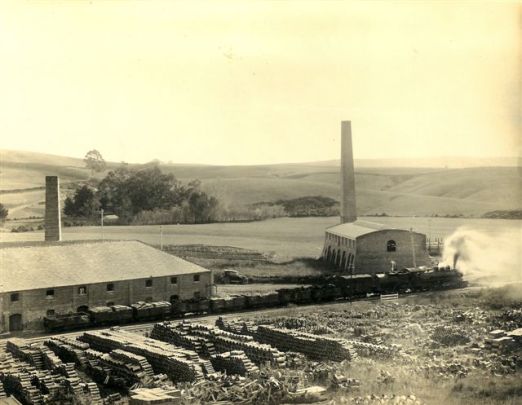
Nelson had originally established the Benhar Coal Company in 1864 to mine the local coal deposits. With suitable clay also available in the area, Nelson began to make clay pipes during the late 1870s and produced bricks, vases and pots from 1888. The completion of the railway between Stirling and Benhar during the mid-1870s, which enabled goods to be easily transported out of the area, assisted Nelson's expansion. By 1888 Nelson employed 50 workers. The McSkimmings, after working on contract as pipemakers for a number of years, then leased and subsequently purchased the business from Nelson in 1894.
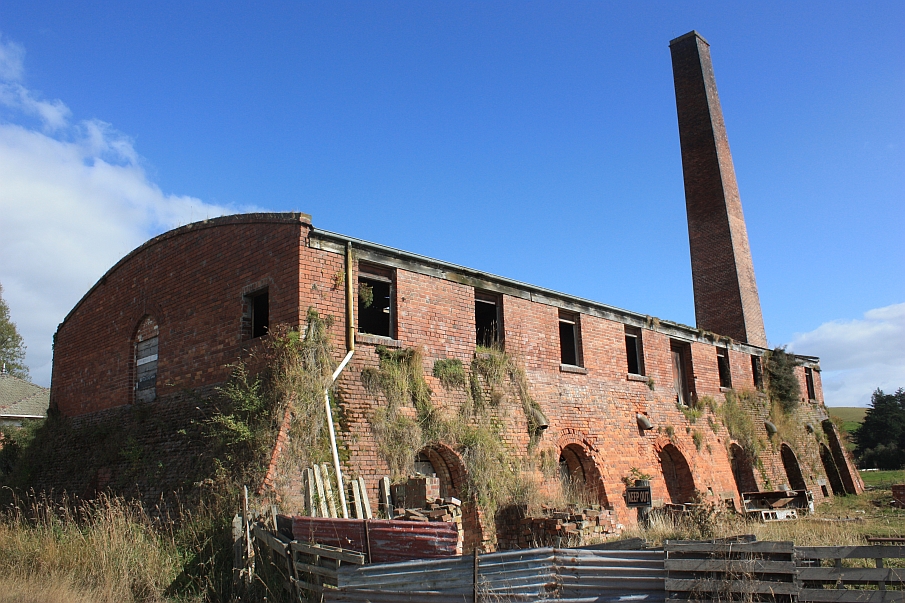
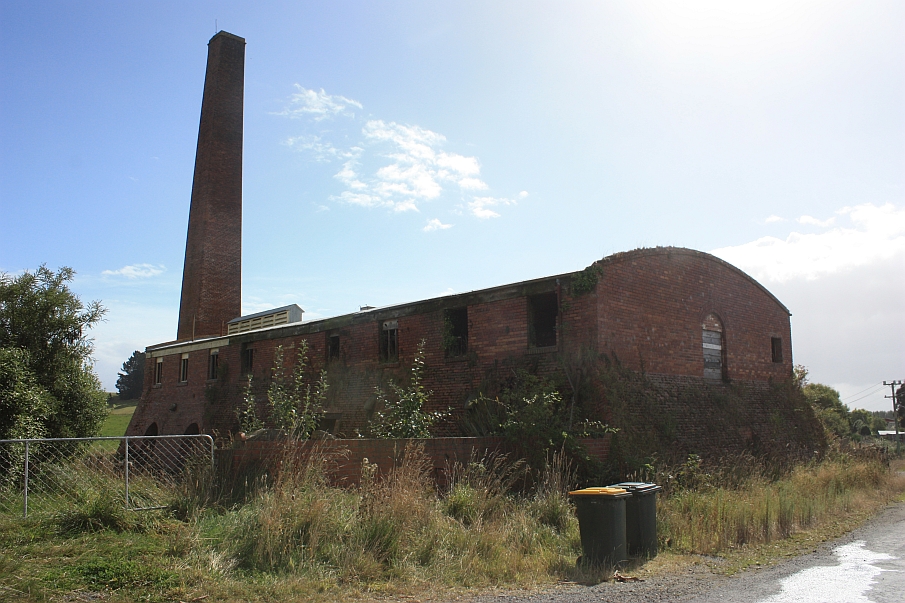
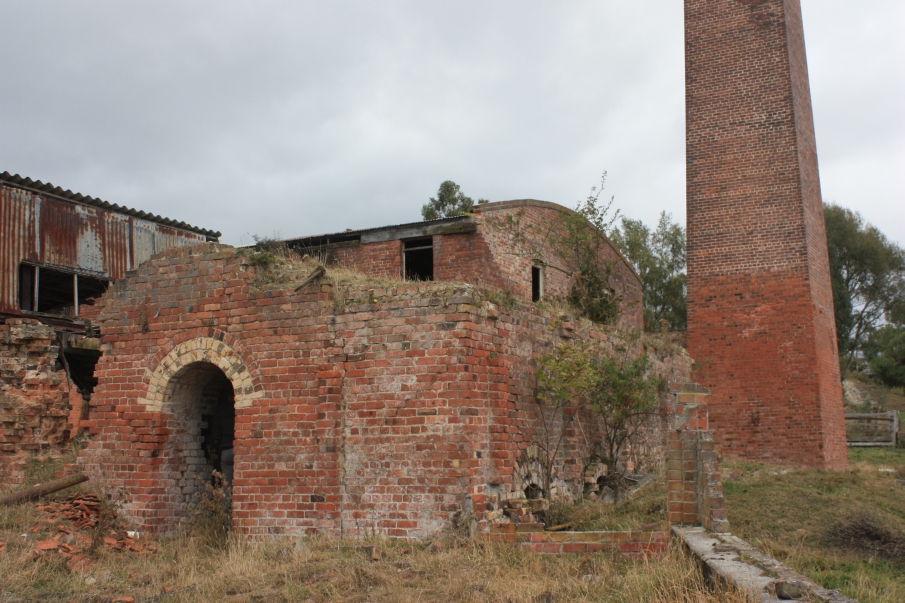
It is thought that the Hoffman Kiln at Benhar was one of the first improvements to be erected by the McSkimmings after they purchased the business. The Hoffman continuously fired brick kiln was invented by Friedrick Hoffman (1818-1900) of Germany in the late 1850s. Before then brick making was a small industry, which used single-chamber kilns, which had to be fired, then cooled and emptied before the next load could be processed. Hoffman's new kiln contained a number of firing chambers around which the fire was moved in sequence. This method allowed for a continuous firing of bricks and thus increased both efficiency and production. Hoffman's kilns also use a downdraught to heat the kiln rather than the earlier and less efficient updraught. In a downdraught kiln the heat is directed against a bagwall which pushes the heat up and over and then downwards through the wares. This provides a more even distribution of heat and avoids the damage done to the lower layers of wares often caused by an updraught kiln. The large outside chimney is a vital part of this process, creating a draught that pulls the fire down through the wares. The large chimneys were therefore a distinctive feature of Hoffman kilns. The kiln erected at Benhar is a two-storeyed brick building with its tall rectangular chimney situated at the western end. It is buttressed at both the western and eastern ends and further supported by the typically splayed ground floor walls. Inside two rows of six barrel-vaulted firing chambers run from a central passage. The building is covered by a convex corrugated-iron roof. While early Hoffman kilns were circular with a central chimney, the Benhar kiln is typical of later designs. Such kilns were once notable features of a number of New Zealand towns, although only one other, a oval-shaped kiln in Palmerston North, still survives, albeit without its chimney. The Palmerston North kiln is also registered by the New Zealand Historic Places Trust Pouhere Taonga.
McSkimming brought out experienced workers and relatives from Scotland to work at Benhar and gradually established a small village around the factory to house his employees. The majority of his workers rented their houses from him, although some eventually purchased theirs. McSkimming's own large brick house at the top of the hill, 'Lesmahagow', was erected in 1914, and in its heyday was noted for its superb gardens. A church cum community hall was erected in 1908 and the Benhar School opened in 1909. As well as supplying housing McSkimming was noted for his patriarchal control over the lives of his employees. He insisted that all staff attend church on Sundays and docked a shilling from people's pay if he saw them smoking. He also encouraged his employees to keep a house cow, which could graze on the company farm, and is said to have always left a £5 note in the cradle of new born babies. The village of Benhar was one of only a few New Zealand towns established along the lines of industrial villages in Britain.
McSkimming Industries thrived and became New Zealand's leading supplier of earthenware pipes and glazed bricks. By 1903 McSkimming and Son, in conjunction with J.H. Lambert, could supply the stoneware pipes for the Dunedin sewerage scheme. In 1907 McSkimming's son-in-law, Parker McKinlay, was dispatched to England to investigate the possibility of manufacturing of sanitaryware, that is toilet pans, basins and associated bathroom fittings. McKinlay managed to acquire suitable glaze and body recipes and production of sanitaryware began at Benhar in 1908. McSkimmings became the major producers of sanitaryware in New Zealand - by 1935 it advertised itself as the only manufacturer of white sanitaryware in the country. This specialisation is one of the main reasons, ceramics historian Gail Lambert says, that McSkimming Industries continued to operated successfully until the 1980s.
While the factory at Benhar substantially expanded over the course of the twentieth century it appears that the Hoffman Kiln itself was little used. It is said that the continuous firing of the Hoffman Kiln at Benhar clashed with the McSkimmings' religious beliefs, as it required people to work on a Sunday. It was therefore converted to a boiler room and then a storehouse.
Benhar was sold to Ceramco Ltd in 1980, a company who became noted as the first in the world to obtain a licence to manufacture Villeroy and Boch sanitaryware. In 1989 Ceramco sold the pottery and village to James Hardie Building Products New Zealand Ltd, makers of Fowler Bathroom Products. In 1990 a fire gutted most of the works, leaving only the company office, part of a warehouse and the Hoffman Kiln still standing. After the fire the company closed the works at Benhar and sold the land on which the kiln stood to Mrs S.M. Moore in 1991. In May 1992 demolition of the kiln's chimney began. This was halted by concerned locals and a heritage order was placed over the entire structure.
The Hoffman Kiln at Benhar is a distinctive landmark, which is highly significant as the only remaining example of a Hoffman kiln in New Zealand that retains its chimney. The kiln reminds us of the relatively quick adoption in New Zealand of new industrial techniques developed in Europe. It was constructed by McSkimming Industries, which became an integral part of the New Zealand clay industry, a major supplier of earthenware pipes, and glazed bricks. The company was particularly noted for its production of sanitaryware. Peter McSkimming, the founder of McSkimmings Industries, was a noted member of the local community, a staunch Presbyterian and was recognised for his major contribution to clay manufacturing in New Zealand. The kiln is closely associated with the surrounding village, which developed to house McSkimmings' employees and the two provide a rare New Zealand example of an industrial village established by the local employer.
List Entry Information
Status
Listed
List Entry Status
Historic Place Category 1
Access
Private/No Public Access
List Number
5179
Date Entered
13th December 1990
Date of Effect
13th December 1990
City/District Council
Clutha District
Region
Otago Region
Legal description
Lot 10 DP 25340 (RT 17B/797), Otago Land District
Location Description
Benhar, Clutha.
Status
Listed
List Entry Status
Historic Place Category 1
Access
Private/No Public Access
List Number
5179
Date Entered
13th December 1990
Date of Effect
13th December 1990
City/District Council
Clutha District
Region
Otago Region
Legal description
Lot 10 DP 25340 (RT 17B/797), Otago Land District
Location Description
Benhar, Clutha.
Construction Professional
Name
McSkimming, Peter
Type
Architect
Biography
Peter McSkimming and his family immigrated to New Zealand from Glasgow in 1878. After spending four years gold-panning in Central Otago the McSkimmings settled in Stirling where Peter and his eldest son, also called Peter, went to work for John Nelson who ran a pottery and brick factory at nearby Benhar. After working as pipemakers for about ten years the McSkimmings leased and later purchased the business from Nelson in the early 1890s. The erection of the Hoffman kiln was probably one of the first projects undertaken at Benhar after the factory had changed hands and it is possible that Peter McSkimming senior was at least in part responsible for its design.
Construction Details
Start Year
1894
startYearCirca
Type
Original Construction
Construction Professional
Name
McSkimming, Peter
Type
Architect
Biography
Peter McSkimming and his family immigrated to New Zealand from Glasgow in 1878. After spending four years gold-panning in Central Otago the McSkimmings settled in Stirling where Peter and his eldest son, also called Peter, went to work for John Nelson who ran a pottery and brick factory at nearby Benhar. After working as pipemakers for about ten years the McSkimmings leased and later purchased the business from Nelson in the early 1890s. The erection of the Hoffman kiln was probably one of the first projects undertaken at Benhar after the factory had changed hands and it is possible that Peter McSkimming senior was at least in part responsible for its design.
Construction Details
Start Year
1894
startYearCirca
Type
Original Construction
Historical and Associated Iwi / Hapū / Whānau
Completion Date
3rd June 2003
Report Written By
Melanie Lovell-Smith
Information Sources
Dictionary of New Zealand Biography
Dictionary of New Zealand Biography
Henry, 1999
Gail Henry, New Zealand Pottery: Commercial and Collectable, Auckland, 1999
Smith, 2001
Nigel Smith, Heritage of Industry: Discovering New Zealand's Industrial History, Auckland, 2001
Thornton, 1982
Geoffrey G. Thornton, New Zealand's Industrial Heritage, A.H. & A.W. Reed, Wellington, 1982
Wilson, 1987
J. Wilson (ed.), The Past Today - Historic Places in New Zealand, Pacific Publishers, Auckland, 1987
Other Information
This place was identified as significant under previous legislation with different information requirements. It remains significant under the current legislation. There is opportunity under our legislation and policies to add to this information. Further information about this place may be available from the Otago/Southland Office of Heritage New Zealand Pouhere Taonga. NZHPT Heritage Order (22 May 1992) Please note that entry on the New Zealand Heritage List/Rarangi Korero identifies only the heritage values of the property concerned, and should not be construed as advice on the state of the property, or as a comment of its soundness or safety, including in regard to earthquake risk, safety in the event of fire, or insanitary conditions.
Historical and Associated Iwi / Hapū / Whānau
Completion Date
3rd June 2003
Report Written By
Melanie Lovell-Smith
Information Sources
Dictionary of New Zealand Biography
Dictionary of New Zealand Biography
Henry, 1999
Gail Henry, New Zealand Pottery: Commercial and Collectable, Auckland, 1999
Smith, 2001
Nigel Smith, Heritage of Industry: Discovering New Zealand's Industrial History, Auckland, 2001
Thornton, 1982
Geoffrey G. Thornton, New Zealand's Industrial Heritage, A.H. & A.W. Reed, Wellington, 1982
Wilson, 1987
J. Wilson (ed.), The Past Today - Historic Places in New Zealand, Pacific Publishers, Auckland, 1987
Other Information
This place was identified as significant under previous legislation with different information requirements. It remains significant under the current legislation. There is opportunity under our legislation and policies to add to this information. Further information about this place may be available from the Otago/Southland Office of Heritage New Zealand Pouhere Taonga. NZHPT Heritage Order (22 May 1992) Please note that entry on the New Zealand Heritage List/Rarangi Korero identifies only the heritage values of the property concerned, and should not be construed as advice on the state of the property, or as a comment of its soundness or safety, including in regard to earthquake risk, safety in the event of fire, or insanitary conditions.
Former Usages
General Usage: Manufacturing
Specific Usage: Kiln Pottery
Former Usages
General Usage: Manufacturing
Specific Usage: Kiln Pottery
Location
Sign up to hear more
Get the latest heritage news, features and events delivered
straight to your inbox.
