

Located on a prominent corner site on Lawrence’s main street, the Bank of New Zealand (Former), designed by Dunedin architect John Arthur Burnside, and opened in 1886, has historical, social, and architectural significance.
The first Bank of New Zealand building in Lawrence opened on Peel Street in 1865, servicing the thriving goldfields town. Lawrence became the centre for both the surrounding goldfields at Blue Spur, Waitahuna and Wetherstons, and the farming families who established themselves in the district. Brick replaced canvas and corrugated iron, with solidity and respectability in business reflected in the second generation of buildings such as the Bank of New Zealand.
Burnside invited tenders for the brick building in August 1885. Dunedin builder William King won the contract with a price of £1800. The Tuapeka Times reported that the ‘handsome and imposing structure’ was to be ‘quite an ornament to the town.’ Built of brick, on concrete foundations, it was ornamented with Oamaru stone and stucco. On the ground floor of the two storey building were the banking rooms, dining room, and kitchen, while on the first floor was bedrooms and other living spaces for the bank manager and his family. The entrance to the banking chamber was via a corner door on Ross Place and Lancaster Street. Outbuildings included a coal house, a wash-house, and a scullery. The new building was required to be ‘more in keeping with its surroundings and the importance of the business which this institution is transacting here.’
The new premises were completed in April 1886, at which time the reporter from the Tuapeka Times reflected that the building represented the high status and development of Lawrence – the first wave of timber structures replaced with solid, permanent premises, in keeping with the growing requirements of Lawrence as the centre of the agricultural district. As an amusing interlude, when Burnside was checking the strong room he became trapped when the door jammed shut. Just as helpers went in search of a block and tackle, the combined effort of onlookers saw the door opened ‘and the entombed architect restored to the light.’
The Bank of New Zealand closed in Lawrence in the 1970s. It lay empty until the mid-1990s when it reopened as a bar called the Diggers Arms. Its subsequent incarnations have been Gabriel’s Inn and the Sluice Bar and Grill, and Jafa’s. In 2018, it houses Gabriel’s Café and Bar.
The first Bank of New Zealand building in Lawrence opened on Peel Street in 1865, servicing the thriving goldfields town. Lawrence became the centre for both the surrounding goldfields at Blue Spur, Waitahuna and Wetherstons, and the farming families who established themselves in the district. Brick replaced canvas and corrugated iron, with solidity and respectability in business reflected in the second generation of buildings such as the Bank of New Zealand.
Burnside invited tenders for the brick building in August 1885. Dunedin builder William King won the contract with a price of £1800. The Tuapeka Times reported that the ‘handsome and imposing structure’ was to be ‘quite an ornament to the town.’ Built of brick, on concrete foundations, it was ornamented with Oamaru stone and stucco. On the ground floor of the two storey building were the banking rooms, dining room, and kitchen, while on the first floor was bedrooms and other living spaces for the bank manager and his family. The entrance to the banking chamber was via a corner door on Ross Place and Lancaster Street. Outbuildings included a coal house, a wash-house, and a scullery. The new building was required to be ‘more in keeping with its surroundings and the importance of the business which this institution is transacting here.’
The new premises were completed in April 1886, at which time the reporter from the Tuapeka Times reflected that the building represented the high status and development of Lawrence – the first wave of timber structures replaced with solid, permanent premises, in keeping with the growing requirements of Lawrence as the centre of the agricultural district. As an amusing interlude, when Burnside was checking the strong room he became trapped when the door jammed shut. Just as helpers went in search of a block and tackle, the combined effort of onlookers saw the door opened ‘and the entombed architect restored to the light.’
The Bank of New Zealand closed in Lawrence in the 1970s. It lay empty until the mid-1990s when it reopened as a bar called the Diggers Arms. Its subsequent incarnations have been Gabriel’s Inn and the Sluice Bar and Grill, and Jafa’s. In 2018, it houses Gabriel’s Café and Bar.
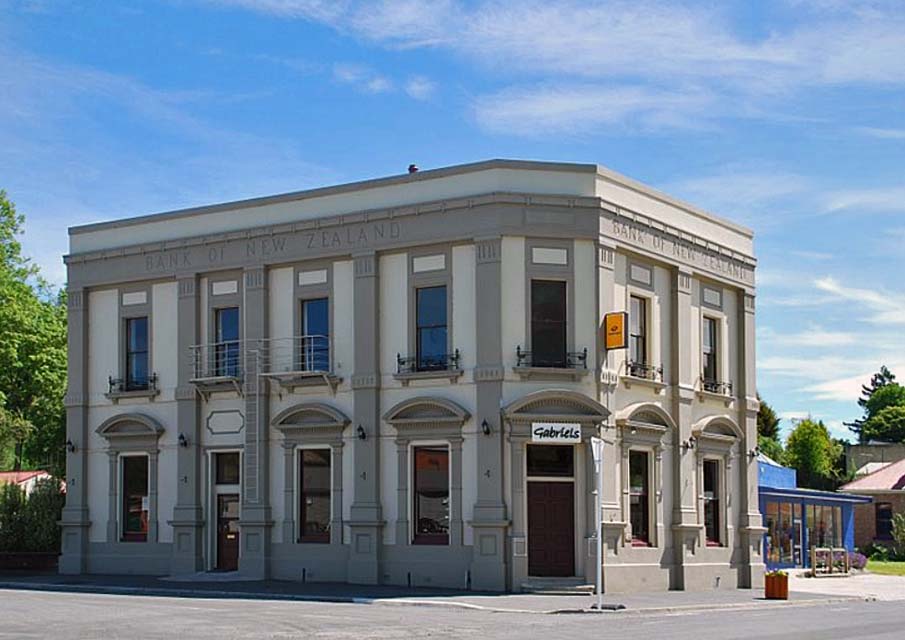
Bank of New Zealand (Former), Lawrence. CC Licence 3.0 Image courtesy of commons.wikimedia.org | Mattinbgn | 22/11/2011 | Mattinbgn - Wikimedia Commons
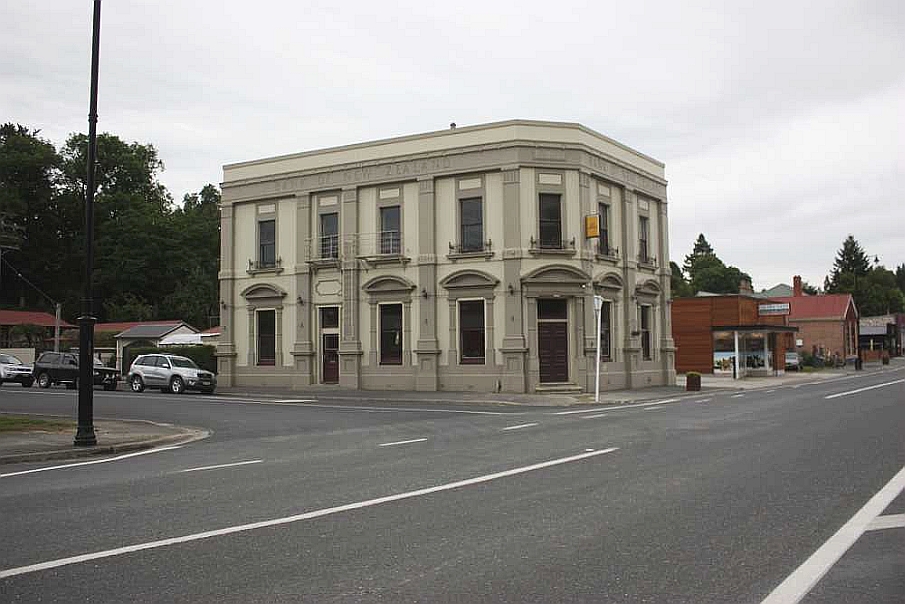
Bank of New Zealand (Former), Lawrence | Sarah Gallagher | 02/12/2020 | Heritage New Zealand Pouhere Taonga
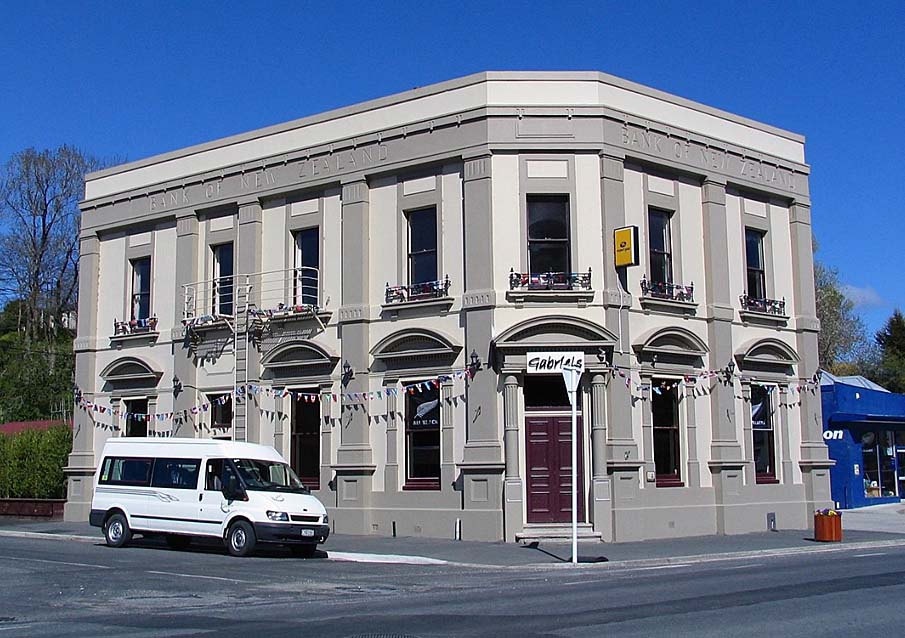
Bank of New Zealand (Former), Lawrence. CC Licence 3.0 Image courtesy of commons.wikimedia.org | Benchill | 09/10/2011 | Benchill - Wikimedia Commons
Bank of New Zealand (Former), Lawrence. CC Licence 3.0 Image courtesy of commons.wikimedia.org | Mattinbgn | 22/11/2011 | Mattinbgn - Wikimedia Commons
Bank of New Zealand (Former), Lawrence | Sarah Gallagher | 02/12/2020 | Heritage New Zealand Pouhere Taonga
Bank of New Zealand (Former), Lawrence. CC Licence 3.0 Image courtesy of commons.wikimedia.org | Benchill | 09/10/2011 | Benchill - Wikimedia Commons
