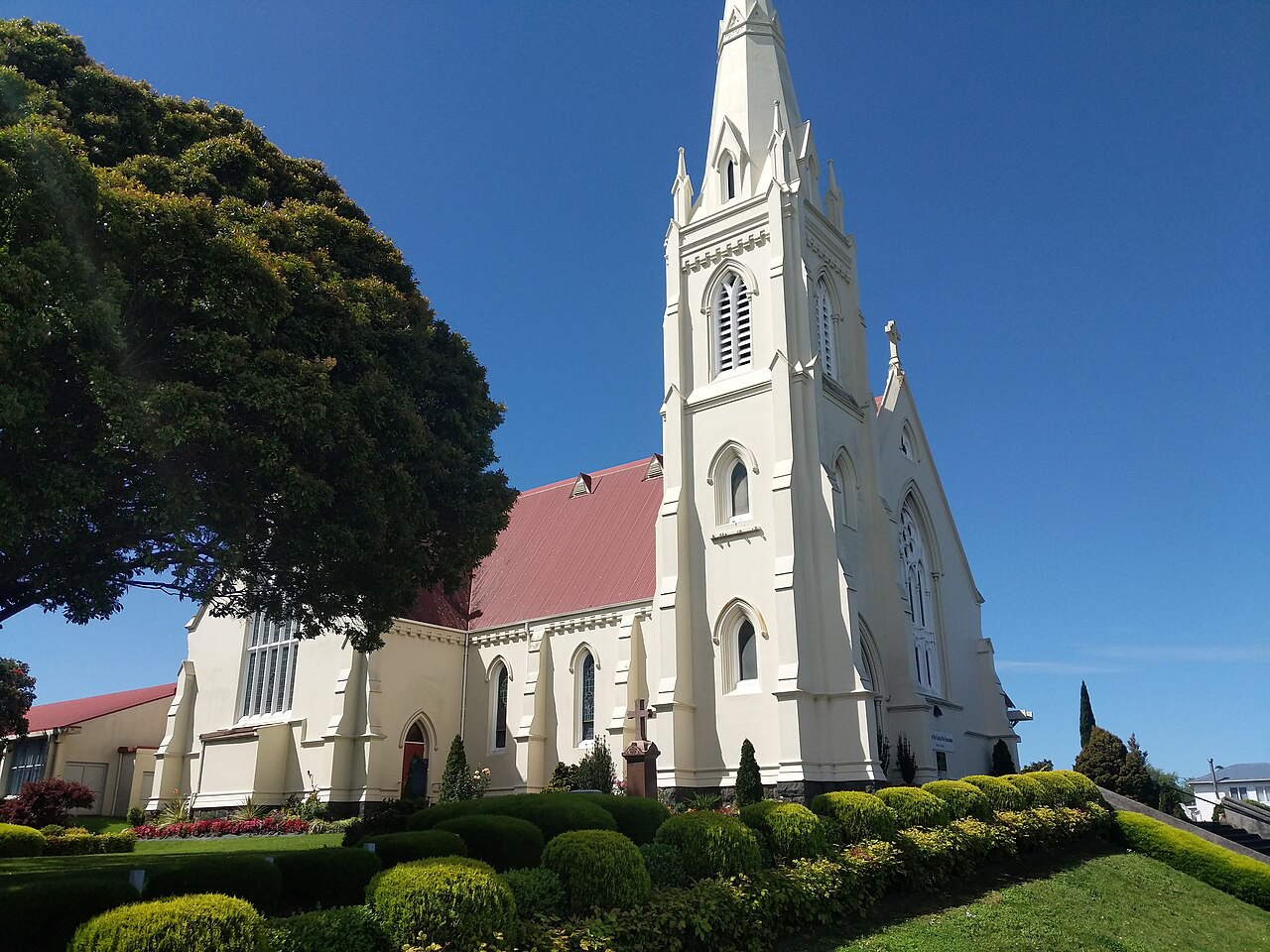
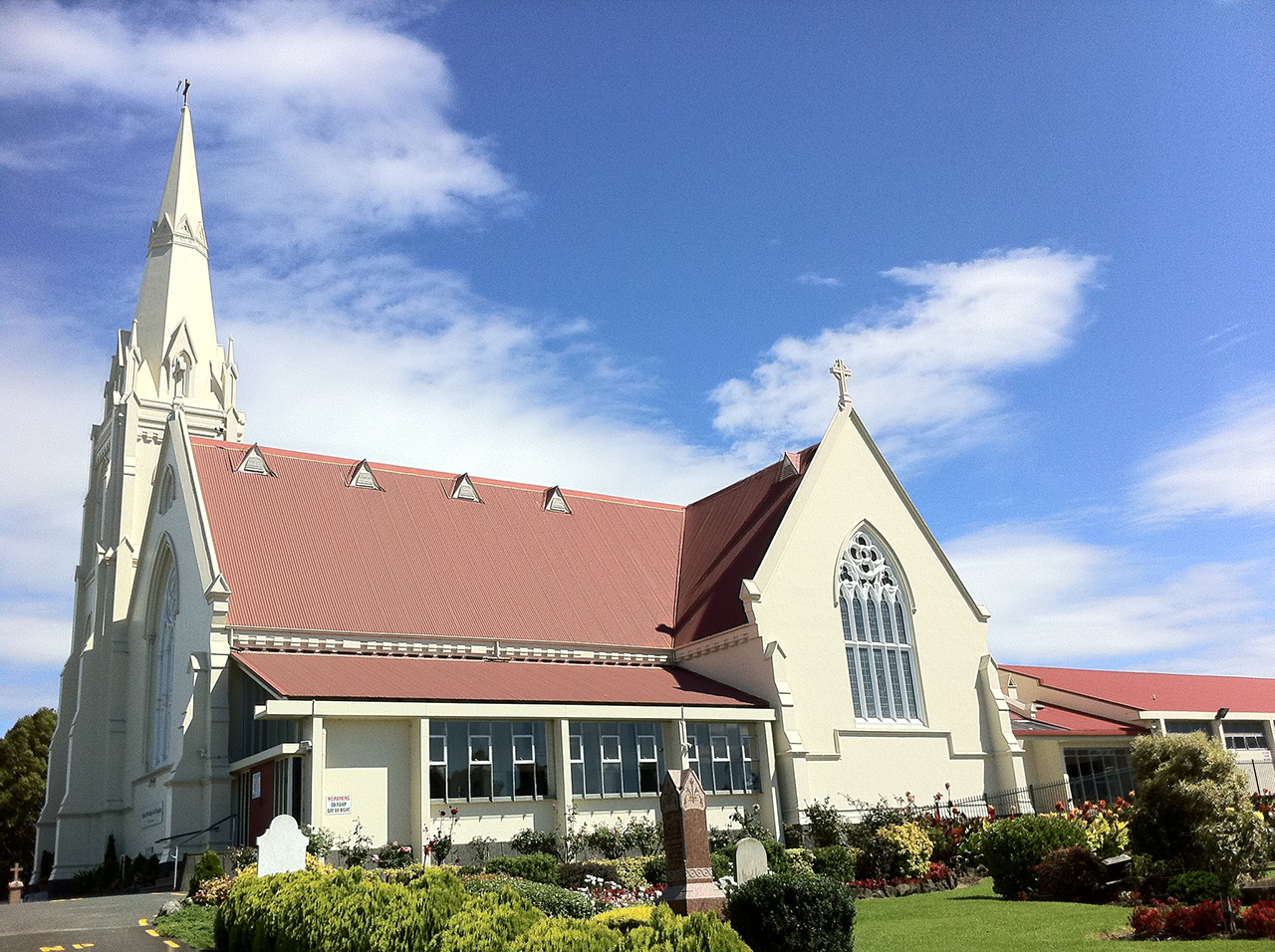
Located within an 1840s Catholic cemetery in the historic fencible settlement of Onehunga, the Gothic Revival-style Church of our Lady of the Assumption constructed in 1887-9. The prominent landmark is an important ecclesiastical work by the noted Auckland architectural firm Edward Mahoney and Sons. The place has strong historical associations with several people of significance in the Catholic Diocese of Auckland, including the late Bishop Luck (1882-1896) whose remains lie in the church vault.
Prior to the arrival of Europeans, Onehunga was occupied by a number of Maori tribes, including Te Waiohua and Ngati Whatua. In 1847, the village became the first of four Royal New Zealand Fencible settlements established around the southern side of Auckland.
The Church of Our Lady of the Assumption is located in one of two denominational cemeteries established in Onehunga in the late 1840s. A timber church known as St Mary's was erected on the south side of Church Street in 1851, opposite the Catholic burial ground consecrated in 1848. Following the arrival Father James Paul (1822-1905) in 1858, a convent, a school and a hall were also constructed on the church site.
In May 1887, the Benedictine Bishop John Edmund Luck (1844-1896) an energetic organiser and builder, laid the foundation stone for a new church on the cemetery site opposite. The church was designed by architect Thomas Mahoney (1854/5?-1923), of Edward Mahoney and Sons, a prolific Auckland practice responsible for most Catholic places of worship built in Auckland between 1858 and 1923. Stylistically, the Church of Our Lady of the Assumption is said to be an important bridge between design of the nave and tower of St Patrick's Cathedral (1884-5), and the completed Cathedral (1907).
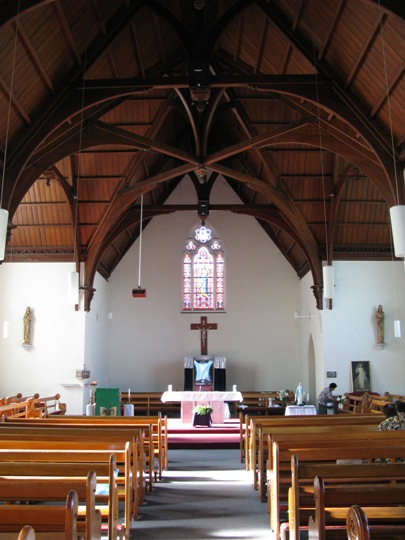
The large suburban church reflected Onehunga's strong Catholic population stemming from the Irish origins of a high proportion of the fencible settlers; and the town's importance as Auckland's second port. The building with steeply-pitched roof, external buttressing, lancet-shaped openings and broached spire was an expression of Early English Gothic influences. The contractor was parishioner Joseph Kemp (1841-1906), a stonemason and builder known for the use of ornamental brick finishes. Basalt for the foundations was quarried on the site. The concrete floor and the brick exterior were finished with Portland cement plaster. The aisles were laid with tiles. The building seating 600 incorporated a nave, transepts, chancel, an oratory for the local Sisters of Mercy convent, sacristies and a gallery.
The remains of Bishop Luck were interred in the west transept upon his death in 1896. Anxious to close the churchyard on the basis of hygiene concerns, Father Paul strongly supported the establishment of a local public cemetery at Waikaraka in 1898. Reflecting a tradition of pastoral care of military personnel, a mass was celebrated for Catholic troopers of the 9th contingent encamped at Onehunga in March 1902 prior to embarkation for the Anglo Boer War.
The addition of the spire completed the church in 1902-3. The remains of Monsignor Paul and the builder William Kemp were interred in the transept in 1905 and 1906 respectively. The last surviving priest to come to New Zealand in Bishop Pompallier's time, Vicar-General Monsignor Paul was mourned as a significant figure in the Catholic Church, having administered the Auckland diocese during the absence of Bishops Luck and Lenihan. Monsignor Paul's successor as Onehunga parish priest was Monsignor William Mahoney (1877-1925), a son of the architect Edward Mahoney. Mahoney was the first New Zealand-born priest to be ordained into the Catholic Church.
In 1970, reflecting the liturgical reforms of Vatican II, the high altar was removed. A foyer was added along the east side of the nave; the gallery and stairs were replaced; the front entrance was blocked up; and the oratory and the three confessional boxes were converted to other uses. In circa 2006 a new hall was constructed on adjoining land abutting the north wall of the church. The Church of the Assumption continues to serve the Catholic parish of Onehunga as their place of worship.
The Church of Our Lady of the Assumption and churchyard has historical significance for its strong associations with the early development of the fencible settlement of Onehunga, and with people of significance in the Catholic Diocese of Auckland. These included Bishop Luck, Monsignor Paul, and Monsignor Mahoney the first New Zealand-born person to be ordained as a Catholic priest. The place has spiritual value as a cemetery consecrated within the first decade of Auckland's founding as colonial capital, and as a suburban parish church. The Church of the Assumption has architectural significance for its striking Gothic Revival design and as an important work of the practice Edward Mahoney and Sons, major contributors to the ecclesiastical architecture of Auckland. The place has aesthetic significance for its ornate appearance and landmark qualities and is socially significant as a place of commemoration and gathering for over 120 years.
Prior to the arrival of Europeans, Onehunga was occupied by a number of Maori tribes, including Te Waiohua and Ngati Whatua. In 1847, the village became the first of four Royal New Zealand Fencible settlements established around the southern side of Auckland.
The Church of Our Lady of the Assumption is located in one of two denominational cemeteries established in Onehunga in the late 1840s. A timber church known as St Mary's was erected on the south side of Church Street in 1851, opposite the Catholic burial ground consecrated in 1848. Following the arrival Father James Paul (1822-1905) in 1858, a convent, a school and a hall were also constructed on the church site.
In May 1887, the Benedictine Bishop John Edmund Luck (1844-1896) an energetic organiser and builder, laid the foundation stone for a new church on the cemetery site opposite. The church was designed by architect Thomas Mahoney (1854/5?-1923), of Edward Mahoney and Sons, a prolific Auckland practice responsible for most Catholic places of worship built in Auckland between 1858 and 1923. Stylistically, the Church of Our Lady of the Assumption is said to be an important bridge between design of the nave and tower of St Patrick's Cathedral (1884-5), and the completed Cathedral (1907).
The large suburban church reflected Onehunga's strong Catholic population stemming from the Irish origins of a high proportion of the fencible settlers; and the town's importance as Auckland's second port. The building with steeply-pitched roof, external buttressing, lancet-shaped openings and broached spire was an expression of Early English Gothic influences. The contractor was parishioner Joseph Kemp (1841-1906), a stonemason and builder known for the use of ornamental brick finishes. Basalt for the foundations was quarried on the site. The concrete floor and the brick exterior were finished with Portland cement plaster. The aisles were laid with tiles. The building seating 600 incorporated a nave, transepts, chancel, an oratory for the local Sisters of Mercy convent, sacristies and a gallery.
The remains of Bishop Luck were interred in the west transept upon his death in 1896. Anxious to close the churchyard on the basis of hygiene concerns, Father Paul strongly supported the establishment of a local public cemetery at Waikaraka in 1898. Reflecting a tradition of pastoral care of military personnel, a mass was celebrated for Catholic troopers of the 9th contingent encamped at Onehunga in March 1902 prior to embarkation for the Anglo Boer War.
The addition of the spire completed the church in 1902-3. The remains of Monsignor Paul and the builder William Kemp were interred in the transept in 1905 and 1906 respectively. The last surviving priest to come to New Zealand in Bishop Pompallier's time, Vicar-General Monsignor Paul was mourned as a significant figure in the Catholic Church, having administered the Auckland diocese during the absence of Bishops Luck and Lenihan. Monsignor Paul's successor as Onehunga parish priest was Monsignor William Mahoney (1877-1925), a son of the architect Edward Mahoney. Mahoney was the first New Zealand-born priest to be ordained into the Catholic Church.
In 1970, reflecting the liturgical reforms of Vatican II, the high altar was removed. A foyer was added along the east side of the nave; the gallery and stairs were replaced; the front entrance was blocked up; and the oratory and the three confessional boxes were converted to other uses. In circa 2006 a new hall was constructed on adjoining land abutting the north wall of the church. The Church of the Assumption continues to serve the Catholic parish of Onehunga as their place of worship.
The Church of Our Lady of the Assumption and churchyard has historical significance for its strong associations with the early development of the fencible settlement of Onehunga, and with people of significance in the Catholic Diocese of Auckland. These included Bishop Luck, Monsignor Paul, and Monsignor Mahoney the first New Zealand-born person to be ordained as a Catholic priest. The place has spiritual value as a cemetery consecrated within the first decade of Auckland's founding as colonial capital, and as a suburban parish church. The Church of the Assumption has architectural significance for its striking Gothic Revival design and as an important work of the practice Edward Mahoney and Sons, major contributors to the ecclesiastical architecture of Auckland. The place has aesthetic significance for its ornate appearance and landmark qualities and is socially significant as a place of commemoration and gathering for over 120 years.