

Both iwi history and archaeological evidence show Māori occupation in the Ōtākou / Otago region since the 12th century. Today, Kāi Tahu mana whenua is recognised over a large part of Te Wai Pounamu. Kāti Māmoe and Waitaha shared occupation are always acknowledged. The hapū Kai Te Pahi, Kāti Moki, and Kāti Taoka still maintain their presence and responsibility as kaitiaki in this region. While there were no permanent settlements around George Street, the area near the Toitū Tauraka waka (List No. 9774) south at the current exchange, was known as Ōtepoti.
Pitt Street had a long association with medical professionals which began in 1849 when Dr William Purdie bought a house near the bottom of the street which had been built for, but rejected by, the leader of the Otago settlement scheme, Captain William Cargill. From the 1880s, several doctors chose the street for their substantial homes and surgeries, some of which are now student flats. Thomas McKellar's surgery was used until 1980, with Dr Oliver Chapman and Dr William Brown among the last tenants.
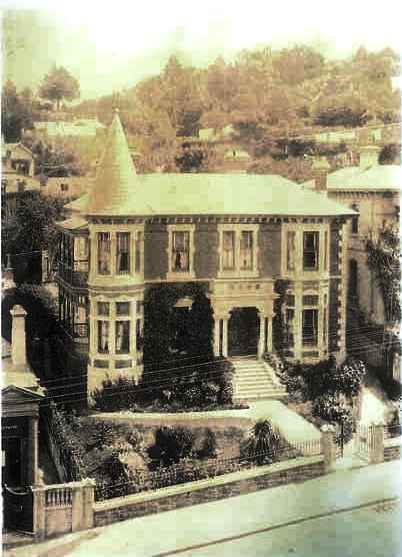
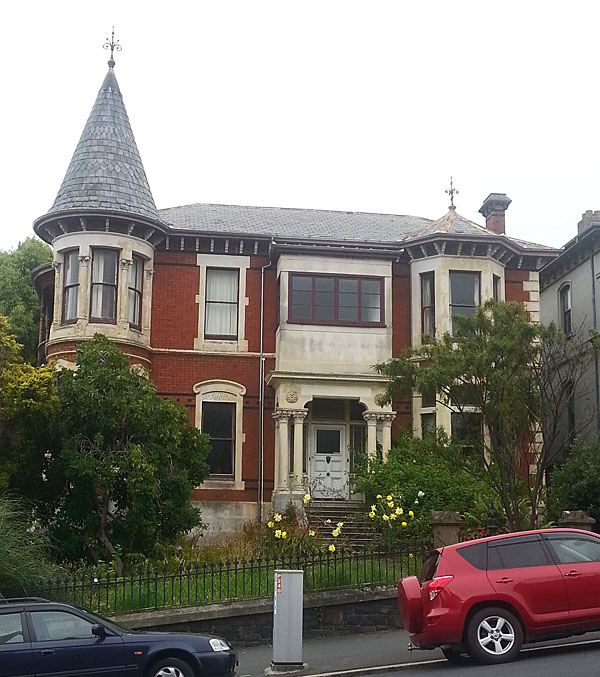
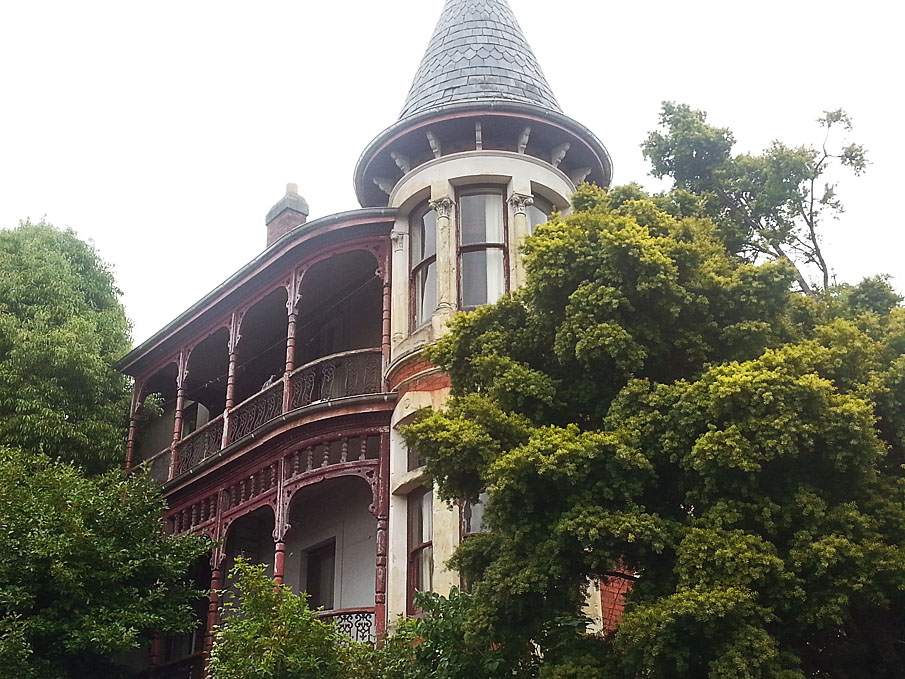
Thomas McKellar had returned from medical studies in Edinburgh in 1893 and set up practice when he purchased the Pitt Street property in 1896. The 18-room mansion has a slate roof with brick walls with Oamaru stone facings. Stained-glass sidelights flank the front door. The corner turret has a slate roof and curved windowpanes, unusual at the time the house was built in the late 1890s. On the ground floor, a curved glass door leads to a veranda with elegant cast-iron balustrades. Upstairs, a large octagonal skylight illuminates the spacious hallway and an archway painted to look like marble leads to two of the seven bedrooms. Three of the ground-floor rooms served as his waiting room, nurse's office, and General Practitioner’s surgery but a cubicle containing a sink is one of the few remaining signs of this.
The house was designed by J.A. Burnside who called for tenders for the ‘erection of a residence in Pitt Street’”. Apparently, Mr Burnside envisaged a very grand residence and showed the McKellar’s pictures of English and Scottish palaces, while the McKellar’s had something more modest in mind.
After being put up for sale in 1931 but not selling, the property was then divided into flats in 1939 with McKellar living in the bottom floor section while he let the top floor. In the 1930s the area above the portico over the pillared entrance was closed in to enlarge the room behind it. A wooden fire escape has been added to the upstairs back room of the house. The billiard room has been extended with a beamed lean-to roof over top of the ground floor lean-to scullery/kitchen area. It became the family home of Professor Peter McKellar, who inherited the house on his mother’s death in 1965. The house sold in 2016 after being in the McKellar family for 120 years. Today it is a student flat, which recently won the Best Flat Awards from Otago University Student’s Association in 2021. In December 2022 the land was subdivided.
List Entry Information
Status
Listed
List Entry Status
Historic Place Category 2
Access
Private/No Public Access
List Number
5233
Date Entered
19th April 1990
Date of Effect
19th April 1990
City/District Council
Dunedin City
Region
Otago Region
Extent of List Entry
Extent includes the land described as Lot 3 DP 512596 (RT 994944), Otago Land District and the building known as McKellar House, thereon.
Legal description
Lot 3 DP 512596 (RT 994944), Otago Land District
Status
Listed
List Entry Status
Historic Place Category 2
Access
Private/No Public Access
List Number
5233
Date Entered
19th April 1990
Date of Effect
19th April 1990
City/District Council
Dunedin City
Region
Otago Region
Extent of List Entry
Extent includes the land described as Lot 3 DP 512596 (RT 994944), Otago Land District and the building known as McKellar House, thereon.
Legal description
Lot 3 DP 512596 (RT 994944), Otago Land District
Construction Professional
Name
Burnside, John Arthur
Type
Architect
Biography
Burnside (1856-1920) was born in Dunedin and is believed to be one of the first professional architects who were born and trained in New Zealand. He was articled to the architectural firm of Mason and Wales, remaining with them for two or three years. During this time he won important prizes for designs which he exhibited at international exhibitions. In 1880 he established his own practice at Dunedin. His buildings include Transit House (1880s), Philips Hotel (now Gresham Hotel, 1882) and the Otago Early Settlers' Museum (1908).
Name
J.C White
Type
Builder
Biography
Construction Details
Start Year
1896
Type
Original Construction
Start Year
1903
Type
Modification
Description
Extend Billiard Room
Start Year
1912
Type
Addition
Description
Erect brick motor shed
Start Year
1924
Type
Addition
Description
Addition to Garage
Start Year
1939
Type
Modification
Description
Convert Dwelling into Flats
Start Year
1941
Type
Maintenance/repairs
Description
Replace double hung window with casement window
Start Year
1941
Type
Addition
Description
Stairway
Construction Professional
Name
Burnside, John Arthur
Type
Architect
Biography
Burnside (1856-1920) was born in Dunedin and is believed to be one of the first professional architects who were born and trained in New Zealand. He was articled to the architectural firm of Mason and Wales, remaining with them for two or three years. During this time he won important prizes for designs which he exhibited at international exhibitions. In 1880 he established his own practice at Dunedin. His buildings include Transit House (1880s), Philips Hotel (now Gresham Hotel, 1882) and the Otago Early Settlers' Museum (1908).
Name
J.C White
Type
Builder
Biography
Construction Details
Start Year
1896
Type
Original Construction
Start Year
1903
Type
Modification
Description
Extend Billiard Room
Start Year
1912
Type
Addition
Description
Erect brick motor shed
Start Year
1924
Type
Addition
Description
Addition to Garage
Start Year
1939
Type
Modification
Description
Convert Dwelling into Flats
Start Year
1941
Type
Maintenance/repairs
Description
Replace double hung window with casement window
Start Year
1941
Type
Addition
Description
Stairway
Historical and Associated Iwi / Hapū / Whānau
Completion Date
10th July 2023
Report Written By
Alison Breese
Information Sources
Fulton, 1922
Robert Fulton, Medical Practice in Otago and Southland in the Early Days, Otago Daily Times and Witness, Dunedin, 1922
Dungey, 2016
Kim Dungey, ’Growing Old Gracefully‘, Otago Daily Times, 23 April 2016 https://www.odt.co.nz/lifestyle/food-wine/news-features/growing-old-gracefully
Heritage New Zealand Pouhere Taonga, Dunedin Office File 12013-880
Other Information
This place was identified as significant under previous legislation with different information requirements. It remains significant under the current legislation. There is opportunity under our legislation and policies to add to this information. Further information about this place may be available from the Otago/Southland Office of Heritage New Zealand Pouhere Taonga. A fully referenced copy of the upgrade report is available on request from the Southern Area Office of Heritage New Zealand Pouhere Taonga Please note that entry on the New Zealand Heritage List/Rarangi Korero identifies only the heritage values of the property concerned, and should not be construed as advice on the state of the property, or as a comment of its soundness or safety, including in regard to earthquake risk, safety in the event of fire, or insanitary conditions.
Historical and Associated Iwi / Hapū / Whānau
Completion Date
10th July 2023
Report Written By
Alison Breese
Information Sources
Fulton, 1922
Robert Fulton, Medical Practice in Otago and Southland in the Early Days, Otago Daily Times and Witness, Dunedin, 1922
Dungey, 2016
Kim Dungey, ’Growing Old Gracefully‘, Otago Daily Times, 23 April 2016 https://www.odt.co.nz/lifestyle/food-wine/news-features/growing-old-gracefully
Heritage New Zealand Pouhere Taonga, Dunedin Office File 12013-880
Other Information
This place was identified as significant under previous legislation with different information requirements. It remains significant under the current legislation. There is opportunity under our legislation and policies to add to this information. Further information about this place may be available from the Otago/Southland Office of Heritage New Zealand Pouhere Taonga. A fully referenced copy of the upgrade report is available on request from the Southern Area Office of Heritage New Zealand Pouhere Taonga Please note that entry on the New Zealand Heritage List/Rarangi Korero identifies only the heritage values of the property concerned, and should not be construed as advice on the state of the property, or as a comment of its soundness or safety, including in regard to earthquake risk, safety in the event of fire, or insanitary conditions.
Current Usages
Uses: Accommodation
Specific Usage: Complex of flats
Former Usages
General Usage: Accommodation
Specific Usage: House
General Usage: Trade
Specific Usage: Office building/Offices
Current Usages
Uses: Accommodation
Specific Usage: Complex of flats
Former Usages
General Usage: Accommodation
Specific Usage: House
General Usage: Trade
Specific Usage: Office building/Offices
Location
Stay up to date with Heritage this month
