

The takiwā (district) of Te Ngāi Tūāhuriri Rūnanga centres on Tuahiwi and extends from the Hurunui to the Hakatere river and inland to the Main Divide. Nearby the famous Kaiapoi Pā was established by the first Ngāi Tahu ancestors when they settled Te Wai Pounamu. Kaiapoi Pā was the major capital, trading centre and point from which further penetration of the South Island occurred so the area is a genealogical centre for all Ngāi Tahu whānui (descendants). Kaiapoi Pā was established by Moki’s elder brother Tūrākautahi who was the second son of Tūāhuriri, hence “Ngai Tūāhuriri” is the name of the hapū of this area.
Pine Hill House sits just over five kilometres from the rural service town of Cust, which was originally known by colonial settlers as Moeraki Downs, then as Middleton-on-the-Cust, being the middle town between Oxford and Rangiora. Later `Cust' was adopted, being the name of the nearby river and the railway station established in 1864. They had been named after General Sir Edward Cust, of Leasowe Castle, England, who was a founding member of the Canterbury Association, which organised the immigrant ships and early settlement of Canterbury in 1850. The land became part of the Fernside Run, taken up in 1851, by Charles Obins Torlesse of Stoke, England, who sold the Run to Mannering and Cunningham in 1859. Fernside contained good land and lay near the settlement of Rangiora, so the land was bought up quickly in the 1860s, and by 1866 almost all of the twenty-thousand-acre Run had been sold off. By 1872 Rural Sections 12465, 12466 and 12467 were held by land agents Richard James Strachan Harman and Edward Cephas John Stevens. Harman was born in Dublin and trained as an engineer in London. He arrived in Lyttelton in 1850 by the ship Sir George Seymour, one of the ‘first four ships’, and established himself in business as a land agent. He was joined some years after by Stevens, born in Oxfordshire who travelled to New Zealand in 1856 at the age of 21. Stevens was a politician and businessman and purchased Englefield Lodge from William Guise Brittan in 1872, where he lived until his death in 1915. A title was drawn up in the name of farmer William Milne, originally from Aberdeenshire, Scotland, in January 1876 and transferred in April that year to Archibald Wotherspoon. Wotherspoon was born in Lanarkshire, Scotland in 1836 and bred Border-Leicester sheep in Roxburghshire before travelling to New Zealand in 1875. The dwelling is thought to have been constructed circa 1876 with several mortgages being drawn down between 1876 and 1883 before the property was transferred to his son Archibald James Thomson Wotherspoon in 1905.
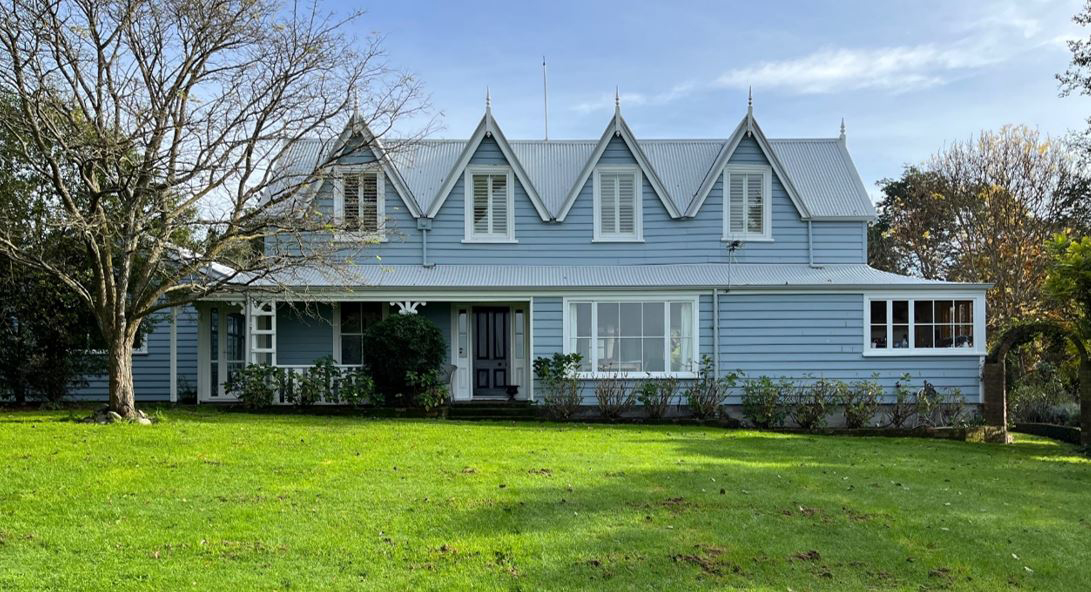
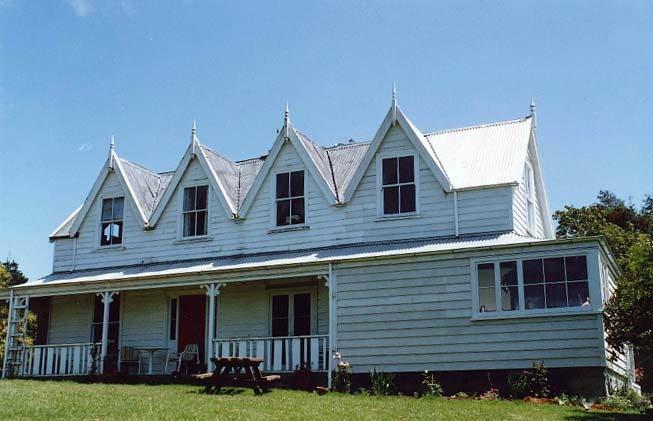
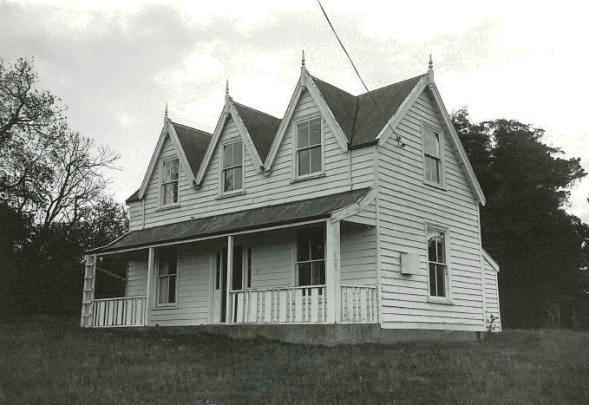
Pine Hill House is a one and a half storey colonial homestead. The building is set in mature landscaped gardens on the side of a hill, providing it with a commanding view over the land to the east. It is constructed of weatherboard and the gabled iron roof has four gabled dormers with decorative finials on the front (south-east) elevation – three of the dormers are original and a fourth was added when a large addition was added to the north-east. The front of the building was symmetrical in appearance with a central entrance door and sash window on each side, covered by a verandah, later extended and closed in at the north-east side.
The property was transferred to Frank Ernest Fairweather in January 1908 and again in October that year to James Nelson of Christchurch. In 1909, Hugh Henry Gillin purchased the property and retained ownership until 1938 when it passed to Ian Cummings Graham of Cust. Graham started calling it Inchtalla after an island in the lake of Menteith, Central Scotland, where his ancestors came from. Prior to that it was known locally as the Pine Hill house as it was surrounded by pine trees on a hillside. D and K McKay purchased the property in 1989 and it was transferred to Cust Investments Limited in 2013. The farmhouse has been enlarged in stages, with a lean-to added to the rear some time before 1990 and a major extension undertaken between 1990 and 1992. This resulted in the roof line being extended to the north-east and a fourth dormer added, increasing both the ground and first floor accommodation. The verandah was also extended at this time and closed in to provide a single-storey room that wraps around the north-east side of the main extension. The verandah was further enclosed to the east of the front door, sometime after 1992. These substantial modifications have changed the form of this building, with the extension of the roofline and addition of the fourth gabled dormer altering its proportions. However, the character of the farmhouse remains, as does its relationship with its rural setting and mature gardens. A garage was added in 2011, adjoining the south-west side of the house. Various ancillary buildings were constructed, and some demolished, within the setting. The house remains in private residential use.
List Entry Information
Status
Listed
List Entry Status
Historic Place Category 2
Access
Private/No Public Access
List Number
5272
Date Entered
25th October 1990
Date of Effect
25th October 1990
City/District Council
Waimakariri District
Region
Canterbury Region
Extent of List Entry
Extent includes part of the land described as Lot 1 DP 468410 (RT 628582), Canterbury Land District and the building known as Pine Hill House thereon. The extent excludes the garage to the south-west.
Legal description
Lot 1 DP 468410 (CT 628582), Canterbury Land District
Status
Listed
List Entry Status
Historic Place Category 2
Access
Private/No Public Access
List Number
5272
Date Entered
25th October 1990
Date of Effect
25th October 1990
City/District Council
Waimakariri District
Region
Canterbury Region
Extent of List Entry
Extent includes part of the land described as Lot 1 DP 468410 (RT 628582), Canterbury Land District and the building known as Pine Hill House thereon. The extent excludes the garage to the south-west.
Legal description
Lot 1 DP 468410 (CT 628582), Canterbury Land District
Construction Details
Start Year
1876
startYearCirca
Type
Original Construction
Type
Addition
Description
Lean-to added
Period
Pre-1990
Start Year
1990
startYearCirca
Finish Year
1992
Type
Modification
Start Year
2011
startYearCirca
Type
Addition
Description
Garage added
Construction Details
Start Year
1876
startYearCirca
Type
Original Construction
Type
Addition
Description
Lean-to added
Period
Pre-1990
Start Year
1990
startYearCirca
Finish Year
1992
Type
Modification
Start Year
2011
startYearCirca
Type
Addition
Description
Garage added
Historical and Associated Iwi / Hapū / Whānau
Completion Date
1st July 2022
Report Written By
Arlene Baird,
Information Sources
Te Ara - The Encyclopedia of New Zealand
www.TeAra.govt.nz
Savage, 2016
Peter Savage, For Cust's Sake: A History of Cust and Districts, North Canterbury, 2016
Other Information
This place was identified as significant under previous legislation with different information requirements. It remains significant under the current legislation. There is opportunity under our legislation and policies to add to this information. Further information about this place may be available from the Southern Regional Office of Heritage New Zealand Pouhere Taonga. A fully referenced copy of the upgrade report is available on request from the Southern Regional Office of Heritage New Zealand Pouhere Taonga Please note that entry on the New Zealand Heritage List/Rarangi Korero identifies only the heritage values of the property concerned, and should not be construed as advice on the state of the property, or as a comment of its soundness or safety, including in regard to earthquake risk, safety in the event of fire, or insanitary conditions.
Historical and Associated Iwi / Hapū / Whānau
Completion Date
1st July 2022
Report Written By
Arlene Baird,
Information Sources
Te Ara - The Encyclopedia of New Zealand
www.TeAra.govt.nz
Savage, 2016
Peter Savage, For Cust's Sake: A History of Cust and Districts, North Canterbury, 2016
Other Information
This place was identified as significant under previous legislation with different information requirements. It remains significant under the current legislation. There is opportunity under our legislation and policies to add to this information. Further information about this place may be available from the Southern Regional Office of Heritage New Zealand Pouhere Taonga. A fully referenced copy of the upgrade report is available on request from the Southern Regional Office of Heritage New Zealand Pouhere Taonga Please note that entry on the New Zealand Heritage List/Rarangi Korero identifies only the heritage values of the property concerned, and should not be construed as advice on the state of the property, or as a comment of its soundness or safety, including in regard to earthquake risk, safety in the event of fire, or insanitary conditions.
Current Usages
Uses: Accommodation
Specific Usage: House
Former Usages
General Usage: Accommodation
Specific Usage: House
Current Usages
Uses: Accommodation
Specific Usage: House
Former Usages
General Usage: Accommodation
Specific Usage: House
Location
Stay up to date with Heritage this month
