Quick links


Quick links
Quick links
Quick links
Quick links
Quick links
Magistrates Court
85 Armagh Street, CHRISTCHURCH
Private
Historic Place Category 1
List No. 5308
Quick links:
List GalleryLocationDetails
85 Armagh Street, CHRISTCHURCH
Private
Historic Place Category 1
List No. 5308
List Entry Information
Status
Listed
List Entry Status
Historic Place Category 1
Access
Private/No Public Access
List Number
5308
Date Entered
22nd August 1991
Date of Effect
22nd August 1991
City/District Council
Christchurch City
Region
Canterbury Region
Legal description
Section 319 & Pt sec 317 & 318Gaz 92-1520 TS 1182
Status
Listed
List Entry Status
Historic Place Category 1
Access
Private/No Public Access
List Number
5308
Date Entered
22nd August 1991
Date of Effect
22nd August 1991
City/District Council
Christchurch City
Region
Canterbury Region
Legal description
Section 319 & Pt sec 317 & 318Gaz 92-1520 TS 1182
Why is this place significant?
Historic Significance
Historical Significance or Value This historic place was registered under the Historic Places Act 1980. The following text is from the original Building Classification Committee report considered by the NZHPT Board at the time of registration. Having served Canterbury for 109 years (1881-1990) the Magistrates' Court has historical associations with the community of this region and with the development of New Zealand's judicial system. It is the oldest purpose-built court building in Christchurch.
Physical Significance
This historic place was registered under the Historic Places Act 1980. The following text is from the original Building Classification Committee report considered by the NZHPT Board at the time of registration. ARCHITECTURAL QUALITY: Somewhat eclectic in that it combines round arches with steeply pitched roofs, gables and ornamental window heads which allude to lancet arches, the Magistrates' Court is a fine example of public buildings erected in Victorian and Edwardian Christchurch. The earlier, unpretentious portion is the work of Mountfort, New Zealand's pre-eminent Gothic Revival architect. It is a simple but refined example of his prodigious design talents. The later portion was designed in sympathy with Mountfort's original design, and is a rare example of Public Works Department gothic architecture. Together, the two portions of the building constitute an important contribution to a precinct of exceptional Gothic buildings. TOWNSCAPE/LANDMARK VALUE: The Magistrates' Court makes an important contribution to the Armagh Street streetscape, although this has been reduced by the demolition of the neighbouring Supreme Court (1869), and it relates to Mountfort's Provincial Council Building (1859-60) directly opposite
Why is this place significant?
Historic Significance
Historical Significance or Value This historic place was registered under the Historic Places Act 1980. The following text is from the original Building Classification Committee report considered by the NZHPT Board at the time of registration. Having served Canterbury for 109 years (1881-1990) the Magistrates' Court has historical associations with the community of this region and with the development of New Zealand's judicial system. It is the oldest purpose-built court building in Christchurch.
Physical Significance
This historic place was registered under the Historic Places Act 1980. The following text is from the original Building Classification Committee report considered by the NZHPT Board at the time of registration. ARCHITECTURAL QUALITY: Somewhat eclectic in that it combines round arches with steeply pitched roofs, gables and ornamental window heads which allude to lancet arches, the Magistrates' Court is a fine example of public buildings erected in Victorian and Edwardian Christchurch. The earlier, unpretentious portion is the work of Mountfort, New Zealand's pre-eminent Gothic Revival architect. It is a simple but refined example of his prodigious design talents. The later portion was designed in sympathy with Mountfort's original design, and is a rare example of Public Works Department gothic architecture. Together, the two portions of the building constitute an important contribution to a precinct of exceptional Gothic buildings. TOWNSCAPE/LANDMARK VALUE: The Magistrates' Court makes an important contribution to the Armagh Street streetscape, although this has been reduced by the demolition of the neighbouring Supreme Court (1869), and it relates to Mountfort's Provincial Council Building (1859-60) directly opposite
Construction Professional
Name
Mountfort, Benjamin Woolfield
Type
Architect
Biography
Benjamin Woolfield Mountfort (1825-98) trained as an architect in England, in the office of Richard Cromwell Carpenter, a member of the Cambridge Camden Society (later the Ecclesiological Society). He arrived in Canterbury in 1850. Mountfort was New Zealand's pre-eminent Gothic Revival architect and, according to architectural historian Ian Lochhead, 'did most to shape the architectural character of nineteenth-century Christchurch.' The buildings he designed were almost exclusively in the Gothic Revival style. During his career he designed many churches and additions to churches; those still standing include the Trinity Congregational Church in Christchurch (1874), St Mary's Church in Parnell, Auckland and the Church of the Good Shepherd in Phillipstown, Christchurch (1884). In 1857 he became the first architect to the province of Canterbury. He designed the Canterbury Provincial Council Buildings in three stages from 1858 to 1865. The stone chamber of this building can be considered the greatest accomplishment of his career. He was involved in many important commissions from the 1870s, including the Canterbury Museum (1869-82) and the Clock-tower Block on the Canterbury College campus (1876-77). He was also involved in the construction of Christchurch's Cathedral and made several major modifications to the original design. Mountfort introduced a number of High Victorian elements to New Zealand architecture, such as the use of constructional polychromy, probably first used in New Zealand in the stone tower of the Canterbury Provincial Government Buildings (1859). Overall, his oeuvre reveals a consistent and virtually unerring application of Puginian principles including a commitment to the Gothic style, honest use of materials and picturesque utility. The result was the construction of inventive and impressive buildings of outstanding quality. He died in Christchurch in 1898. A belfry at the Church of the Good Shepherd in Phillipstown, the church he attended for the last ten years of his life, was erected in his honour.
Name
Macrae, A.F.
Type
Architect
Biography
It would appear that A.F. Macrae was employed in the Public Works Department, but little else is known of him.
Construction Details
Start Year
1880
Finish Year
1881
Type
Original Construction
Description
Construction of Mountfort building
Start Year
1908
Finish Year
1909
Type
Original Construction
Description
Construction of Macrae building
Start Year
1998
Type
Modification
Description
Strengthened/refurbished to become Family Court
Construction Materials
Base course of green Heathcote trachyte; walls of Port Hills trachyte; facings of Oamaru limestone. Some offices are plastered, others are lined with brick and stone. Roof of 1880-81 portion now clad with corrugated iron; roof of 1908-09 portion clad with slate.
Notable Features
Trachyte masonry and Oamaru limestone stonework.
Construction Professional
Name
Mountfort, Benjamin Woolfield
Type
Architect
Biography
Benjamin Woolfield Mountfort (1825-98) trained as an architect in England, in the office of Richard Cromwell Carpenter, a member of the Cambridge Camden Society (later the Ecclesiological Society). He arrived in Canterbury in 1850. Mountfort was New Zealand's pre-eminent Gothic Revival architect and, according to architectural historian Ian Lochhead, 'did most to shape the architectural character of nineteenth-century Christchurch.' The buildings he designed were almost exclusively in the Gothic Revival style. During his career he designed many churches and additions to churches; those still standing include the Trinity Congregational Church in Christchurch (1874), St Mary's Church in Parnell, Auckland and the Church of the Good Shepherd in Phillipstown, Christchurch (1884). In 1857 he became the first architect to the province of Canterbury. He designed the Canterbury Provincial Council Buildings in three stages from 1858 to 1865. The stone chamber of this building can be considered the greatest accomplishment of his career. He was involved in many important commissions from the 1870s, including the Canterbury Museum (1869-82) and the Clock-tower Block on the Canterbury College campus (1876-77). He was also involved in the construction of Christchurch's Cathedral and made several major modifications to the original design. Mountfort introduced a number of High Victorian elements to New Zealand architecture, such as the use of constructional polychromy, probably first used in New Zealand in the stone tower of the Canterbury Provincial Government Buildings (1859). Overall, his oeuvre reveals a consistent and virtually unerring application of Puginian principles including a commitment to the Gothic style, honest use of materials and picturesque utility. The result was the construction of inventive and impressive buildings of outstanding quality. He died in Christchurch in 1898. A belfry at the Church of the Good Shepherd in Phillipstown, the church he attended for the last ten years of his life, was erected in his honour.
Name
Macrae, A.F.
Type
Architect
Biography
It would appear that A.F. Macrae was employed in the Public Works Department, but little else is known of him.
Construction Details
Start Year
1880
Finish Year
1881
Type
Original Construction
Description
Construction of Mountfort building
Start Year
1908
Finish Year
1909
Type
Original Construction
Description
Construction of Macrae building
Start Year
1998
Type
Modification
Description
Strengthened/refurbished to become Family Court
Construction Materials
Base course of green Heathcote trachyte; walls of Port Hills trachyte; facings of Oamaru limestone. Some offices are plastered, others are lined with brick and stone. Roof of 1880-81 portion now clad with corrugated iron; roof of 1908-09 portion clad with slate.
Notable Features
Trachyte masonry and Oamaru limestone stonework.
This historic place was registered under the Historic Places Act 1980. The following text is from the original Building Classification Committee report considered by the NZHPT Board at the time of registration. DESCRIPTION: Courts were established in New Zealand in 1841 following a Royal Charter (1840) which gave Legislative Council the power to make laws for peace, order and good government in New Zealand. By the 1860s a three-tier system of courts had emerged; Resident Magistrates' Courts, District Courts and the Supreme Court. District Courts were abolished in 1925 leaving a two-tier system of Magistrates' Courts (now known as District Courts) and Supreme Courts (now known as High Courts). The land on which the Magistrates' Court stands, Section 319 and part of Sections 317 and 318, was transferred to the Crown in 1863. The 1880-81 portion of the building replaced an earlier wooden one built elsewhere on the site. The Magistrates' Court had "ordinary and extended jurisdiction within the city of Christchurch and district". The building was extended in 1908-09 and continues to be used as a courthouse by the Justice Department.
This historic place was registered under the Historic Places Act 1980. The following text is from the original Building Classification Committee report considered by the NZHPT Board at the time of registration. DESCRIPTION: Courts were established in New Zealand in 1841 following a Royal Charter (1840) which gave Legislative Council the power to make laws for peace, order and good government in New Zealand. By the 1860s a three-tier system of courts had emerged; Resident Magistrates' Courts, District Courts and the Supreme Court. District Courts were abolished in 1925 leaving a two-tier system of Magistrates' Courts (now known as District Courts) and Supreme Courts (now known as High Courts). The land on which the Magistrates' Court stands, Section 319 and part of Sections 317 and 318, was transferred to the Crown in 1863. The 1880-81 portion of the building replaced an earlier wooden one built elsewhere on the site. The Magistrates' Court had "ordinary and extended jurisdiction within the city of Christchurch and district". The building was extended in 1908-09 and continues to be used as a courthouse by the Justice Department.
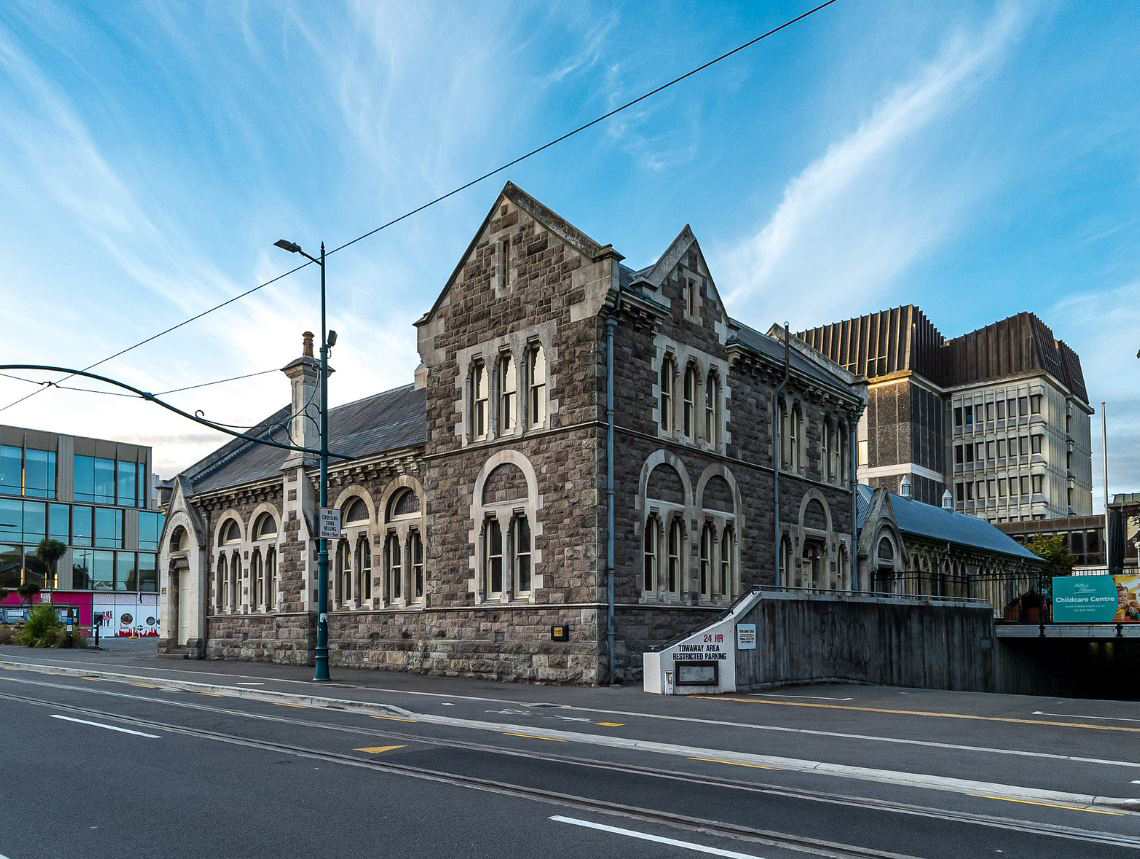
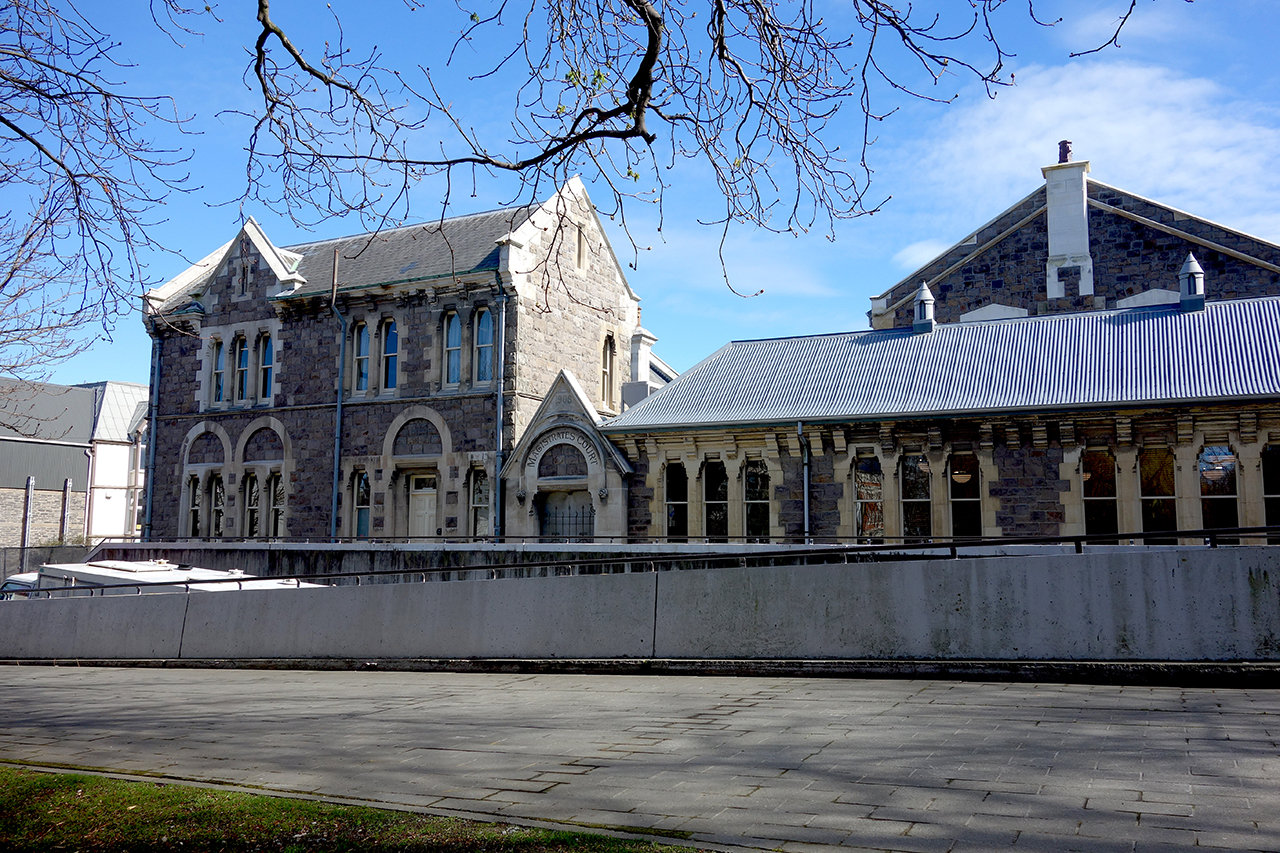
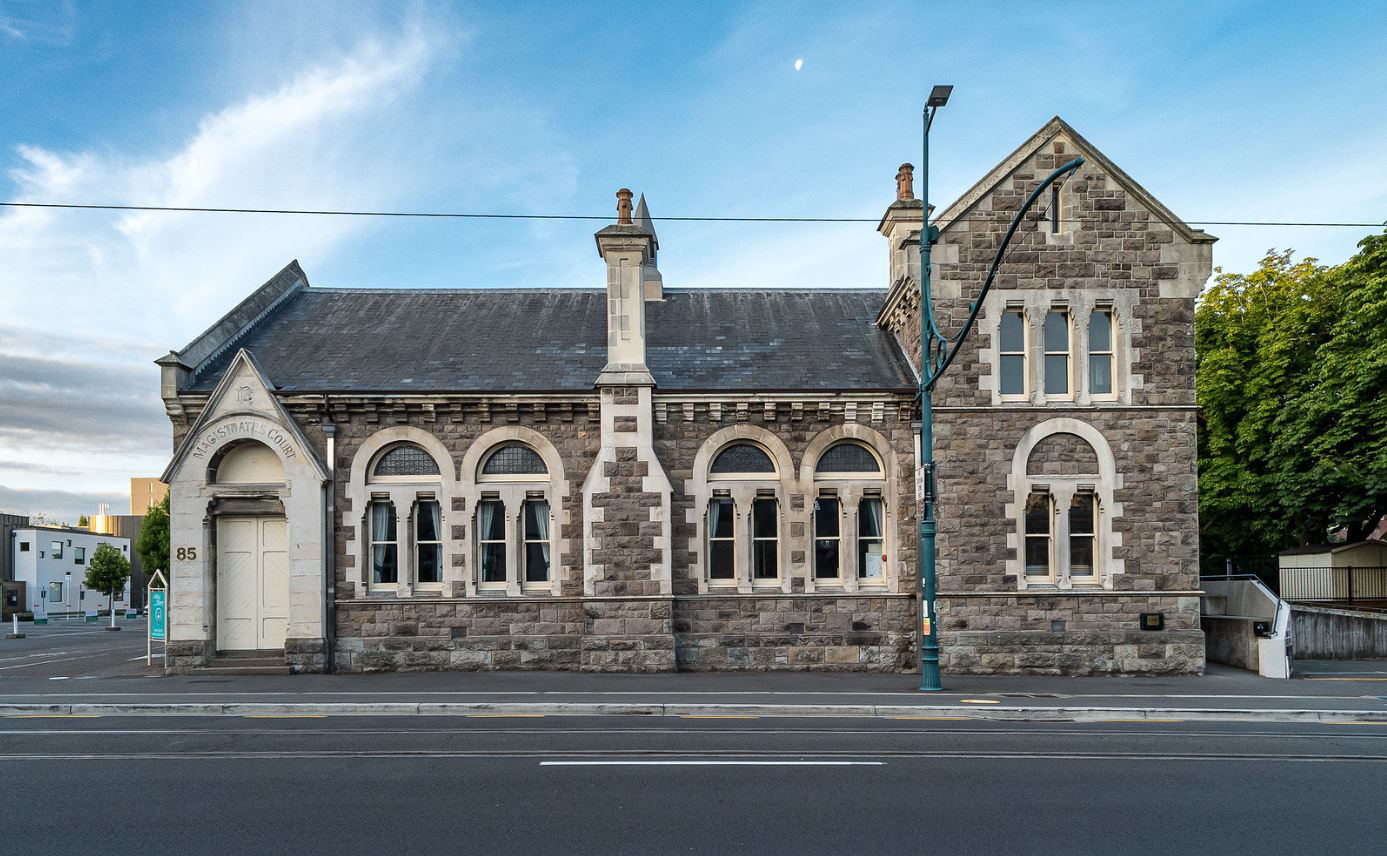
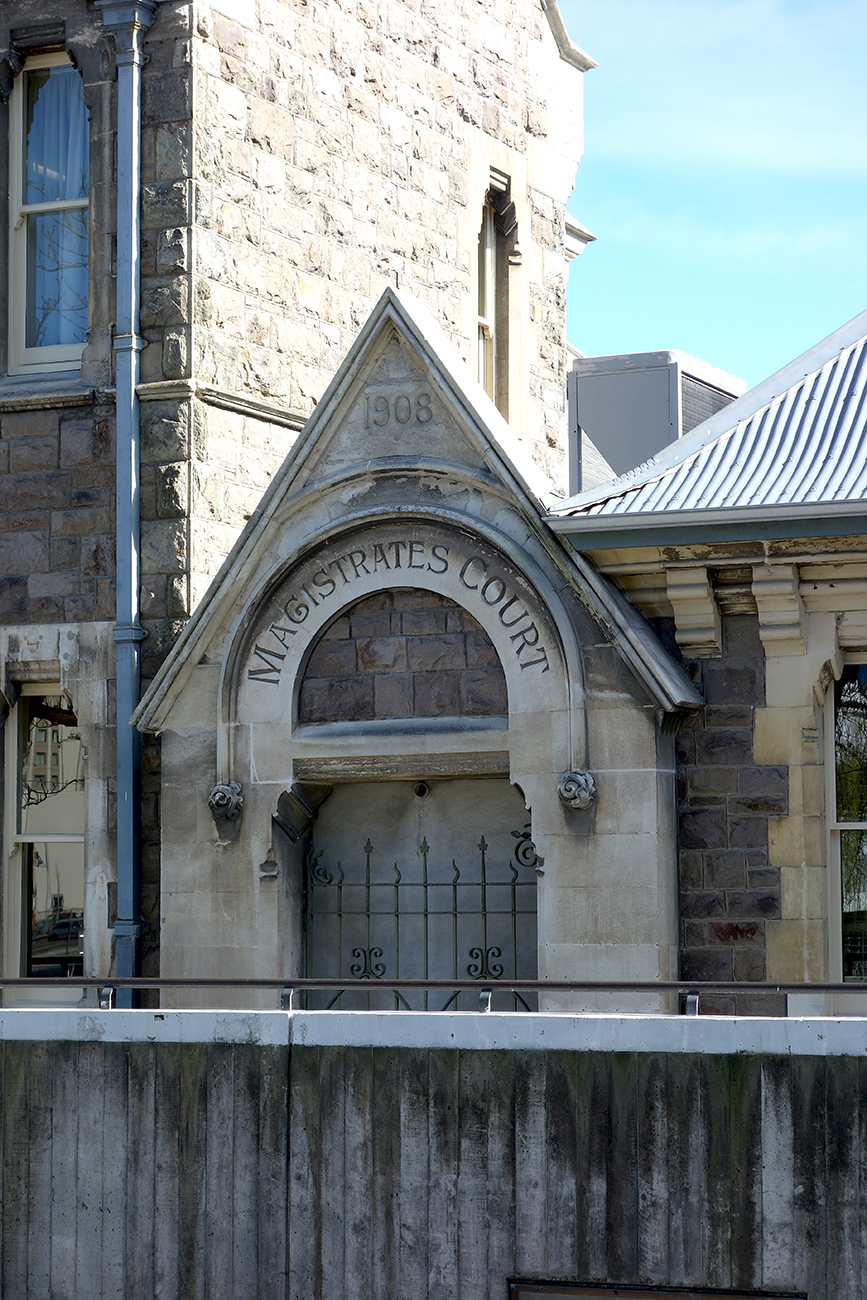
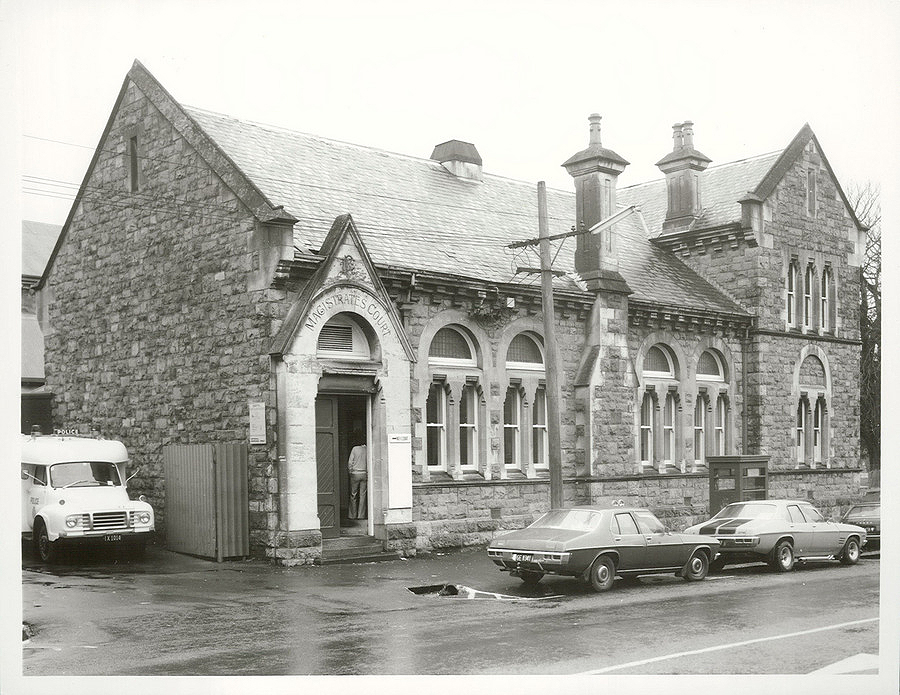
This historic place was registered under the Historic Places Act 1980. The following text is from the original Building Classification Committee report considered by the NZHPT Board at the time of registration. ARCHITECT/ENGINEER/DESIGNER: 1880-81 portion: Benjamin Woolfield MOUNTFORT (1825-98) 1908-09 portion: A.F. MACRAE ARCHITECTURAL DESCRIPTION26 Mar 2009 The Magistrates' Court comprises two portions, one built 1880-81 and the other 1908-09. The earlier portion is unpretentious and single- storeyed with a central two-storeyed gabled block and has been described as "a sturdy, simple building, almost domestic in scale and appearance". Roofs are pitched with heavy corbels beneath the eaves and pointed ventilators on the ridge. Double-hung sash windows are ornamental headed in Mountfort's Early English style and grouped in threes or fours with a quoined surround. There are two north-facing gabled entrances. The 1908-09 building adjoins the south end of the earlier one and incorporates similar details such as corbelled eaves and ornamental headed windows. The east end is two-storeyed and windows at ground floor level are topped with round arches. Again roofs are pitched and within the gable ends are small narrow windows. Stone chimneys surmount the roof and a large gabled entrance on the east facade has the inscription "1908" above. The interior has been modernised with carpeting, wallpapers and painted timbers. The many fireplaces throughout have been boarded over and painted. The building incorporates prisoners' and police rooms, a number of waiting rooms and administrative offices. The largest rooms, however, are the three courtrooms currently known as Courts 1, 2 and 3. Court 2 is in the 1880-81 portion and has a gallery at the west end with stairs enclosed by brick walls and a dark stained timber trussed roof. The judge's bench is on a raised dais at the east end. Court 3 is also in this portion of the building. It is considerably smaller and has a vertically boarded dado and a flat ceiling with a skylight addition. Court 1, the largest of the three courtrooms, is situated in the 1908-09 building. The judge's bench at the east end has diagonal boarding at the front and a canopy sits over the whole bench. Arched windows above the double-hung sashes open into the building. MODIFICATIONS: Dates not known - Brick chimneys of 1880-81 portion removed - Roof of 1880-81 portion reclad with corrugated iron - Round arches in 1908-09 portion glazed - Addition of interior partitions 1965 Some stonework replaced with concrete capping
This historic place was registered under the Historic Places Act 1980. The following text is from the original Building Classification Committee report considered by the NZHPT Board at the time of registration. ARCHITECT/ENGINEER/DESIGNER: 1880-81 portion: Benjamin Woolfield MOUNTFORT (1825-98) 1908-09 portion: A.F. MACRAE ARCHITECTURAL DESCRIPTION26 Mar 2009 The Magistrates' Court comprises two portions, one built 1880-81 and the other 1908-09. The earlier portion is unpretentious and single- storeyed with a central two-storeyed gabled block and has been described as "a sturdy, simple building, almost domestic in scale and appearance". Roofs are pitched with heavy corbels beneath the eaves and pointed ventilators on the ridge. Double-hung sash windows are ornamental headed in Mountfort's Early English style and grouped in threes or fours with a quoined surround. There are two north-facing gabled entrances. The 1908-09 building adjoins the south end of the earlier one and incorporates similar details such as corbelled eaves and ornamental headed windows. The east end is two-storeyed and windows at ground floor level are topped with round arches. Again roofs are pitched and within the gable ends are small narrow windows. Stone chimneys surmount the roof and a large gabled entrance on the east facade has the inscription "1908" above. The interior has been modernised with carpeting, wallpapers and painted timbers. The many fireplaces throughout have been boarded over and painted. The building incorporates prisoners' and police rooms, a number of waiting rooms and administrative offices. The largest rooms, however, are the three courtrooms currently known as Courts 1, 2 and 3. Court 2 is in the 1880-81 portion and has a gallery at the west end with stairs enclosed by brick walls and a dark stained timber trussed roof. The judge's bench is on a raised dais at the east end. Court 3 is also in this portion of the building. It is considerably smaller and has a vertically boarded dado and a flat ceiling with a skylight addition. Court 1, the largest of the three courtrooms, is situated in the 1908-09 building. The judge's bench at the east end has diagonal boarding at the front and a canopy sits over the whole bench. Arched windows above the double-hung sashes open into the building. MODIFICATIONS: Dates not known - Brick chimneys of 1880-81 portion removed - Roof of 1880-81 portion reclad with corrugated iron - Round arches in 1908-09 portion glazed - Addition of interior partitions 1965 Some stonework replaced with concrete capping
Historical and Associated Iwi / Hapū / Whānau
Completion Date
20th August 2001
Report Written By
Melanie Lovell-Smith
Information Sources
Andersen, 1949
Johannes C. Andersen, 'Old Christchurch in Picture and Story', Christchurch, 1949
Archives New Zealand (Wgtn)
Archives New Zealand (Wellington)
Cyclopedia of New Zealand, 1903
Cyclopedia Company, Industrial, descriptive, historical, biographical facts, figures, illustrations, Wellington, N.Z, 1897-1908, Vol. 3, Canterbury Provincial District, Christchurch, 1903
Wilson, 1984 (2)
J. Wilson, Lost Christchurch, Springston: Te Waihora Press, 1984.
Hayward, 1987
Bruce W. Hayward, 'Granite and Marble: a guide to building stones in New Zealand', Geological Society of New Zealand Guidebook, No.8
Lyttelton Times
Lyttelton Times
Press
Press, 17 May 1915, p.9.
Ministry of Works and Development
Ministry of Works and Development
Ministry of Justice
Ministry of Justice
Other Information
This historic place was registered under the Historic Places Act 1980. This report includes the text from the original Building Classification Committee report considered by the NZHPT Board at the time of registration. Please note that entry on the New Zealand Heritage List/Rarangi Korero identifies only the heritage values of the property concerned, and should not be construed as advice on the state of the property, or as a comment of its soundness or safety, including in regard to earthquake risk, safety in the event of fire, or insanitary conditions.
Historical and Associated Iwi / Hapū / Whānau
Completion Date
20th August 2001
Report Written By
Melanie Lovell-Smith
Information Sources
Andersen, 1949
Johannes C. Andersen, 'Old Christchurch in Picture and Story', Christchurch, 1949
Archives New Zealand (Wgtn)
Archives New Zealand (Wellington)
Cyclopedia of New Zealand, 1903
Cyclopedia Company, Industrial, descriptive, historical, biographical facts, figures, illustrations, Wellington, N.Z, 1897-1908, Vol. 3, Canterbury Provincial District, Christchurch, 1903
Wilson, 1984 (2)
J. Wilson, Lost Christchurch, Springston: Te Waihora Press, 1984.
Hayward, 1987
Bruce W. Hayward, 'Granite and Marble: a guide to building stones in New Zealand', Geological Society of New Zealand Guidebook, No.8
Lyttelton Times
Lyttelton Times
Press
Press, 17 May 1915, p.9.
Ministry of Works and Development
Ministry of Works and Development
Ministry of Justice
Ministry of Justice
Other Information
This historic place was registered under the Historic Places Act 1980. This report includes the text from the original Building Classification Committee report considered by the NZHPT Board at the time of registration. Please note that entry on the New Zealand Heritage List/Rarangi Korero identifies only the heritage values of the property concerned, and should not be construed as advice on the state of the property, or as a comment of its soundness or safety, including in regard to earthquake risk, safety in the event of fire, or insanitary conditions.
Current Usages
Uses: Law Enforcement
Specific Usage: Courthouse
Former Usages
General Usage: Law Enforcement
Specific Usage: Courthouse
Current Usages
Uses: Law Enforcement
Specific Usage: Courthouse
Former Usages
General Usage: Law Enforcement
Specific Usage: Courthouse
Location
Get the latest heritage news, features and events delivered
straight to your inbox.
