Quick links


Quick links
Quick links
Quick links
Quick links
Quick links
Albert Park, 33-43 Princes Street, AUCKLAND
Public
Historic Place Category 2
List No. 538
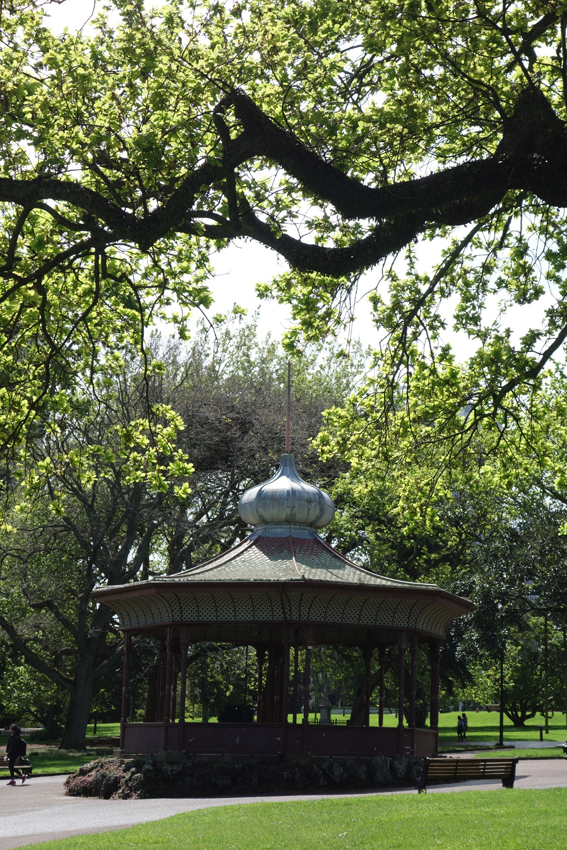
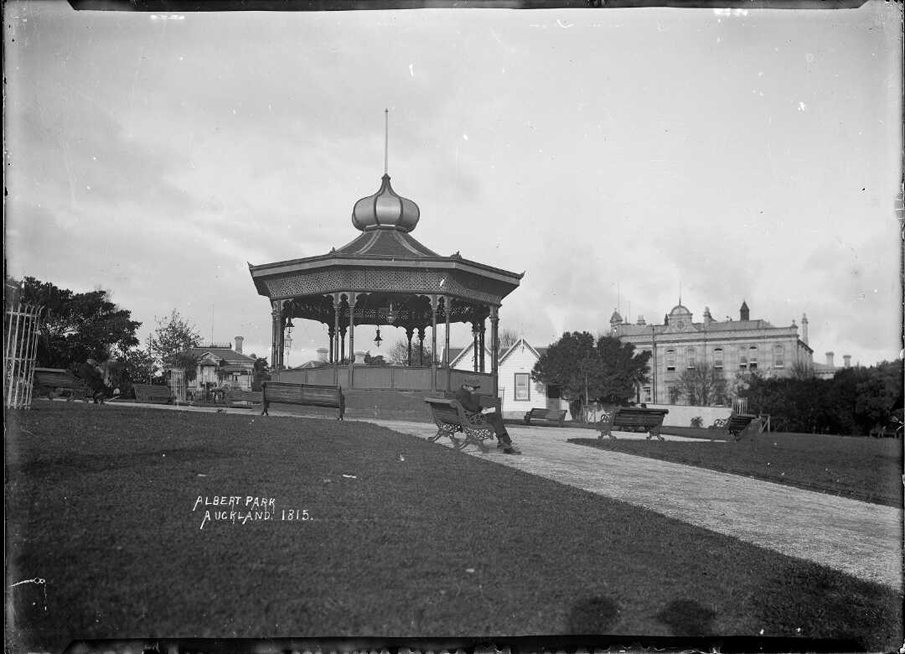
List Entry Information
Status
Listed
List Entry Status
Historic Place Category 2
Access
Able to Visit
List Number
538
Date Entered
26th November 1981
Date of Effect
26th November 1981
City/District Council
Auckland Council
Region
Auckland Council
Extent of List Entry
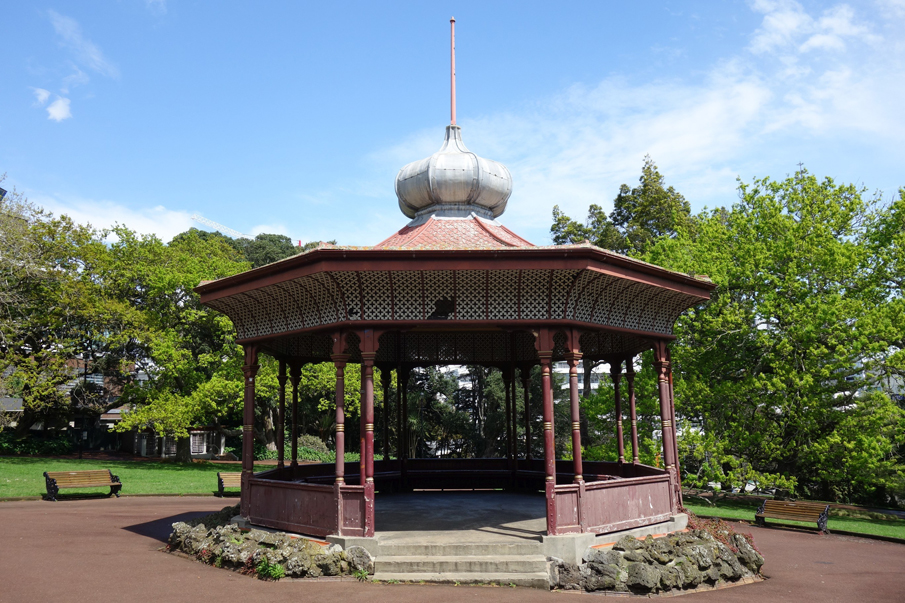
Extent includes part of the land described as Sec 1 SO 374931 (Public Reserve, s4(7) Auckland Improvement Trust Act 1971; Historic Reserve, s16 (2A) Reserves Act 1977), North Auckland Land District, and the structure known as Albert Park Bandstand thereon. (Refer to the extent map tabled at the Heritage List/ Rārangi Kōrero Committee meeting on 11 February 2016).
Legal description
Sec 1 SO 374931 (Public Reserve, s4(7) Auckland Improvement Trust Act 1971; Historic Reserve, s16 (2A) Reserves Act 1977), North Auckland Land District
Status
Listed
List Entry Status
Historic Place Category 2
Access
Able to Visit
List Number
538
Date Entered
26th November 1981
Date of Effect
26th November 1981
City/District Council
Auckland Council
Region
Auckland Council
Extent of List Entry
Extent includes part of the land described as Sec 1 SO 374931 (Public Reserve, s4(7) Auckland Improvement Trust Act 1971; Historic Reserve, s16 (2A) Reserves Act 1977), North Auckland Land District, and the structure known as Albert Park Bandstand thereon. (Refer to the extent map tabled at the Heritage List/ Rārangi Kōrero Committee meeting on 11 February 2016).
Legal description
Sec 1 SO 374931 (Public Reserve, s4(7) Auckland Improvement Trust Act 1971; Historic Reserve, s16 (2A) Reserves Act 1977), North Auckland Land District
Construction Professional
Name
Wrigg, Alfred
Type
Engineer
Biography
Alfred Wrigg - Wrigg (1852 - 1927) was City Engineer at Auckland City Council from 1900 to 1906. He was born in Lancashire, England and came to New Zealand with his family in 1863. He worked as an apprentice to his engineer father, Henry Wrigg, in Auckland and Timaru and in several other locations before becoming assistant in the Engineer's Department of the Auckland City Council in 1885. He then worked as Assistant City Engineer until 1899, when he became City Engineer, a position he held until 1906. During his time as City Engineer, the Auckland Electric Trams were constructed and Queen Street was paved with Neuchatel asphalt. Mr W. E. Bush became City Engineer from 1906 and Wrigg remained as his assistant until his retirement in 1925.
Name
McLean, Neil
Type
Builder
Biography
Builder of the Albert PArk Bandstand, Auckland, 1900-1901
Construction Details
Start Year
1900
Finish Year
1901
Type
Original Construction
Type
Other
Description
Site of Albert Barracks
Period
late-1840s to early-1870s
Start Year
1901
startYearCirca
Finish Year
1902
finishYearCirca
Type
Modification
Description
Curtains; and additional gas lights around the rotunda
Finish Year
1914
Type
Modification
Description
Conversion from gas to electric lighting
Finish Year
1928
finishYearCirca
Type
Maintenance/repairs
Description
Repairs
Type
Modification
Description
Concrete base and rock surround replacing timber floor and flower bed
Period
1960s?
Type
Modification
Description
Internal seating added
Period
Pre-2002
Finish Year
2003
Type
Modification
Description
Conservation work including new perforated zinc cove-moulding, fish-scale roofing iron and four internal posts
Construction Professional
Name
Wrigg, Alfred
Type
Engineer
Biography
Alfred Wrigg - Wrigg (1852 - 1927) was City Engineer at Auckland City Council from 1900 to 1906. He was born in Lancashire, England and came to New Zealand with his family in 1863. He worked as an apprentice to his engineer father, Henry Wrigg, in Auckland and Timaru and in several other locations before becoming assistant in the Engineer's Department of the Auckland City Council in 1885. He then worked as Assistant City Engineer until 1899, when he became City Engineer, a position he held until 1906. During his time as City Engineer, the Auckland Electric Trams were constructed and Queen Street was paved with Neuchatel asphalt. Mr W. E. Bush became City Engineer from 1906 and Wrigg remained as his assistant until his retirement in 1925.
Name
McLean, Neil
Type
Builder
Biography
Builder of the Albert PArk Bandstand, Auckland, 1900-1901
Construction Details
Start Year
1900
Finish Year
1901
Type
Original Construction
Type
Other
Description
Site of Albert Barracks
Period
late-1840s to early-1870s
Start Year
1901
startYearCirca
Finish Year
1902
finishYearCirca
Type
Modification
Description
Curtains; and additional gas lights around the rotunda
Finish Year
1914
Type
Modification
Description
Conversion from gas to electric lighting
Finish Year
1928
finishYearCirca
Type
Maintenance/repairs
Description
Repairs
Type
Modification
Description
Concrete base and rock surround replacing timber floor and flower bed
Period
1960s?
Type
Modification
Description
Internal seating added
Period
Pre-2002
Finish Year
2003
Type
Modification
Description
Conservation work including new perforated zinc cove-moulding, fish-scale roofing iron and four internal posts
Historical and Associated Iwi / Hapū / Whānau
Public NZAA Number
R11/833
Completion Date
23rd June 2019
Report Written By
Martin Jones and Alexandra Foster
Information Sources
Auckland Star
Auckland Star
Auckland Council
Auckland Council
Auckland Libraries
Auckland Libraries
New Zealand Herald
New Zealand Herald, ‘Historic Hut is Preserved’, 25 March 1961
Cammick, 2014
Cammick, Murray, ‘Albert Park: all ages venue of the century’, AudioCulture, 12 May 2014 URL: https://www.audioculture.co.nz/scenes/albert-park-all-ages-venue-of-the-century
Geometria, 2003
Geometria, ‘Archaeological Documentation: Albert Park, Albert Barracks’, Auckland, June 2003.
Matthews and Matthews Architects Ltd, 2002
Matthews and Matthews Architects Ltd., ‘Albert Park Band Rotunda: Condition Report’, Auckland, June 2002.
Salmond Architects, 1997
Salmond Architects, Albert Park Conservation Plan’, Auckland, March 1997.
Other Information
This place was identified as significant under previous legislation with different information requirements. It remains significant under the current legislation. There is opportunity under our legislation and policies to add to this information. Further information about this place may be available from the Northern Regional Office of Heritage New Zealand Pouhere Taonga. Please note that entry on the New Zealand Heritage List/Rarangi Korero identifies only the heritage values of the property concerned, and should not be construed as advice on the state of the property, or as a comment of its soundness or safety, including in regard to earthquake risk, safety in the event of fire, or insanitary conditions. A fully referenced upgrade report is available on request from the Central Region Office of Heritage New Zealand.
Historical and Associated Iwi / Hapū / Whānau
Public NZAA Number
R11/833
Completion Date
23rd June 2019
Report Written By
Martin Jones and Alexandra Foster
Information Sources
Auckland Star
Auckland Star
Auckland Council
Auckland Council
Auckland Libraries
Auckland Libraries
New Zealand Herald
New Zealand Herald, ‘Historic Hut is Preserved’, 25 March 1961
Cammick, 2014
Cammick, Murray, ‘Albert Park: all ages venue of the century’, AudioCulture, 12 May 2014 URL: https://www.audioculture.co.nz/scenes/albert-park-all-ages-venue-of-the-century
Geometria, 2003
Geometria, ‘Archaeological Documentation: Albert Park, Albert Barracks’, Auckland, June 2003.
Matthews and Matthews Architects Ltd, 2002
Matthews and Matthews Architects Ltd., ‘Albert Park Band Rotunda: Condition Report’, Auckland, June 2002.
Salmond Architects, 1997
Salmond Architects, Albert Park Conservation Plan’, Auckland, March 1997.
Other Information
This place was identified as significant under previous legislation with different information requirements. It remains significant under the current legislation. There is opportunity under our legislation and policies to add to this information. Further information about this place may be available from the Northern Regional Office of Heritage New Zealand Pouhere Taonga. Please note that entry on the New Zealand Heritage List/Rarangi Korero identifies only the heritage values of the property concerned, and should not be construed as advice on the state of the property, or as a comment of its soundness or safety, including in regard to earthquake risk, safety in the event of fire, or insanitary conditions. A fully referenced upgrade report is available on request from the Central Region Office of Heritage New Zealand.
Former Usages
General Usage: Civic Facilities
Specific Usage: Bandstand/Rotunda
Former Usages
General Usage: Civic Facilities
Specific Usage: Bandstand/Rotunda
Get the latest heritage news, features and events delivered
straight to your inbox.