DonateMembershipVisit Heritage
  • Tūrangawaewae
    Places
  • Tira Māori
    Māori Heritage
  • Poutairangahia
    Archaeology
  • Rauemi
    Resources
  • Mō Tātou
    About Us
  • New Zealand Heritage List
  • Nominate and submit
  • Explore the List
  • National Historic Landmarks
  • Plaques
  • Rainbow List Project
  • Lost heritage
  • Visit Heritage
  • Our properties
  • Turnbull House Project
  • Collections
  • Shop
  • Tohu Whenua
  • Tira Māori
  • Conserving Māori heritage
  • Marae built heritage
  • Māori heritage on the List
  • Hinemihi—Te Hokinga Mai
  • What is archaeology?
  • Is there a site on my property?
  • What are my legal requirements?
  • Affecting an archaeological site
  • Declaring an archaeological site
  • Archaeology FAQs
  • Archaeology Digital Library
  • Archaeology guidelines and templates
  • Resources
  • Funding
  • Publications
  • Sustainable management guides
  • Disaster recovery
  • Podcasts & digital resources
  • Education Hub
  • Conservation plans
  • About
  • Board
  • Māori Heritage Council
  • Senior Staff
  • Offices
  • Contact us
  • Careers
  • Covenants
  • Fast-track
  • Corporate documents
  • Currently consulting on
  • Our submissions
  • News
  • Covid-19 response
Quick links
Rārangi Kōrero | The List
Explore the List
National Historic Landmarks
Ngā Manawhenua o Aotearoa me ōna Kōrero Tūturu
Quick links
Tapuwae
A Vision for Places of Māori Heritage
Funding for Māori Heritage
Resources
Quick links
Archaeological Authority Portal
Applying for an archaeological authority
Archaeology FAQs
Browse the most frequently asked questions about archaeological authorities and the archaeological process.
Quick links
Quick links
News
News Keep up to date with Heritage New Zealand Pouhere Taonga
Membership
Membership Find out more and sign up today
DonateMembershipVisit Heritage
  • Tūrangawaewae
    Places
  • Tira Māori
    Māori Heritage
  • Poutairangahia
    Archaeology
  • Rauemi
    Resources
  • Mō Tātou
    About Us
  • New Zealand Heritage List
  • Nominate and submit
  • Explore the List
  • National Historic Landmarks
  • Plaques
  • Rainbow List Project
  • Lost heritage
  • Visit Heritage
  • Our properties
  • Turnbull House Project
  • Collections
  • Shop
  • Tohu Whenua
  • Tira Māori
  • Conserving Māori heritage
  • Marae built heritage
  • Māori heritage on the List
  • Hinemihi—Te Hokinga Mai
  • What is archaeology?
  • Is there a site on my property?
  • What are my legal requirements?
  • Affecting an archaeological site
  • Declaring an archaeological site
  • Archaeology FAQs
  • Archaeology Digital Library
  • Archaeology guidelines and templates
  • Resources
  • Funding
  • Publications
  • Sustainable management guides
  • Disaster recovery
  • Podcasts & digital resources
  • Education Hub
  • Conservation plans
  • About
  • Board
  • Māori Heritage Council
  • Senior Staff
  • Offices
  • Contact us
  • Careers
  • Covenants
  • Fast-track
  • Corporate documents
  • Currently consulting on
  • Our submissions
  • News
  • Covid-19 response
Quick links
Rārangi Kōrero | The List
Explore the List
National Historic Landmarks
Ngā Manawhenua o Aotearoa me ōna Kōrero Tūturu
Quick links
Tapuwae
A Vision for Places of Māori Heritage
Funding for Māori Heritage
Resources
Quick links
Archaeological Authority Portal
Applying for an archaeological authority
Archaeology FAQs
Browse the most frequently asked questions about archaeological authorities and the archaeological process.
Quick links
Quick links
News
News Keep up to date with Heritage New Zealand Pouhere Taonga
Membership
Membership Find out more and sign up today
  • Nominate and submit
  • National Historic Landmarks
  • Nominate and submit
  • National Historic Landmarks
  • Conserving Māori heritage
  • Marae built heritage
  • Conserving Māori heritage
  • Marae built heritage
  • Archaeological authorities
  • Archaeology Digital Library
  • Archaeological authorities
  • Archaeology Digital Library
  • All resources
  • Publications
  • Funding
  • All resources
  • Publications
  • Funding
  • FAQs
  • FAQs
Follow us on:
Places
  • Nominate and submit
  • National Historic Landmarks
Tira Māori
  • Conserving Māori heritage
  • Marae built heritage
Archaeology
  • Archaeological authorities
  • Archaeology Digital Library
Resources
  • All resources
  • Publications
  • Funding
FAQs
  • FAQs
Follow us on
HomePrivacyTerms and conditionsAbout this site
© Heritage New Zealand Pouhere Taonga 2026.
 
Picton Railway Station

3-5B Auckland Street (State Highway 1 Picton-Wharenui), PICTON

Public

Historic Place Category 2

List No. 5392

Quick links:
List GalleryLocationDetails
Constructed in 1914, the Picton Railway Station was designed under George Troup (1863-1941) and became a fitting gateway at the northern terminal of the South Island Main Trunk. This single storey timber building has architectural significance because it is a classic Troup station with characteristic Edwardian embellishment. Historically and socially important, the station building, canopy and platform formed a crucial community transport and communications hub, especially in the early to mid-twentieth century.

Many iwi are connected with the resource rich sounds and land of Te Tau Ihu o Te Waka-a-Māui, at the top of Te Waipounamu/the South Island. Waitohi was home to Te Āti Awa people when it was purchased in 1850 for the town eventually called Picton. By the late nineteenth century Picton had become an important local coastal shipping port and ferries ran between it, Nelson and Wellington. Connecting Picton’s harbour and port facilities with the surrounding farming district and Blenheim by railway was part of Julius Vogel’s public works and immigration scheme in the 1870s. Picton’s first station officially opened on 12 October 1875.

Early twentieth century port developments at Picton coincided with a period of expansion by the New Zealand Railways Department (NZR). The station’s original site on the foreshore at London Quay was restricted. Therefore, the NZR decided to build a new station building and yard, which was opened in March 1914. Compared with the earlier ‘spartan’ building, Picton Railway Station was an elegant adornment to the town and typical of the approach taken by Troup. Picton’s residents must have been pleased at no longer being upstaged by Blenheim, which got a Troup station in 1906, and also at having the honour of Prime Minister William Ferguson Massey (1856-1925) opening their station.

Troup’s best-known railway station is arguably Dunedin’s grand ‘gingerbread’ masonry building, but more commonly Troup stations, like the example at Picton, were smaller timber buildings, featuring Tudor-esque stickwork, shaped bargeboards, bay windows and Marseille tile roofs; all combining to create an impressive focal point in the streetscape. From the platform side, shelter was provided by a canopy with picketed gable-ends and railway iron posts.

The station building and associated facilities were essential to the town and wider region’s economic and social life. For example, ‘as many as 2,200 people could arrive from Wellington on Boxing Day or New Year’s Day, many intending on travel beyond Picton by rail’. Until the 1960s, each school day students flowed onto the platform, travelling on the ‘school train’ to and from high school in Blenheim. The station was also the regional operational base, an important transit point for mail to and from the North Island, as well as providing important passenger facilities and services.

The South Island Main Trunk, which the railway between Picton and Blenheim was among the earliest parts of, was only completed in 1945. Rail traffic to and through Picton then increased significantly from 1962 when the Railways Department started its roll-on-roll-off ferry service between Wellington and Picton. Since the early 1990s the station building has been primarily used as a commercial property, with its interior ‘extensively remodelled’ and the building extended to enclose part of the canopy and platform. For example, Subway has been based in the building since the early twenty-first century. The Coastal Pacific passenger service continues to stop at the station several times weekly (2021).
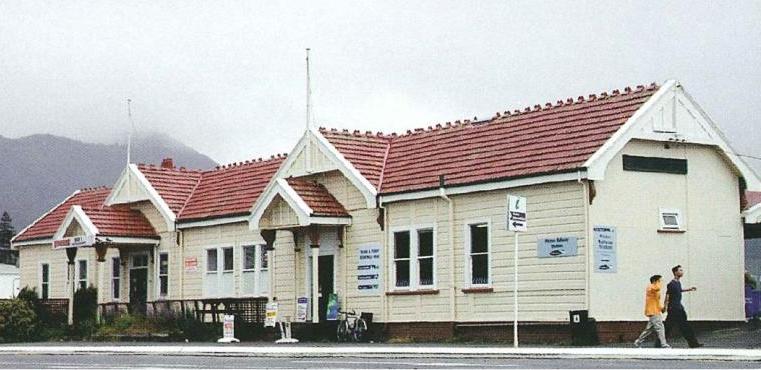
Picton Railway Station | NZ Historic Places Trust

List Entry Information

Overview

Status
Listed

List Entry Status
Historic Place Category 2

Access
Able to Visit

List Number
5392

Date Entered
19th September 1991

Date of Effect
19th September 1991

City/District Council
Marlborough District

Region
Marlborough Region

Extent of List Entry

Extent is the land described as Lot 1 DP 9032 (RT MB5B/874), Marlborough Land District and the building known as Picton Railway Station thereon and its platform and canopy.

Legal description

Lot 1 DP 9032 (RT MB5B/874), Marlborough Land District

Detailed List Entry

Construction Professional

Name

New Zealand Railway Department

Type

Architect

Biography

No biography is currently available for this construction professional

Name

Troup, George Alexander

Type

Architect

Biography

G A Troup (1863-1941) was born in London in 1863 and educated in Scotland. He trained as an architect and engineer under C E Calvert of Edinburgh and came to New Zealand in 1884. After a short time with the Survey Department in Otago he became a draughtsman for New Zealand Railways in Dunedin and then, from 1888, in Wellington. Troup became Chief Draughtsman in 1894. He designed many station buildings throughout the county, some of which are still in use today; these buildings form an important part of New Zealand's landscape. His best known building is the Dunedin Railway Station (1904-07). He also designed the head office building in Wellington for Railways (1901, now demolished). Troup became a Fellow of the Royal Institute of British Architects in 1907. After World War I he was promoted to head the newly established Architectural Branch of New Zealand Railways. On retirement from Railways in 1925 he entered local body politics and was Mayor of Wellington from 1927 to 1931. Troup was prominent in the Presbyterian Church and founded the Presbyterian Young Men's Bible Class Union. He was an elder of the church for 47 years and also served on the governing bodies of several Wellington secondary schools. Education was a life-long interest and he was keenly involved in the training of engineering cadets in New Zealand Railways. Troup was knighted in 1937 and died in 1941. Last updated 1 October 2014 See also: James Veitch. 'Troup, George Alexander', Dictionary of New Zealand Biography, first published in 1993. Te Ara - the Encyclopedia of New Zealand, https://teara.govt.nz/en/biographies/2t49/troup-george-alexander

Name

Public Works Department

Type

Builder

Biography

No biography is currently available for this construction professional

Construction Details

Start Year

1902

Type

Original Construction

Start Year

1914

Type

Original Construction

Start Year

1991

Type

Addition

Description

Canopy and platform partially enclosed

Reference

Completion Date

9th March 2021

Report Written By

Karen Astwood

Information Sources

Picton Station

‘Picton Station’, Rail Heritage Trust of New Zealand, http://railheritage.org.nz/Register/Listing.aspx?c=21&r=9&l=38, accessed 4 Mar 2021

Mahoney, 1992

Paul Mahoney, ‘Train time in Marlborough’, Historic Places, Vol.38, Sep 1992, 16-20

Report Written By

This place was identified as significant under previous legislation with different information requirements. It remains significant under the current legislation. There is opportunity under our legislation and policies to add to this information. Further information about this place may be available from the Central Regional Office of Heritage New Zealand Pouhere Taonga. A copy of the original report is available from the NZHPT Central region office Please note that entry on the New Zealand Heritage List/Rarangi Korero identifies only the heritage values of the property concerned, and should not be construed as advice on the state of the property, or as a comment of its soundness or safety, including in regard to earthquake risk, safety in the event of fire, or insanitary conditions.

Further Information

Current Usages

Uses: Trade

Specific Usage: Restaurant/cafe/tearoom

Uses: Transport

Specific Usage: Railway station/ platform/ refreshment room

Former Usages

Themes

Web Links

Overview

Status

Listed

List Entry Status

Historic Place Category 2

Access

Able to Visit

List Number

5392

Date Entered

19th September 1991

Date of Effect

19th September 1991

City/District Council

Marlborough District

Region

Marlborough Region

Extent of List Entry

Extent is the land described as Lot 1 DP 9032 (RT MB5B/874), Marlborough Land District and the building known as Picton Railway Station thereon and its platform and canopy.

Legal description

Lot 1 DP 9032 (RT MB5B/874), Marlborough Land District

Status

Listed

List Entry Status

Historic Place Category 2

Access

Able to Visit

List Number

5392

Date Entered

19th September 1991

Date of Effect

19th September 1991

City/District Council

Marlborough District

Region

Marlborough Region

Extent of List Entry

Extent is the land described as Lot 1 DP 9032 (RT MB5B/874), Marlborough Land District and the building known as Picton Railway Station thereon and its platform and canopy.

Legal description

Lot 1 DP 9032 (RT MB5B/874), Marlborough Land District

Construction Information

Construction Professional

Name

New Zealand Railway Department

Type

Architect

Biography

No biography is currently available for this construction professional

Name

Troup, George Alexander

Type

Architect

Biography

G A Troup (1863-1941) was born in London in 1863 and educated in Scotland. He trained as an architect and engineer under C E Calvert of Edinburgh and came to New Zealand in 1884. After a short time with the Survey Department in Otago he became a draughtsman for New Zealand Railways in Dunedin and then, from 1888, in Wellington. Troup became Chief Draughtsman in 1894. He designed many station buildings throughout the county, some of which are still in use today; these buildings form an important part of New Zealand's landscape. His best known building is the Dunedin Railway Station (1904-07). He also designed the head office building in Wellington for Railways (1901, now demolished). Troup became a Fellow of the Royal Institute of British Architects in 1907. After World War I he was promoted to head the newly established Architectural Branch of New Zealand Railways. On retirement from Railways in 1925 he entered local body politics and was Mayor of Wellington from 1927 to 1931. Troup was prominent in the Presbyterian Church and founded the Presbyterian Young Men's Bible Class Union. He was an elder of the church for 47 years and also served on the governing bodies of several Wellington secondary schools. Education was a life-long interest and he was keenly involved in the training of engineering cadets in New Zealand Railways. Troup was knighted in 1937 and died in 1941. Last updated 1 October 2014 See also: James Veitch. 'Troup, George Alexander', Dictionary of New Zealand Biography, first published in 1993. Te Ara - the Encyclopedia of New Zealand, https://teara.govt.nz/en/biographies/2t49/troup-george-alexander

Name

Public Works Department

Type

Builder

Biography

No biography is currently available for this construction professional

Construction Details

Start Year

1902

Type

Original Construction

Start Year

1914

Type

Original Construction

Start Year

1991

startYearCirca

Type

Addition

Description

Canopy and platform partially enclosed

Construction Professional

Name

New Zealand Railway Department

Type

Architect

Biography

No biography is currently available for this construction professional

Name

Troup, George Alexander

Type

Architect

Biography

G A Troup (1863-1941) was born in London in 1863 and educated in Scotland. He trained as an architect and engineer under C E Calvert of Edinburgh and came to New Zealand in 1884. After a short time with the Survey Department in Otago he became a draughtsman for New Zealand Railways in Dunedin and then, from 1888, in Wellington. Troup became Chief Draughtsman in 1894. He designed many station buildings throughout the county, some of which are still in use today; these buildings form an important part of New Zealand's landscape. His best known building is the Dunedin Railway Station (1904-07). He also designed the head office building in Wellington for Railways (1901, now demolished). Troup became a Fellow of the Royal Institute of British Architects in 1907. After World War I he was promoted to head the newly established Architectural Branch of New Zealand Railways. On retirement from Railways in 1925 he entered local body politics and was Mayor of Wellington from 1927 to 1931. Troup was prominent in the Presbyterian Church and founded the Presbyterian Young Men's Bible Class Union. He was an elder of the church for 47 years and also served on the governing bodies of several Wellington secondary schools. Education was a life-long interest and he was keenly involved in the training of engineering cadets in New Zealand Railways. Troup was knighted in 1937 and died in 1941. Last updated 1 October 2014 See also: James Veitch. 'Troup, George Alexander', Dictionary of New Zealand Biography, first published in 1993. Te Ara - the Encyclopedia of New Zealand, https://teara.govt.nz/en/biographies/2t49/troup-george-alexander

Name

Public Works Department

Type

Builder

Biography

No biography is currently available for this construction professional

Construction Details

Start Year

1902

Type

Original Construction

Start Year

1914

Type

Original Construction

Start Year

1991

startYearCirca

Type

Addition

Description

Canopy and platform partially enclosed

Reference

Historical and Associated Iwi / Hapū / Whānau

Completion Date

9th March 2021

Report Written By

Karen Astwood

Information Sources

Picton Station

‘Picton Station’, Rail Heritage Trust of New Zealand, http://railheritage.org.nz/Register/Listing.aspx?c=21&r=9&l=38, accessed 4 Mar 2021

Mahoney, 1992

Paul Mahoney, ‘Train time in Marlborough’, Historic Places, Vol.38, Sep 1992, 16-20

Other Information

This place was identified as significant under previous legislation with different information requirements. It remains significant under the current legislation. There is opportunity under our legislation and policies to add to this information. Further information about this place may be available from the Central Regional Office of Heritage New Zealand Pouhere Taonga. A copy of the original report is available from the NZHPT Central region office Please note that entry on the New Zealand Heritage List/Rarangi Korero identifies only the heritage values of the property concerned, and should not be construed as advice on the state of the property, or as a comment of its soundness or safety, including in regard to earthquake risk, safety in the event of fire, or insanitary conditions.

Historical and Associated Iwi / Hapū / Whānau

Completion Date

9th March 2021

Report Written By

Karen Astwood

Information Sources

Picton Station

‘Picton Station’, Rail Heritage Trust of New Zealand, http://railheritage.org.nz/Register/Listing.aspx?c=21&r=9&l=38, accessed 4 Mar 2021

Mahoney, 1992

Paul Mahoney, ‘Train time in Marlborough’, Historic Places, Vol.38, Sep 1992, 16-20

Other Information

This place was identified as significant under previous legislation with different information requirements. It remains significant under the current legislation. There is opportunity under our legislation and policies to add to this information. Further information about this place may be available from the Central Regional Office of Heritage New Zealand Pouhere Taonga. A copy of the original report is available from the NZHPT Central region office Please note that entry on the New Zealand Heritage List/Rarangi Korero identifies only the heritage values of the property concerned, and should not be construed as advice on the state of the property, or as a comment of its soundness or safety, including in regard to earthquake risk, safety in the event of fire, or insanitary conditions.

Further Information

Current Usages

Uses: Trade

Specific Usage: Restaurant/cafe/tearoom

Uses: Transport

Specific Usage: Railway station/ platform/ refreshment room

Current Usages

Uses: Trade

Specific Usage: Restaurant/cafe/tearoom

Uses: Transport

Specific Usage: Railway station/ platform/ refreshment room

Location

Loading
Stay up to date with Heritage this month
