

DESCRIPTION:
The orphanage is said to have originated with J.F. Lloyd, vicar of St Paul's, and Dr T.H. Kenderdine in 1860. It was confined to St Paul's Parish until 1862 when it became the Anglican Orphanage and moved to a rented home in Grafton. It opened with thirty-three children. Later that year it was transferred temporarily to St Stephen's School. It was not until 1865 that the St Stephen's Native Trust granted 5½ acres of their estate to the Orphan's Home for a period of twenty-one years. An orphanage was built on this site by A. Hunter and Son from charitable funds. This was opened in 1866 and included a stable intended for a school room and dining hall given by the Bishop of New Zealand.
In 1883 a bequest of £12,150 was made by Mr Edward Costley. In 1890 the home was incorporated under the provisions of the Religious Charitable and Education Trusts Boards' Incorporation Act and registered under the name Orphans' Home Trust Board.
A fire in 1905 destroyed the central part of the orphanage and one dormitory. The orphanage had no legal title to the St Stephen's land and the remaining buildings on the site were old and had been very overcrowded. Queen Victoria School for Maori Girls had taken up the available farm land so it was decided to build on an independent site. The Anglican Trust settled on an eighty-six acre property belonging to a Mr Wyllie in Papatoetoe.
George Goldsbro' was accepted as architect after offering his services without charge. This was in memory of his father who had been honorary medical office at the institution. A sketch plan was approved based on a rough plan of a pavilion system drawn up by Dr Robertson and the foundation stone for the new building was laid by the Governor-General, Lord Plunket, on the 2 December 1907. Three dormitories, a kitchen and a laundry were built and occupancy was taken up on 1 April 1909. The building was officially opened on 1 May 1909 by Mr C.J. Trunks, Chairman of the Home Trust Board.
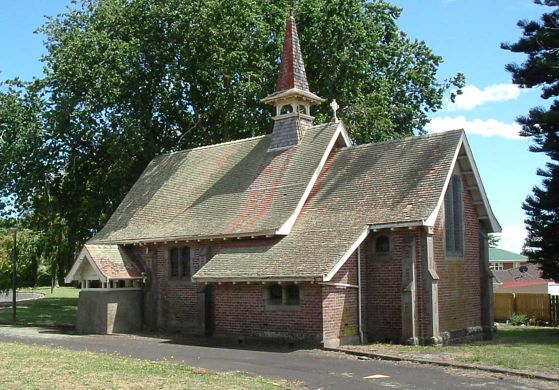
A chapel was added to the complex in 1918. By 1920 moves were underway to complete the home with the addition of the administration block which had been marked by the foundation stone laid in 1907. On 19 May 1923 the stone of completion was set by the Governor-General, Viscount Jellicoe.
Parliament passed a private act in December 1962 which changed the Orphan Home Trust Board to the Church of England Children's Trust. Policy too had changed. Foster and family homes were being used and with a fall in numbers owing to general prosperity, family benefit and demand for adoption, there were only ten children left at St John's. These children were moved to a family home in 1963 and the building was sold to the Division of Mental Health to become a hospital and training school under the Mangere Hospital Scheme. Known as the St John's Home for Mentally Subnormal Children, workshops were set up for simple assembly work and later, in 1967, special classes were established under the Department of Education. The home functioned in this way until 1990 when Area Health Board cuts made the unit uneconomical to run.
List Entry Information
Status
Listed
List Entry Status
Historic Place Category 1
Access
Private/No Public Access
List Number
5472
Date Entered
24th February 1994
Date of Effect
24th February 1994
City/District Council
Auckland Council
Region
Auckland Council
Extent of List Entry
Extent includes part of the land described as Lot 1 DP 149864 (RT NA89B/91), North Auckland Land District, and the buildings and structures known as St John’s Home thereon. Refer to the extent map tabled at the Heritage New Zealand Board meeting on 25 June 2015.
Legal description
Lot 1 DP 149864 (RT NA89B/91), North Auckland Land District
Status
Listed
List Entry Status
Historic Place Category 1
Access
Private/No Public Access
List Number
5472
Date Entered
24th February 1994
Date of Effect
24th February 1994
City/District Council
Auckland Council
Region
Auckland Council
Extent of List Entry
Extent includes part of the land described as Lot 1 DP 149864 (RT NA89B/91), North Auckland Land District, and the buildings and structures known as St John’s Home thereon. Refer to the extent map tabled at the Heritage New Zealand Board meeting on 25 June 2015.
Legal description
Lot 1 DP 149864 (RT NA89B/91), North Auckland Land District
Why is this place significant?
Historic Significance
Historical Significance or Value This report includes the text from the original Proposal for Classification report July 1993. The development of orphanages was essentially a part of Christian church policy and not of the state. As the twentieth century progressed the state did become involved, however, refining the system through child education and social welfare policies. With its origins in the Anglican church, St John's Home is representative of this social transformation. St John's is a rare example of an extant (former) orphanage, more so in that with its large grounds it was self-sufficient and demonstrates how isolated this institutional up-bringing was.
Physical Significance
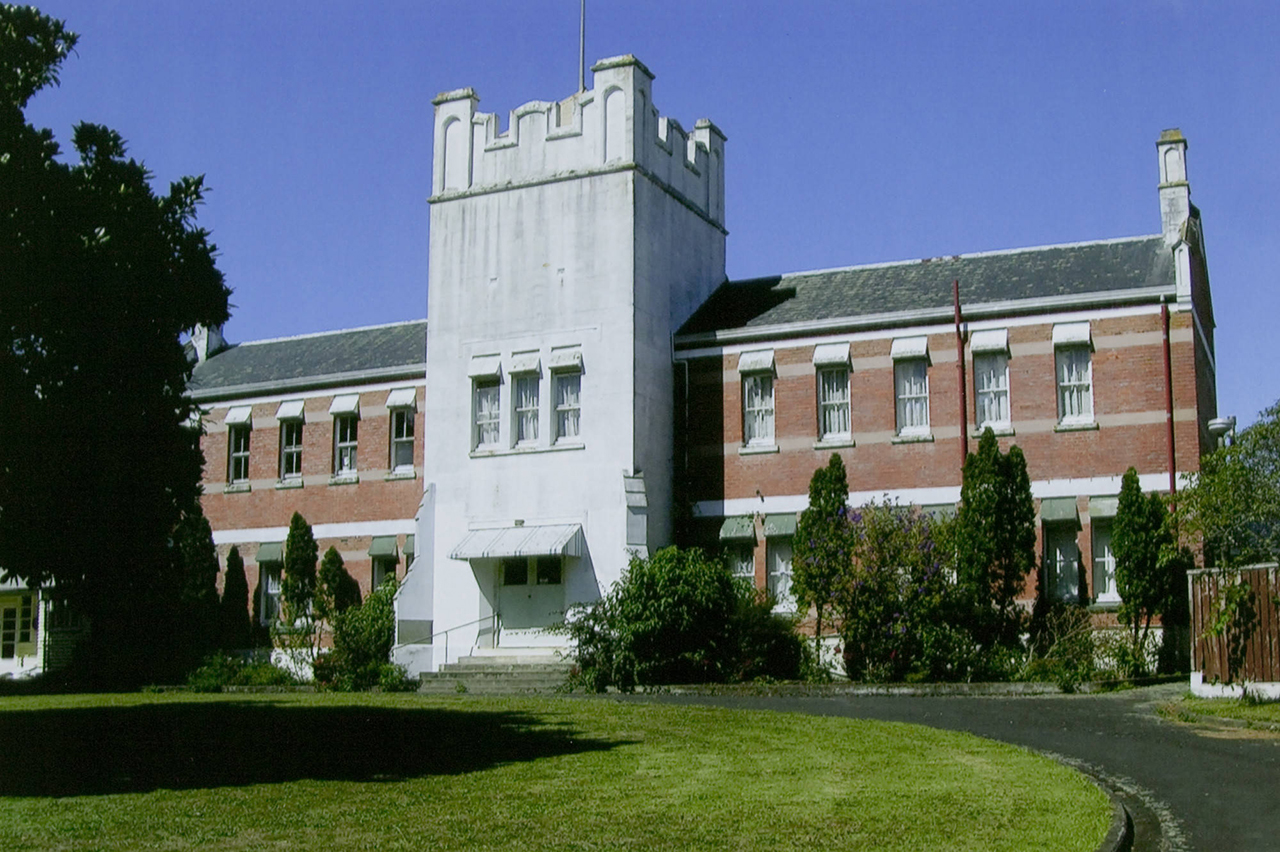
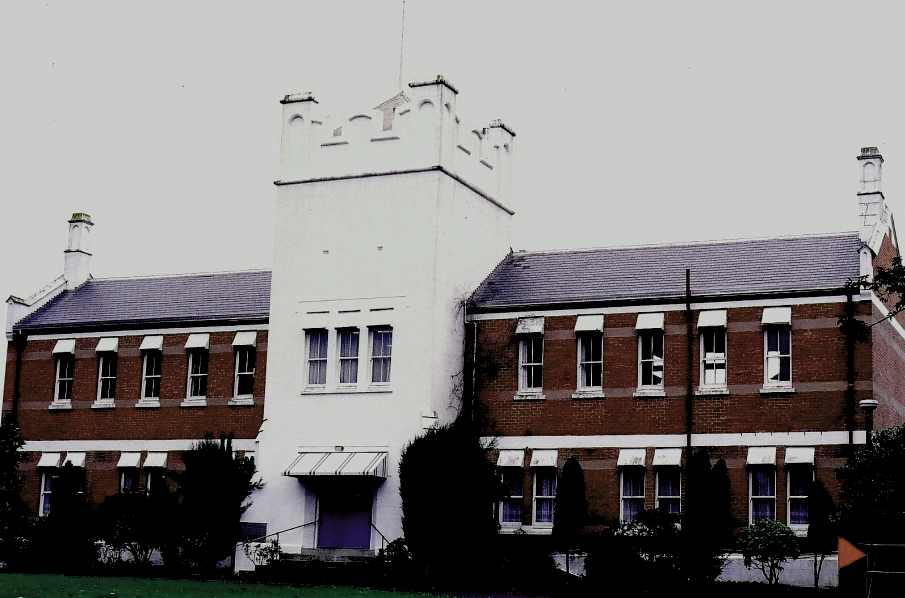
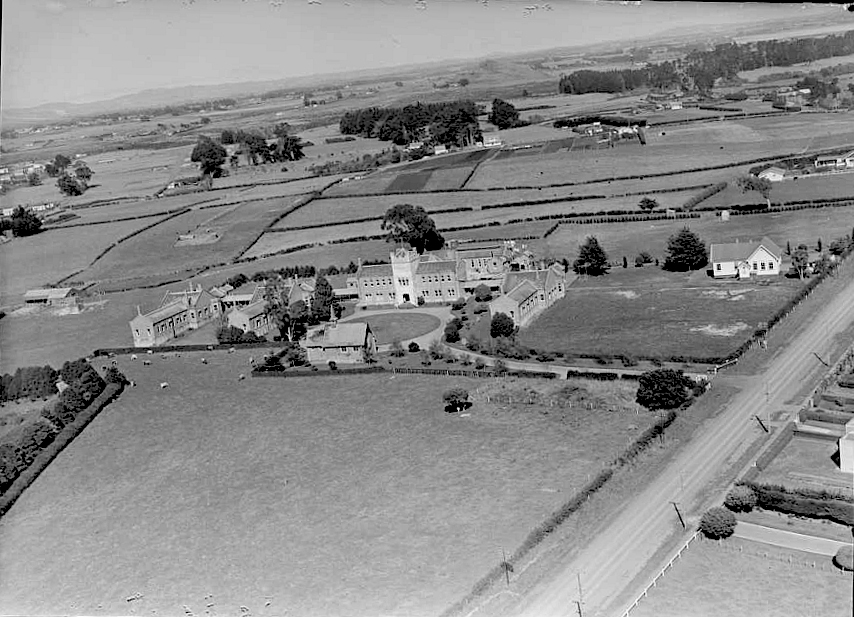
This report includes the text from the original Proposal for Classification report July 1993. ARCHITECTURAL QUALITY: Designed as a single complex, the individual blocks which comprise St John's Home form a coherent statement due to their consistent scale, materials, colour and architectural detailing. The plastered surface of the Norman tower contrasts the dominant use of red brick and with its additional height and castellated battlements, the tower gives the complex a visual focus and landmark value. St John's Home is an unmodified example of hospital pavilion planning, adapting the precedent set by such hospitals as the Edinburgh Royal Infirmary to its specific requirements as an orphanage. Pavilion planning attempted to maximise natural sunlight and ventilation of the interior, their benefits having been realised, and also separated different classes of patients or inmates. TOWNSCAPE/LANDMARK VALUE: St John's Home is set amidst a mature garden and has an orangery between the eastern dormitory pavilions and a chapel to the north. The large scale and elevated site give the complex prominence in the Papatoetoe streetscape and the Norman tower, in particular, is a known landmark.
Why is this place significant?
Historic Significance
Historical Significance or Value This report includes the text from the original Proposal for Classification report July 1993. The development of orphanages was essentially a part of Christian church policy and not of the state. As the twentieth century progressed the state did become involved, however, refining the system through child education and social welfare policies. With its origins in the Anglican church, St John's Home is representative of this social transformation. St John's is a rare example of an extant (former) orphanage, more so in that with its large grounds it was self-sufficient and demonstrates how isolated this institutional up-bringing was.
Physical Significance
This report includes the text from the original Proposal for Classification report July 1993. ARCHITECTURAL QUALITY: Designed as a single complex, the individual blocks which comprise St John's Home form a coherent statement due to their consistent scale, materials, colour and architectural detailing. The plastered surface of the Norman tower contrasts the dominant use of red brick and with its additional height and castellated battlements, the tower gives the complex a visual focus and landmark value. St John's Home is an unmodified example of hospital pavilion planning, adapting the precedent set by such hospitals as the Edinburgh Royal Infirmary to its specific requirements as an orphanage. Pavilion planning attempted to maximise natural sunlight and ventilation of the interior, their benefits having been realised, and also separated different classes of patients or inmates. TOWNSCAPE/LANDMARK VALUE: St John's Home is set amidst a mature garden and has an orangery between the eastern dormitory pavilions and a chapel to the north. The large scale and elevated site give the complex prominence in the Papatoetoe streetscape and the Norman tower, in particular, is a known landmark.
Construction Professional
Name
Goldsbro, George Selwyn
Type
Architect
Biography
Goldsbro' was born in Auckland. He studied architecture there under R Mackay Fripp during 1884-88 before travelling to Australia. He worked in Melbourne until 1891 and then in Sydney under Messrs Sulman and Power, Mr Howard Joseland and Mr Theo Kemmis. On his return to Auckland in 1886 he joined Mackay Fripp in partnership. The partnership was dissolved in 1898 but during these two years Goldsbro' had been awarded second prize in the competition for the Auckland Stock Exchange and first prize in the competition for the Taranaki Club, New Plymouth. Several years later he established a partnership with Henry Wade and this firm was responsible for a wide variety of domestic and commercial buildings including the Terminus Hotel, Helensville (1906), Bishopscourt, Parnell (1906), Patterson Memorial Wing, St John's College (1909), Dalgety's Building, Customs Street (1912) and the Papatoetoe Orphanage (1922). He was awarded second prize in the competition for the Auckland Stock Exchange and first prize in the competition for the Taranaki Club, New Plymouth. Goldsbro' was an inaugural member of the New Zealand Institute of Architects formed in 1905. During the last two years of his life he was a partner in the firm Goldsbro' and Carter.
Construction Details
Start Year
1907
Finish Year
1909
Type
Original Construction
Start Year
1922
Finish Year
1923
Type
Original Construction
Description
Administration Block added
Start Year
1964
Finish Year
1965
Type
Modification
Description
Hall reblocked
Start Year
1969
Type
Modification
Description
Addition to and alteration of children's dining room and kitchen. Cubicles added to subdivide one dormitory in the first floor of the Administration Block.
Construction Materials
Plastered brick foundation walls in conjunction with concrete piles; external walls are mainly cavity brick though double skin brick and concrete are also used; timber roof structure with slate sheathing. Kitchen and dining room have concrete floors and are timber framed with weatherboard sheathing.
Construction Professional
Name
Goldsbro, George Selwyn
Type
Architect
Biography
Goldsbro' was born in Auckland. He studied architecture there under R Mackay Fripp during 1884-88 before travelling to Australia. He worked in Melbourne until 1891 and then in Sydney under Messrs Sulman and Power, Mr Howard Joseland and Mr Theo Kemmis. On his return to Auckland in 1886 he joined Mackay Fripp in partnership. The partnership was dissolved in 1898 but during these two years Goldsbro' had been awarded second prize in the competition for the Auckland Stock Exchange and first prize in the competition for the Taranaki Club, New Plymouth. Several years later he established a partnership with Henry Wade and this firm was responsible for a wide variety of domestic and commercial buildings including the Terminus Hotel, Helensville (1906), Bishopscourt, Parnell (1906), Patterson Memorial Wing, St John's College (1909), Dalgety's Building, Customs Street (1912) and the Papatoetoe Orphanage (1922). He was awarded second prize in the competition for the Auckland Stock Exchange and first prize in the competition for the Taranaki Club, New Plymouth. Goldsbro' was an inaugural member of the New Zealand Institute of Architects formed in 1905. During the last two years of his life he was a partner in the firm Goldsbro' and Carter.
Construction Details
Start Year
1907
Finish Year
1909
Type
Original Construction
Start Year
1922
Finish Year
1923
Type
Original Construction
Description
Administration Block added
Start Year
1964
Finish Year
1965
Type
Modification
Description
Hall reblocked
Start Year
1969
Type
Modification
Description
Addition to and alteration of children's dining room and kitchen. Cubicles added to subdivide one dormitory in the first floor of the Administration Block.
Construction Materials
Plastered brick foundation walls in conjunction with concrete piles; external walls are mainly cavity brick though double skin brick and concrete are also used; timber roof structure with slate sheathing. Kitchen and dining room have concrete floors and are timber framed with weatherboard sheathing.
This report includes the text from the original Proposal for Classification report July 1993. ARCHITECTURAL DESCRIPTION: The Edwardian design of St John's Home follows hospital pavilion planning and comprises a north-facing central administration block (built 1922-23 though part of the original design concept) flanked by two dormitory pavilions on the west and one on the east. South of the Administration Block is a dining room, kitchen and hall for common use. The Administration Block is two storeyed and is dominated by a central Norman style concrete tower. The tower is corner buttressed and has double entrance doors with three sash windows above. At third storey level it is capped with castellated battlements and a pyramidal roof bearing a flagpole. The two storeyed wings are symmetrical about the tower and are striated by concrete bands at window sill and lintel height. Each wing has five evenly spaced two-light sash windows at first floor level and three pairs of single-light sashes at ground floor level. The roof is pitched and has a chimney stack and gabled parapet at either end. The Administration Block has a 'T' shaped plan with offices on either side of the entrance and a central hallway leading to toilet and bathroom facilities. Upstairs each wing is a dormitory, one divided into nine cubicles, and again ablution facilities are at the rear. The three dormitory pavilions are connected to the central hallway of the Administration Block by an open breezeway. The northern side of the breezeway connecting the two eastern dormitories has been built in to form an annex and, to the south, covered ways adjoin each of three toilet blocks. These have pitched roofs and gabled parapets. The three dormitory pavilions are identical in plan and construction. Entrance is from the south and with a central corridor leading past toilets, storage space, an office, kitchen and living room to a single dormitory measuring 7 x 23 metres with a fireplace in the north end. Each pavilion has a double gabled roof at the south end, where the breezeway forms a lean-to, and a single gable to the north with an elevated cross gable between. Along either side of each dormitory were eight double-hung sash windows with fanlights and now each of the three northern most windows on the east side has been converted to a fire escape. The north end of each dormitory has two double-hung sashes and a gabled parapet. Adjoining the south end of the Administration Block is a dining room, kitchen and hall for common use. The timber framed dining room and kitchen have weatherboard sheathing while the hall has brick masonry construction. The hall is the former laundry and is the largest room in the complex. It has a timber trussed roof with an elevated hipped section like a clerestory but with corrugated iron sheathing.
This report includes the text from the original Proposal for Classification report July 1993. ARCHITECTURAL DESCRIPTION: The Edwardian design of St John's Home follows hospital pavilion planning and comprises a north-facing central administration block (built 1922-23 though part of the original design concept) flanked by two dormitory pavilions on the west and one on the east. South of the Administration Block is a dining room, kitchen and hall for common use. The Administration Block is two storeyed and is dominated by a central Norman style concrete tower. The tower is corner buttressed and has double entrance doors with three sash windows above. At third storey level it is capped with castellated battlements and a pyramidal roof bearing a flagpole. The two storeyed wings are symmetrical about the tower and are striated by concrete bands at window sill and lintel height. Each wing has five evenly spaced two-light sash windows at first floor level and three pairs of single-light sashes at ground floor level. The roof is pitched and has a chimney stack and gabled parapet at either end. The Administration Block has a 'T' shaped plan with offices on either side of the entrance and a central hallway leading to toilet and bathroom facilities. Upstairs each wing is a dormitory, one divided into nine cubicles, and again ablution facilities are at the rear. The three dormitory pavilions are connected to the central hallway of the Administration Block by an open breezeway. The northern side of the breezeway connecting the two eastern dormitories has been built in to form an annex and, to the south, covered ways adjoin each of three toilet blocks. These have pitched roofs and gabled parapets. The three dormitory pavilions are identical in plan and construction. Entrance is from the south and with a central corridor leading past toilets, storage space, an office, kitchen and living room to a single dormitory measuring 7 x 23 metres with a fireplace in the north end. Each pavilion has a double gabled roof at the south end, where the breezeway forms a lean-to, and a single gable to the north with an elevated cross gable between. Along either side of each dormitory were eight double-hung sash windows with fanlights and now each of the three northern most windows on the east side has been converted to a fire escape. The north end of each dormitory has two double-hung sashes and a gabled parapet. Adjoining the south end of the Administration Block is a dining room, kitchen and hall for common use. The timber framed dining room and kitchen have weatherboard sheathing while the hall has brick masonry construction. The hall is the former laundry and is the largest room in the complex. It has a timber trussed roof with an elevated hipped section like a clerestory but with corrugated iron sheathing.
Historical and Associated Iwi / Hapū / Whānau
Completion Date
1st July 1993
Information Sources
Auckland Weekly News
Auckland Weekly News
Church Gazette
Church Gazette
Cyclopedia of New Zealand, 1902
Cyclopedia Company, Industrial, descriptive, historical, biographical facts, figures, illustrations, Wellington, N.Z, 1897-1908, Vol.2, Christchurch, 1902
Wises Post Office Directories
Wises Post Office Directories
New Zealand Building Progress
New Zealand Building Progress
New Zealand Herald
New Zealand Herald, 12 July 1932, p. 6; 28 September 1933, p. 6.
Southern Cross
Southern Cross
New Zealand Graphic
New Zealand Graphic
Smytheman, 1962
Ivy F. Smytheman and Albert E. Tonson, Our First Hundred Years, A Historical Record of Papatoetoe, Papatoetoe, 1962.
Other Information
This historic place was registered under the Historic Places Act 1980. This report includes text from the original Proposal for Registration considered by the NZHPT Board at the time of registration. Please note that entry on the New Zealand Heritage List/Rarangi Korero identifies only the heritage values of the property concerned, and should not be construed as advice on the state of the property, or as a comment of its soundness or safety, including in regard to earthquake risk, safety in the event of fire, or insanitary conditions.
Historical and Associated Iwi / Hapū / Whānau
Completion Date
1st July 1993
Information Sources
Auckland Weekly News
Auckland Weekly News
Church Gazette
Church Gazette
Cyclopedia of New Zealand, 1902
Cyclopedia Company, Industrial, descriptive, historical, biographical facts, figures, illustrations, Wellington, N.Z, 1897-1908, Vol.2, Christchurch, 1902
Wises Post Office Directories
Wises Post Office Directories
New Zealand Building Progress
New Zealand Building Progress
New Zealand Herald
New Zealand Herald, 12 July 1932, p. 6; 28 September 1933, p. 6.
Southern Cross
Southern Cross
New Zealand Graphic
New Zealand Graphic
Smytheman, 1962
Ivy F. Smytheman and Albert E. Tonson, Our First Hundred Years, A Historical Record of Papatoetoe, Papatoetoe, 1962.
Other Information
This historic place was registered under the Historic Places Act 1980. This report includes text from the original Proposal for Registration considered by the NZHPT Board at the time of registration. Please note that entry on the New Zealand Heritage List/Rarangi Korero identifies only the heritage values of the property concerned, and should not be construed as advice on the state of the property, or as a comment of its soundness or safety, including in regard to earthquake risk, safety in the event of fire, or insanitary conditions.
Former Usages
General Usage: Accommodation
Specific Usage: Orphanage/ children’s home
Former Usages
General Usage: Accommodation
Specific Usage: Orphanage/ children’s home
Location
Sign up to hear more
Get the latest heritage news, features and events delivered
straight to your inbox.
