Te Raka a Hineatua is the traditional name of the pā at Katiki on the Moeraki peninsula in North Otago. Constructed for the tūpuna Taoka, the pā recalls the Kāi Tahu occupation of the pā, a vibrant mahika kai economy and a history of conflict. Te Raka a Hineatua was one of the few Te Wai Pounamu fortified pā landscaped by Maori into a strongly defended settlement with terraces for housing and defence surrounding the site. Te Raka a Hineatua has cultural, archaeological and historical significance.
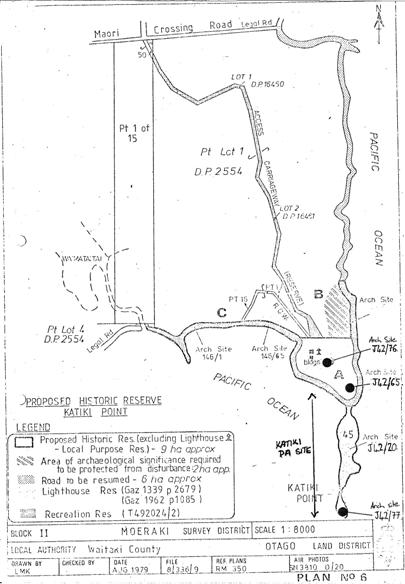
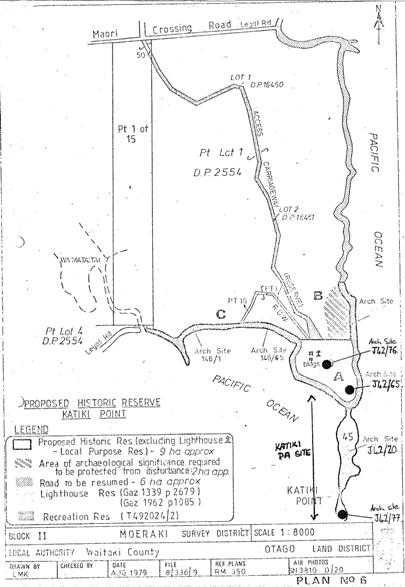
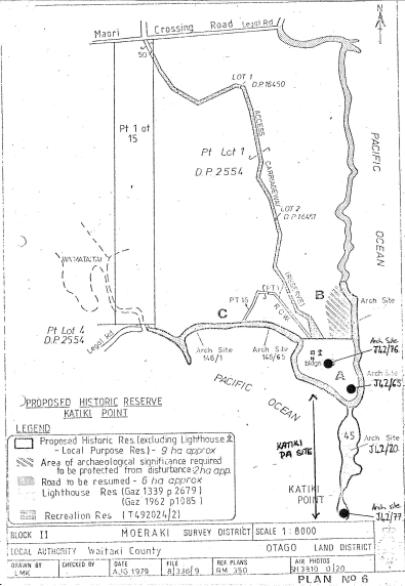
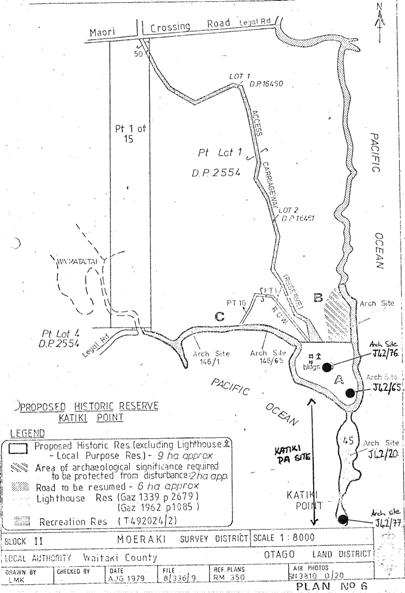
Te Raka a Hineatua is a well-positioned coastal pā site set at the end of a narrow isthmus on an elongated peninsula with two sheer cliff faces on the western and southern sides. Within easy reach of a plethora of marine resources; small sandy beaches nearby for tauraka waka; and handy access to forest and other resources for building materials and food sources – the pā site was well utilised for several generations.
Te Raka a Hineatua was built under the mantle of Taoka, the son of Te Ruahikihiki and Te Aotaurewa of Taumutu. Soon after the pā was built, an tauā (war pārty) of Kaikoura and Kaiapoi people arrived under the leadership of Tawhakiterangi, Te Mātauira, Tūāhuriri II, Te Ruapāpā, Pōkeka and Pārakiore. The large combined force was considered to be one of the biggest that was ever collected. Taoka and his people beat the tauā in the battle which became known as Te Hakopā. Taoka was a well-known fighting chief and participated in some of the last battles with Kāti Māmoe in Ōtākou before eventually dying in his bed of old age at Katiki.
The story of day to day living at the pā is often uncovered by archaeologists who study the tangible vestiges left behind by tūpuna. The metre thick occupation layer contains middens exposing the resources utilised by the occupants. The bones of barracoota, ling and other fish as well as the shells from pāua, mussel, whelk and limpets, pipi and cockle are found in the middens. Fauna species like duck, shags, penguin, rat, fur seal, dog and whale, even a kaka are present. These are all indicators of the bountiful variety of kai available. The remnants of the heavy Totara slabs used to construct the whare and the well-considered slight sloping terracing for water runoff are attributes of the forethought and effort involved in the construction of the pā. Archaeologist Michael Trotter, who excavated the site in the 1960s, writes that the terraced pā covered about five acres (2 hectares). The site has three sections – the mainland, a peninsula separated by a neck and a rocky island accessible at low tide. Terraces exist on all slopes, and ‘appear to have been constructed for use as building sites.’ Some of the terraces were damaged when the Moeraki Lighthouse was constructed in 1877.
Archaeological evidence shows the main features of the pā sites have been terraces for houses, traces of ditch-and-bank defences and midden material with later style artefacts. At Te Raka a Hineatua there are terraces on both sides of the neck of the peninsula. Excavations indicate the presence of rectangular houses built of wooden slabs with square stone fireplaces and associated midden containing later style artefacts (for example, greenstone adzes). Carbon dating indicates that the pā was occupied in the eighteenth century. At this time the main Māori settlement in North Otago was to the north of Katiki at the Moeraki kaik. Associated with Te Raka a Hineatua are several recorded archaeological sites included within the List entry boundary. Three associated sites have separate List entries – providing details about how people lived at the pā, describing the terracing of the pā, cooking and domestic life (Terraces/Midden List No. 5696, Ovens List No. 5697, Midden, List No. 5698).
Trotter concluded that the site was occupied in the mid-eighteenth century, that the ‘artifactural assemblage is typologically later, and the occupants of the site were doubtless of the Ngāi Tahu tribe. Rectangular buildings constructed with dressed totara slab uprights were erected on terraces apparently levelled for that purpose, although pits of as yet unknown use are present on the site. All foods represented by midden remains were available in the vicinity and materials for artefact manufacture were with the exception of nephrite, largely of local origin, indicating a good knowledge of available resources.’
In later years the pā (on which a lighthouse was built in 1878) became part of a historic reserve. As part of the Ngai Tahu Claims Settlement, the Kātiki Point Historic Reserve has been vested in Te Runanga o Ngai Tahu who manage the area in conjunction with Te Runanga o Moeraki, who hold manawhenua of the area. In 2016, Te Raka a Hineatua is a popular site with visitors who can read about the history of the area and watch the seals and other wildlife that live on Katiki Point. Installation of new fencing, improved signage and a new whakaruruhau (gateway) is currently being undertaken to not only acknowledge the history and significance of the site, but to guide visitor behaviour and enhance their experience by providing information on how best to interact with the environment and the wildlife found there.
Te Raka a Hineatua is a well-positioned coastal pā site set at the end of a narrow isthmus on an elongated peninsula with two sheer cliff faces on the western and southern sides. Within easy reach of a plethora of marine resources; small sandy beaches nearby for tauraka waka; and handy access to forest and other resources for building materials and food sources – the pā site was well utilised for several generations.
Te Raka a Hineatua was built under the mantle of Taoka, the son of Te Ruahikihiki and Te Aotaurewa of Taumutu. Soon after the pā was built, an tauā (war pārty) of Kaikoura and Kaiapoi people arrived under the leadership of Tawhakiterangi, Te Mātauira, Tūāhuriri II, Te Ruapāpā, Pōkeka and Pārakiore. The large combined force was considered to be one of the biggest that was ever collected. Taoka and his people beat the tauā in the battle which became known as Te Hakopā. Taoka was a well-known fighting chief and participated in some of the last battles with Kāti Māmoe in Ōtākou before eventually dying in his bed of old age at Katiki.
The story of day to day living at the pā is often uncovered by archaeologists who study the tangible vestiges left behind by tūpuna. The metre thick occupation layer contains middens exposing the resources utilised by the occupants. The bones of barracoota, ling and other fish as well as the shells from pāua, mussel, whelk and limpets, pipi and cockle are found in the middens. Fauna species like duck, shags, penguin, rat, fur seal, dog and whale, even a kaka are present. These are all indicators of the bountiful variety of kai available. The remnants of the heavy Totara slabs used to construct the whare and the well-considered slight sloping terracing for water runoff are attributes of the forethought and effort involved in the construction of the pā. Archaeologist Michael Trotter, who excavated the site in the 1960s, writes that the terraced pā covered about five acres (2 hectares). The site has three sections – the mainland, a peninsula separated by a neck and a rocky island accessible at low tide. Terraces exist on all slopes, and ‘appear to have been constructed for use as building sites.’ Some of the terraces were damaged when the Moeraki Lighthouse was constructed in 1877.
Archaeological evidence shows the main features of the pā sites have been terraces for houses, traces of ditch-and-bank defences and midden material with later style artefacts. At Te Raka a Hineatua there are terraces on both sides of the neck of the peninsula. Excavations indicate the presence of rectangular houses built of wooden slabs with square stone fireplaces and associated midden containing later style artefacts (for example, greenstone adzes). Carbon dating indicates that the pā was occupied in the eighteenth century. At this time the main Māori settlement in North Otago was to the north of Katiki at the Moeraki kaik. Associated with Te Raka a Hineatua are several recorded archaeological sites included within the List entry boundary. Three associated sites have separate List entries – providing details about how people lived at the pā, describing the terracing of the pā, cooking and domestic life (Terraces/Midden List No. 5696, Ovens List No. 5697, Midden, List No. 5698).
Trotter concluded that the site was occupied in the mid-eighteenth century, that the ‘artifactural assemblage is typologically later, and the occupants of the site were doubtless of the Ngāi Tahu tribe. Rectangular buildings constructed with dressed totara slab uprights were erected on terraces apparently levelled for that purpose, although pits of as yet unknown use are present on the site. All foods represented by midden remains were available in the vicinity and materials for artefact manufacture were with the exception of nephrite, largely of local origin, indicating a good knowledge of available resources.’
In later years the pā (on which a lighthouse was built in 1878) became part of a historic reserve. As part of the Ngai Tahu Claims Settlement, the Kātiki Point Historic Reserve has been vested in Te Runanga o Ngai Tahu who manage the area in conjunction with Te Runanga o Moeraki, who hold manawhenua of the area. In 2016, Te Raka a Hineatua is a popular site with visitors who can read about the history of the area and watch the seals and other wildlife that live on Katiki Point. Installation of new fencing, improved signage and a new whakaruruhau (gateway) is currently being undertaken to not only acknowledge the history and significance of the site, but to guide visitor behaviour and enhance their experience by providing information on how best to interact with the environment and the wildlife found there.