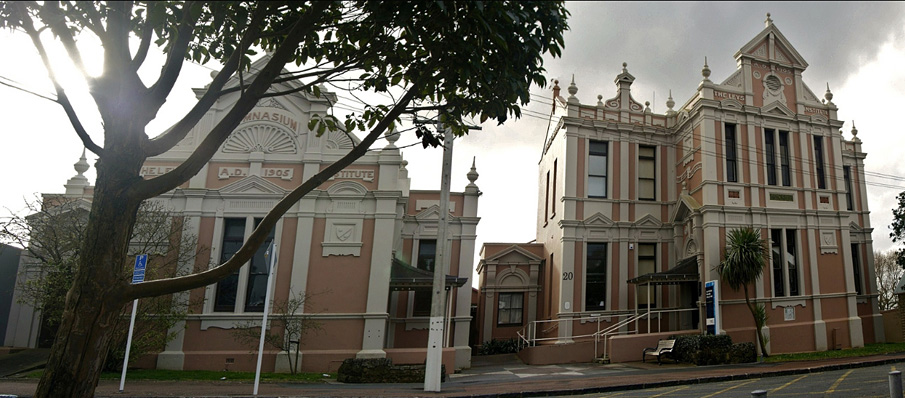
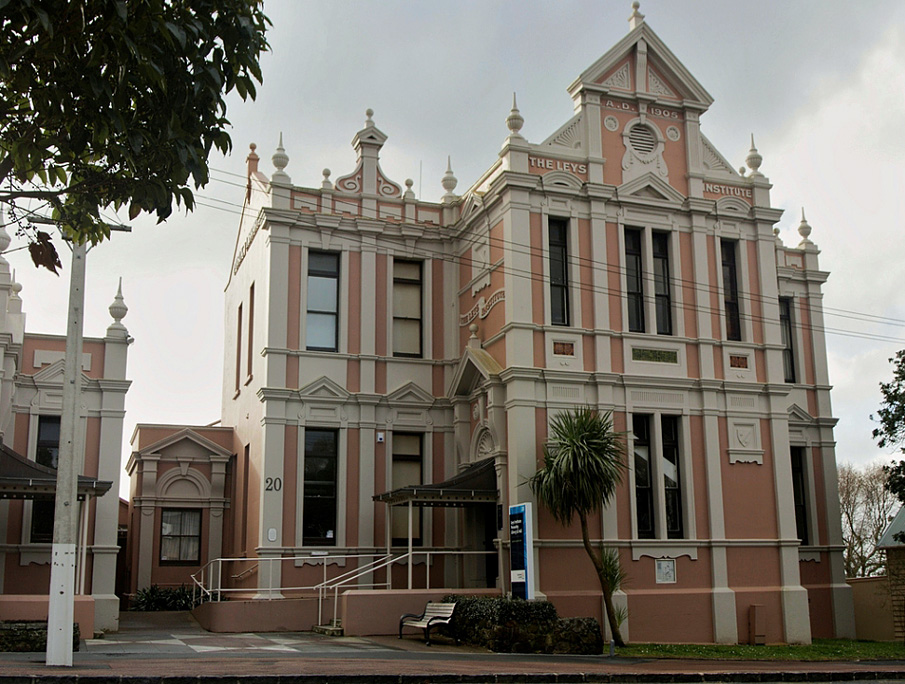
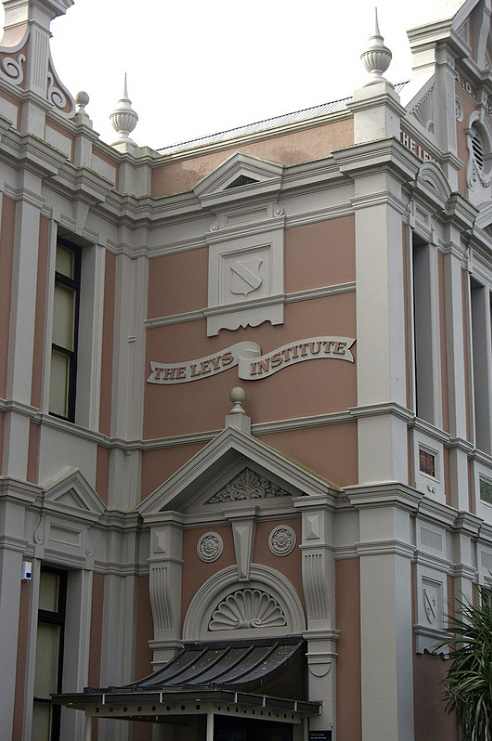
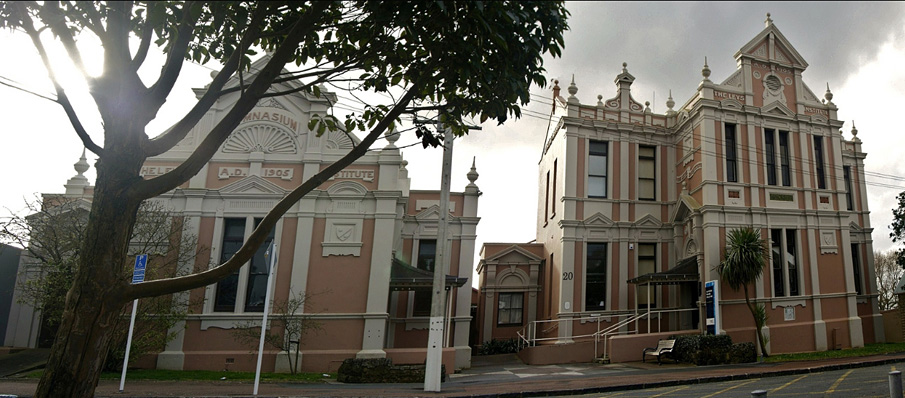
The Leys Institute Public Library building, opened in 1905 in St Marys Road, Ponsonby, is nationally significant as a monument to the Victorian ideals of education and self-improvement, and the philanthropic ideals of sections of the Victorian middle class. The two buildings of the Leys Institute, the library and adjacent gymnasium, have high aesthetic and architectural significance as important examples of Edwardian Baroque architecture by architect Robert Watt, of which there are few examples in Auckland, and contribute an impressive street presence in a well-preserved late nineteenth- and early twentieth- century working-class suburb. They are believed to be a rare surviving example nationally of a purpose-built early twentieth-century combination of library and gymnasium in separate but adjoining buildings, and reflect the importance placed on self-improvement through both mind and body in a period of social change and heightened awareness of the disadvantaged. The history of the Institute is closely linked with the Leys family, and the library building has significance due to its history of innovative library practice.
The Institute was originally founded under the will of William Leys, a bookbinder and property owner, who died in 1899, and was significantly added to by his brother, Thomson Wilson Leys, with the Auckland Council providing the site. The Institute library contained a reference and lending library on the ground floor, and a recreation room, lecture hall and meeting room on the upper storey. These spaces were widely used and the building became the parent body for a large number of cultural, music and hobby organisations, many of which took the name of the Institute.
The Auckland Public Library had been established in 1880; the Leys Institute library was effectively its first branch library, but was managed by a separate management committee, including members of the Leys family, until 1964 when it was incorporated into the Auckland library system. Thomson Leys was the first President of the Institute, donated thousands of books, spearheaded the introduction of the children’s library in 1908, and set up a building fund. The family’s involvement continued with his son, newspaper editor Sir Cecil Leys, and members of subsequent generations. Donations of money and books also came from other members of the community.
In 1909 a new room for the lending department was added to the side, and in 1922 further additions doubled the lending library space and added a basement. In 1939 a further addition to the rear was added and the basement extended. In 1958 the two-storey Hilary Leys Memorial Wing was built for the children’s library, designed by notable architectural firm of Gummer and Ford and decorated with murals by the Irish-born James Turkington a prominent artist in Auckland whose works made particular reference to New Zealand society. In the early 1960s the library led the way in educating children, and later adults, who had difficulty reading, and provided programmes for the many Polynesian families who had become part of the surrounding population. Architect John Gummer carried out a major restoration project in 1991, funded by the William Leys Trust Fund.
Throughout its history, the building has played a significant role in the community, and as the Ponsonby library, continues to do so today.