Pitt Street Church (Methodist)

78 Pitt Street, Newton, AUCKLAND

Historic Place Category 2

List No. 626

Quick links:
Erected in 1865-1866 to accommodate an expanding Methodist ministry in Auckland, the Pitt Street church has been referred to as 'the Cathedral of Auckland Methodism'. The first Methodist gatherings in Auckland were held in 1841, soon after the establishment of the settlement as colonial capital of New Zealand. Early services were conducted in temporary accommodation such as the Supreme Court House in Queen Street and a carpenter's shop in Chancery Street, while a purpose-built timber chapel was erected in High Street in 1843. This place of worship was replaced by a brick structure five years later, and by 1859 expansion had included the construction of another brick chapel on Hobson Street. The New Zealand Wesleyan mission was administered from Auckland from 1843 until 1854, the year the British Methodists created the new Conference of Australasia, which included two New Zealand mission areas. By 1866 the Northern Wesleyan District, of which Auckland was head, included the entire North Island, while the Southern District was administered from Christchurch. Methodism is said to have flourished among early colonists because it had a tradition of using understandable language, and was unpretentious and democratic. From the 1840s until 1900, about ten percent of New Zealand's population were Methodist. The faith remains the country's fourth largest religious denomination.

In 1864, a one-acre site was purchased in Pitt Street for the express purpose of building a "large chapel". While the traditional centre of Auckland Methodism in High Street lay in the commercial heart of the settlement, the new site overlooked the town from a prominent position on the skyline. The structure was planned as an impressive and ornate building, contrasting with the plainer appearance of earlier nonconformist chapels. There are indications that its use of Gothic Revival, an architectural style more closely associated with the Anglican Church, may have been controversial.

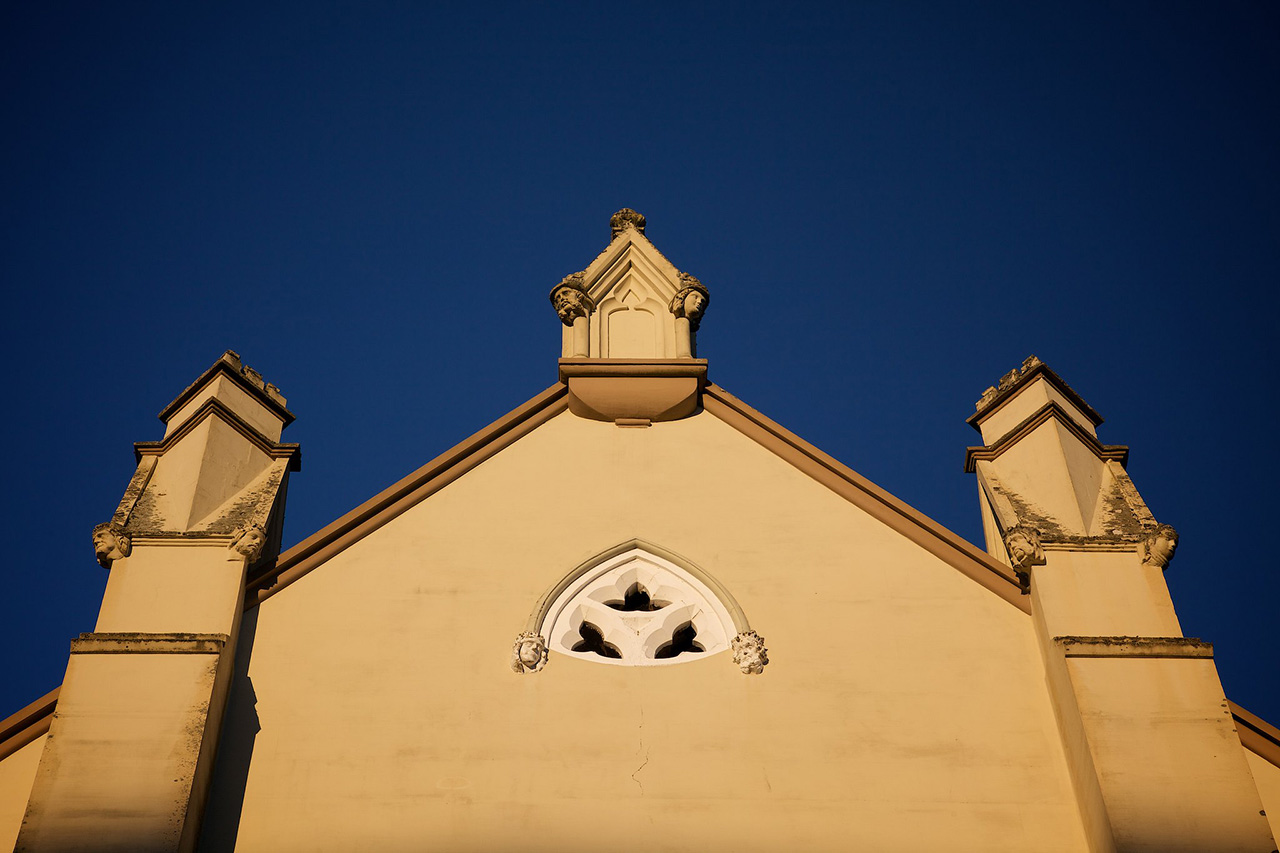
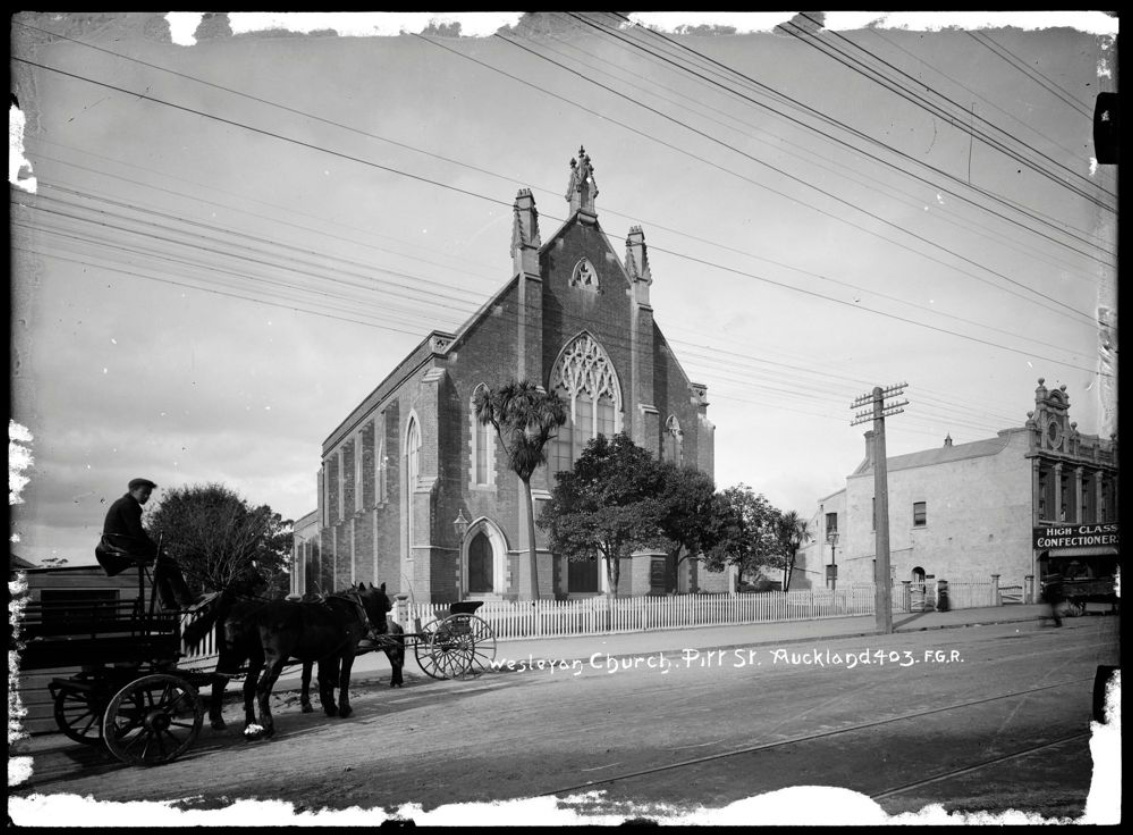
The foundation stone for the church was laid in November 1865 by Thomas Russell (1830-1904), a member of the High Street congregation and acknowledged leader of Auckland's business community, who was instrumental in the foundation of the New Zealand Insurance Company and the Bank of New Zealand. Estimated to have involved an outlay of about £11,000, the cost of the church exceeded initial expectations and its design was modified accordingly. The church was claimed in 1865 as being second only in New Zealand to Christchurch's Durham Street Wesleyan Church, which was also under construction. The Pitt Street Church's striking brick and stone exterior incorporated numerous stone heads, believed to have been executed by the renowned carver and engraver Anton Teutenberg (1840-1933). The church was designed by Philip Herapath (1822-1892), who was subsequently responsible for a number of other nonconformist buildings in the Auckland area, including Wesleyan chapels at Onehunga (1877), Pukekohe (1878) and Pokeno (1878), and the Beresford Street Congregational Church (1874-1876), a pioneer in concrete design.

The church opened for use on 14 October 1866, with room for 650 individuals. It incorporated a large schoolroom in its basement, while the main church interior followed the 'preaching hall' tradition of nonconformist worship, containing a large gallery for the choir and Sunday School children who required supervision during the service. The church's first minister was James Buller (1812-1884), who had earlier been a missionary at Mangungu Mission Station in the Hokianga and who had carried out the earliest official Methodist services in Auckland in September 1841. The leader of the Hokianga Mission, John Hobbs (1800-1883), became a member of the Pitt Street congregation while living at nearby Beresford Street, and his funeral was held at the church after his death in 1883. Other missionaries to follow Buller in his role as minister included Alexander Reid and William Kirk.

After the closure of the High Street chapel in 1874, the Pitt Street structure effectively became the leading church in the Northern District. Plaques honouring other notable Methodist missionary pioneers, such as John Bumby (1808-1840) and John Skevington (?-1845), were transferred from the High Street site. Rents for use of the pews helped to reduce the large debt that the church had incurred during construction work. With a growing local population during the boom years of the 1870s and early 1880s, the Auckland Circuit headed by the Pitt Street church provided the initiatives, money and workforce for the expansion of chapels into developing areas. Influenced by the work of Wesleyans in Great Britain, laymen in the Pitt Street church also fostered the Helping Hand Mission, which met in halls in the poorer areas of the parish as part of an evangelical revival.

With the enhanced role of the church, plans to construct internal side galleries in accordance with the original design were completed in 1877. A large hall was also opened directly next to the church for adult Sunday School classes, while a new parsonage was built on the site of an earlier brick structure fronting Karangahape Road. Children's classes continued to be held in the basement of the chapel. For some time the Pitt Street establishment was regarded as a model school. Further expansion of the Pitt Street church occurred in 1887, with a two-storeyed addition at its eastern end. Possibly modelled on Herapath's initial design, it contained a lecture hall and classrooms in its basement area, and a 'church parlour', choir vestry and classrooms above. Each Annual New Zealand Wesleyan Conference that met in Auckland was held at Pitt Street, and in 1897 the church hosted the General Conference of Australasia.

The nineteenth-century congregation included prominent local businessmen, such as the Wilson brothers (proprietors of the New Zealand Herald) and William and George Winstone (general carriers and quarriers), as well as members who were active in new initiatives for women, such as Eliza White and Annie Schnackenberg. Joseph Liston Wilson headed one of the earliest petitions to Parliament on the issue of women's suffrage, while Eliza White started the Ladies' Christian Association in 1875, which was later converted in the Auckland Branch of the Young Women's Christian Association (YWCA). Schnackenberg was national president of the Women's Christian Temperance Movement (WCTU) in 1893, when New Zealand women were granted the vote. Prominent visitors included Sir William Fox, who gave an address on the responsibility of the Christian church in relation to the liquor trade in 1887, Herbert Booth of the Salvation Army, and the chaplains of the British and American Fleets in 1924 and 1925 respectively. The Prince of Wales (later Edward VIII) also attended service there in 1920, while Queen Salote of Tonga is said to have attended the church regularly while in the city. The radio celebrity 'Uncle Tom' - Tom Garland (1877-1964) - a founder of the innovative 'Friendly Road' radio church in Auckland in the 1930s, was in charge of Sunday School music at the church and later became a trustee.

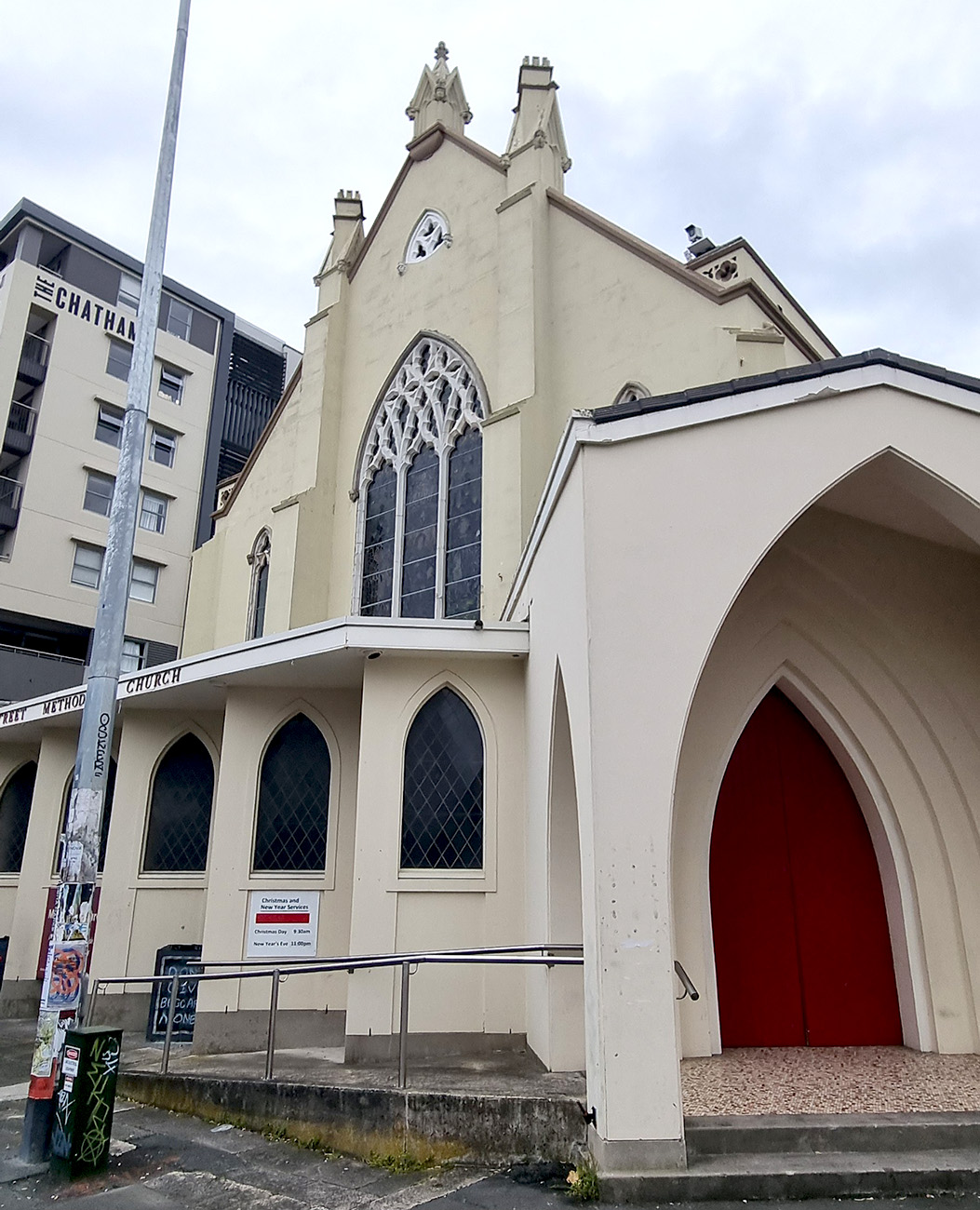
Internal alterations to the church during the twentieth century have included modifications to the position of the organ and pulpit, and the addition of a number of memorial windows. In 1962 more significant changes were carried out to the front of the building, when a single-storey vestibule was added and the internal side galleries were removed. Changes to the surrounding site, owned by the church trustees, have included the construction of a row of shops on the Karangahape Road corner in 1904, and the replacement of the earlier timber hall by the three-storeyed Bicentennial Wesleyan Hall in 1939. The church continues to serve as an important place of worship in the inner city, with ongoing Sunday School programmes and Youth Groups. Over the past few decades, the church has had significant links to several of Auckland's ethnic groups, including the Samoan, Tongan and Korean communities.
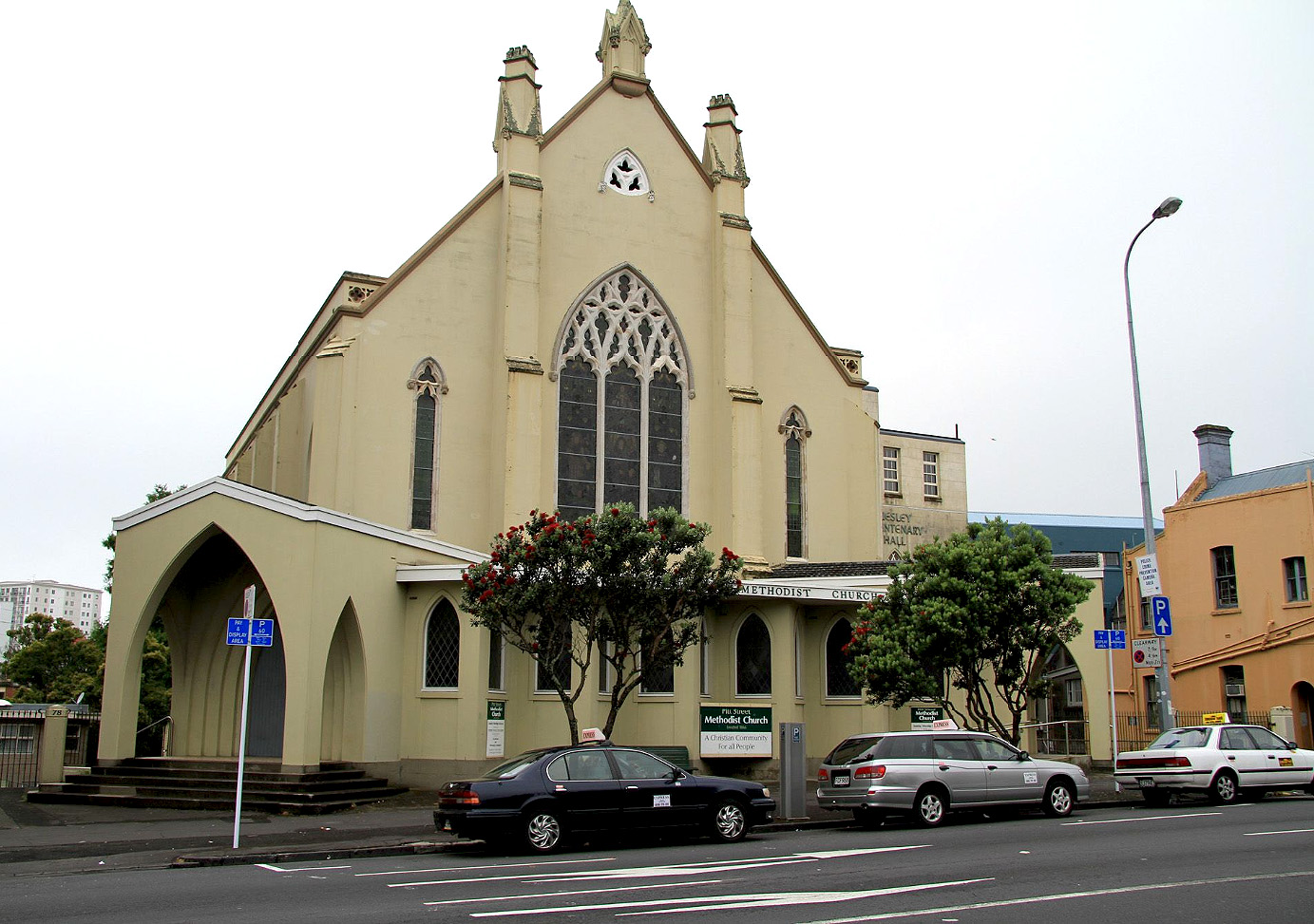
Pitt Street Church (Methodist), Newton, Auckland. CC BY Image courtesy of Auckland Libraries Heritage Collections, Record #1477-2531 | Brian Cairns | 19/12/2010 | Auckland Libraries
Pitt Street Church (Methodist), Auckland. CC BY-SA 4.0 Image courtesy of commons.wikimedia.org | Itineris55 | 06/12/2022 | Itineris55 - Wikimedia Commons
Pitt Street Church (Methodist), Auckland. Building detail CC BY-NC-SA 2.0 Image courtesy of www.flickr.com | Nick Thompson | 06/09/2009 | Nick Thompson
Pitt Street Church (Methodist), Auckland. Image courtesy of Auckland Libraries Heritage Collections, Record# 35-R0096 | Frederick George Radcliffe | Auckland Libraries

List Entry Information

Overview

Status

Listed

List Entry Status

Historic Place Category 2

Access

Private/No Public Access

List Number

626

Date Entered

24th June 2005

Date of Effect

24th June 2005

City/District Council

Auckland Council

Region

Auckland Council

Extent of List Entry

The registration includes part of the land in RT NA597/52 (as shown on Map C in Appendix 4) and the church, its fittings and fixtures thereon. The area of registration extends one metre beyond the outer edge of the external wall of the structure.

Legal description

Part of Pt Allot 34 and Allot 33 Sec 29 Town of Auckland (RT NA597/52)

Status

Listed

List Entry Status

Historic Place Category 2

Access

Private/No Public Access

List Number

626

Date Entered

24th June 2005

Date of Effect

24th June 2005

City/District Council

Auckland Council

Region

Auckland Council

Extent of List Entry

The registration includes part of the land in RT NA597/52 (as shown on Map C in Appendix 4) and the church, its fittings and fixtures thereon. The area of registration extends one metre beyond the outer edge of the external wall of the structure.

Legal description

Part of Pt Allot 34 and Allot 33 Sec 29 Town of Auckland (RT NA597/52)

Significance

Why is this place significant?

Cultural Significance

The building is both spiritually and socially significant as a place of worship and gathering, which has been in continuous use for nearly 140 years.

Historic Significance

Historical Significance or Value The church has substantial historical value for its tangible links with several of New Zealand's Wesleyan missionary pioneers, prominent early businessmen, and notable individuals involved in wider Christian organisations and movements for social reform. Its historical significance extends to its role in the development of Methodism in Auckland and the wider Wesleyan community through its position as a 'Mother Church' and as a centre for national and international gatherings, as well through being a notable early Sunday School.

Physical Significance

The Pitt Street Church (Methodist) has aesthetic value for its visual appearance and for the contribution it makes to the streetscape in the Karangahape Road/Pitt Street precinct. It is one of only two surviving buildings in Auckland believed to incorporate decorative carvings sculpted by Anton Teutenberg. The church is architecturally significant as an early example of Methodist Gothic Revival design, created by the architect Philip Herapath.

Why is this place Category 1 / Category 2?

Detail Of Assessed Criteria

(a) The extent to which the place reflects important or representative aspects of New Zealand history The Pitt Street Church (Methodist) reflects important and representative aspects of New Zealand's history, including the development of Methodism in Auckland and the role of religion in the spiritual, social, educational and cultural life of the local community. (b) The association of the place with events, persons, or ideas of importance in New Zealand history The church is associated with people of importance to New Zealand history including early Wesleyan missionaries such as John Hobbs and James Buller, prominent local businessmen, and a number of individuals involved in social reform including Annie Schnackenberg and 'Uncle Tom' (Garland), co-founder of the 'Friendly Road Church', a non-denominational radio church in Auckland. (c) The potential of the place to provide knowledge of New Zealand history The well-preserved historic fabric of the place - including its gallery, pews and other internal elements - has potential to provide knowledge of past attitudes to worship, religious education and other aspects of New Zealand history. (f) The potential of the place for public education Located beside a major thoroughfare in a busy part of Auckland city centre, the place has potential for public education about the importance of religion in general and Wesleyanism/Methodism in particular, in both colonial and more recent times. (g) The technical accomplishment or value, or design of the place The building can be considered significant for certain aspects of its design, notably its fusion of traditional nonconformist and newer Gothic Revival architecture within a Wesleyan context. It also has design significance for its internal stone corbels, which are an early example of the rendition of New Zealand's indigenous foliage for decorative effect. (h) The symbolic or commemorative value of the place The church's symbolic or commemorative value is apparent from the memorial plaques in the main body of the church (some of which were relocated from the earlier Wesleyan chapel in High Street, Auckland), from the windows commemorating committed individuals, and the memorial plaques honouring young men of the congregation who gave their lives in the First and Second World Wars. (i) The importance of the identifying historic places known to date from early periods of New Zealand settlement The church was erected just 25 years after the foundation of Auckland as a colonial settlement. The Pitt Street Church is one of Auckland's major early places of worship. (k) The extent to which the place forms part of a wider historical and cultural complex or historical and cultural landscape The church is a significant part of a wider historical and cultural complex in the Pitt Street and Karangahape Road area, which incorporates a number of significant historic structures, including the adjacent, Methodist-owned Pitt Street Buildings on the corner of Pitt Street and Karangahape Road (NZHPT Registration # 625, Category II historic place).

Why is this place significant?

Cultural Significance

The building is both spiritually and socially significant as a place of worship and gathering, which has been in continuous use for nearly 140 years.

Historic Significance

Historical Significance or Value The church has substantial historical value for its tangible links with several of New Zealand's Wesleyan missionary pioneers, prominent early businessmen, and notable individuals involved in wider Christian organisations and movements for social reform. Its historical significance extends to its role in the development of Methodism in Auckland and the wider Wesleyan community through its position as a 'Mother Church' and as a centre for national and international gatherings, as well through being a notable early Sunday School.

Physical Significance

The Pitt Street Church (Methodist) has aesthetic value for its visual appearance and for the contribution it makes to the streetscape in the Karangahape Road/Pitt Street precinct. It is one of only two surviving buildings in Auckland believed to incorporate decorative carvings sculpted by Anton Teutenberg. The church is architecturally significant as an early example of Methodist Gothic Revival design, created by the architect Philip Herapath.

Why is this place Category 1 / Category 2?

Detail Of Assessed Criteria

(a) The extent to which the place reflects important or representative aspects of New Zealand history The Pitt Street Church (Methodist) reflects important and representative aspects of New Zealand's history, including the development of Methodism in Auckland and the role of religion in the spiritual, social, educational and cultural life of the local community. (b) The association of the place with events, persons, or ideas of importance in New Zealand history The church is associated with people of importance to New Zealand history including early Wesleyan missionaries such as John Hobbs and James Buller, prominent local businessmen, and a number of individuals involved in social reform including Annie Schnackenberg and 'Uncle Tom' (Garland), co-founder of the 'Friendly Road Church', a non-denominational radio church in Auckland. (c) The potential of the place to provide knowledge of New Zealand history The well-preserved historic fabric of the place - including its gallery, pews and other internal elements - has potential to provide knowledge of past attitudes to worship, religious education and other aspects of New Zealand history. (f) The potential of the place for public education Located beside a major thoroughfare in a busy part of Auckland city centre, the place has potential for public education about the importance of religion in general and Wesleyanism/Methodism in particular, in both colonial and more recent times. (g) The technical accomplishment or value, or design of the place The building can be considered significant for certain aspects of its design, notably its fusion of traditional nonconformist and newer Gothic Revival architecture within a Wesleyan context. It also has design significance for its internal stone corbels, which are an early example of the rendition of New Zealand's indigenous foliage for decorative effect. (h) The symbolic or commemorative value of the place The church's symbolic or commemorative value is apparent from the memorial plaques in the main body of the church (some of which were relocated from the earlier Wesleyan chapel in High Street, Auckland), from the windows commemorating committed individuals, and the memorial plaques honouring young men of the congregation who gave their lives in the First and Second World Wars. (i) The importance of the identifying historic places known to date from early periods of New Zealand settlement The church was erected just 25 years after the foundation of Auckland as a colonial settlement. The Pitt Street Church is one of Auckland's major early places of worship. (k) The extent to which the place forms part of a wider historical and cultural complex or historical and cultural landscape The church is a significant part of a wider historical and cultural complex in the Pitt Street and Karangahape Road area, which incorporates a number of significant historic structures, including the adjacent, Methodist-owned Pitt Street Buildings on the corner of Pitt Street and Karangahape Road (NZHPT Registration # 625, Category II historic place).

Construction Information

Construction Professional

Name

Herapath, Philip

Type

Architect

Biography

Herapath became a member of the Auckland Institute of Architects in 1885. His designs included institutional and ecclesiastical buildings, such as the main block of Auckland Hospital (1875, demolished 1964) and Wesleyan churches in Pitt St (1865), Onehunga (1877), Pukekohe and Pokeno (1878). The most important remaining example of his work is the Beresford Street Congregational Church (1875), now St James's Presbyterian Church. This was a pioneer design in concrete.

Name

Annabel, Milton

Type

Architect

Biography

No biography is currently available for this construction professional

Name

White, Henry

Type

Builder

Biography

Brick and stonework - Register number 626

Name

Kaye, Robert

Type

Builder

Biography

Scoria work - register number 626

Name

Froude, Robert

Type

Builder

Biography

No biography is currently available for this construction professional

Name

Heron, James

Type

Builder

Biography

1886-87 addition - register number 626.

Name

Shop and Office Specialties Ltd

Type

Builder

Biography

1962 additions/ alterations - register number 626

Name

West, Robert

Type

Sculptor

Biography

No biography is currently available for this construction professional

Name

Teutenberg, Anton

Type

Sculptor

Biography

No biography is currently available for this construction professional

Construction Details

Start Year

1865

Finish Year

1866

Type

Original Construction

Description

Construction of original church

Start Year

1870

Type

Modification

Description

Internal modifications: small side galleries erected

Start Year

1877

Finish Year

1879

Type

Modification

Description

Internal modifications, including fuller side galleries and a new rostrum

Start Year

1886

Finish Year

1887

Type

Modification

Description

Two-storeyed addition at east end

Start Year

1911

Type

Modification

Description

Internal modifications, including seating for choir behind pulpit and a new organ at east end

Type

Modification

Description

Exterior plastered and painted

Period

Early 1920s

Start Year

1929

startYearCirca

Finish Year

1934

Type

Modification

Description

Main timber trusses replaced with steel, tie rods added and rear wall tied in to the rest of the building

Type

Modification

Description

Internal modifications, including relocation of organ console and choir with higher 'quarterdeck' pulpit behind

Period

Early 1940s

Start Year

1962

Type

Modification

Description

Addition of a single-storeyed vestibule at west end. Also internal modifications, including incorporation of old vestibule into nave, removal of side galleries, rebuilding of organ

Start Year

1962

Type

Modification

Description

Lowering of central pulpit, and provision of a small side chapel

Construction Materials

Plastered brick with stone dressings, scoria masonry basement walls, concrete foundations and slate roof.

Construction Professional

Name

Herapath, Philip

Type

Architect

Biography

Herapath became a member of the Auckland Institute of Architects in 1885. His designs included institutional and ecclesiastical buildings, such as the main block of Auckland Hospital (1875, demolished 1964) and Wesleyan churches in Pitt St (1865), Onehunga (1877), Pukekohe and Pokeno (1878). The most important remaining example of his work is the Beresford Street Congregational Church (1875), now St James's Presbyterian Church. This was a pioneer design in concrete.

Name

Annabel, Milton

Type

Architect

Biography

No biography is currently available for this construction professional

Name

White, Henry

Type

Builder

Biography

Brick and stonework - Register number 626

Name

Kaye, Robert

Type

Builder

Biography

Scoria work - register number 626

Name

Froude, Robert

Type

Builder

Biography

No biography is currently available for this construction professional

Name

Heron, James

Type

Builder

Biography

1886-87 addition - register number 626.

Name

Shop and Office Specialties Ltd

Type

Builder

Biography

1962 additions/ alterations - register number 626

Name

West, Robert

Type

Sculptor

Biography

No biography is currently available for this construction professional

Name

Teutenberg, Anton

Type

Sculptor

Biography

No biography is currently available for this construction professional

Construction Details

Start Year

1865

Finish Year

1866

Type

Original Construction

Description

Construction of original church

Start Year

1870

Type

Modification

Description

Internal modifications: small side galleries erected

Start Year

1877

Finish Year

1879

Type

Modification

Description

Internal modifications, including fuller side galleries and a new rostrum

Start Year

1886

Finish Year

1887

Type

Modification

Description

Two-storeyed addition at east end

Start Year

1911

Type

Modification

Description

Internal modifications, including seating for choir behind pulpit and a new organ at east end

Type

Modification

Description

Exterior plastered and painted

Period

Early 1920s

Start Year

1929

startYearCirca

Finish Year

1934

Type

Modification

Description

Main timber trusses replaced with steel, tie rods added and rear wall tied in to the rest of the building

Type

Modification

Description

Internal modifications, including relocation of organ console and choir with higher 'quarterdeck' pulpit behind

Period

Early 1940s

Start Year

1962

Type

Modification

Description

Addition of a single-storeyed vestibule at west end. Also internal modifications, including incorporation of old vestibule into nave, removal of side galleries, rebuilding of organ

Start Year

1962

Type

Modification

Description

Lowering of central pulpit, and provision of a small side chapel

Construction Materials

Plastered brick with stone dressings, scoria masonry basement walls, concrete foundations and slate roof.

Physical Description

The church lies in the southern part of Auckland's Central Business District, on the upper slopes of a ridge overlooking the city centre. It occupies a site on the eastern side of Pitt Street, adjoining its intersection with Karangahape Road. The building lies within the Auckland City Council's Karangahape Road precinct, whose distinctive character is derived from a number of factors including its ridge-top location, orientation and aspect, building form and architecture. There are a number of heritage buildings in the immediate vicinity of the church, including the former Fire Station in Pitt Street (NZHPT Registration # 117, Category I historic place), the Pitt Street Buildings on the corner of Pitt Street and Karangahape Road (NZHPT Registration # 625, Category II historic place), the former George Courts Department Store (NZHPT Registration # 580, Category II historic place) and the Hallenstein Brothers Building (NZHPT Registration # 586, Category II historic place), both in Karangahape Road. The church occupies a sloping site, which descends from southwest to northeast. Other structures within the same legal title include a two-storeyed block of ten shops, built by the Church trustees in 1904 on the Karangahape Road intersection, and the Wesley Bicentennial Hall, a three-storeyed building constructed in 1939-40 between the shops and church. The church is linked to the hall by a short air-bridge. The church is a large building, fusing nonconformist chapel design with Gothic Revival style. It comprises an original structure five bays in length (1865-1866), a rear addition of three bays (1886-1887) and a smaller front vestibule (1962). The walls of the original structure are of red brick with white stone dressings, concealed beneath plaster and paint, and are underpinned by basalt lower walls. This part of the building contains a basement storey, originally used as a classroom. Two buttresses run the full height of the Pitt Street façade and are surmounted by ornamental masonry towers. Further buttresses set diagonally at the four corners of the original building. The main facade incorporates a large traceried window and a number of carved stone details, including two heads believed to represent John and Charles Wesley, founders of the Methodist faith. The interior includes a large room in its basement, used for services by the Korean Methodist community, while the main body of the church contains a large gallery, original pews and a barrel-vaulted timber ceiling, whose principals rest upon stone corbels carved with representations of New Zealand foliage. The walls bear nineteenth-century memorial plaques (to a number of early missionaries), memorial windows and other tablets of historical value, including details of pew rents. The two-storeyed rear addition is of a similar style, constructed on a lower part of the site. Its roofline steps down slightly from the main structure, and its main walls have been externally plastered. This contains a number of rooms currently reserved for Sunday School and committee use. The later single-storey vestibule extending across the front of the original structure is of a plainer Gothic appearance, incorporating broad lancet windows and two doorways in extended porches, which protrude at an angle at either end of the façade. The roofing material for the main buildings is slate.

The church lies in the southern part of Auckland's Central Business District, on the upper slopes of a ridge overlooking the city centre. It occupies a site on the eastern side of Pitt Street, adjoining its intersection with Karangahape Road. The building lies within the Auckland City Council's Karangahape Road precinct, whose distinctive character is derived from a number of factors including its ridge-top location, orientation and aspect, building form and architecture. There are a number of heritage buildings in the immediate vicinity of the church, including the former Fire Station in Pitt Street (NZHPT Registration # 117, Category I historic place), the Pitt Street Buildings on the corner of Pitt Street and Karangahape Road (NZHPT Registration # 625, Category II historic place), the former George Courts Department Store (NZHPT Registration # 580, Category II historic place) and the Hallenstein Brothers Building (NZHPT Registration # 586, Category II historic place), both in Karangahape Road. The church occupies a sloping site, which descends from southwest to northeast. Other structures within the same legal title include a two-storeyed block of ten shops, built by the Church trustees in 1904 on the Karangahape Road intersection, and the Wesley Bicentennial Hall, a three-storeyed building constructed in 1939-40 between the shops and church. The church is linked to the hall by a short air-bridge. The church is a large building, fusing nonconformist chapel design with Gothic Revival style. It comprises an original structure five bays in length (1865-1866), a rear addition of three bays (1886-1887) and a smaller front vestibule (1962). The walls of the original structure are of red brick with white stone dressings, concealed beneath plaster and paint, and are underpinned by basalt lower walls. This part of the building contains a basement storey, originally used as a classroom. Two buttresses run the full height of the Pitt Street façade and are surmounted by ornamental masonry towers. Further buttresses set diagonally at the four corners of the original building. The main facade incorporates a large traceried window and a number of carved stone details, including two heads believed to represent John and Charles Wesley, founders of the Methodist faith. The interior includes a large room in its basement, used for services by the Korean Methodist community, while the main body of the church contains a large gallery, original pews and a barrel-vaulted timber ceiling, whose principals rest upon stone corbels carved with representations of New Zealand foliage. The walls bear nineteenth-century memorial plaques (to a number of early missionaries), memorial windows and other tablets of historical value, including details of pew rents. The two-storeyed rear addition is of a similar style, constructed on a lower part of the site. Its roofline steps down slightly from the main structure, and its main walls have been externally plastered. This contains a number of rooms currently reserved for Sunday School and committee use. The later single-storey vestibule extending across the front of the original structure is of a plainer Gothic appearance, incorporating broad lancet windows and two doorways in extended porches, which protrude at an angle at either end of the façade. The roofing material for the main buildings is slate.

Reference

Historical and Associated Iwi / Hapū / Whānau

Information Sources

Chappell, 1941

Albert Chappell, Across a Hundred Years 1841-1941: A Brief History of Methodism in Auckland, Auckland, 1941

Daily Southern Cross

Daily Southern Cross

Hames, 1970

Eric Hames, 100 Years in Pitt Street: A Brief History of the Pitt Street Methodist Church, Auckland, 1970

Hames, 1972

Eric Hames, Out of the Common Way: The European Church in the Colonial Era 1840-1913, Auckland, 1972

Hames, 1974

Eric Hames, Coming of Age 1913-1972, Auckland, 1974

Morley, 1900

Rev. William Morley, The History of Methodism in New Zealand, Wellington, 1900

New Zealand Herald

New Zealand Herald, 12 July 1932, p. 6; 28 September 1933, p. 6.

Other Information

A fully referenced version of this report is available from the NZHPT Northern Region Office. Please note that entry on the New Zealand Heritage List/Rarangi Korero identifies only the heritage values of the property concerned, and should not be construed as advice on the state of the property, or as a comment of its soundness or safety, including in regard to earthquake risk, safety in the event of fire, or insanitary conditions.

Historical and Associated Iwi / Hapū / Whānau

Information Sources

Chappell, 1941

Albert Chappell, Across a Hundred Years 1841-1941: A Brief History of Methodism in Auckland, Auckland, 1941

Daily Southern Cross

Daily Southern Cross

Hames, 1970

Eric Hames, 100 Years in Pitt Street: A Brief History of the Pitt Street Methodist Church, Auckland, 1970

Hames, 1972

Eric Hames, Out of the Common Way: The European Church in the Colonial Era 1840-1913, Auckland, 1972

Hames, 1974

Eric Hames, Coming of Age 1913-1972, Auckland, 1974

Morley, 1900

Rev. William Morley, The History of Methodism in New Zealand, Wellington, 1900

New Zealand Herald

New Zealand Herald, 12 July 1932, p. 6; 28 September 1933, p. 6.

Other Information

A fully referenced version of this report is available from the NZHPT Northern Region Office. Please note that entry on the New Zealand Heritage List/Rarangi Korero identifies only the heritage values of the property concerned, and should not be construed as advice on the state of the property, or as a comment of its soundness or safety, including in regard to earthquake risk, safety in the event of fire, or insanitary conditions.

Further Information

Current Usages

Uses: Religion

Specific Usage: Church

Former Usages

General Usage: Religion

Specific Usage: Church

Themes

Women's Suffrage

Web Links

Current Usages

Uses: Religion

Specific Usage: Church

Former Usages

General Usage: Religion

Specific Usage: Church

Themes

Women's Suffrage

Web Links

Location

Loading
Sign up to hear more

Get the latest heritage news, features and events delivered
straight to your inbox.