Quick links


Quick links
Quick links
Quick links
Quick links
Quick links
Ponsonby Post Office (Former)
1-3 St Marys Road and College Hill, Ponsonby, AUCKLAND
Private
Historic Place Category 1
List No. 628
Quick links:
List GalleryLocationDetails
1-3 St Marys Road and College Hill, Ponsonby, AUCKLAND
Private
Historic Place Category 1
List No. 628
List Entry Information
Status
Listed
List Entry Status
Historic Place Category 1
Access
Private/No Public Access
List Number
628
Date Entered
2nd July 1987
Date of Effect
2nd July 1987
City/District Council
Auckland Council
Region
Auckland Council
Extent of List Entry
Extent includes the land described as Lot 1 DP 123175 (RT NA71C/678), North Auckland Land District, and the building and structures known as Ponsonby Post Office (Former) thereon.
Legal description
Lot 1 DP 123175 (RT NA71C/678), North Auckland Land District
Status
Listed
List Entry Status
Historic Place Category 1
Access
Private/No Public Access
List Number
628
Date Entered
2nd July 1987
Date of Effect
2nd July 1987
City/District Council
Auckland Council
Region
Auckland Council
Extent of List Entry
Extent includes the land described as Lot 1 DP 123175 (RT NA71C/678), North Auckland Land District, and the building and structures known as Ponsonby Post Office (Former) thereon.
Legal description
Lot 1 DP 123175 (RT NA71C/678), North Auckland Land District
Why is this place significant?
Historic Significance
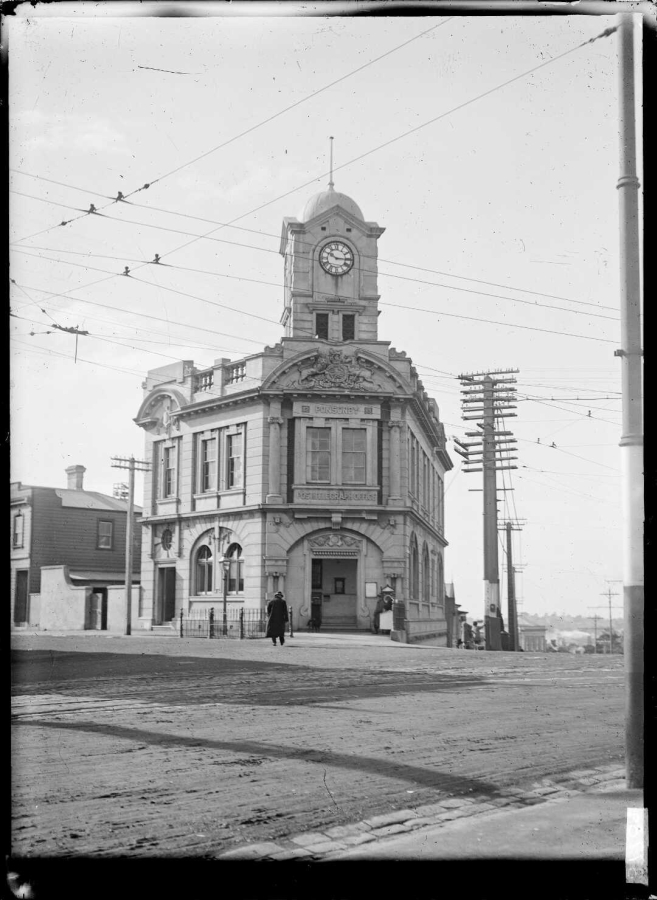
Historical Significance or Value The Ponsonby Post Office was built by L McKinstry at a cost of 3700 pounds. The clock was added in 1913 and the clock tower was heightened by 10 feet from what was originally planned to augment the building's prominent site. Half the cost of the clock was contributed by Ponsonby residents. The building has been an important public facility in the area for 75 years and is highly regarded by local residents.
Physical Significance
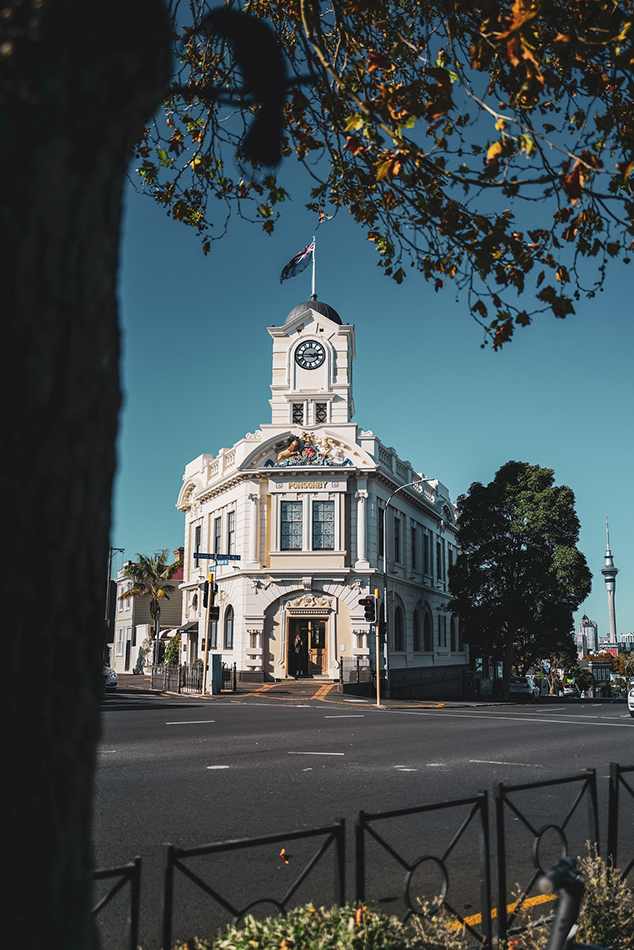
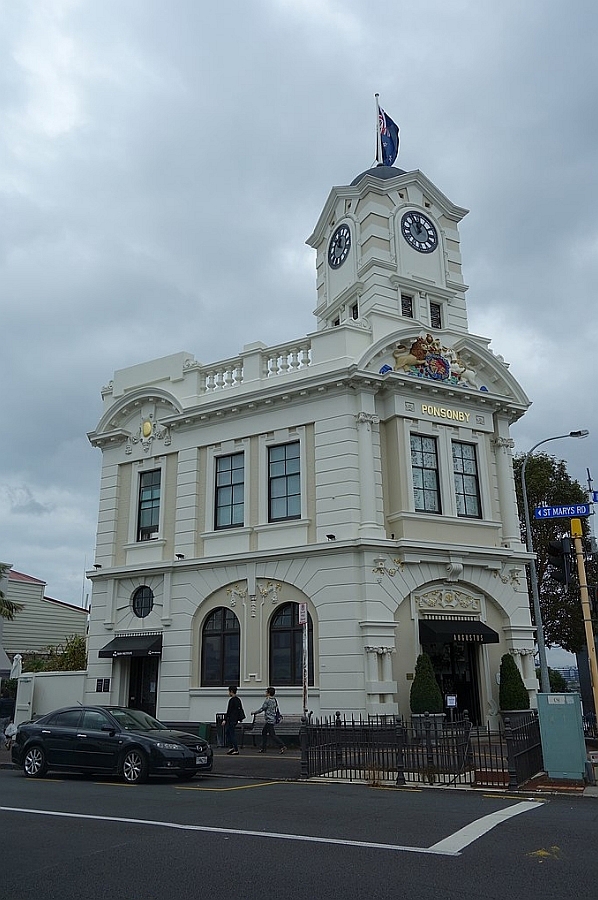
ARCHITECTURAL SIGNIFICANCE Ponsonby is one of the best preserved and most heavily ornamented suburban Post Offices in New Zealand. It has been described as being somewhat ill-proportioned, but its elaborate Neo-Baroque decoration and prominent, elevated site make it a building of considerable architectural significance. TOWNSCAPE/LANDSCAPE SIGNIFICANCE With its tower and elevated site the Ponsonby Post Office acts as a landmark in the Three Lamps area of Ponsonby. The building also forms an integral part of a precinct of historic buildings including the Leys Institute and the former Ponsonby Fire Station nearby.
Why is this place significant?
Historic Significance
Historical Significance or Value The Ponsonby Post Office was built by L McKinstry at a cost of 3700 pounds. The clock was added in 1913 and the clock tower was heightened by 10 feet from what was originally planned to augment the building's prominent site. Half the cost of the clock was contributed by Ponsonby residents. The building has been an important public facility in the area for 75 years and is highly regarded by local residents.
Physical Significance
ARCHITECTURAL SIGNIFICANCE Ponsonby is one of the best preserved and most heavily ornamented suburban Post Offices in New Zealand. It has been described as being somewhat ill-proportioned, but its elaborate Neo-Baroque decoration and prominent, elevated site make it a building of considerable architectural significance. TOWNSCAPE/LANDSCAPE SIGNIFICANCE With its tower and elevated site the Ponsonby Post Office acts as a landmark in the Three Lamps area of Ponsonby. The building also forms an integral part of a precinct of historic buildings including the Leys Institute and the former Ponsonby Fire Station nearby.
Construction Professional
Name
Campbell, John
Type
Architect
Biography
John Campbell (1857-1942) served his articles under John Gordon (c1835-1912) in Glasgow. He arrived in Dunedin in 1882 and after a brief period as a draughtsman with Mason and Wales joined the Dunedin branch of the Public Works Department in 1883. His first known work, an unbuilt design for the Dunedin Railway Station, reveals an early interest in Baroque architecture. In November 1888 Campbell was transferred to Wellington where in 1889 he took up the position of draughtsman in charge of the Public Buildings Division of the Public Works Department. He remained in charge of the design of government buildings throughout New Zealand until his retirement in 1922, becoming in 1909 the first person to hold the position of Government Architect. Government architecture designed under his aegis evidences a change in style from Queen Anne to Edwardian Baroque. His best-known Queen Anne design is the Dunedin Police Station (1895-8), modelled on Richard Norman Shaw's New Scotland Yard (1887-90). Among his most exuberant Edwardian Baroque buildings is the Public Trust Office, Wellington (1905-09). Although Campbell designed the Dunedin Law Courts (1899-1902) in the Gothic style with a Scottish Baronial inflection, he established Edwardian Baroque as the government style for police stations, courthouses and post offices throughout New Zealand. In 1911 Campbell won the nation-wide architectural competition for the design of Parliament Buildings, Wellington. Although only partially completed, Parliament House is the crowning achievement of Campbell's career.
Construction Details
Start Year
1912
Type
Original Construction
Start Year
1913
Type
Addition
Description
Clock tower built
Start Year
2012
startYearCirca
Finish Year
2012
finishYearCirca
Type
Other
Description
Structural Upgrade to 100% NBS and extensive refurbishment (NZ Herald 16/3/13 p.1)
Construction Materials
Brick walls with cement finish on ground floor. First floor consists of pressed brick walls with cement dressings. Interior woodwork is Rimu with interior walls being finished in Keene's cement.
Notable Features
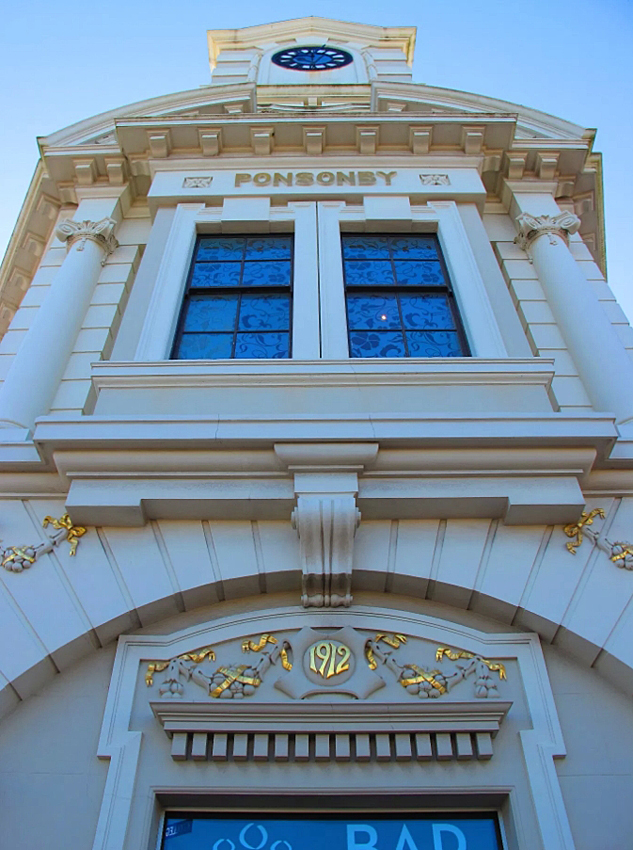
SPECIAL FEATURES Clock, and the royal coat of arms in the large broken pediment over the corner entrance.
Construction Professional
Name
Campbell, John
Type
Architect
Biography
John Campbell (1857-1942) served his articles under John Gordon (c1835-1912) in Glasgow. He arrived in Dunedin in 1882 and after a brief period as a draughtsman with Mason and Wales joined the Dunedin branch of the Public Works Department in 1883. His first known work, an unbuilt design for the Dunedin Railway Station, reveals an early interest in Baroque architecture. In November 1888 Campbell was transferred to Wellington where in 1889 he took up the position of draughtsman in charge of the Public Buildings Division of the Public Works Department. He remained in charge of the design of government buildings throughout New Zealand until his retirement in 1922, becoming in 1909 the first person to hold the position of Government Architect. Government architecture designed under his aegis evidences a change in style from Queen Anne to Edwardian Baroque. His best-known Queen Anne design is the Dunedin Police Station (1895-8), modelled on Richard Norman Shaw's New Scotland Yard (1887-90). Among his most exuberant Edwardian Baroque buildings is the Public Trust Office, Wellington (1905-09). Although Campbell designed the Dunedin Law Courts (1899-1902) in the Gothic style with a Scottish Baronial inflection, he established Edwardian Baroque as the government style for police stations, courthouses and post offices throughout New Zealand. In 1911 Campbell won the nation-wide architectural competition for the design of Parliament Buildings, Wellington. Although only partially completed, Parliament House is the crowning achievement of Campbell's career.
Construction Details
Start Year
1912
Type
Original Construction
Start Year
1913
Type
Addition
Description
Clock tower built
Start Year
2012
startYearCirca
Finish Year
2012
finishYearCirca
Type
Other
Description
Structural Upgrade to 100% NBS and extensive refurbishment (NZ Herald 16/3/13 p.1)
Construction Materials
Brick walls with cement finish on ground floor. First floor consists of pressed brick walls with cement dressings. Interior woodwork is Rimu with interior walls being finished in Keene's cement.
Notable Features
SPECIAL FEATURES Clock, and the royal coat of arms in the large broken pediment over the corner entrance.
ARCHITECTURAL DESCRIPTION (Style) A very free, idiosyncratic example of Edwardian Baroque architecture occupying a prominent triangular site. Entrance is through a wide section of façade at the apex of the triangle. The building has a balustraded parapet and clock tower over the corner section of the façade. MODIFICATIONS Largely original apart from changes to the interior made necessary by the need to streamline Post Office operations
ARCHITECTURAL DESCRIPTION (Style) A very free, idiosyncratic example of Edwardian Baroque architecture occupying a prominent triangular site. Entrance is through a wide section of façade at the apex of the triangle. The building has a balustraded parapet and clock tower over the corner section of the façade. MODIFICATIONS Largely original apart from changes to the interior made necessary by the need to streamline Post Office operations
Historical and Associated Iwi / Hapū / Whānau
Information Sources
Auckland Star
Auckland Star
New Zealand Herald
New Zealand Herald, 12 July 1932, p. 6; 28 September 1933, p. 6.
New Zealand Post Office
Post Office Records, Wellington
Other Information
Please note that entry on the New Zealand Heritage List/Rarangi Korero identifies only the heritage values of the property concerned, and should not be construed as advice on the state of the property, or as a comment of its soundness or safety, including in regard to earthquake risk, safety in the event of fire, or insanitary conditions.
Historical and Associated Iwi / Hapū / Whānau
Information Sources
Auckland Star
Auckland Star
New Zealand Herald
New Zealand Herald, 12 July 1932, p. 6; 28 September 1933, p. 6.
New Zealand Post Office
Post Office Records, Wellington
Other Information
Please note that entry on the New Zealand Heritage List/Rarangi Korero identifies only the heritage values of the property concerned, and should not be construed as advice on the state of the property, or as a comment of its soundness or safety, including in regard to earthquake risk, safety in the event of fire, or insanitary conditions.
Former Usages
General Usage: Communication
Specific Usage: Post Office
Former Usages
General Usage: Communication
Specific Usage: Post Office
Location
Get the latest heritage news, features and events delivered
straight to your inbox.
