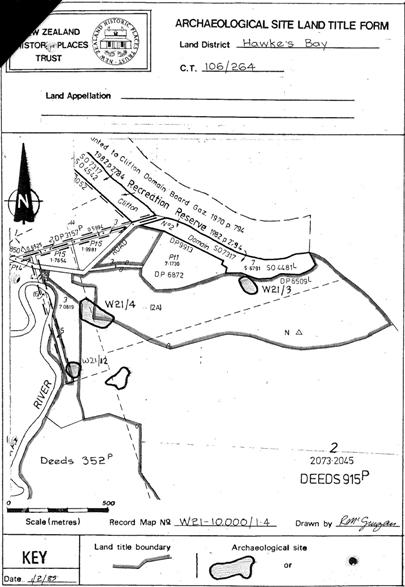
NZAA site W21/15 (New Zealand Heritage List no. 6507) is a small ridgeline pa on a steep, narrow spur below the Clifton trig station on farmland above the Maraetotara River. The pa is one of a number of pa on the ridges and small platforms on uplifted marine terraces near Cape Kidnappers / Mataupo Maui, which have elevated views of the surrounding landscape and have utilised the natural defences of the topography. Further inland along the river valley there are small areas with raised-rim pits, indicating gardening nearby. The pa is of cultural, traditional, archaeological and historical significance.
While pa W21/15 is not rare it is has important archaeological contextual and information value as an element of Maori occupation and settlement in this archaeologically rich setting on the fringe of Cape Kidnappers / Mataupo Maui. The settlement pattern of this area is directly linked to the resources and geography of the Maraetotara River and the coastal environment of Hawke’s Bay.
Archaeological evidence and Maori oral history points to the initial settlement of Hawke’s Bay around 1250–1300 AD. Different hapu gradually settled the area from Mahia to Porangahau in a variety of diverse landscapes from the coast to the inland forests. The tangata whenua of the Te Awanga (Clifton) area can trace permanent occupation back to the Te Kakano or archaic period of Polynesian settlement. Isolated pockets of Kupe people settled along the Wairarapa coast and came into contact with the descendant of Whatonga who had migrated south from Mahia. Whatonga’s son Tara was born at Te Awanga and is the ancestor for Ngai Tara.
The sites in the area are associated with the descendants of Te Aomatarahi. Mahangapuhua, a son of Whiringarakau, established a pa called Te Pa o Mahanga at Te Awanga. Tama-ariki and Hine-te-ao also occupied this area. Later the area was under the influence of Te Whatui-a-piti through his son Hikawera. Through strategic marriage of the descendants of Ngati Kahungunu, Te Whatui-a-piti and Te Aomatarahi merged the people into the hapu of today. The main hapu interests in Te Awanga are Ngati Kurukuru, Ngati Hikatoa, Ngati Whakaiti, Ngati Ura ki te ao and Ngati Hawea.
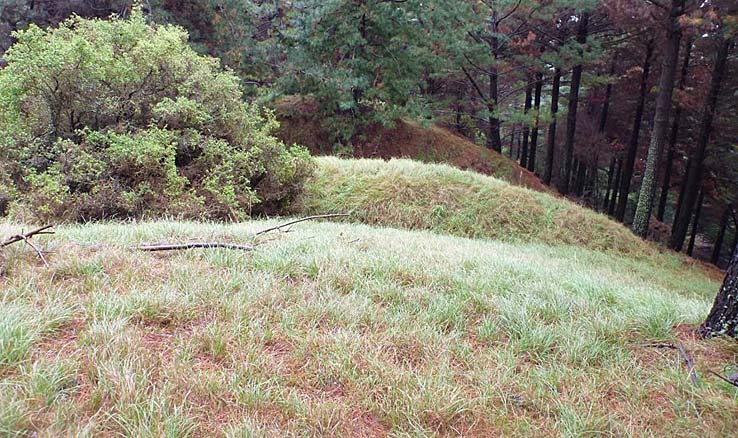
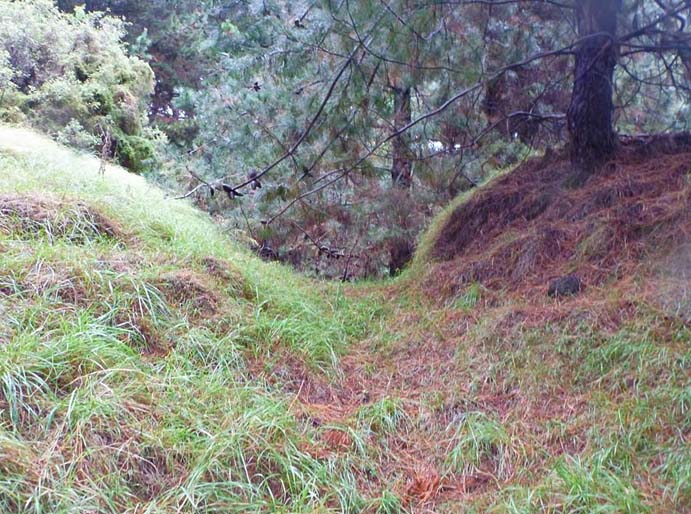
Pa W21/15 is defended on the landward side by double ditch and bank. The double defensive ditch in the southeast section cuts through the ridgeline. The outer ditch is two metres wide and one metre deep. The inner ditch is four metres wide and two metres deep. There is a terrace and house site within the perimeter of the site. The terrace is five metres wide and the house site is five metres by four metres. Immediately inside the inner bank is a raised rim pit. There is also a large crescent terrace around the bottom of the site. Although the site is small it appears to be heavily fortified. A mature karaka grove lies in the western gully adjacent to the site.
The pa features are in good condition and in long grass although the site is surrounded by pine forest, the felling of which may endanger the site.
While pa W21/15 is not rare it is has important archaeological contextual and information value as an element of Maori occupation and settlement in this archaeologically rich setting on the fringe of Cape Kidnappers / Mataupo Maui. The settlement pattern of this area is directly linked to the resources and geography of the Maraetotara River and the coastal environment of Hawke’s Bay.
Archaeological evidence and Maori oral history points to the initial settlement of Hawke’s Bay around 1250–1300 AD. Different hapu gradually settled the area from Mahia to Porangahau in a variety of diverse landscapes from the coast to the inland forests. The tangata whenua of the Te Awanga (Clifton) area can trace permanent occupation back to the Te Kakano or archaic period of Polynesian settlement. Isolated pockets of Kupe people settled along the Wairarapa coast and came into contact with the descendant of Whatonga who had migrated south from Mahia. Whatonga’s son Tara was born at Te Awanga and is the ancestor for Ngai Tara.
The sites in the area are associated with the descendants of Te Aomatarahi. Mahangapuhua, a son of Whiringarakau, established a pa called Te Pa o Mahanga at Te Awanga. Tama-ariki and Hine-te-ao also occupied this area. Later the area was under the influence of Te Whatui-a-piti through his son Hikawera. Through strategic marriage of the descendants of Ngati Kahungunu, Te Whatui-a-piti and Te Aomatarahi merged the people into the hapu of today. The main hapu interests in Te Awanga are Ngati Kurukuru, Ngati Hikatoa, Ngati Whakaiti, Ngati Ura ki te ao and Ngati Hawea.
Pa W21/15 is defended on the landward side by double ditch and bank. The double defensive ditch in the southeast section cuts through the ridgeline. The outer ditch is two metres wide and one metre deep. The inner ditch is four metres wide and two metres deep. There is a terrace and house site within the perimeter of the site. The terrace is five metres wide and the house site is five metres by four metres. Immediately inside the inner bank is a raised rim pit. There is also a large crescent terrace around the bottom of the site. Although the site is small it appears to be heavily fortified. A mature karaka grove lies in the western gully adjacent to the site.
The pa features are in good condition and in long grass although the site is surrounded by pine forest, the felling of which may endanger the site.