DonateSupporterVisit Heritage
  • Tūrangawaewae
    Places
  • Tira Māori
    Māori Heritage
  • Poutairangahia
    Archaeology
  • Rauemi
    Resources
  • Mō Tātou
    About Us
  • New Zealand Heritage List
  • Nominate and submit
  • Explore the List
  • National Historic Landmarks
  • Plaques
  • Rainbow List Project
  • Lost heritage
  • Visit Heritage
  • Our properties
  • Turnbull House Project
  • Collections
  • Shop
  • Tohu Whenua
  • Tira Māori
  • Conserving Māori heritage
  • Marae built heritage
  • Māori heritage on the List
  • Hinemihi—Te Hokinga Mai
  • What is archaeology?
  • Is there a site on my property?
  • What are my legal requirements?
  • Affecting an archaeological site
  • Declaring an archaeological site
  • Archaeology FAQs
  • Archaeology Digital Library
  • Archaeology guidelines and templates
  • Resources
  • Funding
  • Publications
  • Sustainable management guides
  • Disaster recovery
  • Podcasts & digital resources
  • Education Hub
  • Conservation plans
  • About
  • Board
  • Māori Heritage Council
  • Senior Staff
  • Offices
  • Contact us
  • Careers
  • Covenants
  • Fast-track
  • Corporate documents
  • Currently consulting on
  • Our submissions
  • News
Quick links
Rārangi Kōrero | The List
Explore the List
National Historic Landmarks
Ngā Manawhenua o Aotearoa me ōna Kōrero Tūturu
Quick links
Tapuwae
A Vision for Places of Māori Heritage
Funding for Māori Heritage
Resources
Quick links
Archaeological Authority Portal
Applying for an archaeological authority
Archaeology FAQs
Browse the most frequently asked questions about archaeological authorities and the archaeological process.
Quick links
Quick links
Contact us
Offices
DonateSupporterVisit Heritage
  • Tūrangawaewae
    Places
  • Tira Māori
    Māori Heritage
  • Poutairangahia
    Archaeology
  • Rauemi
    Resources
  • Mō Tātou
    About Us
  • New Zealand Heritage List
  • Nominate and submit
  • Explore the List
  • National Historic Landmarks
  • Plaques
  • Rainbow List Project
  • Lost heritage
  • Visit Heritage
  • Our properties
  • Turnbull House Project
  • Collections
  • Shop
  • Tohu Whenua
  • Tira Māori
  • Conserving Māori heritage
  • Marae built heritage
  • Māori heritage on the List
  • Hinemihi—Te Hokinga Mai
  • What is archaeology?
  • Is there a site on my property?
  • What are my legal requirements?
  • Affecting an archaeological site
  • Declaring an archaeological site
  • Archaeology FAQs
  • Archaeology Digital Library
  • Archaeology guidelines and templates
  • Resources
  • Funding
  • Publications
  • Sustainable management guides
  • Disaster recovery
  • Podcasts & digital resources
  • Education Hub
  • Conservation plans
  • About
  • Board
  • Māori Heritage Council
  • Senior Staff
  • Offices
  • Contact us
  • Careers
  • Covenants
  • Fast-track
  • Corporate documents
  • Currently consulting on
  • Our submissions
  • News
Quick links
Rārangi Kōrero | The List
Explore the List
National Historic Landmarks
Ngā Manawhenua o Aotearoa me ōna Kōrero Tūturu
Quick links
Tapuwae
A Vision for Places of Māori Heritage
Funding for Māori Heritage
Resources
Quick links
Archaeological Authority Portal
Applying for an archaeological authority
Archaeology FAQs
Browse the most frequently asked questions about archaeological authorities and the archaeological process.
Quick links
Quick links
Contact us
Offices
  • Places
  • Nominate and submit
  • National Historic Landmarks
  • Places
  • Nominate and submit
  • National Historic Landmarks
  • Tira Māori
  • Conserving Māori heritage
  • Marae built heritage
  • Tira Māori
  • Conserving Māori heritage
  • Marae built heritage
  • Archaeological authorities
  • Archaeology Digital Library
  • Archaeological authorities
  • Archaeology Digital Library
  • All resources
  • Publications
  • Funding
  • All resources
  • Publications
  • Funding
  • FAQs
  • FAQs
Follow us on:
Places
  • Places
  • Nominate and submit
  • National Historic Landmarks
Tira Māori
  • Tira Māori
  • Conserving Māori heritage
  • Marae built heritage
Archaeology
  • Archaeological authorities
  • Archaeology Digital Library
Resources
  • All resources
  • Publications
  • Funding
FAQs
  • FAQs
Follow us on
HomePrivacyTerms and conditionsAbout this site
© Heritage New Zealand Pouhere Taonga 2026.
 
Pit Complex

450 Clifton Road, CLIFTON

Private

Historic Place Category 2

List No. 6511

Quick links:
List GalleryLocationDetails
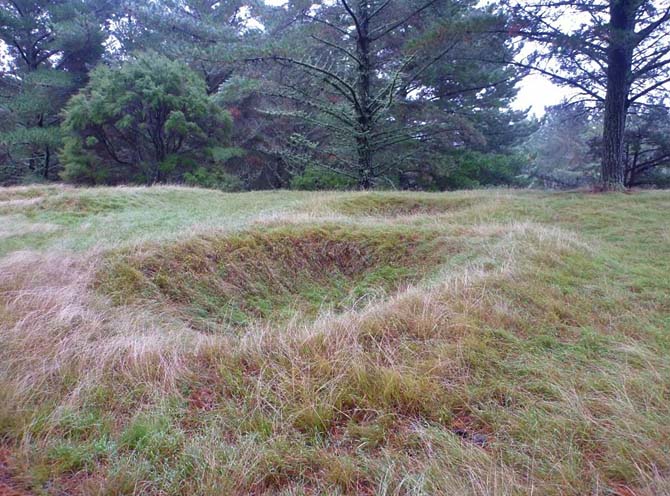
NZAA site W21/12 (New Zealand Heritage List no. 6511) is a pit complex in pasture on the east side of the Maraetotara River off Clifton Road, Clifton. There are a number of these pit/terrace sites on this uplifted marine terrace through which the Maraetotara River flows. The presence of these pits indicates that the area was extensively used for horticulture. The pits are predominantly of the raised rim variety. The pit/terrace site is of cultural, traditional, archaeological and historical significance.

Archaeological evidence and Maori oral history points to the settlement of Hawke’s Bay around 1250–1300 AD. Different hapu gradually settled the area from Mahia to Porangahau in a variety of different landscapes from the coast to the inland forests. Access to these inland areas was often via rivers like the Maraetotara. The tangata whenua of the Te Awanga (Clifton) area can trace permanent occupation back to the Te Kakano or archaic period of Polynesian settlement. Isolated pockets of Kupe people settled along the Wairarapa coast and came into contact with the descendant of Whatonga who had migrated south from Mahia. Whatonga’s son Tara was born at Te Awanga and is the ancestor for Ngai Tara.

The sites in the area are associated with the descendants of Te Aomatarahi. Mahangapuhua, a son of Whiringarakau, established a pa called Te Pa o Mahanga at Te Awanga. Tama-ariki and Hine-te-ao also occupied this area. Later the area was under the influence of Te Whatui-a-piti through his son Hikawera. Through strategic marriage of the descendants of Ngati Kahungunu, Te Whatui-a-piti and Te Aomatarahi merged the people into the hapu of today. The main hapu interests in Te Awanga are Ngati Kurukuru, Ngati Hikatoa, Ngati Whakaiti, Ngati Ura ki te ao and Ngati Hawea.

While pit complex W21/12 is not rare in this area the pit and terrace site reflects the importance of horticultural production (kumara) to sustain tangata whenua in this archaeologically rich setting inland of Cape Kidnappers / Mataupo Maui. The terraces of this area provided fertile, flat land on which to grow crops which were then stored in specifically designed raised rim pits.

This site was initially recorded in 1985 as a group of eight pits scattered on a triangular river terrace remnant. During a site visit in March 2014 only four pits were recorded. All were approximately 4 x 2 metres. The area was heavily overgrown so the other four pits were not relocated due to vegetation cover. It is likely that the pits are a remnant of a village/kainga site. At this point in time the location has not been identified with a specific Maori name.
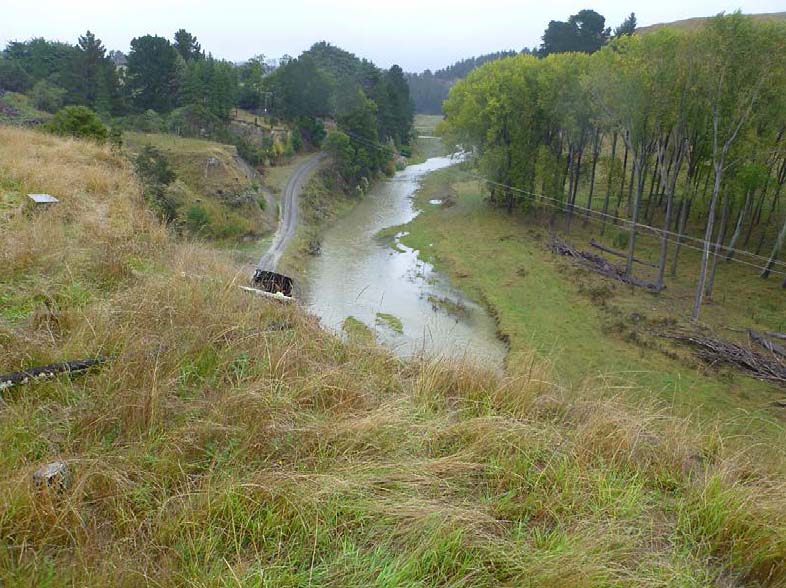
Pit Complex. View from edge of (W21/12) looking south-west showing the natural defences of the site | David Rudd | 01/04/2014 | Heritage New Zealand Pouhere Taonga
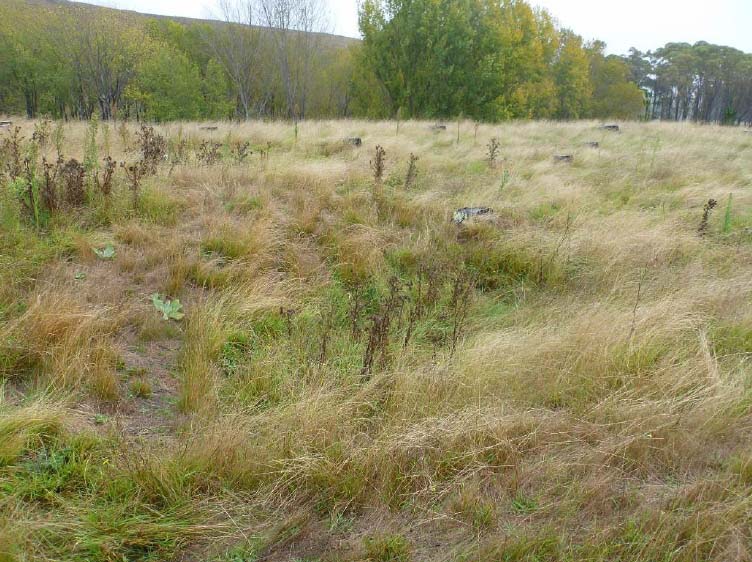
Pit Complex. Overgrown kumara pit (W21/12) | David Rudd | 01/04/2014 | Heritage New Zealand Pouhere Taonga
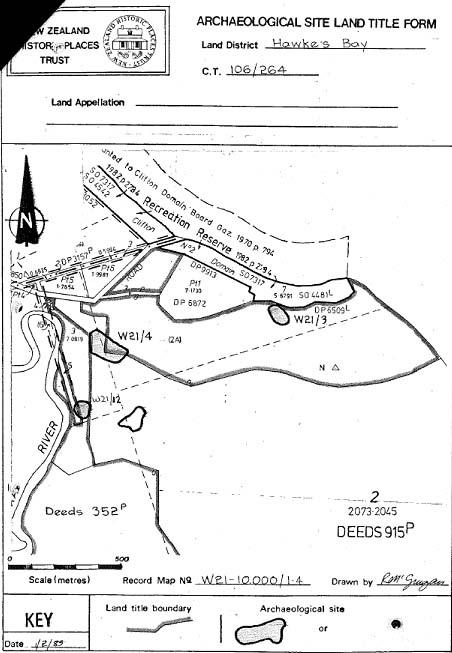
Pit Complex. Plan from Archaeological Site Land Title Form | Heritage New Zealand Pouhere Taonga
Pit Complex. View from edge of (W21/12) looking south-west showing the natural defences of the site | David Rudd | 01/04/2014 | Heritage New Zealand Pouhere Taonga
Pit Complex. Overgrown kumara pit (W21/12) | David Rudd | 01/04/2014 | Heritage New Zealand Pouhere Taonga
Pit Complex. Plan from Archaeological Site Land Title Form | Heritage New Zealand Pouhere Taonga


List Entry Information

Overview

Status
Listed

List Entry Status
Historic Place Category 2

Access
Private/No Public Access

List Number
6511

Date Entered
22nd April 1985

Date of Effect
22nd April 1985

City/District Council
Hastings District

Region
Hawke's Bay Region

Extent of List Entry

Extent includes part of the land described as Lot 3 Deeds 915 (RT HBW4/33) and part of the land described as Sec 5 Blk II Kidnapper SD (RT HBM4/866), Hawkes Bay Land District, and the archaeological site known as Pit Complex (W21/12) thereon. Refer to the extent map tabled at the Heritage New Zealand Board meeting on 25 June 2015.

Legal description

Lot 3 Deeds 915 (RT HBW4/33) and Sec 5 Blk II Kidnapper SD (RT HBM4/866), Hawkes Bay Land District

Detailed List Entry
Reference

Public NZAA Number

W21/12

Completion Date

3rd June 2015

Report Written By

Christine Barnett

Information Sources

Jones, 1994

Kevin L. Jones, Nga Tohuwhenua mai te Rangi: A New Zealand Archaeology in Aerial Photographs, Wellington, 1994

Parson, 2007

Parson. Pat. (2007) Cultural Impact Report, Prepared for the Hastings District Council by the Waimarama Maori Committee – Ocean Beach Facilitation team. Appendix II, An Overview History of Waimarama

Pollock, 2012

'Hawke’s Bay region - Māori settlement and occupation', Te Ara - the Encyclopedia of New Zealand, updated 13-Jul-12

Report Written By

This place was identified as significant under previous legislation with different information requirements. It remains significant under the current legislation. There is opportunity under our legislation and policies to add to this information. Further information about this place may be available from the Central Regional Office of Heritage New Zealand Pouhere Taonga. Please note that entry on the New Zealand Heritage List/Rarangi Korero identifies only the heritage values of the property concerned, and should not be construed as advice on the state of the property, or as a comment of its soundness or safety, including in regard to earthquake risk, safety in the event of fire, or insanitary conditions. A fully referenced upgrade report is available on request from the Central Region Office of Heritage New Zealand

Further Information

Current Usages

Former Usages

General Usage:: Maori

Specific Usage: Pit

General Usage:: Maori

Specific Usage: Terrace

Themes

Of Significance to Maori

Web Links

Overview

Status

Listed

List Entry Status

Historic Place Category 2

Access

Private/No Public Access

List Number

6511

Date Entered

22nd April 1985

Date of Effect

22nd April 1985

City/District Council

Hastings District

Region

Hawke's Bay Region

Extent of List Entry

Extent includes part of the land described as Lot 3 Deeds 915 (RT HBW4/33) and part of the land described as Sec 5 Blk II Kidnapper SD (RT HBM4/866), Hawkes Bay Land District, and the archaeological site known as Pit Complex (W21/12) thereon. Refer to the extent map tabled at the Heritage New Zealand Board meeting on 25 June 2015.

Legal description

Lot 3 Deeds 915 (RT HBW4/33) and Sec 5 Blk II Kidnapper SD (RT HBM4/866), Hawkes Bay Land District

Status

Listed

List Entry Status

Historic Place Category 2

Access

Private/No Public Access

List Number

6511

Date Entered

22nd April 1985

Date of Effect

22nd April 1985

City/District Council

Hastings District

Region

Hawke's Bay Region

Extent of List Entry

Extent includes part of the land described as Lot 3 Deeds 915 (RT HBW4/33) and part of the land described as Sec 5 Blk II Kidnapper SD (RT HBM4/866), Hawkes Bay Land District, and the archaeological site known as Pit Complex (W21/12) thereon. Refer to the extent map tabled at the Heritage New Zealand Board meeting on 25 June 2015.

Legal description

Lot 3 Deeds 915 (RT HBW4/33) and Sec 5 Blk II Kidnapper SD (RT HBM4/866), Hawkes Bay Land District

Reference

Historical and Associated Iwi / Hapū / Whānau

Public NZAA Number

W21/12

Completion Date

3rd June 2015

Report Written By

Christine Barnett

Information Sources

Jones, 1994

Kevin L. Jones, Nga Tohuwhenua mai te Rangi: A New Zealand Archaeology in Aerial Photographs, Wellington, 1994

Parson, 2007

Parson. Pat. (2007) Cultural Impact Report, Prepared for the Hastings District Council by the Waimarama Maori Committee – Ocean Beach Facilitation team. Appendix II, An Overview History of Waimarama

Pollock, 2012

'Hawke’s Bay region - Māori settlement and occupation', Te Ara - the Encyclopedia of New Zealand, updated 13-Jul-12

Other Information

This place was identified as significant under previous legislation with different information requirements. It remains significant under the current legislation. There is opportunity under our legislation and policies to add to this information. Further information about this place may be available from the Central Regional Office of Heritage New Zealand Pouhere Taonga. Please note that entry on the New Zealand Heritage List/Rarangi Korero identifies only the heritage values of the property concerned, and should not be construed as advice on the state of the property, or as a comment of its soundness or safety, including in regard to earthquake risk, safety in the event of fire, or insanitary conditions. A fully referenced upgrade report is available on request from the Central Region Office of Heritage New Zealand

Historical and Associated Iwi / Hapū / Whānau

Public NZAA Number

W21/12

Completion Date

3rd June 2015

Report Written By

Christine Barnett

Information Sources

Jones, 1994

Kevin L. Jones, Nga Tohuwhenua mai te Rangi: A New Zealand Archaeology in Aerial Photographs, Wellington, 1994

Parson, 2007

Parson. Pat. (2007) Cultural Impact Report, Prepared for the Hastings District Council by the Waimarama Maori Committee – Ocean Beach Facilitation team. Appendix II, An Overview History of Waimarama

Pollock, 2012

'Hawke’s Bay region - Māori settlement and occupation', Te Ara - the Encyclopedia of New Zealand, updated 13-Jul-12

Other Information

This place was identified as significant under previous legislation with different information requirements. It remains significant under the current legislation. There is opportunity under our legislation and policies to add to this information. Further information about this place may be available from the Central Regional Office of Heritage New Zealand Pouhere Taonga. Please note that entry on the New Zealand Heritage List/Rarangi Korero identifies only the heritage values of the property concerned, and should not be construed as advice on the state of the property, or as a comment of its soundness or safety, including in regard to earthquake risk, safety in the event of fire, or insanitary conditions. A fully referenced upgrade report is available on request from the Central Region Office of Heritage New Zealand

Further Information

Former Usages

General Usage: Maori

Specific Usage: Pit

General Usage: Maori

Specific Usage: Terrace

Themes

Of Significance to Maori

Former Usages

General Usage: Maori

Specific Usage: Pit

General Usage: Maori

Specific Usage: Terrace

Themes

Of Significance to Maori

Location

Loading
Related listings
Pit Complex. Images shows Pits (W21/11)
Pit Complex
Pit Complex. Images shows Pits (W21/11)
Pit Complex
Sign up to hear more

Get the latest heritage news, features and events delivered
straight to your inbox.

Subscribe