DonateMembershipVisit Heritage
  • Tūrangawaewae
    Places
  • Tira Māori
    Māori Heritage
  • Poutairangahia
    Archaeology
  • Rauemi
    Resources
  • Mō Tātou
    About Us
  • New Zealand Heritage List
  • Nominate and submit
  • Explore the List
  • National Historic Landmarks
  • Plaques
  • Rainbow List Project
  • Lost heritage
  • Visit Heritage
  • Our properties
  • Turnbull House Project
  • Collections
  • Shop
  • Tohu Whenua
  • Tira Māori
  • Conserving Māori heritage
  • Marae built heritage
  • Māori heritage on the List
  • Hinemihi—Te Hokinga Mai
  • What is archaeology?
  • Is there a site on my property?
  • What are my legal requirements?
  • Affecting an archaeological site
  • Declaring an archaeological site
  • Archaeology FAQs
  • Archaeology Digital Library
  • Archaeology guidelines and templates
  • Resources
  • Funding
  • Publications
  • Sustainable management guides
  • Disaster recovery
  • Podcasts & digital resources
  • Education Hub
  • Conservation plans
  • About
  • Board
  • Māori Heritage Council
  • Senior Staff
  • Offices
  • Contact us
  • Careers
  • Covenants
  • Fast-track
  • Corporate documents
  • Currently consulting on
  • Our submissions
  • News
  • Covid-19 response
Quick links
Rārangi Kōrero | The List
Explore the List
National Historic Landmarks
Ngā Manawhenua o Aotearoa me ōna Kōrero Tūturu
Quick links
Tapuwae
A Vision for Places of Māori Heritage
Funding for Māori Heritage
Resources
Quick links
Archaeological Authority Portal
Applying for an archaeological authority
Archaeology FAQs
Browse the most frequently asked questions about archaeological authorities and the archaeological process.
Quick links
Quick links
Contact us
Offices
DonateMembershipVisit Heritage
  • Tūrangawaewae
    Places
  • Tira Māori
    Māori Heritage
  • Poutairangahia
    Archaeology
  • Rauemi
    Resources
  • Mō Tātou
    About Us
  • New Zealand Heritage List
  • Nominate and submit
  • Explore the List
  • National Historic Landmarks
  • Plaques
  • Rainbow List Project
  • Lost heritage
  • Visit Heritage
  • Our properties
  • Turnbull House Project
  • Collections
  • Shop
  • Tohu Whenua
  • Tira Māori
  • Conserving Māori heritage
  • Marae built heritage
  • Māori heritage on the List
  • Hinemihi—Te Hokinga Mai
  • What is archaeology?
  • Is there a site on my property?
  • What are my legal requirements?
  • Affecting an archaeological site
  • Declaring an archaeological site
  • Archaeology FAQs
  • Archaeology Digital Library
  • Archaeology guidelines and templates
  • Resources
  • Funding
  • Publications
  • Sustainable management guides
  • Disaster recovery
  • Podcasts & digital resources
  • Education Hub
  • Conservation plans
  • About
  • Board
  • Māori Heritage Council
  • Senior Staff
  • Offices
  • Contact us
  • Careers
  • Covenants
  • Fast-track
  • Corporate documents
  • Currently consulting on
  • Our submissions
  • News
  • Covid-19 response
Quick links
Rārangi Kōrero | The List
Explore the List
National Historic Landmarks
Ngā Manawhenua o Aotearoa me ōna Kōrero Tūturu
Quick links
Tapuwae
A Vision for Places of Māori Heritage
Funding for Māori Heritage
Resources
Quick links
Archaeological Authority Portal
Applying for an archaeological authority
Archaeology FAQs
Browse the most frequently asked questions about archaeological authorities and the archaeological process.
Quick links
Quick links
Contact us
Offices
  • Places
  • Nominate and submit
  • National Historic Landmarks
  • Places
  • Nominate and submit
  • National Historic Landmarks
  • Tira Māori
  • Conserving Māori heritage
  • Marae built heritage
  • Tira Māori
  • Conserving Māori heritage
  • Marae built heritage
  • Archaeological authorities
  • Archaeology Digital Library
  • Archaeological authorities
  • Archaeology Digital Library
  • All resources
  • Publications
  • Funding
  • All resources
  • Publications
  • Funding
  • FAQs
  • FAQs
Follow us on:
Places
  • Places
  • Nominate and submit
  • National Historic Landmarks
Tira Māori
  • Tira Māori
  • Conserving Māori heritage
  • Marae built heritage
Archaeology
  • Archaeological authorities
  • Archaeology Digital Library
Resources
  • All resources
  • Publications
  • Funding
FAQs
  • FAQs
Follow us on
HomePrivacyTerms and conditionsAbout this site
© Heritage New Zealand Pouhere Taonga 2026.
 
Station Hotel (Former)

131 Beach Road, 122 Anzac Avenue and Parliament Street, AUCKLAND

Private

Historic Place Category 2

List No. 657

Quick links:
List GalleryLocationDetails
The Station Hotel (Former) was built in 1930-1 directly opposite the newly-constructed Auckland Railway Station in Beach Road, which formed the main land-based gateway to Auckland. Designed to harmonise with the station, the brick hotel reflects the ‘golden age’ of New Zealand’s railway system and is of regional significance for reflecting Auckland’s changing social history over many decades. It is also architecturally significant in its own right as a design by William Swanson Read Bloomfield (1885-1968) of Ngati Kahungunu, considered likely to be the first person of Maori descent to attend architecture school and practice as an architect. Reinforcing the hotel’s potency as a symbol of progress, the structure occupies land once part of the grounds of the colonial General Assembly and Provincial Buildings - cut down as part of extensive early-twentieth century remodelling and reclamations to provide better port, road and rail access.

The relocation of Auckland’s railway station allowed the opportunity to establish new facilities for rail travellers, and the developers of this hotel, Hancock and Co, wanted to build a hotel ‘on the lines of the large American and Continental hotels’, for both rail and overseas travellers. By the early twentieth century when Bloomfield was studying architecture at the University of Pennsylvania (1911-13), American hotels formed the global standard for commercial hospitality. The Station Hotel was built by Fletchers Construction; it was one of the very few commercial buildings constructed in Auckland during the Great Depression.

In response to the unusual geography of the site, the hotel consisting of seven floors plus basement was built into the steep slope of the hill and could be entered on either the ground floor; or the sixth floor, from a long courtyard on Anzac Avenue. The ground floor contained the lobby and bars, the fifth floor the dining room, and the sixth floor was completely taken up with a highly decorated lounge bar. Although a number of these spaces have since been reorganised notable surviving features include a segmental arched ceiling with timbering, and deeply moulded Art Deco plaster capitals with unmistakable Maori cultural references. In 1967 the hotel was extended into a two-storey building next door on Beach Road, and at some point the entrance from Anzac Avenue was covered with a one storey addition.

The hotel, its bars and dining rooms enjoyed a significant social history, and its managers often became well-known personalities. The hotel was once an elegant place to stay and played host to many social occasions, for both Aucklanders and travellers. In the 1930s and 1940s the Station Hotel was a favourite of Labour members of parliament, and during the Second World War (1939-45) it was favoured by American soldiers. From the 1950s it became well known as a ‘sporting hotel’; and many involved in rugby and racing stayed there. In the 1960s it was the first in Auckland to be granted an ‘entertainment licence’ allowing it to hold dances in its dining room, making it a popular venue with locals wishing to circumvent alcohol licencing laws. At around this time the reputation of the hotel declined; despite this, the proximity to the Supreme Court made its bars popular with senior police officers. In the 1960s and 1970s the hotel became very well known as a music venue; many significant concerts were held there. The decline in the prestige of the building broadly coincided with that of the railway system, as road transport and motels increasingly gained popularity from the middle of the twentieth century. Since the 1970s, the building, operating as both a hotel and a hostel, has been known by a number of different names. It survives as an important symbol of the popularity of New Zealand's rail network in early and mid-twentieth century society.
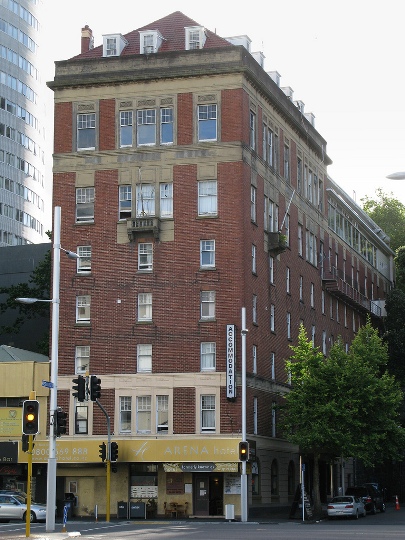
Station Hotel (Former). Image courtesy of www.flickr.com - https://www.flickr.com/photos/geoff-inoz/ | geoff-inoz | 01/02/2010 | geoff-inoz

List Entry Information

Overview

Status
Listed

List Entry Status
Historic Place Category 2

Access
Private/No Public Access

List Number
657

Date Entered
26th November 1981

Date of Effect
26th November 1981

City/District Council
Auckland Council

Region
Auckland Council

Extent of List Entry

Extent includes the land described as Lots 57, 58, 85, 86 DP 14125 (RTs NA624/216, NA51D/1100, NA51D/1101), North Auckland Land District, and the buildings known as the Station Hotel (Former) thereon, and their fittings and fixtures.

Legal description

Lots 57, 58, 85, 86 DP 14125 (RTs NA624/216, NA51D/1100, NA51D/1101), North Auckland Land District

Detailed List Entry

Construction Professional

Name

Fletcher Construction Company

Type

Builder

Biography

Fletcher Construction Company was founded by Scottish-born James Fletcher (1886 - 1974), the son of a builder. Six months after his arrival in Dunedin in 1908, Fletcher formed a house-building partnership with Bert Morris. They soon moved into larger-scale construction work, building the St Kilda Town Hall (1911), and the main dormitory block and Ross Chapel at Knox College (1912). Fletcher's brothers, William, Andrew and John joined the business in 1911, which then became known as Fletcher Brothers. A branch was opened in Invercargill. While holidaying in Auckland in 1916, James tendered for the construction of the the Auckland City Markets. By 1919 the company, then known as Fletcher Construction, was firmly established in Auckland and Wellington. Notable landmarks constructed by the company during the Depression included the Auckland University College Arts Building (completed 1926); Landmark House (the former Auckland Electric Power Board Building, 1927); Auckland Civic Theatre (1929); the Chateau Tongariro (1929); and the Dominion Museum, Wellington (1934). Prior to the election of the first Labour Government, Fletcher (a Reform supporter) had advised the Labour Party on housing policy as hbe believed in large-scale planning and in the inter-dependence of government and business. However, he declined an approach by Prime Minister Michael Joseph Savage in December 1935 to sell the company to the government, when the latter wanted to ensure the large-scale production of rental state housing. Although Fletchers ultimately went on to build many of New Zealand's state houses, for several years Residential Construction Ltd (the subsidiary established to undertake their construction) sustained heavy financial losses. Fletcher Construction became a public company, Fletcher Holdings, in 1940. Already Fletchers' interests were wide ranging: brickyards, engineering shops, joinery factories, marble quarries, structural steel plants and other enterprises had been added the original construction firm. Further expansion could only be undertaken with outside capital. During the Second World War James Fletcher, having retired as chairman of Fletcher Holdings, was seconded to the newly created position of Commissioner of State Construction which he held during 1942 and 1943. Directly responsible to Prime Minister Peter Fraser, Fletcher had almost complete control over the deployment of workers and resources. He also became the Commissioner of the Ministry of Works, set up in 1943, a position he held until December 1945. In 1981 Fletcher Holdings; Tasman Pulp and Paper; and Challenge Corporation amalgamated to form Fletcher Challenge Ltd, at that time New Zealand's largest company. Williamson Construction Company - main contract

Name

Bloomfield, W S R

Type

Architect

Biography

William Swanson Read Bloomfield (1885-1968), of Ngāti Kahungunu, has been considered likely to be the first person of Māori descent to have attended an architecture school and practised as a Western-style architect. Born into a prominent Gisborne family in Manutuke in 1885, his parents were Thomas E. Read Bloomfield and Mary Swanson - the latter being the daughter of Auckland timber merchant William Swanson and Ani Rangitunoa from Hawkes Bay. He was the second of five children to Thomas and Mary. Thomas had emigrated from England as a child in the 1860s and received an inheritance from his wealthy uncle George Edward Read, an English whaler and sea captain who settled in Poverty Bay. Thomas’ legacy funded the building of Riverslea, now known as Opou, a substantial homestead at Manutuke. In 1883 Thomas married Mary Swanson, the daughter of Ani Rangitunoa of Ngāti Kahungungu, and William Swanson, prominent Auckland timber merchant and 40-year politician progressing from the Provincial Council to the House of Representatives and finally the Legislative Council. William Bloomfield’s father died when he was five and his mother did not remarry, so his grandfather William Swanson is thought to have been a key male influence in his early life. William Bloomfield graduated from the University of Pennsylvania’s School of Architecture in 1913 and is reported to have been studying architecture in England when the First World War (1914-18) broke out. Joining the Royal Flying Corps soon after the conflict started, he was shot down over enemy lines in 1917 and was held captive for the remainder of the war. After repatriation from Germany, Bloomfield returned to New Zealand and married Audrey Gribbin in 1920. From the mid-1920s, he practised in Auckland as part of the firm Bloomfield and Hunt, and then Bloomfield, Owen and Morgan. He was responsible for several notable buildings in the city during this period, including Yorkshire House (1926-8); the Queen’s Arcade in Queen Street (1928-9) and the Masonic Temple in St Benedict’s Street (1929-30). Work undertaken in 1930 included the Hotel Titirangi - or Lopdell House - in Titirangi; the Station Hotel in Beach Road; and the Auckland Aero Club clubhouse. Also in 1930, Bloomfield’s design for St Augustine’s Church in Devonport was erected as a memorial to local men who had died in the First World War. Those commemorated included his brother-in-law, Gunner R. L. Gribbin. During the Second World War (1939-45), Bloomfield served in the Royal New Zealand Air Force as squadron leader and North Island divisional commander. His later work as an architect encompassed numerous domestic designs, many of which featured in Home and Building. He retired from practice in 1959. Source: NZ Heritage List Report for Hotel Titirangi (Former), Te Uru Gallery and the Treasure House (Former), 6 November 2020, Martin Jones.

Construction Details

Start Year

1967

Type

Addition

Description

Extension into the two-storey building next door on Beach Road

Start Year

1931

Type

Original Construction

Reference

Completion Date

5th June 2015

Report Written By

Elizabeth Cox

Information Sources

Auckland Star

Auckland Star

Metro

Metro

New Zealand Legacy

NZ Legacy

Shaw, 2009

P. Shaw, Pride of Place: A history of the Fletcher Construction Company, Auckland, 2009

Smith, 2009

J. Smith, No Job Too Big: A history of Fletcher Construction, Volume I: 1909-1940, Wellington, 2009

The New Zealand Railways Magazine

O’Hara, W K, ‘The Development of Auckland’s Railway Station’, The New Zealand Railways Magazine, Vol 2, Issue 2, (June 1927).

Sandoval-Strausz, 2007

Sandoval-Strausz, A.K. Hotel: An American History, Yale, 2007

Report Written By

This place was identified as significant under previous legislation with different information requirements. It remains significant under the current legislation. There is opportunity under our legislation and policies to add to this information. Further information about this place may be available from the Northern Regional Office of Heritage New Zealand Pouhere Taonga. Please note that entry on the New Zealand Heritage List/Rarangi Korero identifies only the heritage values of the property concerned, and should not be construed as advice on the state of the property, or as a comment of its soundness or safety, including in regard to earthquake risk, safety in the event of fire, or insanitary conditions. A fully referenced upgrade report is available on request from the Northern Region Office of Heritage New Zealand

Further Information

Current Usages

Uses: Accommodation

Specific Usage: Hotel

Former Usages

Themes

Web Links

Overview

Status

Listed

List Entry Status

Historic Place Category 2

Access

Private/No Public Access

List Number

657

Date Entered

26th November 1981

Date of Effect

26th November 1981

City/District Council

Auckland Council

Region

Auckland Council

Extent of List Entry

Extent includes the land described as Lots 57, 58, 85, 86 DP 14125 (RTs NA624/216, NA51D/1100, NA51D/1101), North Auckland Land District, and the buildings known as the Station Hotel (Former) thereon, and their fittings and fixtures.

Legal description

Lots 57, 58, 85, 86 DP 14125 (RTs NA624/216, NA51D/1100, NA51D/1101), North Auckland Land District

Status

Listed

List Entry Status

Historic Place Category 2

Access

Private/No Public Access

List Number

657

Date Entered

26th November 1981

Date of Effect

26th November 1981

City/District Council

Auckland Council

Region

Auckland Council

Extent of List Entry

Extent includes the land described as Lots 57, 58, 85, 86 DP 14125 (RTs NA624/216, NA51D/1100, NA51D/1101), North Auckland Land District, and the buildings known as the Station Hotel (Former) thereon, and their fittings and fixtures.

Legal description

Lots 57, 58, 85, 86 DP 14125 (RTs NA624/216, NA51D/1100, NA51D/1101), North Auckland Land District

Construction Information

Construction Professional

Name

Fletcher Construction Company

Type

Builder

Biography

Fletcher Construction Company was founded by Scottish-born James Fletcher (1886 - 1974), the son of a builder. Six months after his arrival in Dunedin in 1908, Fletcher formed a house-building partnership with Bert Morris. They soon moved into larger-scale construction work, building the St Kilda Town Hall (1911), and the main dormitory block and Ross Chapel at Knox College (1912). Fletcher's brothers, William, Andrew and John joined the business in 1911, which then became known as Fletcher Brothers. A branch was opened in Invercargill. While holidaying in Auckland in 1916, James tendered for the construction of the the Auckland City Markets. By 1919 the company, then known as Fletcher Construction, was firmly established in Auckland and Wellington. Notable landmarks constructed by the company during the Depression included the Auckland University College Arts Building (completed 1926); Landmark House (the former Auckland Electric Power Board Building, 1927); Auckland Civic Theatre (1929); the Chateau Tongariro (1929); and the Dominion Museum, Wellington (1934). Prior to the election of the first Labour Government, Fletcher (a Reform supporter) had advised the Labour Party on housing policy as hbe believed in large-scale planning and in the inter-dependence of government and business. However, he declined an approach by Prime Minister Michael Joseph Savage in December 1935 to sell the company to the government, when the latter wanted to ensure the large-scale production of rental state housing. Although Fletchers ultimately went on to build many of New Zealand's state houses, for several years Residential Construction Ltd (the subsidiary established to undertake their construction) sustained heavy financial losses. Fletcher Construction became a public company, Fletcher Holdings, in 1940. Already Fletchers' interests were wide ranging: brickyards, engineering shops, joinery factories, marble quarries, structural steel plants and other enterprises had been added the original construction firm. Further expansion could only be undertaken with outside capital. During the Second World War James Fletcher, having retired as chairman of Fletcher Holdings, was seconded to the newly created position of Commissioner of State Construction which he held during 1942 and 1943. Directly responsible to Prime Minister Peter Fraser, Fletcher had almost complete control over the deployment of workers and resources. He also became the Commissioner of the Ministry of Works, set up in 1943, a position he held until December 1945. In 1981 Fletcher Holdings; Tasman Pulp and Paper; and Challenge Corporation amalgamated to form Fletcher Challenge Ltd, at that time New Zealand's largest company. Williamson Construction Company - main contract

Name

Bloomfield, W S R

Type

Architect

Biography

William Swanson Read Bloomfield (1885-1968), of Ngāti Kahungunu, has been considered likely to be the first person of Māori descent to have attended an architecture school and practised as a Western-style architect. Born into a prominent Gisborne family in Manutuke in 1885, his parents were Thomas E. Read Bloomfield and Mary Swanson - the latter being the daughter of Auckland timber merchant William Swanson and Ani Rangitunoa from Hawkes Bay. He was the second of five children to Thomas and Mary. Thomas had emigrated from England as a child in the 1860s and received an inheritance from his wealthy uncle George Edward Read, an English whaler and sea captain who settled in Poverty Bay. Thomas’ legacy funded the building of Riverslea, now known as Opou, a substantial homestead at Manutuke. In 1883 Thomas married Mary Swanson, the daughter of Ani Rangitunoa of Ngāti Kahungungu, and William Swanson, prominent Auckland timber merchant and 40-year politician progressing from the Provincial Council to the House of Representatives and finally the Legislative Council. William Bloomfield’s father died when he was five and his mother did not remarry, so his grandfather William Swanson is thought to have been a key male influence in his early life. William Bloomfield graduated from the University of Pennsylvania’s School of Architecture in 1913 and is reported to have been studying architecture in England when the First World War (1914-18) broke out. Joining the Royal Flying Corps soon after the conflict started, he was shot down over enemy lines in 1917 and was held captive for the remainder of the war. After repatriation from Germany, Bloomfield returned to New Zealand and married Audrey Gribbin in 1920. From the mid-1920s, he practised in Auckland as part of the firm Bloomfield and Hunt, and then Bloomfield, Owen and Morgan. He was responsible for several notable buildings in the city during this period, including Yorkshire House (1926-8); the Queen’s Arcade in Queen Street (1928-9) and the Masonic Temple in St Benedict’s Street (1929-30). Work undertaken in 1930 included the Hotel Titirangi - or Lopdell House - in Titirangi; the Station Hotel in Beach Road; and the Auckland Aero Club clubhouse. Also in 1930, Bloomfield’s design for St Augustine’s Church in Devonport was erected as a memorial to local men who had died in the First World War. Those commemorated included his brother-in-law, Gunner R. L. Gribbin. During the Second World War (1939-45), Bloomfield served in the Royal New Zealand Air Force as squadron leader and North Island divisional commander. His later work as an architect encompassed numerous domestic designs, many of which featured in Home and Building. He retired from practice in 1959. Source: NZ Heritage List Report for Hotel Titirangi (Former), Te Uru Gallery and the Treasure House (Former), 6 November 2020, Martin Jones.

Construction Details

Start Year

1967

Type

Addition

Description

Extension into the two-storey building next door on Beach Road

Start Year

1931

Type

Original Construction

Construction Professional

Name

Fletcher Construction Company

Type

Builder

Biography

Fletcher Construction Company was founded by Scottish-born James Fletcher (1886 - 1974), the son of a builder. Six months after his arrival in Dunedin in 1908, Fletcher formed a house-building partnership with Bert Morris. They soon moved into larger-scale construction work, building the St Kilda Town Hall (1911), and the main dormitory block and Ross Chapel at Knox College (1912). Fletcher's brothers, William, Andrew and John joined the business in 1911, which then became known as Fletcher Brothers. A branch was opened in Invercargill. While holidaying in Auckland in 1916, James tendered for the construction of the the Auckland City Markets. By 1919 the company, then known as Fletcher Construction, was firmly established in Auckland and Wellington. Notable landmarks constructed by the company during the Depression included the Auckland University College Arts Building (completed 1926); Landmark House (the former Auckland Electric Power Board Building, 1927); Auckland Civic Theatre (1929); the Chateau Tongariro (1929); and the Dominion Museum, Wellington (1934). Prior to the election of the first Labour Government, Fletcher (a Reform supporter) had advised the Labour Party on housing policy as hbe believed in large-scale planning and in the inter-dependence of government and business. However, he declined an approach by Prime Minister Michael Joseph Savage in December 1935 to sell the company to the government, when the latter wanted to ensure the large-scale production of rental state housing. Although Fletchers ultimately went on to build many of New Zealand's state houses, for several years Residential Construction Ltd (the subsidiary established to undertake their construction) sustained heavy financial losses. Fletcher Construction became a public company, Fletcher Holdings, in 1940. Already Fletchers' interests were wide ranging: brickyards, engineering shops, joinery factories, marble quarries, structural steel plants and other enterprises had been added the original construction firm. Further expansion could only be undertaken with outside capital. During the Second World War James Fletcher, having retired as chairman of Fletcher Holdings, was seconded to the newly created position of Commissioner of State Construction which he held during 1942 and 1943. Directly responsible to Prime Minister Peter Fraser, Fletcher had almost complete control over the deployment of workers and resources. He also became the Commissioner of the Ministry of Works, set up in 1943, a position he held until December 1945. In 1981 Fletcher Holdings; Tasman Pulp and Paper; and Challenge Corporation amalgamated to form Fletcher Challenge Ltd, at that time New Zealand's largest company. Williamson Construction Company - main contract

Name

Bloomfield, W S R

Type

Architect

Biography

William Swanson Read Bloomfield (1885-1968), of Ngāti Kahungunu, has been considered likely to be the first person of Māori descent to have attended an architecture school and practised as a Western-style architect. Born into a prominent Gisborne family in Manutuke in 1885, his parents were Thomas E. Read Bloomfield and Mary Swanson - the latter being the daughter of Auckland timber merchant William Swanson and Ani Rangitunoa from Hawkes Bay. He was the second of five children to Thomas and Mary. Thomas had emigrated from England as a child in the 1860s and received an inheritance from his wealthy uncle George Edward Read, an English whaler and sea captain who settled in Poverty Bay. Thomas’ legacy funded the building of Riverslea, now known as Opou, a substantial homestead at Manutuke. In 1883 Thomas married Mary Swanson, the daughter of Ani Rangitunoa of Ngāti Kahungungu, and William Swanson, prominent Auckland timber merchant and 40-year politician progressing from the Provincial Council to the House of Representatives and finally the Legislative Council. William Bloomfield’s father died when he was five and his mother did not remarry, so his grandfather William Swanson is thought to have been a key male influence in his early life. William Bloomfield graduated from the University of Pennsylvania’s School of Architecture in 1913 and is reported to have been studying architecture in England when the First World War (1914-18) broke out. Joining the Royal Flying Corps soon after the conflict started, he was shot down over enemy lines in 1917 and was held captive for the remainder of the war. After repatriation from Germany, Bloomfield returned to New Zealand and married Audrey Gribbin in 1920. From the mid-1920s, he practised in Auckland as part of the firm Bloomfield and Hunt, and then Bloomfield, Owen and Morgan. He was responsible for several notable buildings in the city during this period, including Yorkshire House (1926-8); the Queen’s Arcade in Queen Street (1928-9) and the Masonic Temple in St Benedict’s Street (1929-30). Work undertaken in 1930 included the Hotel Titirangi - or Lopdell House - in Titirangi; the Station Hotel in Beach Road; and the Auckland Aero Club clubhouse. Also in 1930, Bloomfield’s design for St Augustine’s Church in Devonport was erected as a memorial to local men who had died in the First World War. Those commemorated included his brother-in-law, Gunner R. L. Gribbin. During the Second World War (1939-45), Bloomfield served in the Royal New Zealand Air Force as squadron leader and North Island divisional commander. His later work as an architect encompassed numerous domestic designs, many of which featured in Home and Building. He retired from practice in 1959. Source: NZ Heritage List Report for Hotel Titirangi (Former), Te Uru Gallery and the Treasure House (Former), 6 November 2020, Martin Jones.

Construction Details

Start Year

1967

Type

Addition

Description

Extension into the two-storey building next door on Beach Road

Start Year

1931

Type

Original Construction

Reference

Historical and Associated Iwi / Hapū / Whānau

Completion Date

5th June 2015

Report Written By

Elizabeth Cox

Information Sources

Auckland Star

Auckland Star

Metro

Metro

New Zealand Legacy

NZ Legacy

Shaw, 2009

P. Shaw, Pride of Place: A history of the Fletcher Construction Company, Auckland, 2009

Smith, 2009

J. Smith, No Job Too Big: A history of Fletcher Construction, Volume I: 1909-1940, Wellington, 2009

The New Zealand Railways Magazine

O’Hara, W K, ‘The Development of Auckland’s Railway Station’, The New Zealand Railways Magazine, Vol 2, Issue 2, (June 1927).

Sandoval-Strausz, 2007

Sandoval-Strausz, A.K. Hotel: An American History, Yale, 2007

Other Information

This place was identified as significant under previous legislation with different information requirements. It remains significant under the current legislation. There is opportunity under our legislation and policies to add to this information. Further information about this place may be available from the Northern Regional Office of Heritage New Zealand Pouhere Taonga. Please note that entry on the New Zealand Heritage List/Rarangi Korero identifies only the heritage values of the property concerned, and should not be construed as advice on the state of the property, or as a comment of its soundness or safety, including in regard to earthquake risk, safety in the event of fire, or insanitary conditions. A fully referenced upgrade report is available on request from the Northern Region Office of Heritage New Zealand

Historical and Associated Iwi / Hapū / Whānau

Completion Date

5th June 2015

Report Written By

Elizabeth Cox

Information Sources

Auckland Star

Auckland Star

Metro

Metro

New Zealand Legacy

NZ Legacy

Shaw, 2009

P. Shaw, Pride of Place: A history of the Fletcher Construction Company, Auckland, 2009

Smith, 2009

J. Smith, No Job Too Big: A history of Fletcher Construction, Volume I: 1909-1940, Wellington, 2009

The New Zealand Railways Magazine

O’Hara, W K, ‘The Development of Auckland’s Railway Station’, The New Zealand Railways Magazine, Vol 2, Issue 2, (June 1927).

Sandoval-Strausz, 2007

Sandoval-Strausz, A.K. Hotel: An American History, Yale, 2007

Other Information

This place was identified as significant under previous legislation with different information requirements. It remains significant under the current legislation. There is opportunity under our legislation and policies to add to this information. Further information about this place may be available from the Northern Regional Office of Heritage New Zealand Pouhere Taonga. Please note that entry on the New Zealand Heritage List/Rarangi Korero identifies only the heritage values of the property concerned, and should not be construed as advice on the state of the property, or as a comment of its soundness or safety, including in regard to earthquake risk, safety in the event of fire, or insanitary conditions. A fully referenced upgrade report is available on request from the Northern Region Office of Heritage New Zealand

Further Information

Current Usages

Uses: Accommodation

Specific Usage: Hotel

Current Usages

Uses: Accommodation

Specific Usage: Hotel

Location

Loading
Related listings
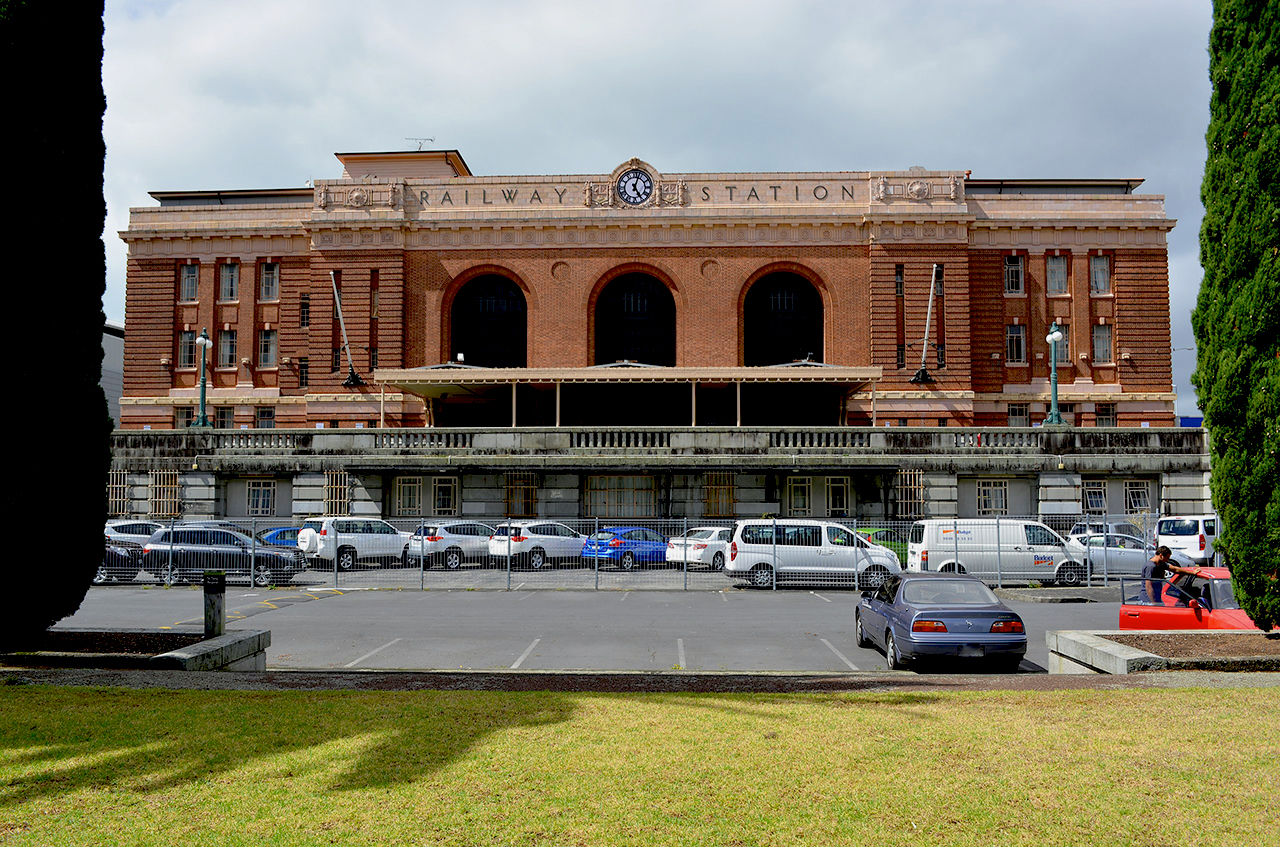
Auckland Railway Station, Auckland. CC BY 2.0 Image courtesy of commons.wikimedia.org
Auckland Railway Station
Auckland Railway Station, Auckland. CC BY 2.0 Image courtesy of commons.wikimedia.org
Auckland Railway Station
Sign up to hear more

Get the latest heritage news, features and events delivered
straight to your inbox.

Subscribe