Quick links


Quick links
Quick links
Quick links
Quick links
Quick links
6882 State Highway 1, PAKARAKA
Private
Historic Place Category 1
List No. 70
List Entry Information
Status
Listed
List Entry Status
Historic Place Category 1
Access
Private/No Public Access
List Number
70
Date Entered
15th February 1990
Date of Effect
15th February 1990
City/District Council
Far North District
Region
Northland Region
Legal description
Pt OLC 54 (RT NA533/273), North Auckland Land District
Status
Listed
List Entry Status
Historic Place Category 1
Access
Private/No Public Access
List Number
70
Date Entered
15th February 1990
Date of Effect
15th February 1990
City/District Council
Far North District
Region
Northland Region
Legal description
Pt OLC 54 (RT NA533/273), North Auckland Land District
Why is this place significant?
Historic Significance
Historical Significance or Value Archdeacon Henry Williams was an influential churchman and important historical figure in the evangelising and European settlement of New Zealand. 'The Retreat' was his home for some 15 years prior to his death, and stayed in family ownership until its vesting in the existing Trust. It is a place of considerable significance to the many Williams descendants. Together with the nearby Holy Trinity Church, the Ludbrook house, other buildings of the same period, and the well-established exotic trees, "The Retreat" forms an important historical precinct.
Physical Significance
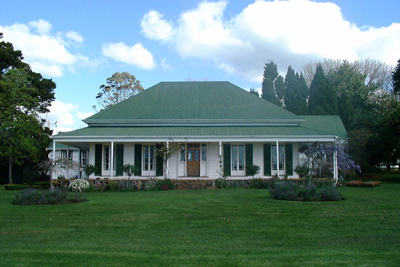
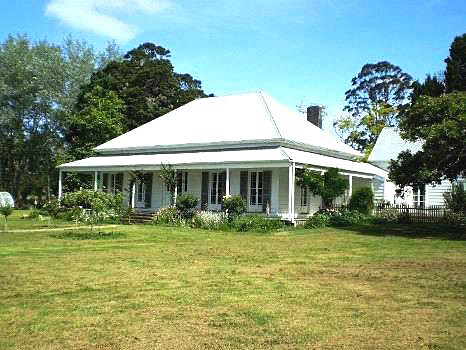
ARCHITECTURAL QUALITY: 'The Retreat' is a well preserved house of the Colonial mission past. Despite several additions, the principal portion of the house is a well-proportioned Georgian style building.
Why is this place significant?
Historic Significance
Historical Significance or Value Archdeacon Henry Williams was an influential churchman and important historical figure in the evangelising and European settlement of New Zealand. 'The Retreat' was his home for some 15 years prior to his death, and stayed in family ownership until its vesting in the existing Trust. It is a place of considerable significance to the many Williams descendants. Together with the nearby Holy Trinity Church, the Ludbrook house, other buildings of the same period, and the well-established exotic trees, "The Retreat" forms an important historical precinct.
Physical Significance
ARCHITECTURAL QUALITY: 'The Retreat' is a well preserved house of the Colonial mission past. Despite several additions, the principal portion of the house is a well-proportioned Georgian style building.
Construction Details
Type
Other
Description
Possible site of Maori field system
Period
pre-1830s
Start Year
1850
Finish Year
1852
Type
Original Construction
Description
Construction of dwelling
Type
Addition
Description
Conservatory added against northern verandah
Period
pre-1877
Type
Modification
Description
Conservatory demolished
Period
pre-1950
Start Year
1950
startYearCirca
Type
Modification
Description
Northeast bedroom wing added, with internal alterations to the main dwelling
Type
Addition
Description
Southeast service wing (possibly a relocated 1840s cottage)
Construction Materials
Timber framing with weatherboard cladding; boxed corners with scribers; all in kauri. Hipped roof, now with corrugated iron. Timber piles.
Notable Features
Registration covers the building, its fixtures and finishes. It also includes recent modifications. The structure is associated with historic trees and other plantings, and likely archaeological deposits of nineteenth-century and - possibly - earlier date. Its general historical and ecclesiastical associations.
Construction Details
Type
Other
Description
Possible site of Maori field system
Period
pre-1830s
Start Year
1850
Finish Year
1852
Type
Original Construction
Description
Construction of dwelling
Type
Addition
Description
Conservatory added against northern verandah
Period
pre-1877
Type
Modification
Description
Conservatory demolished
Period
pre-1950
Start Year
1950
startYearCirca
Type
Modification
Description
Northeast bedroom wing added, with internal alterations to the main dwelling
Type
Addition
Description
Southeast service wing (possibly a relocated 1840s cottage)
Construction Materials
Timber framing with weatherboard cladding; boxed corners with scribers; all in kauri. Hipped roof, now with corrugated iron. Timber piles.
Notable Features
Registration covers the building, its fixtures and finishes. It also includes recent modifications. The structure is associated with historic trees and other plantings, and likely archaeological deposits of nineteenth-century and - possibly - earlier date. Its general historical and ecclesiastical associations.
The house was the home of Archdeacon Henry Williams following his dismissal from the Paihia mission and his move to Pakaraka where his sons had established their farming enterprise. Williams lived in the house until his death in 1867. The house is now known by the firmly established name "The Retreat", but this is not the sense in which the word was first used by Williams who viewed Pakaraka as a place of retreat in its widest meaning as a place of intellectual, spiritual and pastoral renewal. He stayed on at 'The Retreat' following his later reinstatement by the Church Mission Society. Williams was an influential pioneer missionary in New Zealand. He accompanied Marsden to New Zealand on his fourth visit, and became head of the church mission to the Maori people. After a difficult period of endeavour in the early 1830s he eventually achieved success at Otaki and the East Coast, before his involvement in the Bay of Islands. Williams was a potent influence in persuading many Maori to sign the Treaty of Waitangi. He came into dispute with the church authorities because of his land purchases on behalf of his family and was dismissed from the mission at Paihia, although he did retain his ordained status. Following investigation of his land claims he was reinstated by the mission, although he did not return to the Paihia station. The house was in 1908 transferred from the Williams family to the trusteeship of the General Trust Board of the Anglican Diocese of Auckland, which now leases it at a pepper-corn rental to the Clarkes.
The house was the home of Archdeacon Henry Williams following his dismissal from the Paihia mission and his move to Pakaraka where his sons had established their farming enterprise. Williams lived in the house until his death in 1867. The house is now known by the firmly established name "The Retreat", but this is not the sense in which the word was first used by Williams who viewed Pakaraka as a place of retreat in its widest meaning as a place of intellectual, spiritual and pastoral renewal. He stayed on at 'The Retreat' following his later reinstatement by the Church Mission Society. Williams was an influential pioneer missionary in New Zealand. He accompanied Marsden to New Zealand on his fourth visit, and became head of the church mission to the Maori people. After a difficult period of endeavour in the early 1830s he eventually achieved success at Otaki and the East Coast, before his involvement in the Bay of Islands. Williams was a potent influence in persuading many Maori to sign the Treaty of Waitangi. He came into dispute with the church authorities because of his land purchases on behalf of his family and was dismissed from the mission at Paihia, although he did retain his ordained status. Following investigation of his land claims he was reinstated by the mission, although he did not return to the Paihia station. The house was in 1908 transferred from the Williams family to the trusteeship of the General Trust Board of the Anglican Diocese of Auckland, which now leases it at a pepper-corn rental to the Clarkes.
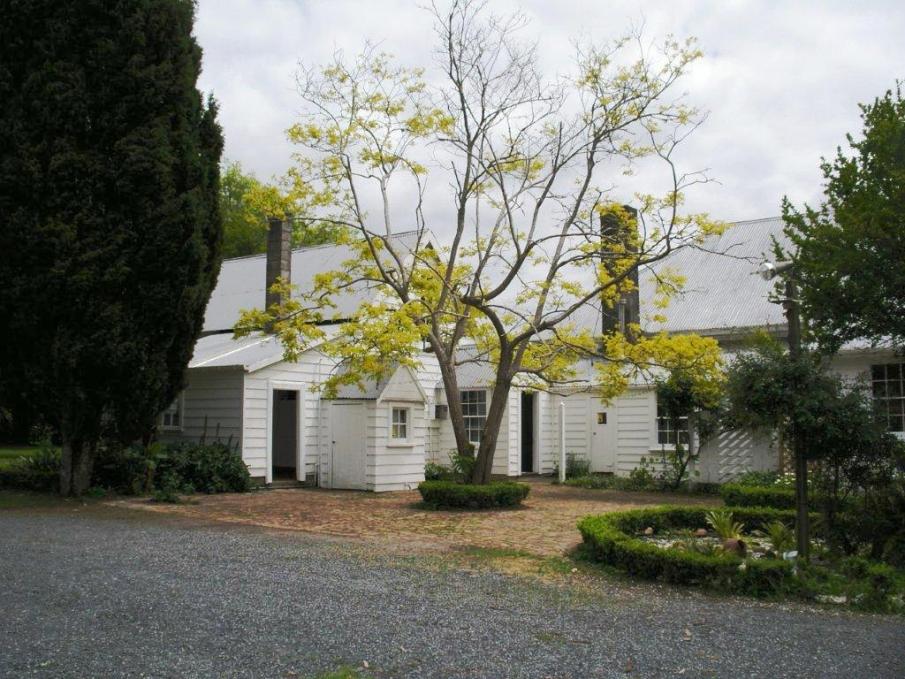
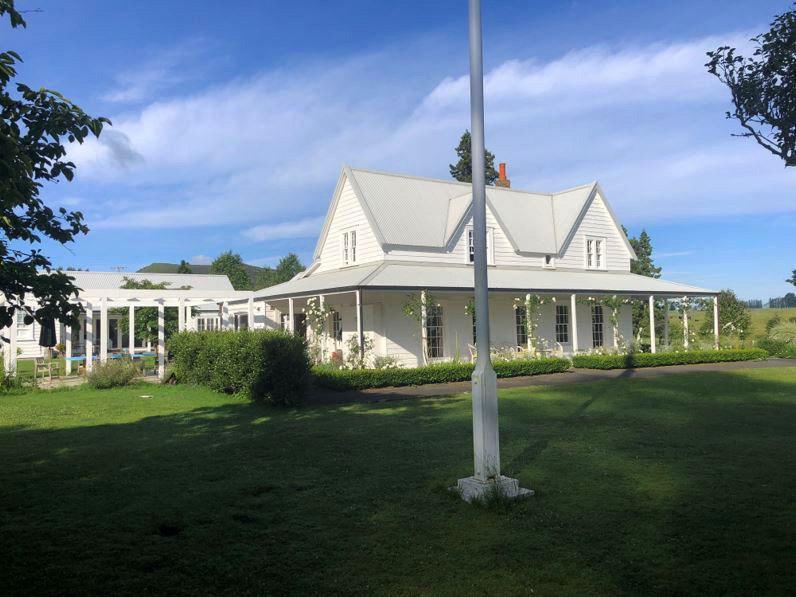
ARCHITECT/ENGINEER/DESIGNER: It is generally believed that the house was built by or for Henry Williams, though the role he actually played in designing or building the house is not documented. He was not a trained architect, but the missionaries and settlers of the period were resourceful people who were quite capable of designing and constructing their own buildings. It is likely that this was the case with 'The Retreat', although because of his age the actual building was probably done by his sons with the assistance of local Maori labour. ARCHITECTURAL DESCRIPTION This is a Colonial mission style building. It is a basically rectangular building with a hipped roof. The main elevation has a classical symmetry. It has one main six-panelled top-glazed door with sidelights, and four French casements equally spaced, two on each side of the door. A verandah runs along three sides of the house, its roof slightly below the eaves of the main house. It is supported by stop chamferred wooden posts. At each end of the back of the house are wings which have been added to the original structure. To the left is a more recent gabled structure with similar fenestration to that of the original house, with double hung, 'twelve light' sash windows. To the right is a two-storeyed wing with a steep gable which has been extended to the rear with a skillion roof. At the back of the house are several additions. Some have gable roofs, but others are lean-tos. MODIFICATIONS: 'The Retreat' has undergone many alterations and modifications, mostly undocumented. Wings and lean-tos have been added to the rear. Internally smaller rooms have been combined, and linings changed; plaster ceilings have been replaced. Windows and doors have been removed, and some reinstated. The original kauri shingles have been replaced with corrugated iron. The steps at the front have been replaced recently.
ARCHITECT/ENGINEER/DESIGNER: It is generally believed that the house was built by or for Henry Williams, though the role he actually played in designing or building the house is not documented. He was not a trained architect, but the missionaries and settlers of the period were resourceful people who were quite capable of designing and constructing their own buildings. It is likely that this was the case with 'The Retreat', although because of his age the actual building was probably done by his sons with the assistance of local Maori labour. ARCHITECTURAL DESCRIPTION This is a Colonial mission style building. It is a basically rectangular building with a hipped roof. The main elevation has a classical symmetry. It has one main six-panelled top-glazed door with sidelights, and four French casements equally spaced, two on each side of the door. A verandah runs along three sides of the house, its roof slightly below the eaves of the main house. It is supported by stop chamferred wooden posts. At each end of the back of the house are wings which have been added to the original structure. To the left is a more recent gabled structure with similar fenestration to that of the original house, with double hung, 'twelve light' sash windows. To the right is a two-storeyed wing with a steep gable which has been extended to the rear with a skillion roof. At the back of the house are several additions. Some have gable roofs, but others are lean-tos. MODIFICATIONS: 'The Retreat' has undergone many alterations and modifications, mostly undocumented. Wings and lean-tos have been added to the rear. Internally smaller rooms have been combined, and linings changed; plaster ceilings have been replaced. Windows and doors have been removed, and some reinstated. The original kauri shingles have been replaced with corrugated iron. The steps at the front have been replaced recently.
Historical and Associated Iwi / Hapū / Whānau
Completion Date
10th July 2002
Report Written By
Martin Jones
Information Sources
Boese, 1977
Kay Boese, 'Tides of History: Bay of Islands County', Whangarei, 1977
Dictionary of New Zealand Biography
Dictionary of New Zealand Biography
Williams, 1961
Henry Williams, The Early Journals of Henry Williams 1826-40, (ed.) L.M. Rogers, Christchurch, 1961
Keene, 1978
Keene, Florence, Legacies in Kauri: Old Homes and Churches of the North, Whangarei, 1978
Langley, 1968
R. W. Langley, 'The Retreat, Pakaraka', BArch measured drawings, University of Auckland, 1968
New Zealand Historic Places Trust (NZHPT)
New Zealand Historic Places Trust
Ross, 1967 (2)
R. M. Ross, 'The Retreat (Mrs Poore), Pakaraka', unpublished ms., Auckland, 1967 (held by NZHPT, Auckland)
Ross, 1967 (3)
R. M. Ross, 'Garden next door to The Retreat, Pakaraka', unpublished ms., Auckland, 1967 (held by NZHPT, Auckland)
Salmond, 1986
Jeremy Salmond, Old New Zealand Houses 1800-1940, Auckland, 1986, Reed Methuen
Stacpoole, 1979
John Stacpoole, 'The Retreat, Pakaraka, Bay of Islands', New Zealand Historic Places Trust Report, Wellington, 1979 (held by NZHPT, Auckland)
Sutton, 1994
Douglas G. Sutton (ed.), The Archaeology of the Kainga: A Study of Precontact Maori Undefended Settlements at Pouerua, Northland, New Zealand (2nd edn.), Auckland, 1994
Other Information
This historic place was registered under the Historic Places Act 1980. This report includes the text from the original Building Classification Committee report considered by the NZHPT Board at the time of registration. Please note that entry on the New Zealand Heritage List/Rarangi Korero identifies only the heritage values of the property concerned, and should not be construed as advice on the state of the property, or as a comment of its soundness or safety, including in regard to earthquake risk, safety in the event of fire, or insanitary conditions.
Historical and Associated Iwi / Hapū / Whānau
Completion Date
10th July 2002
Report Written By
Martin Jones
Information Sources
Boese, 1977
Kay Boese, 'Tides of History: Bay of Islands County', Whangarei, 1977
Dictionary of New Zealand Biography
Dictionary of New Zealand Biography
Williams, 1961
Henry Williams, The Early Journals of Henry Williams 1826-40, (ed.) L.M. Rogers, Christchurch, 1961
Keene, 1978
Keene, Florence, Legacies in Kauri: Old Homes and Churches of the North, Whangarei, 1978
Langley, 1968
R. W. Langley, 'The Retreat, Pakaraka', BArch measured drawings, University of Auckland, 1968
New Zealand Historic Places Trust (NZHPT)
New Zealand Historic Places Trust
Ross, 1967 (2)
R. M. Ross, 'The Retreat (Mrs Poore), Pakaraka', unpublished ms., Auckland, 1967 (held by NZHPT, Auckland)
Ross, 1967 (3)
R. M. Ross, 'Garden next door to The Retreat, Pakaraka', unpublished ms., Auckland, 1967 (held by NZHPT, Auckland)
Salmond, 1986
Jeremy Salmond, Old New Zealand Houses 1800-1940, Auckland, 1986, Reed Methuen
Stacpoole, 1979
John Stacpoole, 'The Retreat, Pakaraka, Bay of Islands', New Zealand Historic Places Trust Report, Wellington, 1979 (held by NZHPT, Auckland)
Sutton, 1994
Douglas G. Sutton (ed.), The Archaeology of the Kainga: A Study of Precontact Maori Undefended Settlements at Pouerua, Northland, New Zealand (2nd edn.), Auckland, 1994
Other Information
This historic place was registered under the Historic Places Act 1980. This report includes the text from the original Building Classification Committee report considered by the NZHPT Board at the time of registration. Please note that entry on the New Zealand Heritage List/Rarangi Korero identifies only the heritage values of the property concerned, and should not be construed as advice on the state of the property, or as a comment of its soundness or safety, including in regard to earthquake risk, safety in the event of fire, or insanitary conditions.
Current Usages
Uses: Accommodation
Specific Usage: House
Former Usages
General Usage: Accommodation
Specific Usage: House
General Usage: Trade
Specific Usage: Restaurant/cafe/tearoom
Current Usages
Uses: Accommodation
Specific Usage: House
Former Usages
General Usage: Accommodation
Specific Usage: House
General Usage: Trade
Specific Usage: Restaurant/cafe/tearoom
Location
Get the latest heritage news, features and events delivered
straight to your inbox.
