The town of Hastings was established in 1873 with the construction of a railway station and in the next two decades it developed as a service town to the surrounding rural district. After 1885 the commercial area, consisting mainly of timber buildings, began to develop around the railway station. Many of these were destroyed by a serious fire in 1893. Due to this fire risk the new larger commercial buildings constructed around the turn of the century were built of brick and plaster.
At this time a number of influential architects began to work in Hastings including William Rush (1872-1965) who was the first to envisage the appropriateness of the Spanish Mission style to the sunny climate of the Hawkes Bay Region. The number of retail businesses grew making the town the main shopping centre in the province. The most important development was in Station St which was later renamed Russell St.
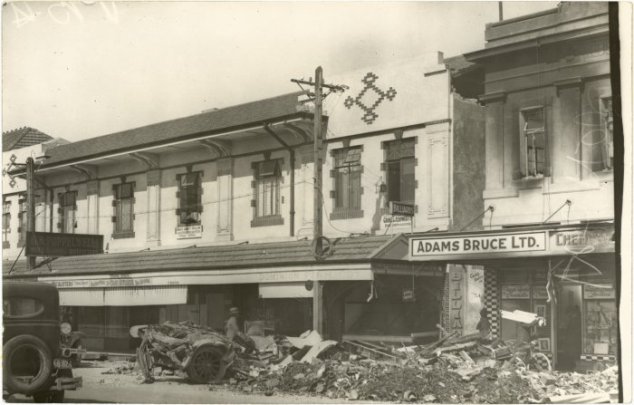
On February 3, 1931 the Napier earthquake struck killing 93 people in the Hastings district. Hundreds were injured and evacuated. Masonry buildings crumbled and only the reinforced concrete structures survived. In order to rebuild the city centre an association of architects was formed to oversee the efficient replacement of the damaged premises. Initially the bulk of this work consisted of demolitions, repairs and building of temporary premises. It was not until 1933-34 that a substantial number of new buildings began to appear in the town's central business district.
List Entry Information
Status
Listed
List Entry Status
Historic Area
Access
Private/No Public Access
List Number
7020
Date Entered
16th December 1994
Date of Effect
16th December 1994
City/District Council
Hastings District
Region
Hawke's Bay Region
Extent of List Entry
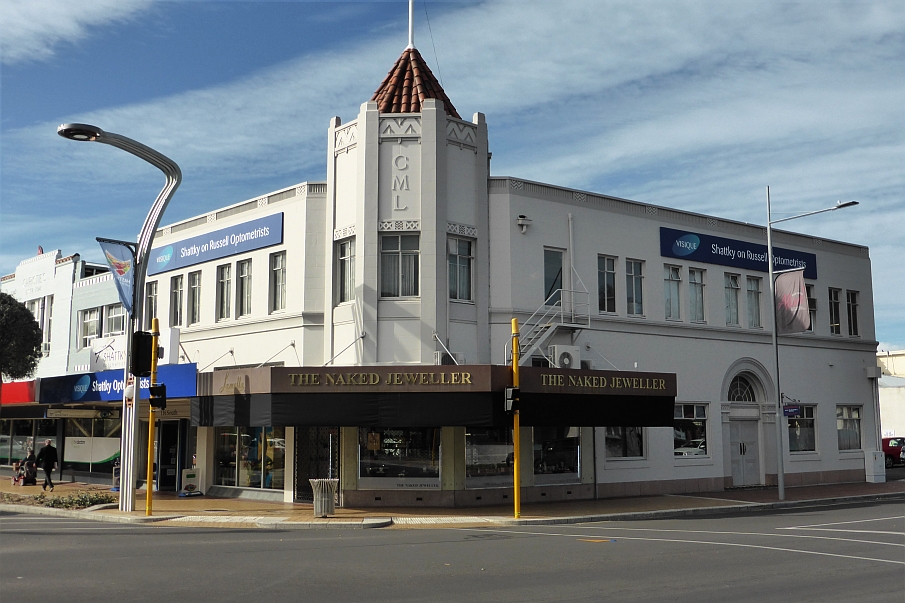
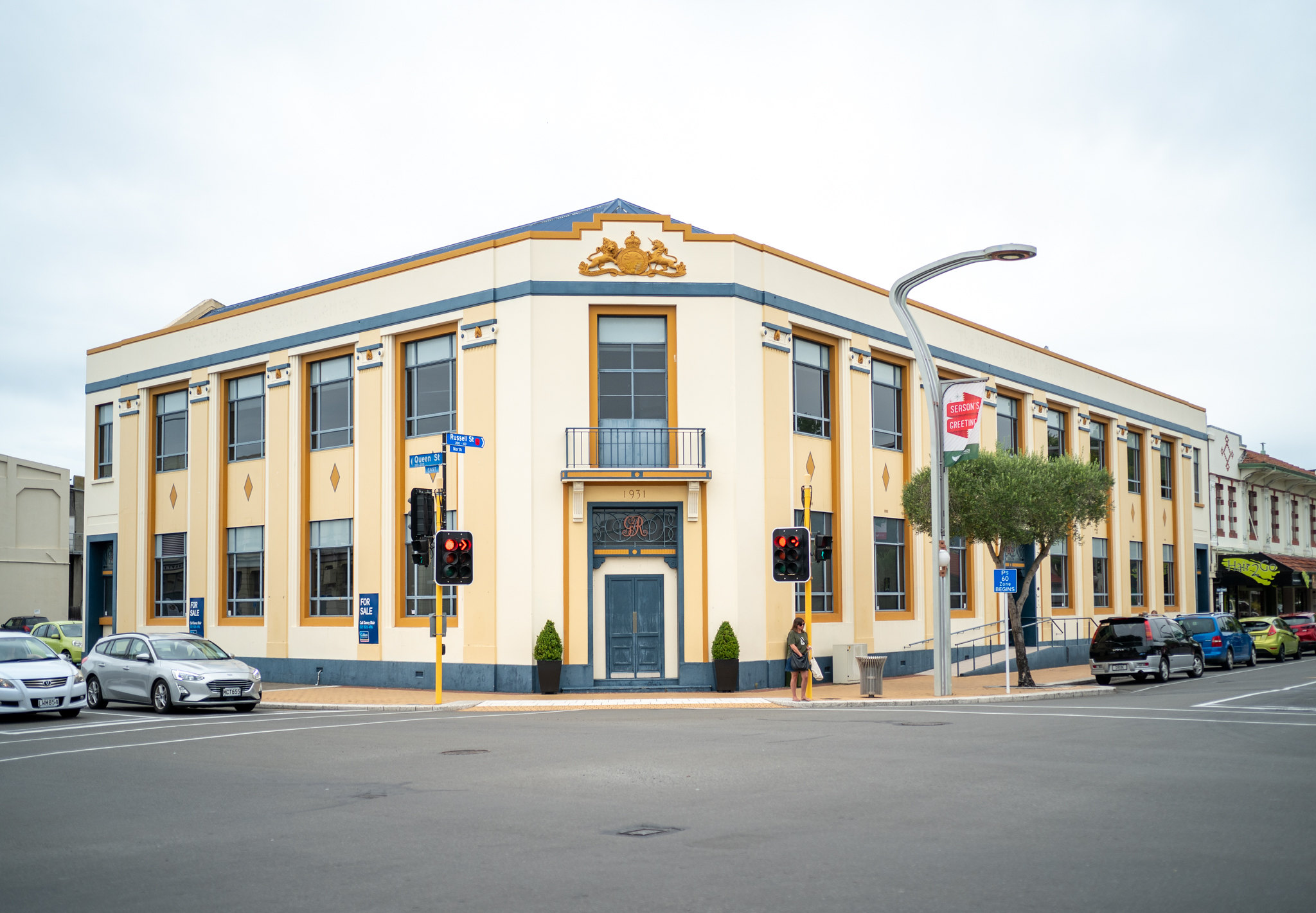
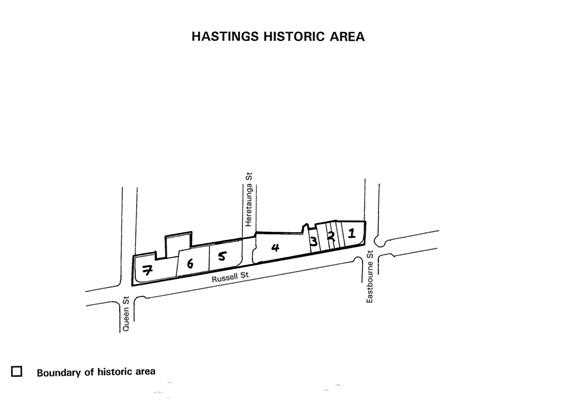
The boundary extends from the Minh Ta Building (former CML) on the corner of Eastbourne Street and Russell Street, along Russell Street to the Post Office on the corner of Queen Street and Russell Street.
Legal description
Lots 13-14 DP 4052 (RT HB H3/798), Lot 10 DP 4052 (RT HBL2/64), Lot 11 DP 4052 (RT HBL2/65), Lot 12 DP 4052 (RT HBL2/63), Lot 5 DP 14181 (RT HBG2/1453), Lot 1 DP 14181 (RT HBG2/1449), Lot 2 DP 2575 (RT HBM2/408), Lots 4 - 5 DP 2709 (RT HBL3/1387), Lot 6 DP 325578 (RT 103284), Hawkes Bay Land District.
Status
Listed
List Entry Status
Historic Area
Access
Private/No Public Access
List Number
7020
Date Entered
16th December 1994
Date of Effect
16th December 1994
City/District Council
Hastings District
Region
Hawke's Bay Region
Extent of List Entry
The boundary extends from the Minh Ta Building (former CML) on the corner of Eastbourne Street and Russell Street, along Russell Street to the Post Office on the corner of Queen Street and Russell Street.
Legal description
Lots 13-14 DP 4052 (RT HB H3/798), Lot 10 DP 4052 (RT HBL2/64), Lot 11 DP 4052 (RT HBL2/65), Lot 12 DP 4052 (RT HBL2/63), Lot 5 DP 14181 (RT HBG2/1453), Lot 1 DP 14181 (RT HBG2/1449), Lot 2 DP 2575 (RT HBM2/408), Lots 4 - 5 DP 2709 (RT HBL3/1387), Lot 6 DP 325578 (RT 103284), Hawkes Bay Land District.
Why is this place significant?
Historic Significance
Historical Significance or Value This historic place was registered under the Historic Places Act 1993. The assessment below is the text from the original registration report considered by the NZHPT Board at the time of registration. HISTORICAL Hastings was established in the 1870's and by the turn of the century Russell St was the thriving commercial centre of the town. The 1931 Napier earthquake had a major impact on the town's subsequent development and character. The time of rebuilding is historically significant because the Depression years dictated that reconstruction of the commercial centre be functional and low cost.
Physical Significance
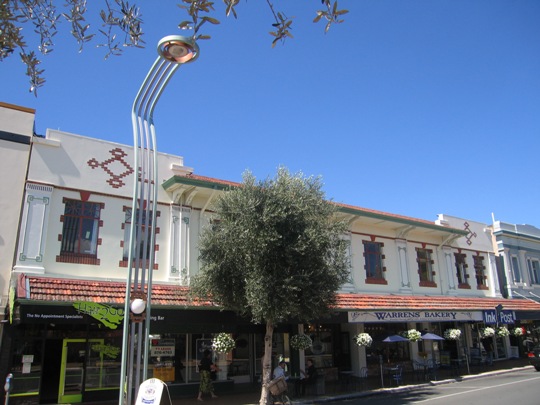
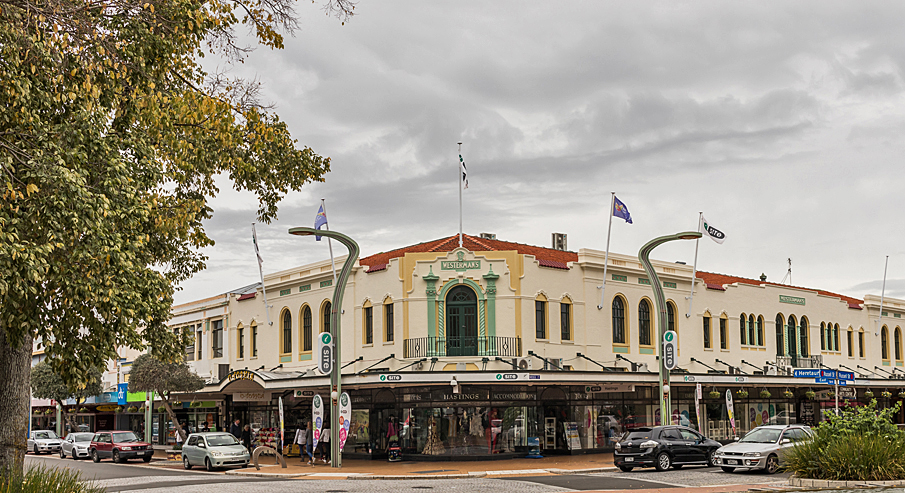
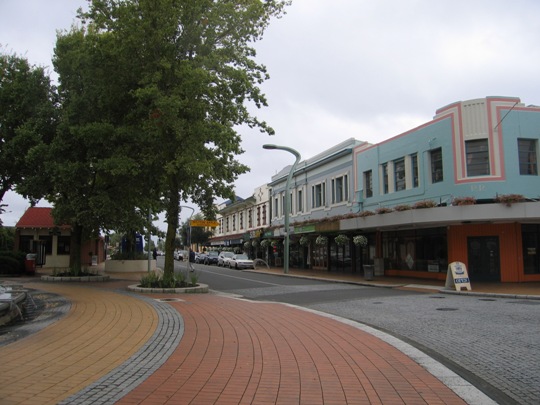
This historic place was registered under the Historic Places Act 1993. The assessment below is the text from the original registration report considered by the NZHPT Board at the time of registration. ARCHITECTURAL The Russell St area is architecturally significant for its large concentration of buildings in the Spanish Mission and Art Deco styles. The Spanish Mission style which suited Hastings' warm sunny climate, was firmly established prior to the 1931 earthquake. The huge rebuilding programme of the commercial centre following the disaster presented an opportunity for many of the city's more significant buildings to be constructed within a short space of time and to follow the established architectural theme. Building was rare during the Depression years and so Hastings provides an interesting high concentration of 1930's architecture. AESTHETIC The large concentration of 1930's architecture in the Russell St commercial area has great aesthetic appeal. A consistent rhythm of similar sized facades has been established with all buildings being one or two storeys high. The shared architectural character of many of the buildings form very attractive streetscape, unique to the Hastings district. CONCLUSION Hastings is well known for its Spanish Mission architecture. Russell St, a commercial centre from the turn of the century, has a significant collection of buildings (erected shortly before or after the Napier earthquake in 1931) which are all of similar, height, scale and age. This piece of uninterrupted streetscape is an excellent example of what gives the city its unique character.
Why is this place significant?
Historic Significance
Historical Significance or Value This historic place was registered under the Historic Places Act 1993. The assessment below is the text from the original registration report considered by the NZHPT Board at the time of registration. HISTORICAL Hastings was established in the 1870's and by the turn of the century Russell St was the thriving commercial centre of the town. The 1931 Napier earthquake had a major impact on the town's subsequent development and character. The time of rebuilding is historically significant because the Depression years dictated that reconstruction of the commercial centre be functional and low cost.
Physical Significance
This historic place was registered under the Historic Places Act 1993. The assessment below is the text from the original registration report considered by the NZHPT Board at the time of registration. ARCHITECTURAL The Russell St area is architecturally significant for its large concentration of buildings in the Spanish Mission and Art Deco styles. The Spanish Mission style which suited Hastings' warm sunny climate, was firmly established prior to the 1931 earthquake. The huge rebuilding programme of the commercial centre following the disaster presented an opportunity for many of the city's more significant buildings to be constructed within a short space of time and to follow the established architectural theme. Building was rare during the Depression years and so Hastings provides an interesting high concentration of 1930's architecture. AESTHETIC The large concentration of 1930's architecture in the Russell St commercial area has great aesthetic appeal. A consistent rhythm of similar sized facades has been established with all buildings being one or two storeys high. The shared architectural character of many of the buildings form very attractive streetscape, unique to the Hastings district. CONCLUSION Hastings is well known for its Spanish Mission architecture. Russell St, a commercial centre from the turn of the century, has a significant collection of buildings (erected shortly before or after the Napier earthquake in 1931) which are all of similar, height, scale and age. This piece of uninterrupted streetscape is an excellent example of what gives the city its unique character.
Historical and Associated Iwi / Hapū / Whānau
Report Written By
NZHPT (with Michael Kelly)
Information Sources
Boyd, 1984
Mary Boyd, City of the Plains, A History of Hastings, Wellington, 1984
Hallett, 1991
P. Hallett and P. Shaw, Spanish Mission Hastings: Styles of Five Decades, Napier, 1991
Other Information
This historic place was registered under the Historic Places Act 1993. Except where stated, the information provided is from the report considered by the NZHPT Board at the time of registration. Fully referenced copies of the information provided on Harvey's Building, the Christies Building and the R&R Building in June 2008 as part of a project to update information on Hastings' heritage are available from the NZHPT Central Region Office. For further information on the remaining places in the historic area, refer to the individual Register entries. Please note that entry on the New Zealand Heritage List/Rarangi Korero identifies only the heritage values of the property concerned, and should not be construed as advice on the state of the property, or as a comment of its soundness or safety, including in regard to earthquake risk, safety in the event of fire, or insanitary conditions.
Historical and Associated Iwi / Hapū / Whānau
Report Written By
NZHPT (with Michael Kelly)
Information Sources
Boyd, 1984
Mary Boyd, City of the Plains, A History of Hastings, Wellington, 1984
Hallett, 1991
P. Hallett and P. Shaw, Spanish Mission Hastings: Styles of Five Decades, Napier, 1991
Other Information
This historic place was registered under the Historic Places Act 1993. Except where stated, the information provided is from the report considered by the NZHPT Board at the time of registration. Fully referenced copies of the information provided on Harvey's Building, the Christies Building and the R&R Building in June 2008 as part of a project to update information on Hastings' heritage are available from the NZHPT Central Region Office. For further information on the remaining places in the historic area, refer to the individual Register entries. Please note that entry on the New Zealand Heritage List/Rarangi Korero identifies only the heritage values of the property concerned, and should not be construed as advice on the state of the property, or as a comment of its soundness or safety, including in regard to earthquake risk, safety in the event of fire, or insanitary conditions.
Current Usages
Uses: Trade
Specific Usage: Shop
Former Usages
General Usage: Trade
Specific Usage: Shop
Current Usages
Uses: Trade
Specific Usage: Shop
Former Usages
General Usage: Trade
Specific Usage: Shop