Although it no longer functions in its original purpose as a Roman Catholic institution of worship and education, the Star of the Sea Historic Area retains an atmosphere of serenity which is reinforced by the spectacular views it offers of Wellington harbour. Originally the site of a school and convent, the area has strong historic ties with both the Sisters of Mercy and the surrounding suburb of Seatoun.
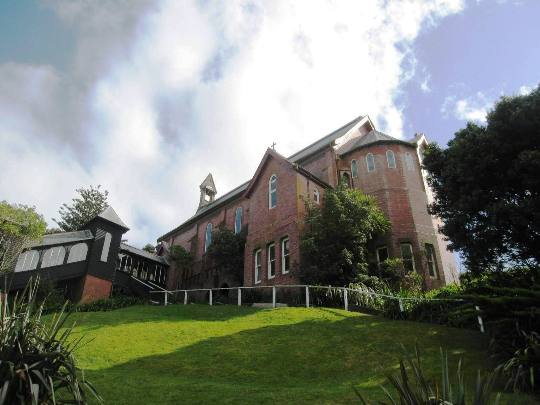
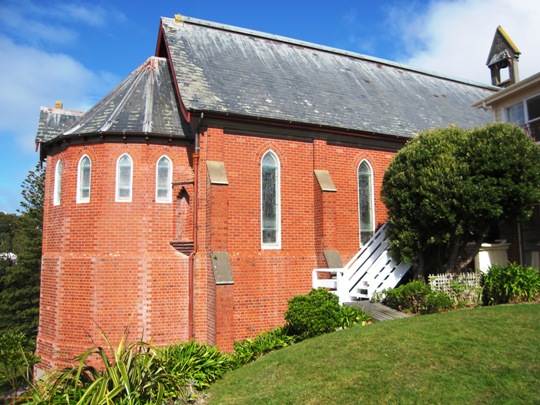
The property is best viewed from Fettes Crescent. Immediately the viewer is struck by the commanding presence of the chapel, Our Lady Star of the Sea, which seems to stand guard over both Seatoun and the harbour. First opened in 1925, the chapel was designed by Wellington architect Frederick de Jersey Clere, who chose the Gothic style that was popular during the inter-war period. The chapel was used by the original inhabitants of the property, the Sisters of Mercy, for worship and it continued in this role until the 1980s when daily Mass ceased. In the years that followed it was used in the summer for weddings.
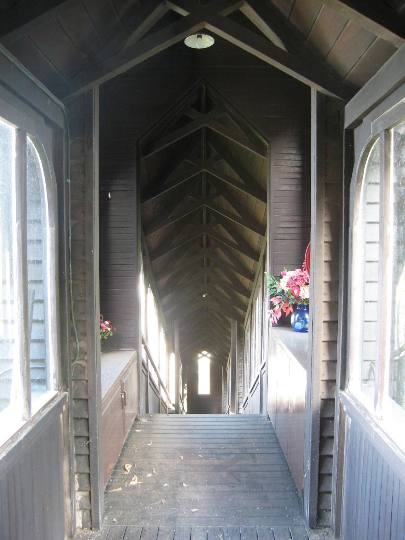
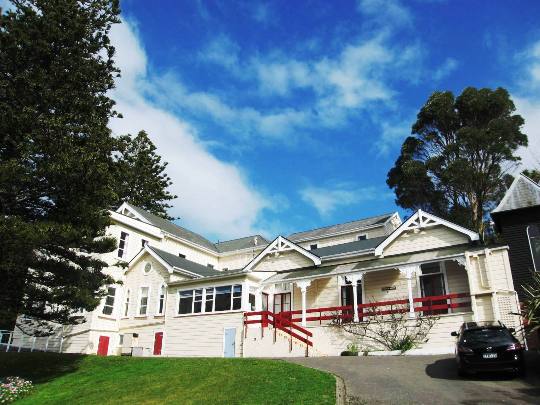
Descending from the chapel is a dark, wooden covered stairway which is broken into four sections, with each section separated by wooden towers. The stairway connects the chapel to the former Stella Maris Retreat Centre. The original section of this building which is still recognisable by its low pitched gabled roofs and wide verandah was once the Francis Xavier Academy, a boarding school for girls run by Sister Francis Xavier Hamilton, who purchased the property in 1893. In 1909 the property was purchased by Mother Francis Doyle of the Sisters of Mercy who turned it into Star of the Sea Preparatory school for boys. Alterations were made to the original academy building, including the construction of dormitories and with one of the larger rooms turned into a chapel which is still recognisable today by its arched windows.
The school’s first pupil, D. Barrett of Christchurch, was killed during the First World War and his parents presented the altar for the Chapel in his memory. In 1941 the building was partially destroyed when a fire broke out. The whole building may have been lost were it not for Sister Madeleine who managed to ring the fire service moments before the telephone lines were melted. Star of the Sea ceased to exist as a school, when it finally closed in 1976. In the following years the building underwent renovations, with the former dormitories being turned into twenty six guest bedrooms. The building was then renamed Stella Maris and became a conference and retreat centre.
Over the years the Sisters began to purchase adjoining sections in order to enlarge the property. These included a house owned by the Usmah family which was later named Mt Carmel and a property with a croquet lawn which had previously been owned by a Mr Griffith who was killed during the First World War. While the boarding school provided accommodation for seven of the sisters, the remainder lived in the houses that surrounded the school. In addition to this expansion a swimming pool and gymnasium were also constructed.
During the 1950s, profits from the sale of land bordering Seatoun Heights Road enabled the Sisters to finally build a convent. Located on the north side of the chapel, the convent is a two storey block building with a lawn that looks out over the harbour. In 1982 the Sisters of Mercy turned the convent into a national novitiate for the training of novices. However in 1990 the Congregation relocated its novitiate to Christchurch.
By the early 2000s the number of people attending retreats at Stella Maris had declined. In 2002 the Wellington City Council declared the chapel to be an earthquake risk and it was closed to the public. Without the financial means to care for the historic buildings the Sisters of Mercy were faced with the unpleasant prospect of demolishing them. The matter was resolved in 2007 when a prominent Wellington citizen purchased the property in order to save the chapel and its surrounding buildings.
Although no longer accessible to the public, the chapel, its walkway and the former Star of the Sea school building are still visible from the road and surrounding areas of Seatoun. People are therefore still able to appreciate this historic area while at the same time respecting the privacy of its owners.
The Star of the Sea is an important historic area for both Catholics and Seatoun residents. The site has strong connections with the Sisters of Mercy who helped to establish Catholic education in the Wellington region and served as a training institution for those women who wished to join the Congregation. The school educated many young men who went on to prominent positions within the Church and New Zealand Government. Since the chapel is an important landmark, it has become a part of people’s personal identity, regardless of their faith. Therefore for the people of Seatoun and those who grew up in the area, the Star of the Sea Historic Area is an integral part of their own personal history.
The property is best viewed from Fettes Crescent. Immediately the viewer is struck by the commanding presence of the chapel, Our Lady Star of the Sea, which seems to stand guard over both Seatoun and the harbour. First opened in 1925, the chapel was designed by Wellington architect Frederick de Jersey Clere, who chose the Gothic style that was popular during the inter-war period. The chapel was used by the original inhabitants of the property, the Sisters of Mercy, for worship and it continued in this role until the 1980s when daily Mass ceased. In the years that followed it was used in the summer for weddings.
Descending from the chapel is a dark, wooden covered stairway which is broken into four sections, with each section separated by wooden towers. The stairway connects the chapel to the former Stella Maris Retreat Centre. The original section of this building which is still recognisable by its low pitched gabled roofs and wide verandah was once the Francis Xavier Academy, a boarding school for girls run by Sister Francis Xavier Hamilton, who purchased the property in 1893. In 1909 the property was purchased by Mother Francis Doyle of the Sisters of Mercy who turned it into Star of the Sea Preparatory school for boys. Alterations were made to the original academy building, including the construction of dormitories and with one of the larger rooms turned into a chapel which is still recognisable today by its arched windows.
The school’s first pupil, D. Barrett of Christchurch, was killed during the First World War and his parents presented the altar for the Chapel in his memory. In 1941 the building was partially destroyed when a fire broke out. The whole building may have been lost were it not for Sister Madeleine who managed to ring the fire service moments before the telephone lines were melted. Star of the Sea ceased to exist as a school, when it finally closed in 1976. In the following years the building underwent renovations, with the former dormitories being turned into twenty six guest bedrooms. The building was then renamed Stella Maris and became a conference and retreat centre.
Over the years the Sisters began to purchase adjoining sections in order to enlarge the property. These included a house owned by the Usmah family which was later named Mt Carmel and a property with a croquet lawn which had previously been owned by a Mr Griffith who was killed during the First World War. While the boarding school provided accommodation for seven of the sisters, the remainder lived in the houses that surrounded the school. In addition to this expansion a swimming pool and gymnasium were also constructed.
During the 1950s, profits from the sale of land bordering Seatoun Heights Road enabled the Sisters to finally build a convent. Located on the north side of the chapel, the convent is a two storey block building with a lawn that looks out over the harbour. In 1982 the Sisters of Mercy turned the convent into a national novitiate for the training of novices. However in 1990 the Congregation relocated its novitiate to Christchurch.
By the early 2000s the number of people attending retreats at Stella Maris had declined. In 2002 the Wellington City Council declared the chapel to be an earthquake risk and it was closed to the public. Without the financial means to care for the historic buildings the Sisters of Mercy were faced with the unpleasant prospect of demolishing them. The matter was resolved in 2007 when a prominent Wellington citizen purchased the property in order to save the chapel and its surrounding buildings.
Although no longer accessible to the public, the chapel, its walkway and the former Star of the Sea school building are still visible from the road and surrounding areas of Seatoun. People are therefore still able to appreciate this historic area while at the same time respecting the privacy of its owners.
The Star of the Sea is an important historic area for both Catholics and Seatoun residents. The site has strong connections with the Sisters of Mercy who helped to establish Catholic education in the Wellington region and served as a training institution for those women who wished to join the Congregation. The school educated many young men who went on to prominent positions within the Church and New Zealand Government. Since the chapel is an important landmark, it has become a part of people’s personal identity, regardless of their faith. Therefore for the people of Seatoun and those who grew up in the area, the Star of the Sea Historic Area is an integral part of their own personal history.