DonateSupporterVisit Heritage
  • Tūrangawaewae
    Places
  • Tira Māori
    Māori Heritage
  • Poutairangahia
    Archaeology
  • Rauemi
    Resources
  • Mō Tātou
    About Us
  • New Zealand Heritage List
  • Nominate and submit
  • Explore the List
  • National Historic Landmarks
  • Plaques
  • Rainbow List Project
  • Lost heritage
  • Visit Heritage
  • Our properties
  • Turnbull House Project
  • Collections
  • Shop
  • Tohu Whenua
  • Tira Māori
  • Conserving Māori heritage
  • Marae built heritage
  • Māori heritage on the List
  • Hinemihi—Te Hokinga Mai
  • What is archaeology?
  • Is there a site on my property?
  • What are my legal requirements?
  • Affecting an archaeological site
  • Declaring an archaeological site
  • Archaeology FAQs
  • Archaeology Digital Library
  • Archaeology guidelines and templates
  • Resources
  • Funding
  • Publications
  • Sustainable management guides
  • Disaster recovery
  • Podcasts & digital resources
  • Education Hub
  • Conservation plans
  • About
  • Board
  • Māori Heritage Council
  • Senior Staff
  • Offices
  • Contact us
  • Careers
  • Covenants
  • Fast-track
  • Corporate documents
  • Currently consulting on
  • Our submissions
  • News
  • Covid-19 response
Quick links
Rārangi Kōrero | The List
Explore the List
National Historic Landmarks
Ngā Manawhenua o Aotearoa me ōna Kōrero Tūturu
Quick links
Tapuwae
A Vision for Places of Māori Heritage
Funding for Māori Heritage
Resources
Quick links
Archaeological Authority Portal
Applying for an archaeological authority
Archaeology FAQs
Browse the most frequently asked questions about archaeological authorities and the archaeological process.
Quick links
Quick links
Contact us
Offices
DonateSupporterVisit Heritage
  • Tūrangawaewae
    Places
  • Tira Māori
    Māori Heritage
  • Poutairangahia
    Archaeology
  • Rauemi
    Resources
  • Mō Tātou
    About Us
  • New Zealand Heritage List
  • Nominate and submit
  • Explore the List
  • National Historic Landmarks
  • Plaques
  • Rainbow List Project
  • Lost heritage
  • Visit Heritage
  • Our properties
  • Turnbull House Project
  • Collections
  • Shop
  • Tohu Whenua
  • Tira Māori
  • Conserving Māori heritage
  • Marae built heritage
  • Māori heritage on the List
  • Hinemihi—Te Hokinga Mai
  • What is archaeology?
  • Is there a site on my property?
  • What are my legal requirements?
  • Affecting an archaeological site
  • Declaring an archaeological site
  • Archaeology FAQs
  • Archaeology Digital Library
  • Archaeology guidelines and templates
  • Resources
  • Funding
  • Publications
  • Sustainable management guides
  • Disaster recovery
  • Podcasts & digital resources
  • Education Hub
  • Conservation plans
  • About
  • Board
  • Māori Heritage Council
  • Senior Staff
  • Offices
  • Contact us
  • Careers
  • Covenants
  • Fast-track
  • Corporate documents
  • Currently consulting on
  • Our submissions
  • News
  • Covid-19 response
Quick links
Rārangi Kōrero | The List
Explore the List
National Historic Landmarks
Ngā Manawhenua o Aotearoa me ōna Kōrero Tūturu
Quick links
Tapuwae
A Vision for Places of Māori Heritage
Funding for Māori Heritage
Resources
Quick links
Archaeological Authority Portal
Applying for an archaeological authority
Archaeology FAQs
Browse the most frequently asked questions about archaeological authorities and the archaeological process.
Quick links
Quick links
Contact us
Offices
  • Places
  • Nominate and submit
  • National Historic Landmarks
  • Places
  • Nominate and submit
  • National Historic Landmarks
  • Tira Māori
  • Conserving Māori heritage
  • Marae built heritage
  • Tira Māori
  • Conserving Māori heritage
  • Marae built heritage
  • Archaeological authorities
  • Archaeology Digital Library
  • Archaeological authorities
  • Archaeology Digital Library
  • All resources
  • Publications
  • Funding
  • All resources
  • Publications
  • Funding
  • FAQs
  • FAQs
Follow us on:
Places
  • Places
  • Nominate and submit
  • National Historic Landmarks
Tira Māori
  • Tira Māori
  • Conserving Māori heritage
  • Marae built heritage
Archaeology
  • Archaeological authorities
  • Archaeology Digital Library
Resources
  • All resources
  • Publications
  • Funding
FAQs
  • FAQs
Follow us on
HomePrivacyTerms and conditionsAbout this site
© Heritage New Zealand Pouhere Taonga 2026.
 
Waihohonu Hut

Tongariro National Park, RUAPEHU

Public

Historic Place Category 1

List No. 7098

Quick links:
List GalleryLocationDetails
DESCRIPTION:
A shelter existed on the Desert Road side of Mt Ruapehu from the 1880's. A rudimentary road was put through from Tokaanu to Waiouru in 1893 and the following year GR Allen established a camp at Waihohonu for tourists. It is not known what happened to this camp or if any structure was built of permanent materials and in its annual report for 1902 the Tourist and Health Resorts Department mentioned the need for some form of accommodation between Tokaanu and Waiouru.

As a result, construction of Waihohonu Hut commenced possibly in late 1903 and was completed in 1904. It was purported to have been built under the supervision of an engineer named Maxwell using pitsawn timber hauled by a bullock team from Pihanga. Conceding to Edwardian social requirements, it was built with two bunk rooms so that men and women were separated. A hut at Ketetahi Springs on the flanks of Mt Tongariro was built at the same time. A bridle track eventually linked these two huts.

Waihohonu Hut enjoyed considerable use in its first few years of existence. The Desert Road route was part of the fashionable, if arduous, Wanganui to Taupo or even Rotorua trek via Pipiriki which took about five days. Tourists travelling in stage coaches often stopped overnight or for refreshment.

With the completion of the main trunk railway in 1908 tourist use of the hut dropped somewhat, but from 1913 a new use was found for the hut. In July that year it was used as the base for the first recreational alpine skiing expedition in New Zealand. The skiers were William Mead and Bernard Drake who founded the Ruapehu Ski Club. Notice of the club's inaugural meeting was posted in Waihohonu Hut and the meeting was held here in August 1914. The Ruapehu Ski Club was New Zealand's first ski club and was a driving force in the opening up of Tongariro National Park to visitors.

The hut remained the principal base for skiing on Mt Ruapehu until better access to the ski fields of Whakapapa Valley in the early 1920's transferred interest to that side of the mountain. Money due to be spent on an extension to Waihohonu Hut in 1918 was diverted to putting a bullock track through to where the Chateau Tongariro and Whakapapa Village now stand. Nevertheless, the hut remained a popular base for hikers and climbers until it was superseded by a new hut in 1968. It continued to be used until 1979 when its overnight use was discouraged and has since been maintained by Tongariro National Park staff. The Department of Conservation has plans for its permanent preservation.
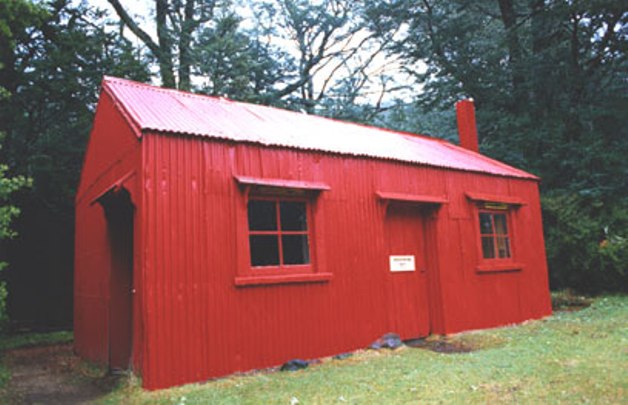
Waihohonu Hut | Glen Hazleton | Department of Conservation


List Entry Information

Overview

Status
Listed

List Entry Status
Historic Place Category 1

Access
Able to Visit

List Number
7098

Date Entered
17th December 1993

Date of Effect
17th December 1993

City/District Council
Taupo District

Region
Waikato Region

Detailed List Entry
Significance

Historic Significance

Historical Significance or Value Waihohonu Hut was the first hut built for recreational purposes in New Zealand's first national park, Tongariro National Park, and is the earliest known extant example of a recreational mountain hut in New Zealand. It saw the inaugural meeting of New Zealand's first ski club, the Ruapehu Ski Club. In addition to its significance in the history of alpine recreation in New Zealand, Waihohonu Hut has significance in the history of New Zealand tourism. From the late nineteenth century the Tourism and Health Resorts Department took an active role in the control and promotion of tourism as well as the provision of accommodation and services and Waihohonu Hut is an early example of a state-erected tourism building.

Physical Significance

ARCHITECTURAL QUALITY: Waihohonu Hut is the earliest known extant example of a recreational mountain hut in New Zealand. It is modest and utilitarian and having had no major modifications is typical of early mountain hut accommodation in New Zealand. The basic design of a two-roomed hut with two entrances was typical until c1930 when single roomed huts became the norm. The use of totara framing, corrugated iron sheathing and pumice wall infill and flooring reflects the difficulty imposed by the remote location. In particular the use of pumice as a building material is rare of not unique and, given that it is abundant in the area, is a practical and innovative response to the extreme alpine climate. TOWNSCAPE/LANDMARK VALUE: Waihohonu Hut is surrounded by mature forest and has a clearing directly in front. With its remote location between the peaks of Ruapehu and Ngaurohoe the hut cannot be considered a landmark. It does, however, have a spectacular view of Ngaurohoe.

Construction Details

Start Year

1904

Type

Original Construction

Start Year

1906

Type

Modification

Description

Chimney erected

Start Year

1927

Type

Modification

Description

December - Floor boards installed

Start Year

1928

Type

Modification

Description

January - Two bunks removed and rebuilt. Shelves fitted. Hood over door and wooden platform in front of door installed. (Platform later removed, date unknown)

Start Year

1953

Type

Modification

Description

Refurbished

Type

Modification

Description

Chimney replaced at least twice

Construction Materials

Walls and roof are timber framed using pitsawn totara and have corrugated iron sheathing. The wall cavity is filled with pumice for insulation. A pumice floor has been covered by tongue and groove boards.

Notable Features

Pumice wall infill and flooring.

Physical Description

ARCHITECT/ENGINEER/DESIGNER: The designer of Waihohonu Hut is not known, but it may have been constructed under the supervision of an engineer called Maxwell. ARCHITECTURAL DESCRIPTION: Waihohonu Hut is a simple 18m² rectangular hut with a gabled roof and adjoining chimney. The principal elevation has a centrally located door sheltered by a corrugated iron hood and flanked on either side by a four-paned window. There are no other windows. At one end of the building is a second door and at the other end is the chimney which has external timber framing. The interior consists of two bunkrooms. Walls are lined with corrugated iron and the ceiling has a boarded sarking. Some tables, and in the bigger room six bunks, remain in the hut. Both the interior and exterior have been inscribed or painted with many names and initials of visitors who have passed through the hut, and there are wooden plaques hanging above the fireplace which date from the 1920's and carry prominent names.

Reference

Completion Date

26th May 1993

Information Sources

Archives New Zealand (Wgtn)

Archives New Zealand (Wellington)

Cowan, 1927

James Cowan, 'The Tongariro National Park, New Zealand' Wellington, Tongariro National Park Board, 1927.

Department of Conservation

Department of Conservation

Graham, 1963

J.C. Graham, Ruapehu: Tribute to a Mountain. Wellington: A.H. & A.W. Reed, 1963.

Land Information New Zealand (LINZ)

Land Information New Zealand

School of Architecture Library

School of Architecture Library, Auckland

Parsons, 1982

R. Parsons and B. Williams, The Summer Book, The Port Nicholson Press, 1982

Report Written By

This historic place was registered under the Historic Places Act 1980. This report includes text from the original Proposal for Registration considered by the NZHPT Board at the time of registration. Please note that entry on the New Zealand Heritage List/Rarangi Korero identifies only the heritage values of the property concerned, and should not be construed as advice on the state of the property, or as a comment of its soundness or safety, including in regard to earthquake risk, safety in the event of fire, or insanitary conditions.

Further Information

Current Usages

Uses: Civic Facilities

Specific Usage: Tramping/Mountain Hut

Former Usages

Themes

Sport

Web Links

Overview

Status

Listed

List Entry Status

Historic Place Category 1

Access

Able to Visit

List Number

7098

Date Entered

17th December 1993

Date of Effect

17th December 1993

City/District Council

Taupo District

Region

Waikato Region

Status

Listed

List Entry Status

Historic Place Category 1

Access

Able to Visit

List Number

7098

Date Entered

17th December 1993

Date of Effect

17th December 1993

City/District Council

Taupo District

Region

Waikato Region

Significance

Why is this place significant?

Historic Significance

Historical Significance or Value Waihohonu Hut was the first hut built for recreational purposes in New Zealand's first national park, Tongariro National Park, and is the earliest known extant example of a recreational mountain hut in New Zealand. It saw the inaugural meeting of New Zealand's first ski club, the Ruapehu Ski Club. In addition to its significance in the history of alpine recreation in New Zealand, Waihohonu Hut has significance in the history of New Zealand tourism. From the late nineteenth century the Tourism and Health Resorts Department took an active role in the control and promotion of tourism as well as the provision of accommodation and services and Waihohonu Hut is an early example of a state-erected tourism building.

Physical Significance

ARCHITECTURAL QUALITY: Waihohonu Hut is the earliest known extant example of a recreational mountain hut in New Zealand. It is modest and utilitarian and having had no major modifications is typical of early mountain hut accommodation in New Zealand. The basic design of a two-roomed hut with two entrances was typical until c1930 when single roomed huts became the norm. The use of totara framing, corrugated iron sheathing and pumice wall infill and flooring reflects the difficulty imposed by the remote location. In particular the use of pumice as a building material is rare of not unique and, given that it is abundant in the area, is a practical and innovative response to the extreme alpine climate. TOWNSCAPE/LANDMARK VALUE: Waihohonu Hut is surrounded by mature forest and has a clearing directly in front. With its remote location between the peaks of Ruapehu and Ngaurohoe the hut cannot be considered a landmark. It does, however, have a spectacular view of Ngaurohoe.

Why is this place significant?

Historic Significance

Historical Significance or Value Waihohonu Hut was the first hut built for recreational purposes in New Zealand's first national park, Tongariro National Park, and is the earliest known extant example of a recreational mountain hut in New Zealand. It saw the inaugural meeting of New Zealand's first ski club, the Ruapehu Ski Club. In addition to its significance in the history of alpine recreation in New Zealand, Waihohonu Hut has significance in the history of New Zealand tourism. From the late nineteenth century the Tourism and Health Resorts Department took an active role in the control and promotion of tourism as well as the provision of accommodation and services and Waihohonu Hut is an early example of a state-erected tourism building.

Physical Significance

ARCHITECTURAL QUALITY: Waihohonu Hut is the earliest known extant example of a recreational mountain hut in New Zealand. It is modest and utilitarian and having had no major modifications is typical of early mountain hut accommodation in New Zealand. The basic design of a two-roomed hut with two entrances was typical until c1930 when single roomed huts became the norm. The use of totara framing, corrugated iron sheathing and pumice wall infill and flooring reflects the difficulty imposed by the remote location. In particular the use of pumice as a building material is rare of not unique and, given that it is abundant in the area, is a practical and innovative response to the extreme alpine climate. TOWNSCAPE/LANDMARK VALUE: Waihohonu Hut is surrounded by mature forest and has a clearing directly in front. With its remote location between the peaks of Ruapehu and Ngaurohoe the hut cannot be considered a landmark. It does, however, have a spectacular view of Ngaurohoe.

Construction Information

Construction Details

Start Year

1904

Type

Original Construction

Start Year

1906

Type

Modification

Description

Chimney erected

Start Year

1927

Type

Modification

Description

December - Floor boards installed

Start Year

1928

Type

Modification

Description

January - Two bunks removed and rebuilt. Shelves fitted. Hood over door and wooden platform in front of door installed. (Platform later removed, date unknown)

Start Year

1953

Type

Modification

Description

Refurbished

Type

Modification

Description

Chimney replaced at least twice

Construction Materials

Walls and roof are timber framed using pitsawn totara and have corrugated iron sheathing. The wall cavity is filled with pumice for insulation. A pumice floor has been covered by tongue and groove boards.

Notable Features

Pumice wall infill and flooring.

Construction Details

Start Year

1904

Type

Original Construction

Start Year

1906

Type

Modification

Description

Chimney erected

Start Year

1927

Type

Modification

Description

December - Floor boards installed

Start Year

1928

Type

Modification

Description

January - Two bunks removed and rebuilt. Shelves fitted. Hood over door and wooden platform in front of door installed. (Platform later removed, date unknown)

Start Year

1953

Type

Modification

Description

Refurbished

Type

Modification

Description

Chimney replaced at least twice

Construction Materials

Walls and roof are timber framed using pitsawn totara and have corrugated iron sheathing. The wall cavity is filled with pumice for insulation. A pumice floor has been covered by tongue and groove boards.

Notable Features

Pumice wall infill and flooring.

Physical Description

ARCHITECT/ENGINEER/DESIGNER: The designer of Waihohonu Hut is not known, but it may have been constructed under the supervision of an engineer called Maxwell. ARCHITECTURAL DESCRIPTION: Waihohonu Hut is a simple 18m² rectangular hut with a gabled roof and adjoining chimney. The principal elevation has a centrally located door sheltered by a corrugated iron hood and flanked on either side by a four-paned window. There are no other windows. At one end of the building is a second door and at the other end is the chimney which has external timber framing. The interior consists of two bunkrooms. Walls are lined with corrugated iron and the ceiling has a boarded sarking. Some tables, and in the bigger room six bunks, remain in the hut. Both the interior and exterior have been inscribed or painted with many names and initials of visitors who have passed through the hut, and there are wooden plaques hanging above the fireplace which date from the 1920's and carry prominent names.

ARCHITECT/ENGINEER/DESIGNER: The designer of Waihohonu Hut is not known, but it may have been constructed under the supervision of an engineer called Maxwell. ARCHITECTURAL DESCRIPTION: Waihohonu Hut is a simple 18m² rectangular hut with a gabled roof and adjoining chimney. The principal elevation has a centrally located door sheltered by a corrugated iron hood and flanked on either side by a four-paned window. There are no other windows. At one end of the building is a second door and at the other end is the chimney which has external timber framing. The interior consists of two bunkrooms. Walls are lined with corrugated iron and the ceiling has a boarded sarking. Some tables, and in the bigger room six bunks, remain in the hut. Both the interior and exterior have been inscribed or painted with many names and initials of visitors who have passed through the hut, and there are wooden plaques hanging above the fireplace which date from the 1920's and carry prominent names.

Reference

Historical and Associated Iwi / Hapū / Whānau

Completion Date

26th May 1993

Information Sources

Archives New Zealand (Wgtn)

Archives New Zealand (Wellington)

Cowan, 1927

James Cowan, 'The Tongariro National Park, New Zealand' Wellington, Tongariro National Park Board, 1927.

Department of Conservation

Department of Conservation

Graham, 1963

J.C. Graham, Ruapehu: Tribute to a Mountain. Wellington: A.H. & A.W. Reed, 1963.

Land Information New Zealand (LINZ)

Land Information New Zealand

School of Architecture Library

School of Architecture Library, Auckland

Parsons, 1982

R. Parsons and B. Williams, The Summer Book, The Port Nicholson Press, 1982

Other Information

This historic place was registered under the Historic Places Act 1980. This report includes text from the original Proposal for Registration considered by the NZHPT Board at the time of registration. Please note that entry on the New Zealand Heritage List/Rarangi Korero identifies only the heritage values of the property concerned, and should not be construed as advice on the state of the property, or as a comment of its soundness or safety, including in regard to earthquake risk, safety in the event of fire, or insanitary conditions.

Historical and Associated Iwi / Hapū / Whānau

Completion Date

26th May 1993

Information Sources

Archives New Zealand (Wgtn)

Archives New Zealand (Wellington)

Cowan, 1927

James Cowan, 'The Tongariro National Park, New Zealand' Wellington, Tongariro National Park Board, 1927.

Department of Conservation

Department of Conservation

Graham, 1963

J.C. Graham, Ruapehu: Tribute to a Mountain. Wellington: A.H. & A.W. Reed, 1963.

Land Information New Zealand (LINZ)

Land Information New Zealand

School of Architecture Library

School of Architecture Library, Auckland

Parsons, 1982

R. Parsons and B. Williams, The Summer Book, The Port Nicholson Press, 1982

Other Information

This historic place was registered under the Historic Places Act 1980. This report includes text from the original Proposal for Registration considered by the NZHPT Board at the time of registration. Please note that entry on the New Zealand Heritage List/Rarangi Korero identifies only the heritage values of the property concerned, and should not be construed as advice on the state of the property, or as a comment of its soundness or safety, including in regard to earthquake risk, safety in the event of fire, or insanitary conditions.

Further Information

Current Usages

Uses: Civic Facilities

Specific Usage: Tramping/Mountain Hut

Themes

Sport

Current Usages

Uses: Civic Facilities

Specific Usage: Tramping/Mountain Hut

Themes

Sport

Location

Loading
Sign up to hear more

Get the latest heritage news, features and events delivered
straight to your inbox.

Subscribe