

List Entry Information
Status
Listed
List Entry Status
Historic Place Category 1
Access
Private/No Public Access
List Number
72
Date Entered
15th February 1990
Date of Effect
15th February 1990
City/District Council
Far North District
Region
Northland Region
Legal description
Wharau A (RT 432235), North Auckland Land District
Status
Listed
List Entry Status
Historic Place Category 1
Access
Private/No Public Access
List Number
72
Date Entered
15th February 1990
Date of Effect
15th February 1990
City/District Council
Far North District
Region
Northland Region
Legal description
Wharau A (RT 432235), North Auckland Land District
Why is this place significant?
Historic Significance
Historical Significance or Value The Church of Our Lady of the Assumption, together with St Peter's at Panguru, is one of the spiritual centres of the North Hokianga Catholic community. The church is intimately associated with the work of the Mill Hill missionaries, who in the latter part of the 19th century were responsible for the rejuvenation of the Catholic faith among the Maori people of the north.
Physical Significance
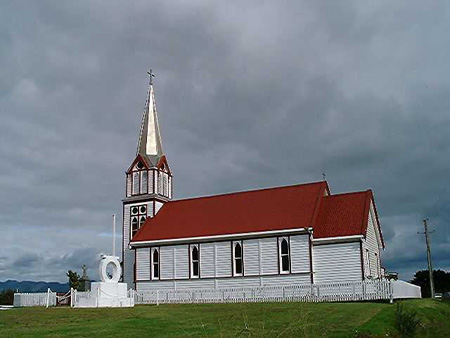
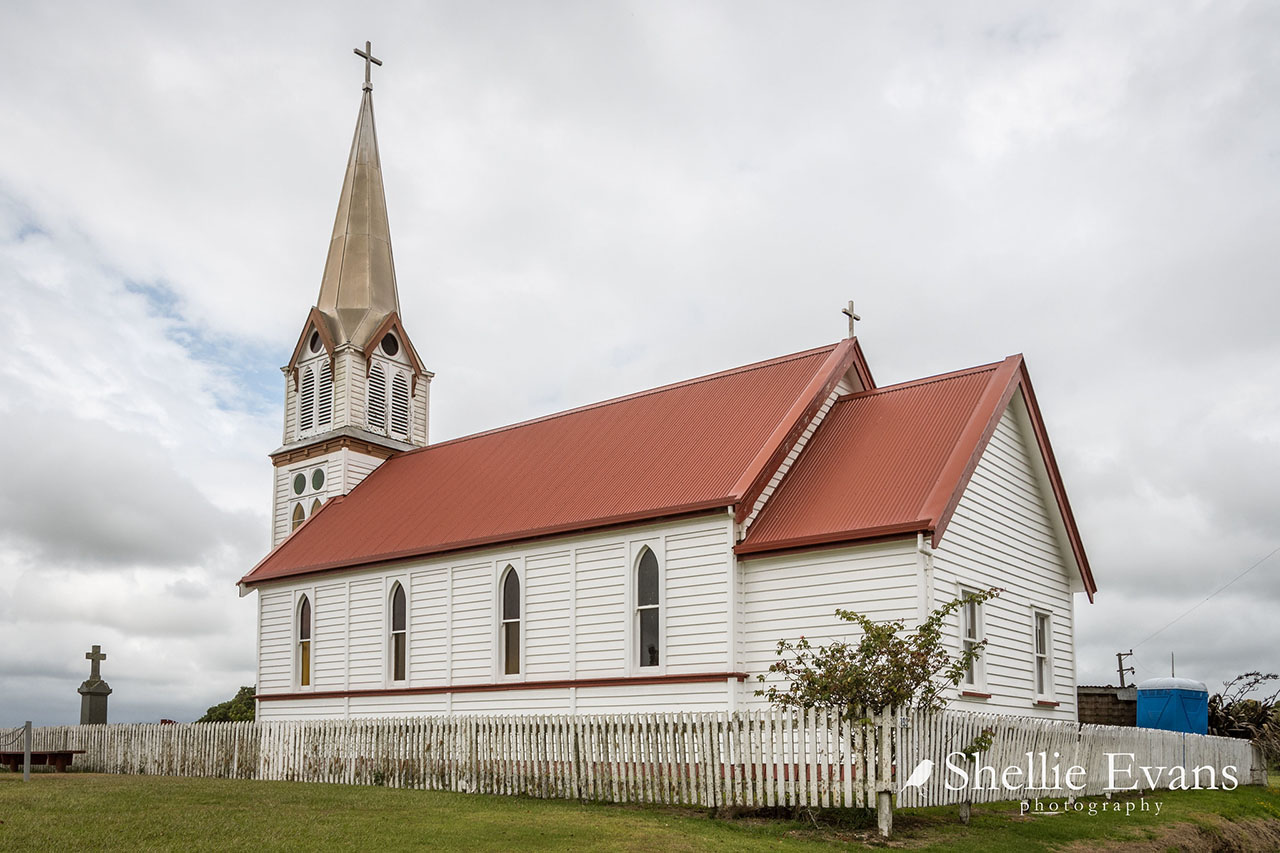
ARCHITECTURAL QUALITY: The Church of Our Lady of the Assumption is a fine essay in siting and an excellent example of the timber tradition of building essentially simple country churches in the neo-Gothic manner. TOWNSCAPE/LANDMARK VALUE The church is magnificently sited on elevated land above the Hokianga Harbour. With its dominant spire it is a splendid landmark.
Why is this place significant?
Historic Significance
Historical Significance or Value The Church of Our Lady of the Assumption, together with St Peter's at Panguru, is one of the spiritual centres of the North Hokianga Catholic community. The church is intimately associated with the work of the Mill Hill missionaries, who in the latter part of the 19th century were responsible for the rejuvenation of the Catholic faith among the Maori people of the north.
Physical Significance
ARCHITECTURAL QUALITY: The Church of Our Lady of the Assumption is a fine essay in siting and an excellent example of the timber tradition of building essentially simple country churches in the neo-Gothic manner. TOWNSCAPE/LANDMARK VALUE The church is magnificently sited on elevated land above the Hokianga Harbour. With its dominant spire it is a splendid landmark.
Construction Professional
Name
Mahoney, Thomas
Type
Architect
Biography
Thomas Mahoney (1854/5?-1923) was the eldest son of Edward Mahoney, a leading Auckland architect. Thomas joined his father's firm, Edward Mahoney and Sons, in 1878 and was followed soon after by his younger brother Robert. The firm was responsible for a wide range of designs including domestic buildings, commercial and public buildings, churches and hotels. They won a competition for the design of the Auckland Customhouse in 1888, and were also responsible for the design of The Pah (now Monte Cecilia Convent), Hillsborough (1887), the Elliot Street facade of Smith and Caughey's Building (1910) and Wrights Building, Auckland (1911). Thomas was secretary of the Auckland Institute of Architects in 1885, president in 1883, and treasurer in 1902. In 1907 he was president of the Auckland branch of the New Zealand Institute of Architects.
Construction Details
Start Year
1910
Type
Original Construction
Construction Materials
Timber piles; truss system for the main roof; building is of kauri timber.
Notable Features
The spectacular siting.
Construction Professional
Name
Mahoney, Thomas
Type
Architect
Biography
Thomas Mahoney (1854/5?-1923) was the eldest son of Edward Mahoney, a leading Auckland architect. Thomas joined his father's firm, Edward Mahoney and Sons, in 1878 and was followed soon after by his younger brother Robert. The firm was responsible for a wide range of designs including domestic buildings, commercial and public buildings, churches and hotels. They won a competition for the design of the Auckland Customhouse in 1888, and were also responsible for the design of The Pah (now Monte Cecilia Convent), Hillsborough (1887), the Elliot Street facade of Smith and Caughey's Building (1910) and Wrights Building, Auckland (1911). Thomas was secretary of the Auckland Institute of Architects in 1885, president in 1883, and treasurer in 1902. In 1907 he was president of the Auckland branch of the New Zealand Institute of Architects.
Construction Details
Start Year
1910
Type
Original Construction
Construction Materials
Timber piles; truss system for the main roof; building is of kauri timber.
Notable Features
The spectacular siting.
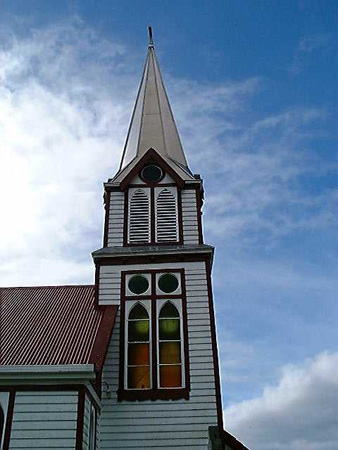
ARCHITECT/ENGINEER OR DESIGNER: Not certain; may have been: Thomas MAHONEY (1855-1923) ARCHITECT & BUILDER: The builder of the church was H.A. Williams of Kohukohu and the plans are said to have been "drawn up in Auckland". The design is such that a trained architect was clearly responsible. This could have well been Thomas Mahoney, who was the architect for many Catholic buildings in the Auckland Diocese, although there is no documentation to prove this. ARCHITECTURAL DESCRIPTION: Neo-Gothic in style, the church consists of a nave with gabled roof and a sacristy, also gabled, behind the altar wall. This unfenestrated wall is decorated with a large painting - a copy of Murillo's "The Immaculate Conception" which hangs in the Louvre, Paris. Lancet windows, widely spaced, have plain glass. The interior with its simple scissor trusses and unpainted kauri matchlining is unpretentious but dignified. A rear gallery which is possibly an addition abuts against windows at the sides. The entrance is through a tower surmounted by a tall broach spire. Above door level are paired lancet windows with coloured glass, with circular windows above. The next level has lancet windows which are louvered. Doors likewise have pointed arch forms. MODIFICATIONS: A gallery at the rear is possibly an addition. The church is being renovated at present, wooden piles are being replaced by concrete piles.
ARCHITECT/ENGINEER OR DESIGNER: Not certain; may have been: Thomas MAHONEY (1855-1923) ARCHITECT & BUILDER: The builder of the church was H.A. Williams of Kohukohu and the plans are said to have been "drawn up in Auckland". The design is such that a trained architect was clearly responsible. This could have well been Thomas Mahoney, who was the architect for many Catholic buildings in the Auckland Diocese, although there is no documentation to prove this. ARCHITECTURAL DESCRIPTION: Neo-Gothic in style, the church consists of a nave with gabled roof and a sacristy, also gabled, behind the altar wall. This unfenestrated wall is decorated with a large painting - a copy of Murillo's "The Immaculate Conception" which hangs in the Louvre, Paris. Lancet windows, widely spaced, have plain glass. The interior with its simple scissor trusses and unpainted kauri matchlining is unpretentious but dignified. A rear gallery which is possibly an addition abuts against windows at the sides. The entrance is through a tower surmounted by a tall broach spire. Above door level are paired lancet windows with coloured glass, with circular windows above. The next level has lancet windows which are louvered. Doors likewise have pointed arch forms. MODIFICATIONS: A gallery at the rear is possibly an addition. The church is being renovated at present, wooden piles are being replaced by concrete piles.
Historical and Associated Iwi / Hapū / Whānau
Information Sources
New Zealand Historic Places Trust (NZHPT)
New Zealand Historic Places Trust
Salmond, 1986
Jeremy Salmond, Old New Zealand Houses 1800-1940, Auckland, 1986, Reed Methuen
Porter, 1983 (2)
Frances Porter (ed.), Historic Buildings of New Zealand: North Island (2nd edn.), Auckland, 1983
Other Information
This historic place was registered under the Historic Places Act 1980. This report includes the text from the original Building Classification Committee report considered by the NZHPT Board at the time of registration. Please note that entry on the New Zealand Heritage List/Rarangi Korero identifies only the heritage values of the property concerned, and should not be construed as advice on the state of the property, or as a comment of its soundness or safety, including in regard to earthquake risk, safety in the event of fire, or insanitary conditions.
Historical and Associated Iwi / Hapū / Whānau
Information Sources
New Zealand Historic Places Trust (NZHPT)
New Zealand Historic Places Trust
Salmond, 1986
Jeremy Salmond, Old New Zealand Houses 1800-1940, Auckland, 1986, Reed Methuen
Porter, 1983 (2)
Frances Porter (ed.), Historic Buildings of New Zealand: North Island (2nd edn.), Auckland, 1983
Other Information
This historic place was registered under the Historic Places Act 1980. This report includes the text from the original Building Classification Committee report considered by the NZHPT Board at the time of registration. Please note that entry on the New Zealand Heritage List/Rarangi Korero identifies only the heritage values of the property concerned, and should not be construed as advice on the state of the property, or as a comment of its soundness or safety, including in regard to earthquake risk, safety in the event of fire, or insanitary conditions.
Current Usages
Uses: Religion
Specific Usage: Church
Former Usages
General Usage: Religion
Specific Usage: Church
Current Usages
Uses: Religion
Specific Usage: Church
Former Usages
General Usage: Religion
Specific Usage: Church
Location
Sign up to hear more
Get the latest heritage news, features and events delivered
straight to your inbox.
