

List Entry Information
Status
Listed
List Entry Status
Historic Place Category 2
Access
Private/No Public Access
List Number
7223
Date Entered
3rd March 1995
Date of Effect
3rd March 1995
City/District Council
Christchurch City
Region
Canterbury Region
Legal description
part rural secs 297C, 4543, 14330 and 19208
Status
Listed
List Entry Status
Historic Place Category 2
Access
Private/No Public Access
List Number
7223
Date Entered
3rd March 1995
Date of Effect
3rd March 1995
City/District Council
Christchurch City
Region
Canterbury Region
Legal description
part rural secs 297C, 4543, 14330 and 19208
Why is this place significant?
Historic Significance
Historical Significance or Value This historic place was registered under the Historic Places Act 1993. The following text is from the original Recommendation for Registration considered by the NZHPT Board at the time of registration. Historical: This building is representative of the type of managerial residence often associated with industrial sites such as quarries, freezing works, woollen mills etc.
Physical Significance
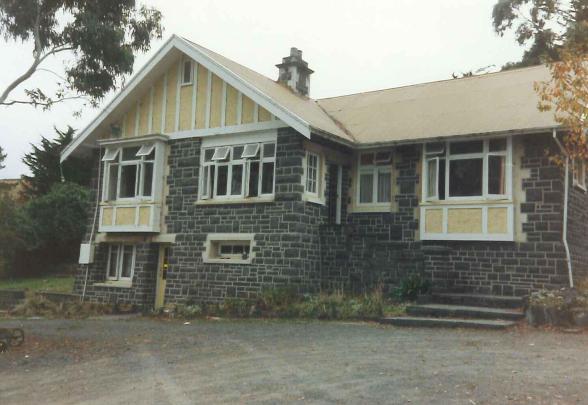
This historic place was registered under the Historic Places Act 1993. The following text is from the original Recommendation for Registration considered by the NZHPT Board at the time of registration. Aesthetic: The aesthetic impact of the house and gardens as an entity is significant. The use of bluestone both as a building material and a paving material demonstrates a conscious attempt at integration of house and garden. The Halswell Quarry house and its gardens together define a place that has an aesthetic value greater than the sum of its parts. Architectural: The Quarry House is representative of the Bungalow style of the 1920's and demonstrates the use of local Halswell bluestone. Archaeological: The Halswell Quarry opened in the late 1850's and closed in 1900. This historic place marks and characterises this once important industrial site. Technological: The technological significance of this place lies in its ability to demonstrate past quarrying processes.
Why is this place Category 1 / Category 2?
Detail Of Assessed Criteria
This historic place was registered under the Historic Places Act 1993. The following text is from the original Recommendation for Registration considered by the NZHPT Board at the time of registration. a) The extent to which the place reflects important or representative aspects of New Zealand history: The house and garden are representative of the sort of middle class residence built for managers of medium to large industries of this type. e) The community association with, or public esteem for the place: This can be inferred from the fact that the Christchurch City Council (owners of the property) prepared the nomination form and submitted the place for registration. f) The potential of the place for public education: In that the remains of the Halswell Quarry itself demonstrates past quarrying practices and techniques, this place has a potential for public education. g) The technical accomplishment or value, or design of the place: The Halswell Quarry House was designed by A.R. Gallbraith, Christchurch City Engineers Department, in 1927. It was built in the Californian Bungalow style with 10 inch perimeter walls of concrete covered with a solid veneer of Halswell stone. The walls have an appearance of squared rubble, a kind of semi-dressed stone. Californian Bungalows are invariably constructed of weatherboard or, more rarely, roughcast brick, therefore concrete was a radical material to use at that time (1927). Concrete was covered with plaster or roughcast because by itself concrete was not considered to be a traditional building material, nor was it considered to be in any way aesthetically pleasing. In the case of the Halswell house there was a definite attempt to disguise its construction with the Halswell Bluestone veneer. At the same time it should be acknowledged that the Halswell Bluestone cladding is in itself sufficiently unusual for this bungalow to warrant special recognition. Conclusion: The Halswell Quarry Stone House and garden is recommended for registration as a Category II as a place of historical and cultural heritage significance and value. The house and garden form a distinct and pleasing entity that characterises and signals a once-important quarry site in Canterbury. The house itself is built in the Californian Bungalow style and is distinguished by the unusual material of its exterior cladding Halswell Bluestone. The gardens are terraced and paved in the same material.
Why is this place significant?
Historic Significance
Historical Significance or Value This historic place was registered under the Historic Places Act 1993. The following text is from the original Recommendation for Registration considered by the NZHPT Board at the time of registration. Historical: This building is representative of the type of managerial residence often associated with industrial sites such as quarries, freezing works, woollen mills etc.
Physical Significance
This historic place was registered under the Historic Places Act 1993. The following text is from the original Recommendation for Registration considered by the NZHPT Board at the time of registration. Aesthetic: The aesthetic impact of the house and gardens as an entity is significant. The use of bluestone both as a building material and a paving material demonstrates a conscious attempt at integration of house and garden. The Halswell Quarry house and its gardens together define a place that has an aesthetic value greater than the sum of its parts. Architectural: The Quarry House is representative of the Bungalow style of the 1920's and demonstrates the use of local Halswell bluestone. Archaeological: The Halswell Quarry opened in the late 1850's and closed in 1900. This historic place marks and characterises this once important industrial site. Technological: The technological significance of this place lies in its ability to demonstrate past quarrying processes.
Why is this place Category 1 / Category 2?
Detail Of Assessed Criteria
This historic place was registered under the Historic Places Act 1993. The following text is from the original Recommendation for Registration considered by the NZHPT Board at the time of registration. a) The extent to which the place reflects important or representative aspects of New Zealand history: The house and garden are representative of the sort of middle class residence built for managers of medium to large industries of this type. e) The community association with, or public esteem for the place: This can be inferred from the fact that the Christchurch City Council (owners of the property) prepared the nomination form and submitted the place for registration. f) The potential of the place for public education: In that the remains of the Halswell Quarry itself demonstrates past quarrying practices and techniques, this place has a potential for public education. g) The technical accomplishment or value, or design of the place: The Halswell Quarry House was designed by A.R. Gallbraith, Christchurch City Engineers Department, in 1927. It was built in the Californian Bungalow style with 10 inch perimeter walls of concrete covered with a solid veneer of Halswell stone. The walls have an appearance of squared rubble, a kind of semi-dressed stone. Californian Bungalows are invariably constructed of weatherboard or, more rarely, roughcast brick, therefore concrete was a radical material to use at that time (1927). Concrete was covered with plaster or roughcast because by itself concrete was not considered to be a traditional building material, nor was it considered to be in any way aesthetically pleasing. In the case of the Halswell house there was a definite attempt to disguise its construction with the Halswell Bluestone veneer. At the same time it should be acknowledged that the Halswell Bluestone cladding is in itself sufficiently unusual for this bungalow to warrant special recognition. Conclusion: The Halswell Quarry Stone House and garden is recommended for registration as a Category II as a place of historical and cultural heritage significance and value. The house and garden form a distinct and pleasing entity that characterises and signals a once-important quarry site in Canterbury. The house itself is built in the Californian Bungalow style and is distinguished by the unusual material of its exterior cladding Halswell Bluestone. The gardens are terraced and paved in the same material.
Construction Details
Start Year
1927
Type
Original Construction
Construction Details
Start Year
1927
Type
Original Construction
Historical and Associated Iwi / Hapū / Whānau
Information Sources
Christchurch City Council
Christchurch City Council
Other Information
A copy of the original report is available from the NZHPT Southern region office Please note that entry on the New Zealand Heritage List/Rarangi Korero identifies only the heritage values of the property concerned, and should not be construed as advice on the state of the property, or as a comment of its soundness or safety, including in regard to earthquake risk, safety in the event of fire, or insanitary conditions.
Historical and Associated Iwi / Hapū / Whānau
Information Sources
Christchurch City Council
Christchurch City Council
Other Information
A copy of the original report is available from the NZHPT Southern region office Please note that entry on the New Zealand Heritage List/Rarangi Korero identifies only the heritage values of the property concerned, and should not be construed as advice on the state of the property, or as a comment of its soundness or safety, including in regard to earthquake risk, safety in the event of fire, or insanitary conditions.
Current Usages
Uses: Accommodation
Specific Usage: House
Former Usages
General Usage: Accommodation
Specific Usage: House
Current Usages
Uses: Accommodation
Specific Usage: House
Former Usages
General Usage: Accommodation
Specific Usage: House
Location
Sign up to hear more
Get the latest heritage news, features and events delivered
straight to your inbox.
