

List Entry Information
Status
Listed
List Entry Status
Historic Place Category 1
Access
Private/No Public Access
List Number
7236
Date Entered
21st September 1989
Date of Effect
21st September 1989
City/District Council
Grey District
Region
West Coast Region
Extent of List Entry
Extent of registration includes part of the land located between the points marked Railway Reserve XI and Railway Reserve XII SO 877, Westland Land District and the building known as the Ruru Railway Station thereon (refer to map tabled at the Board meeting on 13 December 2012).
Legal description
Railway Reserve XI SO 877, Westland Land District
Location Description
The Ruru Railway Station is located on the Midland Line, on the section which runs parallel to Lake Brunner Road, RURU.
Status
Listed
List Entry Status
Historic Place Category 1
Access
Private/No Public Access
List Number
7236
Date Entered
21st September 1989
Date of Effect
21st September 1989
City/District Council
Grey District
Region
West Coast Region
Extent of List Entry
Extent of registration includes part of the land located between the points marked Railway Reserve XI and Railway Reserve XII SO 877, Westland Land District and the building known as the Ruru Railway Station thereon (refer to map tabled at the Board meeting on 13 December 2012).
Legal description
Railway Reserve XI SO 877, Westland Land District
Location Description
The Ruru Railway Station is located on the Midland Line, on the section which runs parallel to Lake Brunner Road, RURU.
Why is this place significant?
Cultural Significance
This historic place was registered under the Historic Places Act 1993. The following text is from the original Recommendation for Registration considered by the NZHPT Board at the time of registration. Cultural/Social: The site on which the Ruru Railway Station is located was once the site of a siding to the Brownlee Sawmill Co. at Moana.
Historic Significance
Historical Significance or Value This historic place was registered under the Historic Places Act 1993. The following text is from the original Recommendation for Registration considered by the NZHPT Board at the time of registration. Ruru station is important as a representative example of the many hundreds of shelter sheds which were built in New Zealand, few of which now remain on site.
Physical Significance
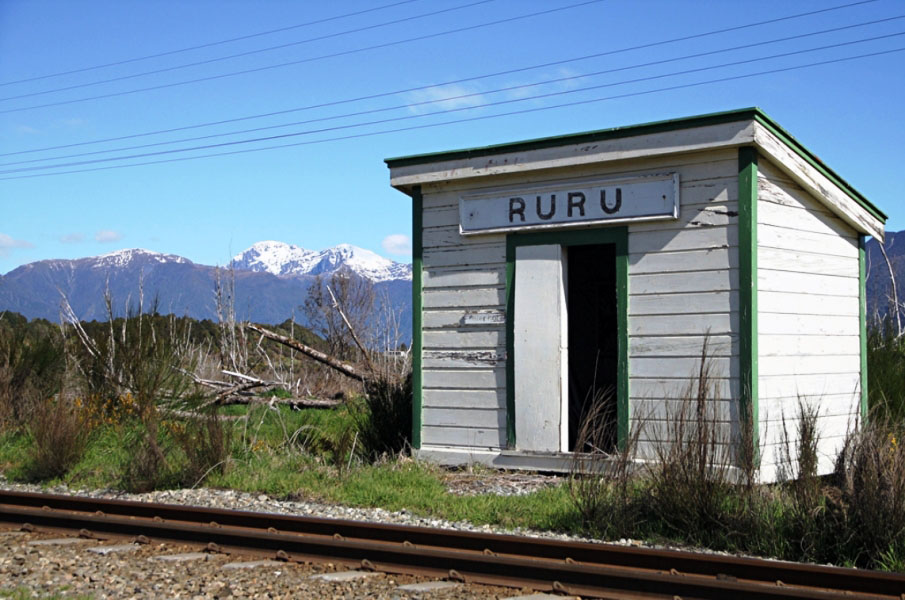
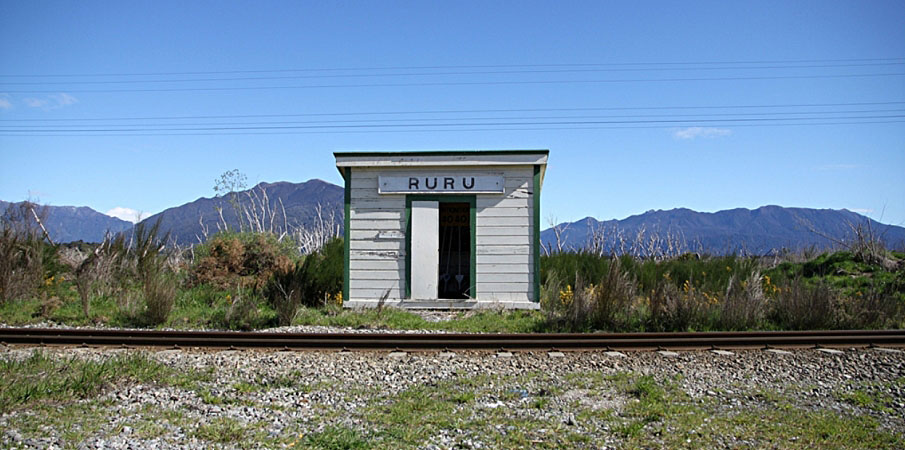
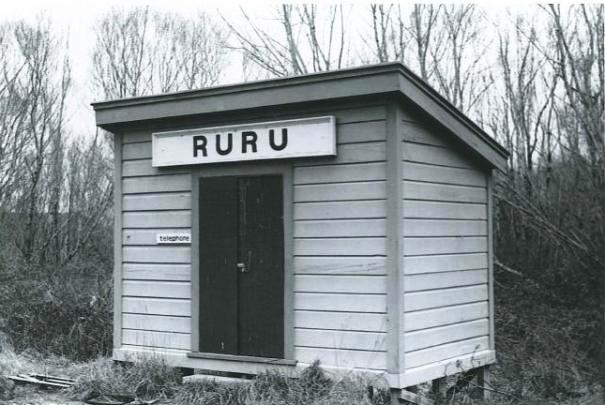
This historic place was registered under the Historic Places Act 1993. The following text is from the original Recommendation for Registration considered by the NZHPT Board at the time of registration. Aesthetic: The simplicity and purity of this structure , a box with a pitched roof, is a considerable part of its appeal. It occupies a picturesque but narrow site between regenerating native bush and the track; and the remnants of an associated sawmill are still evident on the other side of the railway. The building is on the route of the Tranz-Alpine tourist train. Architectural: Ruru is an important as a representative example of the simplest of railway stations, the shelter shed. Timber framed and clad with rusticated weatherboards, it has a corrugated iron roof and few embellishments except perhaps the bargeboards. It is virtually unaltered and in excellent condition. Plan 8849 in the 1914 railway engineers' pocket book gives dimensions for stations like Ruru. Technological: Late last century designs for railway stations around New Zealand were standardised, as part of new philosophies for the management of the railway industry. The Ruru station is the simplest of these standard designs.
Why is this place Category 1 / Category 2?
Detail Of Assessed Criteria
This historic place was registered under the Historic Places Act 1993. The following text is from the original Recommendation for Registration considered by the NZHPT Board at the time of registration. The following comments are made in relation to the criteria identified under S.23(2) of the Historic Places Act 1993. a) The extent to which the place reflects important or representative aspects of New Zealand history: This simple shelter shed, thought to have been built some time around 1920, is an example of what was New Zealand's most common type of railway station building. It is thought to be the finest survivor of an estimated 600 standard shelter sheds which were built before 1945. Julius Vogel, Minister of Railways late last century, adopted pragmatic American design philosophies for the New Zealand Railway industry, including standardising of railway stations and shelters. This standardisation was continued into this century, and Ruru is an example of the shelter shed that succeeded the Class 7 shed of the Vogel era. j) The importance of identifying rare types of historic places: This shelter shed is a survivor of what was the most common type of railway station built by New Zealand Railways, and they accounted for 44% of all stations built in the country. Of an estimated 600 built before 1945, few remain on site, and Ruru is thought to be the finest surviving example. Conclusion: Ruru Railway Station, Grey District, is recommended for registration as a Category I as a place of special and outstanding historical and cultural heritage significance and value. It is the finest example of a once common type of railway structure, and represents and era of expansion and development of the national Railway industry.
Why is this place significant?
Cultural Significance
This historic place was registered under the Historic Places Act 1993. The following text is from the original Recommendation for Registration considered by the NZHPT Board at the time of registration. Cultural/Social: The site on which the Ruru Railway Station is located was once the site of a siding to the Brownlee Sawmill Co. at Moana.
Historic Significance
Historical Significance or Value This historic place was registered under the Historic Places Act 1993. The following text is from the original Recommendation for Registration considered by the NZHPT Board at the time of registration. Ruru station is important as a representative example of the many hundreds of shelter sheds which were built in New Zealand, few of which now remain on site.
Physical Significance
This historic place was registered under the Historic Places Act 1993. The following text is from the original Recommendation for Registration considered by the NZHPT Board at the time of registration. Aesthetic: The simplicity and purity of this structure , a box with a pitched roof, is a considerable part of its appeal. It occupies a picturesque but narrow site between regenerating native bush and the track; and the remnants of an associated sawmill are still evident on the other side of the railway. The building is on the route of the Tranz-Alpine tourist train. Architectural: Ruru is an important as a representative example of the simplest of railway stations, the shelter shed. Timber framed and clad with rusticated weatherboards, it has a corrugated iron roof and few embellishments except perhaps the bargeboards. It is virtually unaltered and in excellent condition. Plan 8849 in the 1914 railway engineers' pocket book gives dimensions for stations like Ruru. Technological: Late last century designs for railway stations around New Zealand were standardised, as part of new philosophies for the management of the railway industry. The Ruru station is the simplest of these standard designs.
Why is this place Category 1 / Category 2?
Detail Of Assessed Criteria
This historic place was registered under the Historic Places Act 1993. The following text is from the original Recommendation for Registration considered by the NZHPT Board at the time of registration. The following comments are made in relation to the criteria identified under S.23(2) of the Historic Places Act 1993. a) The extent to which the place reflects important or representative aspects of New Zealand history: This simple shelter shed, thought to have been built some time around 1920, is an example of what was New Zealand's most common type of railway station building. It is thought to be the finest survivor of an estimated 600 standard shelter sheds which were built before 1945. Julius Vogel, Minister of Railways late last century, adopted pragmatic American design philosophies for the New Zealand Railway industry, including standardising of railway stations and shelters. This standardisation was continued into this century, and Ruru is an example of the shelter shed that succeeded the Class 7 shed of the Vogel era. j) The importance of identifying rare types of historic places: This shelter shed is a survivor of what was the most common type of railway station built by New Zealand Railways, and they accounted for 44% of all stations built in the country. Of an estimated 600 built before 1945, few remain on site, and Ruru is thought to be the finest surviving example. Conclusion: Ruru Railway Station, Grey District, is recommended for registration as a Category I as a place of special and outstanding historical and cultural heritage significance and value. It is the finest example of a once common type of railway structure, and represents and era of expansion and development of the national Railway industry.
Construction Details
Start Year
1920
startYearCirca
Type
Original Construction
Construction Details
Start Year
1920
startYearCirca
Type
Original Construction
Historical and Associated Iwi / Hapū / Whānau
Information Sources
Mahoney, 1987
J. D. Mahoney, Down at the Station: A Study of the New Zealand Railway Station, Palmerston North, 1987
Other Information
A copy of the original report is available from the NZHPT Southern region office. Please note that entry on the New Zealand Heritage List/Rarangi Korero identifies only the heritage values of the property concerned, and should not be construed as advice on the state of the property, or as a comment of its soundness or safety, including in regard to earthquake risk, safety in the event of fire, or insanitary conditions.
Historical and Associated Iwi / Hapū / Whānau
Information Sources
Mahoney, 1987
J. D. Mahoney, Down at the Station: A Study of the New Zealand Railway Station, Palmerston North, 1987
Other Information
A copy of the original report is available from the NZHPT Southern region office. Please note that entry on the New Zealand Heritage List/Rarangi Korero identifies only the heritage values of the property concerned, and should not be construed as advice on the state of the property, or as a comment of its soundness or safety, including in regard to earthquake risk, safety in the event of fire, or insanitary conditions.
Former Usages
General Usage: Transport
Specific Usage: Railway station/ platform/ refreshment room
Former Usages
General Usage: Transport
Specific Usage: Railway station/ platform/ refreshment room
