DonateSupporterVisit Heritage
  • Tūrangawaewae
    Places
  • Tira Māori
    Māori Heritage
  • Poutairangahia
    Archaeology
  • Rauemi
    Resources
  • Mō Tātou
    About Us
  • New Zealand Heritage List
  • Nominate and submit
  • Explore the List
  • National Historic Landmarks
  • Plaques
  • Rainbow List Project
  • Lost heritage
  • Visit Heritage
  • Our properties
  • Turnbull House Project
  • Collections
  • Shop
  • Tohu Whenua
  • Tira Māori
  • Conserving Māori heritage
  • Marae built heritage
  • Māori heritage on the List
  • Hinemihi—Te Hokinga Mai
  • What is archaeology?
  • Is there a site on my property?
  • What are my legal requirements?
  • Affecting an archaeological site
  • Declaring an archaeological site
  • Archaeology FAQs
  • Archaeology Digital Library
  • Archaeology guidelines and templates
  • Resources
  • Funding
  • Publications
  • Sustainable management guides
  • Disaster recovery
  • Podcasts & digital resources
  • Education Hub
  • Conservation plans
  • About
  • Board
  • Māori Heritage Council
  • Senior Staff
  • Offices
  • Contact us
  • Careers
  • Covenants
  • Fast-track
  • Corporate documents
  • Currently consulting on
  • Our submissions
  • News
  • Covid-19 response
Quick links
Rārangi Kōrero | The List
Explore the List
National Historic Landmarks
Ngā Manawhenua o Aotearoa me ōna Kōrero Tūturu
Quick links
Tapuwae
A Vision for Places of Māori Heritage
Funding for Māori Heritage
Resources
Quick links
Archaeological Authority Portal
Applying for an archaeological authority
Archaeology FAQs
Browse the most frequently asked questions about archaeological authorities and the archaeological process.
Quick links
Quick links
Contact us
Offices
DonateSupporterVisit Heritage
  • Tūrangawaewae
    Places
  • Tira Māori
    Māori Heritage
  • Poutairangahia
    Archaeology
  • Rauemi
    Resources
  • Mō Tātou
    About Us
  • New Zealand Heritage List
  • Nominate and submit
  • Explore the List
  • National Historic Landmarks
  • Plaques
  • Rainbow List Project
  • Lost heritage
  • Visit Heritage
  • Our properties
  • Turnbull House Project
  • Collections
  • Shop
  • Tohu Whenua
  • Tira Māori
  • Conserving Māori heritage
  • Marae built heritage
  • Māori heritage on the List
  • Hinemihi—Te Hokinga Mai
  • What is archaeology?
  • Is there a site on my property?
  • What are my legal requirements?
  • Affecting an archaeological site
  • Declaring an archaeological site
  • Archaeology FAQs
  • Archaeology Digital Library
  • Archaeology guidelines and templates
  • Resources
  • Funding
  • Publications
  • Sustainable management guides
  • Disaster recovery
  • Podcasts & digital resources
  • Education Hub
  • Conservation plans
  • About
  • Board
  • Māori Heritage Council
  • Senior Staff
  • Offices
  • Contact us
  • Careers
  • Covenants
  • Fast-track
  • Corporate documents
  • Currently consulting on
  • Our submissions
  • News
  • Covid-19 response
Quick links
Rārangi Kōrero | The List
Explore the List
National Historic Landmarks
Ngā Manawhenua o Aotearoa me ōna Kōrero Tūturu
Quick links
Tapuwae
A Vision for Places of Māori Heritage
Funding for Māori Heritage
Resources
Quick links
Archaeological Authority Portal
Applying for an archaeological authority
Archaeology FAQs
Browse the most frequently asked questions about archaeological authorities and the archaeological process.
Quick links
Quick links
Contact us
Offices
  • Places
  • Nominate and submit
  • National Historic Landmarks
  • Places
  • Nominate and submit
  • National Historic Landmarks
  • Tira Māori
  • Conserving Māori heritage
  • Marae built heritage
  • Tira Māori
  • Conserving Māori heritage
  • Marae built heritage
  • Archaeological authorities
  • Archaeology Digital Library
  • Archaeological authorities
  • Archaeology Digital Library
  • All resources
  • Publications
  • Funding
  • All resources
  • Publications
  • Funding
  • FAQs
  • FAQs
Follow us on:
Places
  • Places
  • Nominate and submit
  • National Historic Landmarks
Tira Māori
  • Tira Māori
  • Conserving Māori heritage
  • Marae built heritage
Archaeology
  • Archaeological authorities
  • Archaeology Digital Library
Resources
  • All resources
  • Publications
  • Funding
FAQs
  • FAQs
Follow us on
HomePrivacyTerms and conditionsAbout this site
© Heritage New Zealand Pouhere Taonga 2026.
 
Bluestone Reservoir Complex

Brookfield Road, TIMARU

Private

Historic Place Category 2

List No. 7266

Quick links:
List GalleryLocationDetails
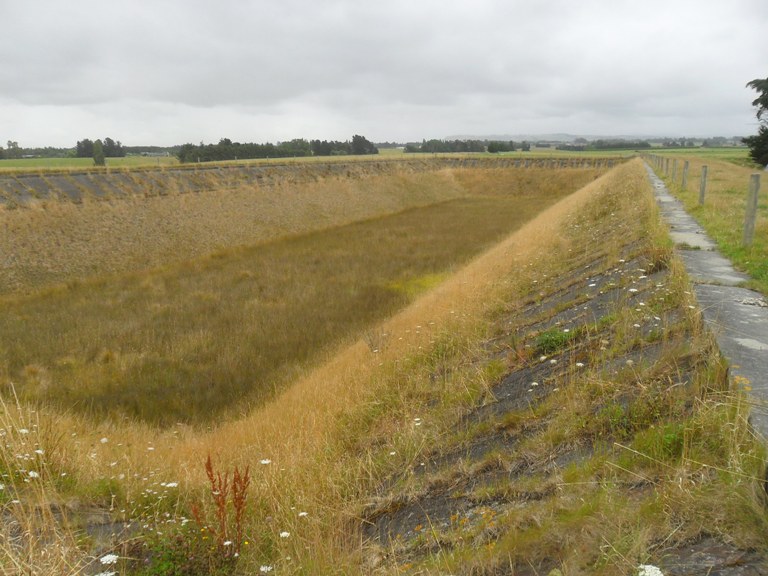
Bluestone Reservoir Complex | Bruce Comfort | Bruce Comfort
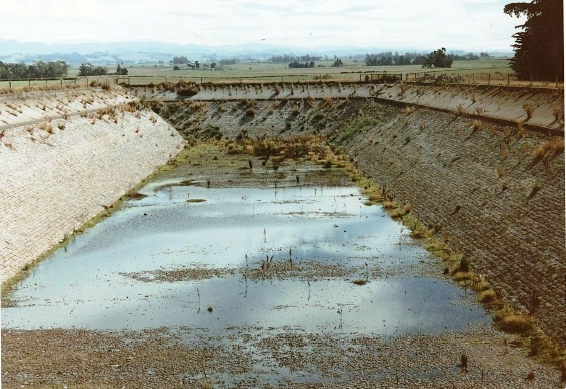
Bluestone Reservoir Complex. Original image submitted at time of registration | Heritage New Zealand Pouhere Taonga
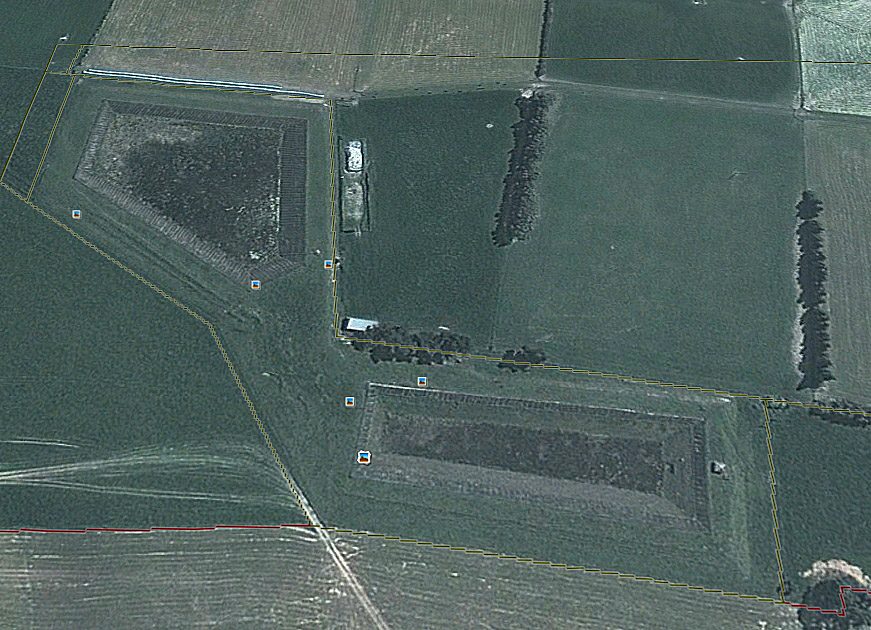
Bluestone Reservoir Complex. Image courtesy of Google Earth 2012 | 18/12/2012 | Google Earth
Bluestone Reservoir Complex | Bruce Comfort | Bruce Comfort
Bluestone Reservoir Complex. Original image submitted at time of registration | Heritage New Zealand Pouhere Taonga
Bluestone Reservoir Complex. Image courtesy of Google Earth 2012 | 18/12/2012 | Google Earth

List Entry Information

Overview

Status
Listed

List Entry Status
Historic Place Category 2

Access
Private/No Public Access

List Number
7266

Date Entered
25th August 1995

Date of Effect
25th August 1995

City/District Council
Timaru District

Region
Canterbury Region

Legal description

lots 3 & 4 DP 23185 part rural sec 6859, 8258, & 9076 Blk X Arowhenua SD

Detailed List Entry
Significance

Historic Significance

Historical Significance or Value This historic place was registered under the Historic Places Act 1993. The following text is from the original Recommendation for Registration considered by the NZHPT Board at the time of registration. Social/Historical: The Timaru reservoir is a relatively intact example of a late Victorian town reservoir system.

Physical Significance

This historic place was registered under the Historic Places Act 1993. The following text is from the original Recommendation for Registration considered by the NZHPT Board at the time of registration. Aesthetic: The [1870s] reservoir has the appearance of both massive size and quality masonry construction. The regular courses of basalt blocks are remarkably true. Architectural: In terms of design, the Timaru reservoir exemplifies the quality of civil engineering in colonial times where major projects such as this were constructed without the benefit of modern technology. Archaeological: As the reservoir was built in [1874-5] it has archaeological significance. Technological: This reservoir is an example of 19th century methods for constructing a town water supply including stone walled reservoirs, [open water races], and cast iron filtration equipment.

Detail Of Assessed Criteria

This historic place was registered under the Historic Places Act 1993. The following text is from the original Recommendation for Registration considered by the NZHPT Board at the time of registration. The following comments are made in relation to the criteria identified under S.23(2) of the Historic Places Act 1993. a) The extent to which the place reflects important or representative aspects of New Zealand history: The provision of a reliable water supply was important to the development of colonial New Zealand towns. This was especially so on the eastern seaboard of the South Island where seasonal droughts restricted water supplies and increased fire dangers in towns and cities such as Oamaru, Timaru, Ashburton and Christchurch. b) The association of the place with events, persons, or ideas of importance in New Zealand history: The provision of safe, reliable supplies of water was crucial to the development of colonial New Zealand towns. An 1864 Dunedin Sanitation Commission pointed out that "the absence of any reliable supply of pure water led 'frequently to the use of polluted streams and wells' causing scarlet fever, typhoid, diphtheria, infantile dysentery, and diarrhoea." (Olssen, 1984:82) Timaru was not as crowded as Dunedin, but the same concerns probably would have prevailed. c) The potential of the place to provide knowledge of New Zealand history: The reservoir demonstrates how such dams were constructed and the storage capacity needs of the people at the time. g) The technical accomplishment or value, or design of the place: The Timaru reservoir consists of two structures, being the bluestone walled [1874-5] reservoir and the [1910-12] reservoir which is constructed of concrete. Also included in the area are the brick walls, water races and screens houses. The reservoir complex is noted particularly for its rectangular and polygonal plan, and the method of construction involving 50% excavation and 50% earth embankment with dry stone walling using local stone in the case of the 1874 reservoir. The stone was well dressed, squared [and carefully fitted]. The construction of the reservoir appears to be of a very high quality. Conclusion: The Bluestone Reservoir, Timaru, is recommended for registration as a Category II as a place of historical and cultural heritage significance and value. The provision of a town water supply in colonial days was an important industrial undertaking for towns such as Timaru. [The] reservoir therefore has historical and technological significance. The [1870s] structure, in particular, has aesthetic appeal due to the quality of its bluestone walls.

Construction Details

Start Year

1910

Finish Year

1912

Type

Modification

Description

Extension of upper walls of original reservoir

Start Year

1910

Finish Year

1912

Type

Original Construction

Description

Construction of second reservoir

Start Year

1874

Finish Year

1875

Type

Original Construction

Reference

Public NZAA Number

J39/52

Report Written By

A copy of the original report is available from the NZHPT Southern region office Please note that entry on the New Zealand Heritage List/Rarangi Korero identifies only the heritage values of the property concerned, and should not be construed as advice on the state of the property, or as a comment of its soundness or safety, including in regard to earthquake risk, safety in the event of fire, or insanitary conditions.

Further Information

Current Usages

Former Usages

General Usage:: Utilities

Specific Usage: Reservoir/ Dam

Themes

Web Links

description: Your Tube: Timaru Water Courses

url: http://www.youtube.com/watch?v=LNi7QnlEcWU

Overview

Status

Listed

List Entry Status

Historic Place Category 2

Access

Private/No Public Access

List Number

7266

Date Entered

25th August 1995

Date of Effect

25th August 1995

City/District Council

Timaru District

Region

Canterbury Region

Legal description

lots 3 & 4 DP 23185 part rural sec 6859, 8258, & 9076 Blk X Arowhenua SD

Status

Listed

List Entry Status

Historic Place Category 2

Access

Private/No Public Access

List Number

7266

Date Entered

25th August 1995

Date of Effect

25th August 1995

City/District Council

Timaru District

Region

Canterbury Region

Legal description

lots 3 & 4 DP 23185 part rural sec 6859, 8258, & 9076 Blk X Arowhenua SD

Significance

Why is this place significant?

Historic Significance

Historical Significance or Value This historic place was registered under the Historic Places Act 1993. The following text is from the original Recommendation for Registration considered by the NZHPT Board at the time of registration. Social/Historical: The Timaru reservoir is a relatively intact example of a late Victorian town reservoir system.

Physical Significance

This historic place was registered under the Historic Places Act 1993. The following text is from the original Recommendation for Registration considered by the NZHPT Board at the time of registration. Aesthetic: The [1870s] reservoir has the appearance of both massive size and quality masonry construction. The regular courses of basalt blocks are remarkably true. Architectural: In terms of design, the Timaru reservoir exemplifies the quality of civil engineering in colonial times where major projects such as this were constructed without the benefit of modern technology. Archaeological: As the reservoir was built in [1874-5] it has archaeological significance. Technological: This reservoir is an example of 19th century methods for constructing a town water supply including stone walled reservoirs, [open water races], and cast iron filtration equipment.

Why is this place Category 1 / Category 2?

Detail Of Assessed Criteria

This historic place was registered under the Historic Places Act 1993. The following text is from the original Recommendation for Registration considered by the NZHPT Board at the time of registration. The following comments are made in relation to the criteria identified under S.23(2) of the Historic Places Act 1993. a) The extent to which the place reflects important or representative aspects of New Zealand history: The provision of a reliable water supply was important to the development of colonial New Zealand towns. This was especially so on the eastern seaboard of the South Island where seasonal droughts restricted water supplies and increased fire dangers in towns and cities such as Oamaru, Timaru, Ashburton and Christchurch. b) The association of the place with events, persons, or ideas of importance in New Zealand history: The provision of safe, reliable supplies of water was crucial to the development of colonial New Zealand towns. An 1864 Dunedin Sanitation Commission pointed out that "the absence of any reliable supply of pure water led 'frequently to the use of polluted streams and wells' causing scarlet fever, typhoid, diphtheria, infantile dysentery, and diarrhoea." (Olssen, 1984:82) Timaru was not as crowded as Dunedin, but the same concerns probably would have prevailed. c) The potential of the place to provide knowledge of New Zealand history: The reservoir demonstrates how such dams were constructed and the storage capacity needs of the people at the time. g) The technical accomplishment or value, or design of the place: The Timaru reservoir consists of two structures, being the bluestone walled [1874-5] reservoir and the [1910-12] reservoir which is constructed of concrete. Also included in the area are the brick walls, water races and screens houses. The reservoir complex is noted particularly for its rectangular and polygonal plan, and the method of construction involving 50% excavation and 50% earth embankment with dry stone walling using local stone in the case of the 1874 reservoir. The stone was well dressed, squared [and carefully fitted]. The construction of the reservoir appears to be of a very high quality. Conclusion: The Bluestone Reservoir, Timaru, is recommended for registration as a Category II as a place of historical and cultural heritage significance and value. The provision of a town water supply in colonial days was an important industrial undertaking for towns such as Timaru. [The] reservoir therefore has historical and technological significance. The [1870s] structure, in particular, has aesthetic appeal due to the quality of its bluestone walls.

Why is this place significant?

Historic Significance

Historical Significance or Value This historic place was registered under the Historic Places Act 1993. The following text is from the original Recommendation for Registration considered by the NZHPT Board at the time of registration. Social/Historical: The Timaru reservoir is a relatively intact example of a late Victorian town reservoir system.

Physical Significance

This historic place was registered under the Historic Places Act 1993. The following text is from the original Recommendation for Registration considered by the NZHPT Board at the time of registration. Aesthetic: The [1870s] reservoir has the appearance of both massive size and quality masonry construction. The regular courses of basalt blocks are remarkably true. Architectural: In terms of design, the Timaru reservoir exemplifies the quality of civil engineering in colonial times where major projects such as this were constructed without the benefit of modern technology. Archaeological: As the reservoir was built in [1874-5] it has archaeological significance. Technological: This reservoir is an example of 19th century methods for constructing a town water supply including stone walled reservoirs, [open water races], and cast iron filtration equipment.

Why is this place Category 1 / Category 2?

Detail Of Assessed Criteria

This historic place was registered under the Historic Places Act 1993. The following text is from the original Recommendation for Registration considered by the NZHPT Board at the time of registration. The following comments are made in relation to the criteria identified under S.23(2) of the Historic Places Act 1993. a) The extent to which the place reflects important or representative aspects of New Zealand history: The provision of a reliable water supply was important to the development of colonial New Zealand towns. This was especially so on the eastern seaboard of the South Island where seasonal droughts restricted water supplies and increased fire dangers in towns and cities such as Oamaru, Timaru, Ashburton and Christchurch. b) The association of the place with events, persons, or ideas of importance in New Zealand history: The provision of safe, reliable supplies of water was crucial to the development of colonial New Zealand towns. An 1864 Dunedin Sanitation Commission pointed out that "the absence of any reliable supply of pure water led 'frequently to the use of polluted streams and wells' causing scarlet fever, typhoid, diphtheria, infantile dysentery, and diarrhoea." (Olssen, 1984:82) Timaru was not as crowded as Dunedin, but the same concerns probably would have prevailed. c) The potential of the place to provide knowledge of New Zealand history: The reservoir demonstrates how such dams were constructed and the storage capacity needs of the people at the time. g) The technical accomplishment or value, or design of the place: The Timaru reservoir consists of two structures, being the bluestone walled [1874-5] reservoir and the [1910-12] reservoir which is constructed of concrete. Also included in the area are the brick walls, water races and screens houses. The reservoir complex is noted particularly for its rectangular and polygonal plan, and the method of construction involving 50% excavation and 50% earth embankment with dry stone walling using local stone in the case of the 1874 reservoir. The stone was well dressed, squared [and carefully fitted]. The construction of the reservoir appears to be of a very high quality. Conclusion: The Bluestone Reservoir, Timaru, is recommended for registration as a Category II as a place of historical and cultural heritage significance and value. The provision of a town water supply in colonial days was an important industrial undertaking for towns such as Timaru. [The] reservoir therefore has historical and technological significance. The [1870s] structure, in particular, has aesthetic appeal due to the quality of its bluestone walls.

Construction Information

Construction Details

Start Year

1910

Finish Year

1912

Type

Modification

Description

Extension of upper walls of original reservoir

Start Year

1910

Finish Year

1912

Type

Original Construction

Description

Construction of second reservoir

Start Year

1874

Finish Year

1875

Type

Original Construction

Construction Details

Start Year

1910

Finish Year

1912

Type

Modification

Description

Extension of upper walls of original reservoir

Start Year

1910

Finish Year

1912

Type

Original Construction

Description

Construction of second reservoir

Start Year

1874

Finish Year

1875

Type

Original Construction

Reference

Historical and Associated Iwi / Hapū / Whānau

Public NZAA Number

J39/52

Other Information

A copy of the original report is available from the NZHPT Southern region office Please note that entry on the New Zealand Heritage List/Rarangi Korero identifies only the heritage values of the property concerned, and should not be construed as advice on the state of the property, or as a comment of its soundness or safety, including in regard to earthquake risk, safety in the event of fire, or insanitary conditions.

Historical and Associated Iwi / Hapū / Whānau

Public NZAA Number

J39/52

Other Information

A copy of the original report is available from the NZHPT Southern region office Please note that entry on the New Zealand Heritage List/Rarangi Korero identifies only the heritage values of the property concerned, and should not be construed as advice on the state of the property, or as a comment of its soundness or safety, including in regard to earthquake risk, safety in the event of fire, or insanitary conditions.

Further Information

Former Usages

General Usage: Utilities

Specific Usage: Reservoir/ Dam

Web Links

description: Your Tube: Timaru Water Courses

url: http://www.youtube.com/watch?v=LNi7QnlEcWU

Former Usages

General Usage: Utilities

Specific Usage: Reservoir/ Dam

Web Links

description: Your Tube: Timaru Water Courses

url: http://www.youtube.com/watch?v=LNi7QnlEcWU

Location

Loading
Sign up to hear more

Get the latest heritage news, features and events delivered
straight to your inbox.

Subscribe