Coromandel Hospital Historic Area

COROMANDEL

Historic Area

List No. 7269

Quick links:
This historic area was registered under the Historic Places Act 1993. This report includes text from the original Recommendation for Registration considered by the NZHPT Board at the time of registration.

GENERAL DESCRIPTION:
Coromandel Hospital has heritage significance as a good example of a nineteenth century cottage hospital.

Gold was discovered in Coromandel in 1852 and the first gold boom began in 1869, following which the first permanent settlement was established in Coromandel. A temporary hospital, known as the "tin hospital", was established in 1871, as a response to the medical needs of the mining community. In the early 1870s the community and town of Coromandel was expanding. In early 1873 the Coromandel government offices were moved to a new building in the town, and the Coromandel Hospital took over the government offices' original buildings in Rings Rd, including 3 acres of land. This formed the basis of the present day hospital.

The hospital was severely underfunded, and was closed in 1879. It was reopened after a mining accident in 1881, which prompted the manager of that mine to guarantee the expense of re-opening. Through the early 1880s however the hospital was still underfunded, and decreased its number of beds. Conditions in this time were also less than adequate or sanitary. This appears to have improved in the later 1880s.

Discovery of a new gold seam in 1895 lead to another boom in Coromandel which lasted to the turn of the century. This was the last major goldrush in the country. An immediate effect of this rush was an increase in population, and in hospital admissions. However, this increase in numbers exposed the inadequacies of care and facilities. This was improved by the arrival of the Sisters of Mercy in 1896 who took over caregiving at the hospital. The Sisters had been in Coromandel since the early 1870s. The role of the Sisters improved the standard of care at the hospital, and they were given complete charge of the new hospital building when it opened in 1898.

The hospital has remained in use serving the local community until its closure in 1995. The hospital complex is set in a large park-like setting which contributes to its landscape qualities. The complex is comprised of a large number of buildings and structures, some of which are recently constructed and have little or no heritage significance, but which contribute to the development and functioning of the hospital complex. The main hospital block is the largest building on the site, constructed in 1898.
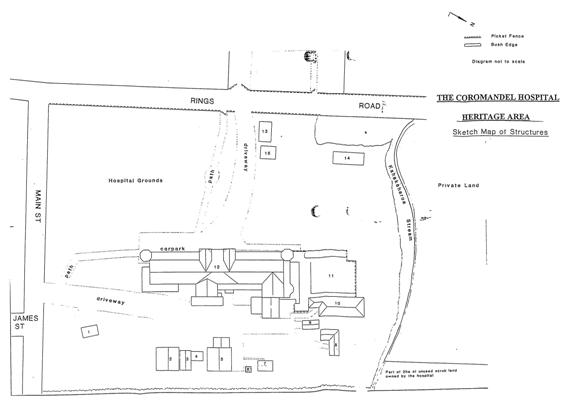
Coromandel Hospital Historic Area. Plan of Historic Area from registration report. | 27/10/1995 | Heritage New Zealand Pouhere Taonga
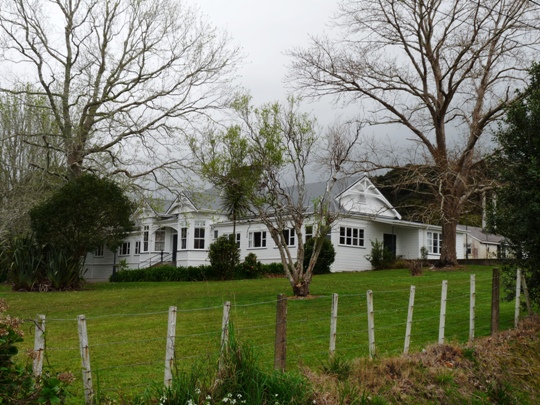

List Entry Information

Overview

Status

Listed

List Entry Status

Historic Area

Access

Private/No Public Access

List Number

7269

Date Entered

27th October 1995

Date of Effect

27th October 1995

City/District Council

Thames-Coromandel District

Region

Waikato Region

Extent of List Entry

Land and structures within the confines of the Coromandel Hospital.

Status

Listed

List Entry Status

Historic Area

Access

Private/No Public Access

List Number

7269

Date Entered

27th October 1995

Date of Effect

27th October 1995

City/District Council

Thames-Coromandel District

Region

Waikato Region

Extent of List Entry

Land and structures within the confines of the Coromandel Hospital.

Significance

Why is this place significant?

Cultural Significance

This historic area was registered under the Historic Places Act 1993. The following text is from the original Recommendation for Registration considered by the NZHPT Board at the time of registration. Social/Cultural: The hospital was of enormous significance to the local community in providing necessary medical care, in the days of isolation and difficult travel. The hospital exemplifies New Zealand society's ability to overcome religious and political differences in the community by standing for public health, an issue the community could agree on.

Historic Significance

Historical Significance or Value This historic area was registered under the Historic Places Act 1993. The following text is from the original Recommendation for Registration considered by the NZHPT Board at the time of registration. Historical: Coromandel hospital is a fine example of a nineteenth century cottage hospital. The cottage hospital was a vital part of life in New Zealand at this time, providing an essential medical service for the small and remote frontier towns. The history and development of the hospital illustrates some of the changes in national legislation and ideology that have occurred in the New Zealand health care system since the 1870s. The hospital as seen today with its collection of buildings represents the growth of the service industry from a small cottage hospital to a large complex serving the region.

Physical Significance

This historic area was registered under the Historic Places Act 1993. The following text is from the original Recommendation for Registration considered by the NZHPT Board at the time of registration. Architectural: Many of the buildings within the historic area are plain and utilitarian in design. However, the main hospital building shows a vernacular interpretation of Queen Anne style, and the cottages are in the typical Victorian Bay Villa style. Aesthetic: The hospital is set in a park-like setting with large expanses of lawn and mature trees. The visual relationship and grouping of the main elements of the area have a certain charm which is enhanced by the bush-clad slopes to the rear of the hospital.

Why is this place significant?

Cultural Significance

This historic area was registered under the Historic Places Act 1993. The following text is from the original Recommendation for Registration considered by the NZHPT Board at the time of registration. Social/Cultural: The hospital was of enormous significance to the local community in providing necessary medical care, in the days of isolation and difficult travel. The hospital exemplifies New Zealand society's ability to overcome religious and political differences in the community by standing for public health, an issue the community could agree on.

Historic Significance

Historical Significance or Value This historic area was registered under the Historic Places Act 1993. The following text is from the original Recommendation for Registration considered by the NZHPT Board at the time of registration. Historical: Coromandel hospital is a fine example of a nineteenth century cottage hospital. The cottage hospital was a vital part of life in New Zealand at this time, providing an essential medical service for the small and remote frontier towns. The history and development of the hospital illustrates some of the changes in national legislation and ideology that have occurred in the New Zealand health care system since the 1870s. The hospital as seen today with its collection of buildings represents the growth of the service industry from a small cottage hospital to a large complex serving the region.

Physical Significance

This historic area was registered under the Historic Places Act 1993. The following text is from the original Recommendation for Registration considered by the NZHPT Board at the time of registration. Architectural: Many of the buildings within the historic area are plain and utilitarian in design. However, the main hospital building shows a vernacular interpretation of Queen Anne style, and the cottages are in the typical Victorian Bay Villa style. Aesthetic: The hospital is set in a park-like setting with large expanses of lawn and mature trees. The visual relationship and grouping of the main elements of the area have a certain charm which is enhanced by the bush-clad slopes to the rear of the hospital.

Construction Information

Construction Professional

Name

Bennett, Thomas

Type

Builder

Biography

Born in 1838 at Bath, England, Thomas Bennett came to New Zealand on the Oliver Lang in 1856, after having served in the Crimean War. Bennett lived in the Hutt Valley for a time and was involved in a number of military actions around New Zealand, including at Parihaka in 1881, as well as prospecting on the Otago goldfields. He moved to the Wairarapa in 1865, where he traded as a builder, constructing a number of buildings in Carterton including the first Carterton Town Hall, the town’s first court house, St Mark’s Anglican Church and Wakelin’s Flourmill, as well as laying the town’s first footpath and the Carterton racecourse. In 1896 Bennett moved to Coromandel, where he built the Coromandel Hospital.

Construction Professional

Name

Bennett, Thomas

Type

Builder

Biography

Born in 1838 at Bath, England, Thomas Bennett came to New Zealand on the Oliver Lang in 1856, after having served in the Crimean War. Bennett lived in the Hutt Valley for a time and was involved in a number of military actions around New Zealand, including at Parihaka in 1881, as well as prospecting on the Otago goldfields. He moved to the Wairarapa in 1865, where he traded as a builder, constructing a number of buildings in Carterton including the first Carterton Town Hall, the town’s first court house, St Mark’s Anglican Church and Wakelin’s Flourmill, as well as laying the town’s first footpath and the Carterton racecourse. In 1896 Bennett moved to Coromandel, where he built the Coromandel Hospital.

Reference

Historical and Associated Iwi / Hapū / Whānau

Information Sources

New Zealand Historic Places Trust (NZHPT)

New Zealand Historic Places Trust

Other Information

A copy of the original report is available from the NZHPT Northern region office Please note that entry on the New Zealand Heritage List/Rarangi Korero identifies only the heritage values of the property concerned, and should not be construed as advice on the state of the property, or as a comment of its soundness or safety, including in regard to earthquake risk, safety in the event of fire, or insanitary conditions.

Historical and Associated Iwi / Hapū / Whānau

Information Sources

New Zealand Historic Places Trust (NZHPT)

New Zealand Historic Places Trust

Other Information

A copy of the original report is available from the NZHPT Northern region office Please note that entry on the New Zealand Heritage List/Rarangi Korero identifies only the heritage values of the property concerned, and should not be construed as advice on the state of the property, or as a comment of its soundness or safety, including in regard to earthquake risk, safety in the event of fire, or insanitary conditions.

Location

Loading
Sign up to hear more

Get the latest heritage news, features and events delivered
straight to your inbox.