

List Entry Information
Status
Listed
List Entry Status
Historic Place Category 2
Access
Private/No Public Access
List Number
7300
Date Entered
14th December 1995
Date of Effect
14th December 1995
City/District Council
Gore District
Region
Southland Region
Extent of List Entry
Extent includes the land described as Lot 2 DP 14366 (RT 42599), Southland Land District and the building known as the Bank of New Zealand (Former) thereon, and its fittings and fixtures.
Legal description
Lot 2 DP 14366 (RT 42599), Southland Land District
Status
Listed
List Entry Status
Historic Place Category 2
Access
Private/No Public Access
List Number
7300
Date Entered
14th December 1995
Date of Effect
14th December 1995
City/District Council
Gore District
Region
Southland Region
Extent of List Entry
Extent includes the land described as Lot 2 DP 14366 (RT 42599), Southland Land District and the building known as the Bank of New Zealand (Former) thereon, and its fittings and fixtures.
Legal description
Lot 2 DP 14366 (RT 42599), Southland Land District
Why is this place significant?
Historic Significance
Historical Significance or Value This historic place was registered under the Historic Places Act 1993. The following text is from the original Recommendation for Registration considered by the NZHPT Board at the time of registration. The Bank of New Zealand has been represented in Mataura since 1873, when it became the third BNZ outlet in Southland. This building was constructed twenty years later and functioned as the bank's local outlet for a century. In addition to interpreting the history of the bank in Mataura, the bank's rise and fall in status also serves as an economic barometer for the township, illustrating its long-running economic rivalry with Gore.
Physical Significance
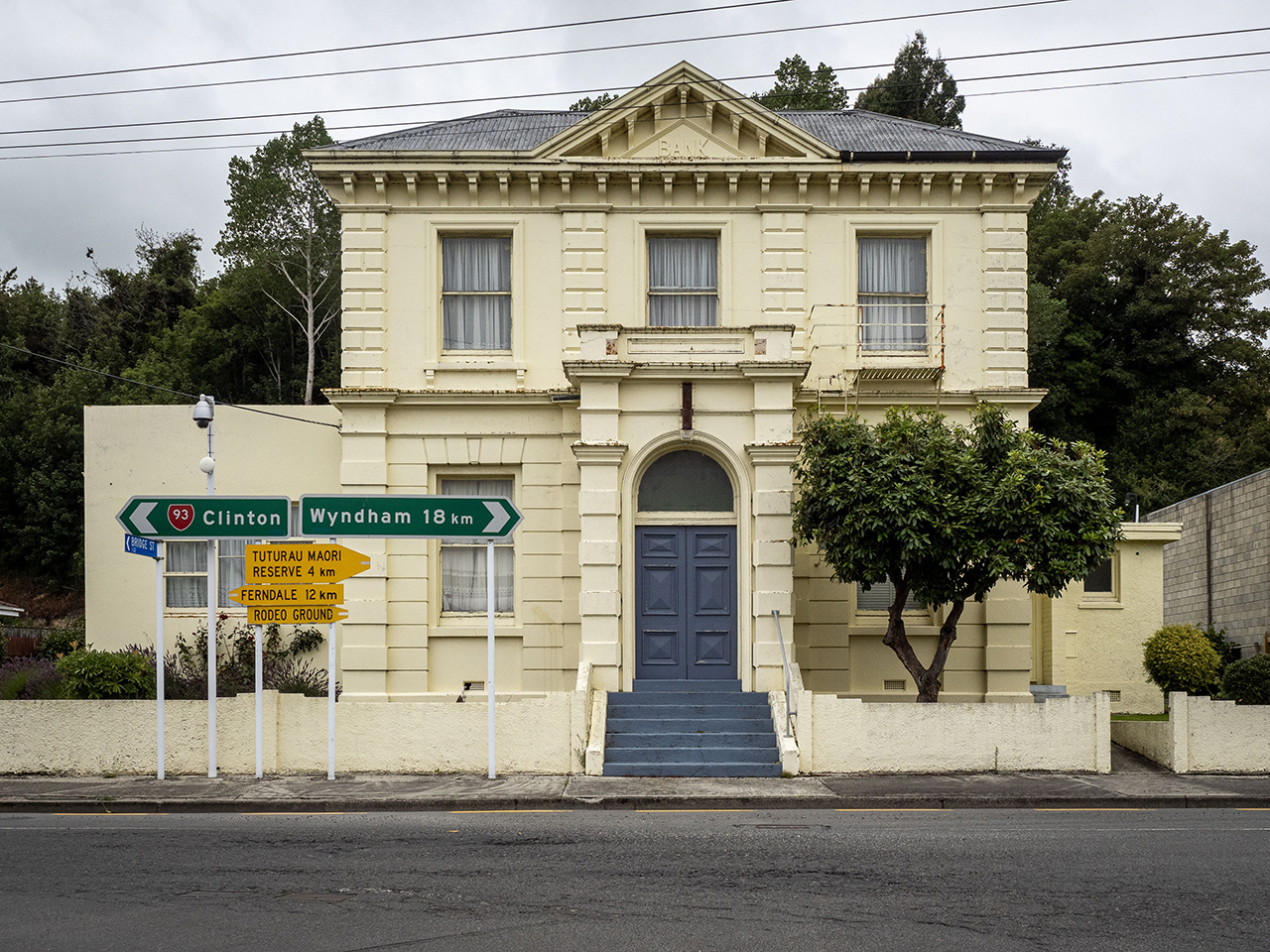
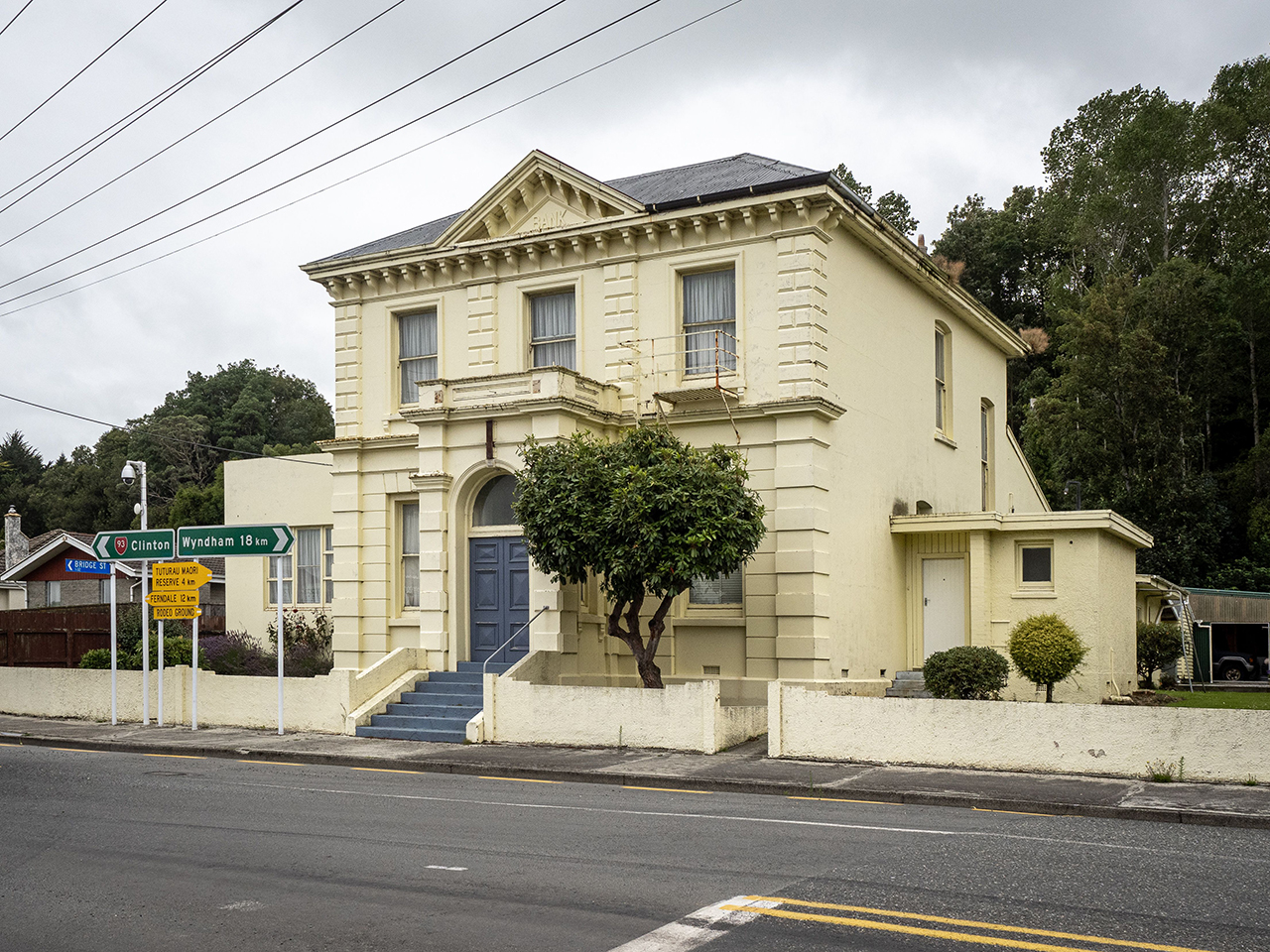
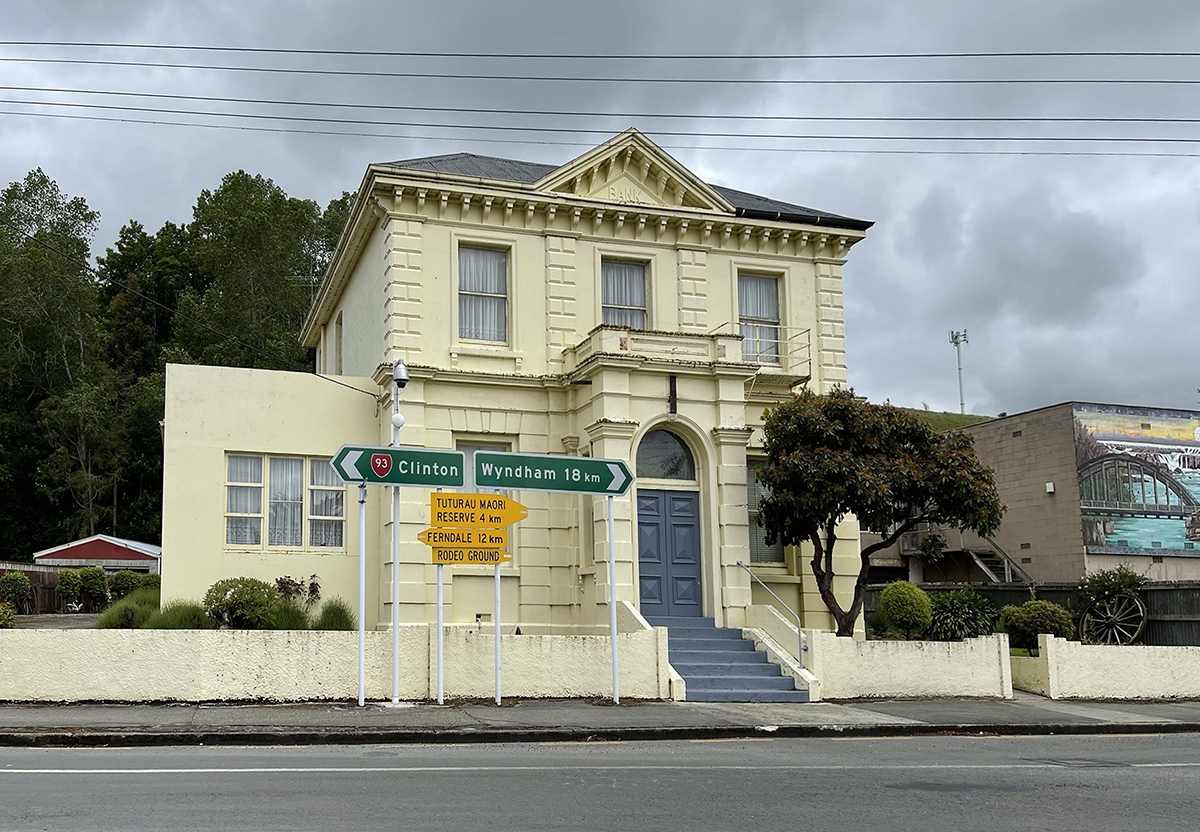
This historic place was registered under the Historic Places Act 1993. The following text is from the original Recommendation for Registration considered by the NZHPT Board at the time of registration. Archaeological: The bank was built pre 1900, therefore its site has archaeological significance. Aesthetic: This attractive two-storey Italianate building has streetscape significance. Architectural: This former Bank of New Zealand building was constructed in 1893. It is a two-storey brick building with a stucco exterior in a plain Italianate styling. Pragmatic and unsympathetic later additions have been built on either side of the building.
Why is this place Category 1 / Category 2?
Detail Of Assessed Criteria
This historic place was registered under the Historic Places Act 1993. The following text is from the original Recommendation for Registration considered by the NZHPT Board at the time of registration. The following comments are made in relation to the criteria identified under S.23(2) of the Historic Places Act 1993. a) The extent to which the place reflects important or representative aspects of New Zealand history. Banking was important to the development of colonial New Zealand society. The Bank of New Zealand has been represented in Mataura since 1873, when it became the third BNZ outlet in Southland. This building was built in 1892/93. Its construction, expansion and recent downgrading and replacement represents reactions to comparative decline of Mataura in the 20th century and also to changes in the financial sector. b) The association of the place with events, persons, or ideas of importance in New Zealand history: The people identified in Muir's history of Tauranga were only of local significance. John Turnbull, the first agent, served from 1873 to 1877. The most influential of his replacement as agent, John Penny, served as agent from 1866 to 1889, before becoming the branch's first manager. He remained as such until 1911; Muir records that he played a prominent role in Mataura in a private capacity, playing a major role in helping to establish the Mataura freezing works. Architect, R.W. England, (1863-1908) founded England Brothers, "one of the foremost architectural practices in the early years of his century", according to the BCC Glossary of Architects, Engineers and Designers and is represented by such properties as McLean's Mansion and the DIC Building, Cashel Street. The provision of banking services was always important in colonial New Zealand society. Banks played a prominent role in the economic health of their communities, a prominence that was reflected by their impact on the streetscape. More important is the rise and fall of the branch's status relative to Gore, Mataura's old rival, for the Mataura BNZ also serves as an economic barometer for the township. Gore was a sub-agency of Mataura between 1873 and 1877, when Gore gained its own agency (later branch). Mataura BNZ was upgraded to branch status in 1899. It was modernised and enlarged in 1962 when the transfer of NZ Paper Mills staff from Dunedin to the town greatly increased local business. The branch status was removed, however, in 1976, becoming an agency of Gore. c) The potential of the place to provide knowledge of New Zealand history: This is an archaeological site. The 1893 building replaced the first courthouse cum school, church and town hall. The present building demonstrates the importance of banking to the community and shows the changes that have been made. g) The technical accomplishments or value, or design of the place: This two-storey building was erected in 1893. It was built of brick and has a stucco exterior. The main facade on Kana Street is a tripartite composition of two stories. The corners of the building are treated as shallow piers - rusticated on the top storey, quoined on the ground floor. There is a shallow, projecting entrance porch, with panelled doors and an arched window above. The hipped corrugated-iron roof is marked by a central gable in the form of a triangular pediment; within this pediment, a triangular moulding holds the word "BNZ". The eaves are bracketed. The windows are plain, square-headed, double-sashes. The bank was one of the most respectable buildings in town. The facade is symmetrical and the bracketed eaves, stucco finish, arched doorway, and triangular pediment, are the features which give the building its plain Italianate feel. The additions on either side of the main facade demonstrate something of the pragmatic provincial character. A brick and roughcast entrance porch has been built onto the former manager's office, while on the other side a stucco Moderne addition has extended the main banking chamber. Neither addition adds anything to the architectural integrity of the original. In plan, the building followed typical small town practice of including accommodation for the manager, discreetly separated from the commercial part of the building. The interior is as original except for the enlarged banking chamber and the entrance built onto the manager's office. Conclusion: The former Bank of New Zealand, 92 Kana St, Mataura, is recommended for registration as a Category II as a place of historical and cultural heritage significance and value. The attractive Italianate building has aesthetic appeal as part of Mataura's streetscape. Historically, the BNZ has been represented in Mataura since 1893 with its rise and fall in status serving as an economic barometer for the township.
Why is this place significant?
Historic Significance
Historical Significance or Value This historic place was registered under the Historic Places Act 1993. The following text is from the original Recommendation for Registration considered by the NZHPT Board at the time of registration. The Bank of New Zealand has been represented in Mataura since 1873, when it became the third BNZ outlet in Southland. This building was constructed twenty years later and functioned as the bank's local outlet for a century. In addition to interpreting the history of the bank in Mataura, the bank's rise and fall in status also serves as an economic barometer for the township, illustrating its long-running economic rivalry with Gore.
Physical Significance
This historic place was registered under the Historic Places Act 1993. The following text is from the original Recommendation for Registration considered by the NZHPT Board at the time of registration. Archaeological: The bank was built pre 1900, therefore its site has archaeological significance. Aesthetic: This attractive two-storey Italianate building has streetscape significance. Architectural: This former Bank of New Zealand building was constructed in 1893. It is a two-storey brick building with a stucco exterior in a plain Italianate styling. Pragmatic and unsympathetic later additions have been built on either side of the building.
Why is this place Category 1 / Category 2?
Detail Of Assessed Criteria
This historic place was registered under the Historic Places Act 1993. The following text is from the original Recommendation for Registration considered by the NZHPT Board at the time of registration. The following comments are made in relation to the criteria identified under S.23(2) of the Historic Places Act 1993. a) The extent to which the place reflects important or representative aspects of New Zealand history. Banking was important to the development of colonial New Zealand society. The Bank of New Zealand has been represented in Mataura since 1873, when it became the third BNZ outlet in Southland. This building was built in 1892/93. Its construction, expansion and recent downgrading and replacement represents reactions to comparative decline of Mataura in the 20th century and also to changes in the financial sector. b) The association of the place with events, persons, or ideas of importance in New Zealand history: The people identified in Muir's history of Tauranga were only of local significance. John Turnbull, the first agent, served from 1873 to 1877. The most influential of his replacement as agent, John Penny, served as agent from 1866 to 1889, before becoming the branch's first manager. He remained as such until 1911; Muir records that he played a prominent role in Mataura in a private capacity, playing a major role in helping to establish the Mataura freezing works. Architect, R.W. England, (1863-1908) founded England Brothers, "one of the foremost architectural practices in the early years of his century", according to the BCC Glossary of Architects, Engineers and Designers and is represented by such properties as McLean's Mansion and the DIC Building, Cashel Street. The provision of banking services was always important in colonial New Zealand society. Banks played a prominent role in the economic health of their communities, a prominence that was reflected by their impact on the streetscape. More important is the rise and fall of the branch's status relative to Gore, Mataura's old rival, for the Mataura BNZ also serves as an economic barometer for the township. Gore was a sub-agency of Mataura between 1873 and 1877, when Gore gained its own agency (later branch). Mataura BNZ was upgraded to branch status in 1899. It was modernised and enlarged in 1962 when the transfer of NZ Paper Mills staff from Dunedin to the town greatly increased local business. The branch status was removed, however, in 1976, becoming an agency of Gore. c) The potential of the place to provide knowledge of New Zealand history: This is an archaeological site. The 1893 building replaced the first courthouse cum school, church and town hall. The present building demonstrates the importance of banking to the community and shows the changes that have been made. g) The technical accomplishments or value, or design of the place: This two-storey building was erected in 1893. It was built of brick and has a stucco exterior. The main facade on Kana Street is a tripartite composition of two stories. The corners of the building are treated as shallow piers - rusticated on the top storey, quoined on the ground floor. There is a shallow, projecting entrance porch, with panelled doors and an arched window above. The hipped corrugated-iron roof is marked by a central gable in the form of a triangular pediment; within this pediment, a triangular moulding holds the word "BNZ". The eaves are bracketed. The windows are plain, square-headed, double-sashes. The bank was one of the most respectable buildings in town. The facade is symmetrical and the bracketed eaves, stucco finish, arched doorway, and triangular pediment, are the features which give the building its plain Italianate feel. The additions on either side of the main facade demonstrate something of the pragmatic provincial character. A brick and roughcast entrance porch has been built onto the former manager's office, while on the other side a stucco Moderne addition has extended the main banking chamber. Neither addition adds anything to the architectural integrity of the original. In plan, the building followed typical small town practice of including accommodation for the manager, discreetly separated from the commercial part of the building. The interior is as original except for the enlarged banking chamber and the entrance built onto the manager's office. Conclusion: The former Bank of New Zealand, 92 Kana St, Mataura, is recommended for registration as a Category II as a place of historical and cultural heritage significance and value. The attractive Italianate building has aesthetic appeal as part of Mataura's streetscape. Historically, the BNZ has been represented in Mataura since 1893 with its rise and fall in status serving as an economic barometer for the township.
Construction Details
Start Year
1900
startYearCirca
Type
Original Construction
Construction Details
Start Year
1900
startYearCirca
Type
Original Construction
Historical and Associated Iwi / Hapū / Whānau
Information Sources
New Zealand Historic Places Trust (NZHPT)
New Zealand Historic Places Trust
Muir, 1991
Muir, Mataura, City of the Falls, 1991.
Other Information
A copy of the original report is available from the NZHPT Southern Region office Please note that entry on the New Zealand Heritage List/Rarangi Korero identifies only the heritage values of the property concerned, and should not be construed as advice on the state of the property, or as a comment of its soundness or safety, including in regard to earthquake risk, safety in the event of fire, or insanitary conditions.
Historical and Associated Iwi / Hapū / Whānau
Information Sources
New Zealand Historic Places Trust (NZHPT)
New Zealand Historic Places Trust
Muir, 1991
Muir, Mataura, City of the Falls, 1991.
Other Information
A copy of the original report is available from the NZHPT Southern Region office Please note that entry on the New Zealand Heritage List/Rarangi Korero identifies only the heritage values of the property concerned, and should not be construed as advice on the state of the property, or as a comment of its soundness or safety, including in regard to earthquake risk, safety in the event of fire, or insanitary conditions.
Current Usages
Uses: Accommodation
Specific Usage: House
Former Usages
General Usage: Finance
Specific Usage: Bank
Current Usages
Uses: Accommodation
Specific Usage: House
Former Usages
General Usage: Finance
Specific Usage: Bank
