Kāi Tahu whānui comprise people of Kāi Tahu, Kāti Māmoe and Waitaha descent, who hold mana whenua over an area that covers the entire Otago region, including the area now covered by Dunedin city. Ara tawhito (traditional travelling routes) crossed the landscape, providing annual and seasonal pathways to permanent pā sites and temporary kāika. The bays and inlets of the Otago Harbour, along the coast of Otago Peninsula and south to Taieri Mouth, were popular sites for settlements. There were numerous mahika kai sites where Kāi Tahu gathered and utilised natural resources. The attributes of shelter, easy access to fishing grounds, and the bush-clad hills with an abundance of bird life, building materials and edible vegetation available in the ngahere (bush) and repo (swamp), complemented the strong kaimoana resource that abounded. Following the arrival of Pākehā and alienation of the land, the first owner of the property in the early 1860s was William Purdie, who eventually sold Sections 8 and 9 of Block I Upper Kaikorai to John McGregor in 1875.
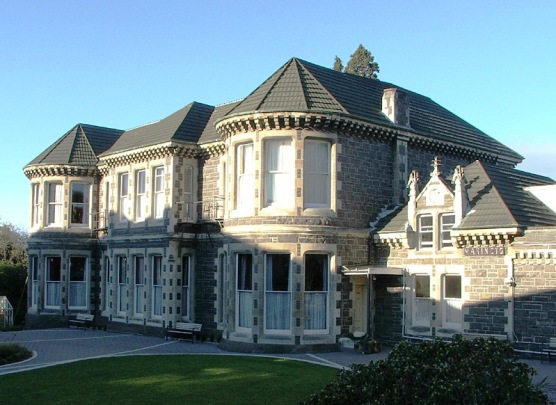
McGregor reportedly started building a grand residence in 1878, carrying the stone by bullock cart from Port Chalmers. In 1881, McGregor advertised for tenders ‘for alterations and additions to residence in Newington, Maori Hill’, so building work appears to have been protracted. Histories of the house indicate that McGregor never finished the work here, having surrendered the land to the mortgagee in 1883. An auction of household furniture ‘on the premises, Newington (occupied by John McGregor Esq.)’ indicates that the building was complete enough to have a hall, dining room, library, billiard room and bedroom. Construction was completed by the following owner, Arthur William Morris. The property was named ‘Marinoto’ – meaning peace – by Morris, as it was to be used ‘in the calm of his and his wife’s old age’.
The property came into the possession of Sir Percy Sargood after 1901. Described as one of Dunedin’s ‘merchant princes’, by this time Sir Percy was ‘of the now semi-independent New Zealand operation’ of drapery and soft goods merchants Sargood, Son and Ewen. Sir Percy and Lady Sargood became known for their large parties, both of a private nature and in service of some of the worthy causes of the day. Photographs from this time show a large and ornate glasshouse at the north-east corner of the residence. Following Sargood’s death in 1940, the residence and grounds were acquired by the Otago Hospital Board, initially as ‘a home for nurses’; there were also plans to build a 40-bed maternity hospital on the grounds. The outside of the original Marinoto residence has not been substantially altered since this time, save for the removal of the chimneys and ornate glasshouse. As of 2026, the residence remains at the heart of the Mercy Hospital complex.

List Entry Information
Status
Listed
List Entry Status
Historic Place Category 2
Access
Private/No Public Access
List Number
7303
Date Entered
14th December 1995
Date of Effect
14th December 1995
City/District Council
Dunedin City
Region
Otago Region
Extent of List Entry
Extent includes part of the land described as Pt Secs 8-9 Blk I DP 539 (OT140/270), Otago Land District, and the building known as Marinoto thereon.
Legal description
Pt Secs 8-9 Blk I DP 539 (OT140/270), Otago Land District
Status
Listed
List Entry Status
Historic Place Category 2
Access
Private/No Public Access
List Number
7303
Date Entered
14th December 1995
Date of Effect
14th December 1995
City/District Council
Dunedin City
Region
Otago Region
Extent of List Entry
Extent includes part of the land described as Pt Secs 8-9 Blk I DP 539 (OT140/270), Otago Land District, and the building known as Marinoto thereon.
Legal description
Pt Secs 8-9 Blk I DP 539 (OT140/270), Otago Land District
Why is this place significant?
Cultural Significance
This historic place was registered under the Historic Places Act 1993. The following text is from the original Recommendation for Registration considered by the NZHPT Board at the time of registration. Social: Marinoto exemplifies the lifestyles of the New Zealand business elite. Its institutional history after the death of Sargood typifies the way in which these large, usually well constructed inner city residences were recycled for other uses.
Historic Significance
Historical Significance or Value This historic place was registered under the Historic Places Act 1993. The following text is from the original Recommendation for Registration considered by the NZHPT Board at the time of registration. Marinoto is important as a link to three significant Otago entrepreneurs - John McGregor, Arthur Morris and Percy Sargood.
Physical Significance
This historic place was registered under the Historic Places Act 1993. The following text is from the original Recommendation for Registration considered by the NZHPT Board at the time of registration. Aesthetic: This large Victorian residence stands apart in its own grounds. House and gardens form something of an aesthetic unit and have landmark value despite modifications over the years. The grounds apparently seem to form part of the Town Belt. Architectural: Marinoto was constructed over the period 1878-1883 of Port Chalmers bluestone with Oamaru stone facing-work. The original style of the building was an eclectic Victorian Scots Baronial, with tall Medieval chimneys, pinnacles, lanterns elaborate bracketed eaves, and an exterior of rock-faced ashlar. Much if this has been stripped off, the roof slate has been covered.
Why is this place Category 1 / Category 2?
Detail Of Assessed Criteria
This historic place was registered under the Historic Places Act 1993. The following text is from the original Recommendation for Registration considered by the NZHPT Board at the time of registration. The following comments are made in relation to the criteria identified under S.23(2) of the Historic Places Act 1993. b) The association of the place with events, persons, or ideas of importance in New Zealand history: Three people of significance have associations with Marinoto. John McGregor, who began the house, is best known for his marine engineering work at Oamaru, Otago (where he worked on Victoria Channel) and Auckland. McGregor was what might better be termed an engineer/entrepreneur, who often worked on commissions or retainers. Thus he invested in the Central Otago railway scheme and set up an important Dunedin engineering and shipbuilding company, John McGregor and Company. While McGregor never actually got to live in Marinoto, it certainly symbolised the aspirations of entrepreneurs such as McGregor. Arthur William Morris was best known for his investments in shipping. Manager of the Otago and Southland Investment Co., he began investing in the Otago Harbour ferry trade in 1863, taking a sizeable shareholding in Johnny Jones' Harbour Steam Company, which was transformed into the Union Steam Ship Company in 1875. Morris remained on the board of Union, by then New Zealand's biggest company, until his death in 1910. His move to 'Wairangi' in 1901 made him a neighbour of John Roberts, a friend and fellow USSCo director. Percy Sargood. The Sargood connection began with John Ross in 1901/2 and Frederick Sargood in 1902/3 before Percy (later Sir Percy) purchased the property in 1905. He and his wife used Marinoto for extensive business entertainment and charity work until his death in 1940. In his book Treasures of the Dunedin Public Art Gallery, Peter Entwisle describes Percy Sargood as "flamboyant," so it may be assumed that Marinoto was often used for these purposes. Sargood is remembered best for his philanthropy (the Sargood Wing of the soon-to-be vacated Dunedin Public Art Gallery) and for his stewardship of Sargood, Son and Ewen, an important mercantile firm with operations on either side of the Tasman. Conclusion: Marinoto, Newington Ave, Dunedin, is recommended for registration as a Category I as a place of special and outstanding historical and cultural heritage significance and value. Marinoto exemplifies the lifestyles of the New Zealand business elite and is associated with three people of significance - John McGregor, Arthur William Morris and Percy Sargood. The large Victorian residence with surrounding garden has both aesthetic and landmark significance.
Why is this place significant?
Cultural Significance
This historic place was registered under the Historic Places Act 1993. The following text is from the original Recommendation for Registration considered by the NZHPT Board at the time of registration. Social: Marinoto exemplifies the lifestyles of the New Zealand business elite. Its institutional history after the death of Sargood typifies the way in which these large, usually well constructed inner city residences were recycled for other uses.
Historic Significance
Historical Significance or Value This historic place was registered under the Historic Places Act 1993. The following text is from the original Recommendation for Registration considered by the NZHPT Board at the time of registration. Marinoto is important as a link to three significant Otago entrepreneurs - John McGregor, Arthur Morris and Percy Sargood.
Physical Significance
This historic place was registered under the Historic Places Act 1993. The following text is from the original Recommendation for Registration considered by the NZHPT Board at the time of registration. Aesthetic: This large Victorian residence stands apart in its own grounds. House and gardens form something of an aesthetic unit and have landmark value despite modifications over the years. The grounds apparently seem to form part of the Town Belt. Architectural: Marinoto was constructed over the period 1878-1883 of Port Chalmers bluestone with Oamaru stone facing-work. The original style of the building was an eclectic Victorian Scots Baronial, with tall Medieval chimneys, pinnacles, lanterns elaborate bracketed eaves, and an exterior of rock-faced ashlar. Much if this has been stripped off, the roof slate has been covered.
Why is this place Category 1 / Category 2?
Detail Of Assessed Criteria
This historic place was registered under the Historic Places Act 1993. The following text is from the original Recommendation for Registration considered by the NZHPT Board at the time of registration. The following comments are made in relation to the criteria identified under S.23(2) of the Historic Places Act 1993. b) The association of the place with events, persons, or ideas of importance in New Zealand history: Three people of significance have associations with Marinoto. John McGregor, who began the house, is best known for his marine engineering work at Oamaru, Otago (where he worked on Victoria Channel) and Auckland. McGregor was what might better be termed an engineer/entrepreneur, who often worked on commissions or retainers. Thus he invested in the Central Otago railway scheme and set up an important Dunedin engineering and shipbuilding company, John McGregor and Company. While McGregor never actually got to live in Marinoto, it certainly symbolised the aspirations of entrepreneurs such as McGregor. Arthur William Morris was best known for his investments in shipping. Manager of the Otago and Southland Investment Co., he began investing in the Otago Harbour ferry trade in 1863, taking a sizeable shareholding in Johnny Jones' Harbour Steam Company, which was transformed into the Union Steam Ship Company in 1875. Morris remained on the board of Union, by then New Zealand's biggest company, until his death in 1910. His move to 'Wairangi' in 1901 made him a neighbour of John Roberts, a friend and fellow USSCo director. Percy Sargood. The Sargood connection began with John Ross in 1901/2 and Frederick Sargood in 1902/3 before Percy (later Sir Percy) purchased the property in 1905. He and his wife used Marinoto for extensive business entertainment and charity work until his death in 1940. In his book Treasures of the Dunedin Public Art Gallery, Peter Entwisle describes Percy Sargood as "flamboyant," so it may be assumed that Marinoto was often used for these purposes. Sargood is remembered best for his philanthropy (the Sargood Wing of the soon-to-be vacated Dunedin Public Art Gallery) and for his stewardship of Sargood, Son and Ewen, an important mercantile firm with operations on either side of the Tasman. Conclusion: Marinoto, Newington Ave, Dunedin, is recommended for registration as a Category I as a place of special and outstanding historical and cultural heritage significance and value. Marinoto exemplifies the lifestyles of the New Zealand business elite and is associated with three people of significance - John McGregor, Arthur William Morris and Percy Sargood. The large Victorian residence with surrounding garden has both aesthetic and landmark significance.
Construction Professional
Name
McGregor, John
Type
Architect
Biography
http://www.ipenz.org.nz/heritage/bio-detail.cfm?id=62
Construction Details
Start Year
1878
Finish Year
1883
Type
Original Construction
Description
Construction started by John McGregor
Finish Year
1883
Type
Original Construction
Description
Construction completed for A. W. Morris
Type
Modification
Description
Glasshouse demolished
Period
Unknown
Type
Modification
Description
Original chimneys removed
Period
Unknown
Construction Professional
Name
McGregor, John
Type
Architect
Biography
http://www.ipenz.org.nz/heritage/bio-detail.cfm?id=62
Construction Details
Start Year
1878
Finish Year
1883
Type
Original Construction
Description
Construction started by John McGregor
Finish Year
1883
Type
Original Construction
Description
Construction completed for A. W. Morris
Type
Modification
Description
Glasshouse demolished
Period
Unknown
Type
Modification
Description
Original chimneys removed
Period
Unknown
Historical and Associated Iwi / Hapū / Whānau
Public NZAA Number
I44/742
Completion Date
15th April 2026
Report Written By
Andrew Winter
Information Sources
Galer, 1981
L. Galer, Houses and Homes, Allied Press, Dunedin, 1981
Other Information
A fully referenced copy of the Upgrade Report is available upon request from the Otago/Southland Area Office of Heritage New Zealand Pouhere Taonga. Disclaimer Please note that entry on the New Zealand Heritage List/Rārangi Kōrero identifies only the heritage values of the property concerned, and should not be construed as advice on the state of the property, or as a comment of its soundness or safety, including in regard to earthquake risk, safety in the event of fire, or insanitary conditions. Archaeological sites are protected by the Heritage New Zealand Pouhere Taonga Act 2014, regardless of whether they are entered on the New Zealand Heritage List/Rārangi Kōrero or not. Archaeological sites include ‘places associated with pre-1900 human activity, where there may be evidence relating to the history of New Zealand’. This List entry report should not be read as a statement on whether or not the archaeological provisions of the Act apply to the property(s) concerned. Please contact your local Heritage New Zealand office for archaeological advice.
Historical and Associated Iwi / Hapū / Whānau
Public NZAA Number
I44/742
Completion Date
15th April 2026
Report Written By
Andrew Winter
Information Sources
Galer, 1981
L. Galer, Houses and Homes, Allied Press, Dunedin, 1981
Other Information
A fully referenced copy of the Upgrade Report is available upon request from the Otago/Southland Area Office of Heritage New Zealand Pouhere Taonga. Disclaimer Please note that entry on the New Zealand Heritage List/Rārangi Kōrero identifies only the heritage values of the property concerned, and should not be construed as advice on the state of the property, or as a comment of its soundness or safety, including in regard to earthquake risk, safety in the event of fire, or insanitary conditions. Archaeological sites are protected by the Heritage New Zealand Pouhere Taonga Act 2014, regardless of whether they are entered on the New Zealand Heritage List/Rārangi Kōrero or not. Archaeological sites include ‘places associated with pre-1900 human activity, where there may be evidence relating to the history of New Zealand’. This List entry report should not be read as a statement on whether or not the archaeological provisions of the Act apply to the property(s) concerned. Please contact your local Heritage New Zealand office for archaeological advice.
Current Usages
Uses: Health
Specific Usage: Hospital
Former Usages
General Usage: Accommodation
Specific Usage: House
Current Usages
Uses: Health
Specific Usage: Hospital
Former Usages
General Usage: Accommodation
Specific Usage: House
Location
Sign up to hear more
Get the latest heritage news, features and events delivered
straight to your inbox.

