


List Entry Information
Status
Listed
List Entry Status
Historic Place Category 2
Access
Private/No Public Access
List Number
7311
Date Entered
19th April 1996
Date of Effect
19th April 1996
City/District Council
Christchurch City
Region
Canterbury Region
Extent of List Entry
Extent includes part of the land described as Sec 6 WALKER Settlement (RT CB358/107), Canterbury Land District, and the building known as House thereon.
Legal description
Sec 6 WALKER Settlement (RT CB358/107), Canterbury Land District
Status
Listed
List Entry Status
Historic Place Category 2
Access
Private/No Public Access
List Number
7311
Date Entered
19th April 1996
Date of Effect
19th April 1996
City/District Council
Christchurch City
Region
Canterbury Region
Extent of List Entry
Extent includes part of the land described as Sec 6 WALKER Settlement (RT CB358/107), Canterbury Land District, and the building known as House thereon.
Legal description
Sec 6 WALKER Settlement (RT CB358/107), Canterbury Land District
Why is this place significant?
Historic Significance
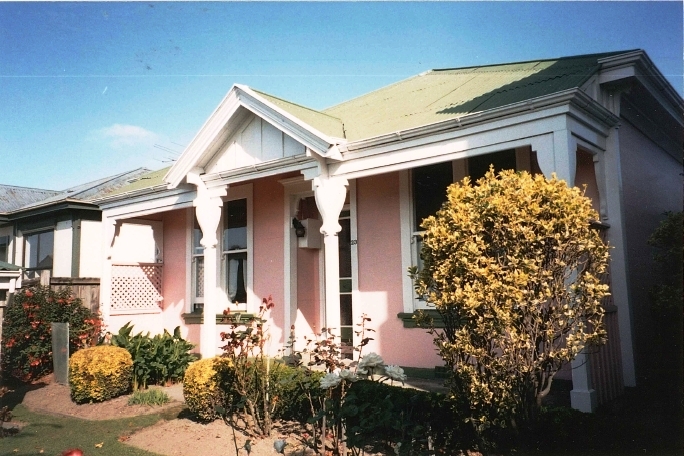
Historical Significance or Value This historic place was registered under the Historic Places Act 1993. The following text is from the original Recommendation for Registration considered by the NZHPT Board at the time of registration. Architectural Historical Social: The house at Manderville Street was designed by Government Architect Woburn Temple under the 1905 Workers' Dwelling Act. It was part of the Walker Settlement in Riccarton. It was built either as one of a first group of six in 1909, or as one of a second group of ten in 1912. The house is a simple symmetrical villa with a gabled verandah.
Why is this place Category 1 / Category 2?
Detail Of Assessed Criteria
The following comments are made in relation to the criteria identified under S.23(2) of the Historic Places Act 1993. a) The extent to which the place reflects important or representative aspects of New Zealand history: The quality of housing was often the subject of debate in colonial New Zealand. The perceived risk to the wider community in the form of disease and fire posed by the more squalid sections of densely-settled cities such as Dunedin led to demands for improved housing conditions for the poor. This was heightened in 1900 when bubonic plaque threatened the Australasian colonies. The passing of the Workers' Dwelling Act of 1905 by the Liberal Government was an attempt to improve the quality of working class accommodation. Riccarton's 23 Manderville Street is an example of the type of property that emerged. b) The association of the place with events, people, or ideas of importance in New Zealand history: The provision by the state of housing for the poor has a long history in this country. The state had long provided accommodation for specific groups of employees - teachers, railway workers, lighthouse keepers, the armed forces etc. This house was built under the Workers' Dwelling Act (1905). The 1905 Act was partly inspired by the bubonic plague scare of 1900, but was less successful than the Advances to Workers Act (1906), which helped build 9,675 houses by 1919, compared to just 648 (5,000 were planned) under the Workers' Dwelling Act. The fact that houses in Riccarton were affordable mainly for the skilled, typified the shortcomings of the scheme. g) The technical accomplishment or value, or design of the place: The house is constructed of ferroconcrete; the extra cost of £6 per dwelling was "more than compensated by the houses extra durability, with consequent savings in cost of maintenance and insurance, and their being 'warmer, more weatherproof, and less sensitive generally to external influences'". (The Post Today pg 151). In appearance, this is a simple symmetrical cottage, or cottage villa. The starkness of the concrete shell is alleviated by the wooden verandah-work at the front. The roof over the verandah is a continuation of the front hip roof itself - a neat solution that agreeably lowers and domesticates the scale of the front facade. The centre of the verandah sports a small half-timbered gable held up by plain bracketed posts. Original fretwork on either side of the verandah has been removed. The front windows are paired, square-headed, double-hung sashes. There is a double-hung, two-sided bay window on the side of the house. The cornice and eaves are pronounced. There are very few early workers' dwellings left in Christchurch in their original condition. The use of concrete in the construction of Walker Settlement houses make this building particularly significant. k) The extent to which the place forms part of a wider historical and cultural complex or historical and cultural landscape: Much of the Manderville Street state housing stock has been destroyed by the spread of industrial and commercial businesses. However, the house is part of that wider landscape of Workers' Dwelling Act housing and can be associated not only with other survivors in Christchurch, but also with similar houses in Petone and Newtown. Conclusion: The House, 23 Manderville St, Riccarton, Christchurch, is recommended for registration as a Category II as a place of historical and cultural heritage significance and value. This simple symmetrical villa, of concrete construction, was built under the Workers' Dwelling Act, 1905. It illustrates the attempt of a Liberal Government to improve living conditions of the working classes.
Why is this place significant?
Historic Significance
Historical Significance or Value This historic place was registered under the Historic Places Act 1993. The following text is from the original Recommendation for Registration considered by the NZHPT Board at the time of registration. Architectural Historical Social: The house at Manderville Street was designed by Government Architect Woburn Temple under the 1905 Workers' Dwelling Act. It was part of the Walker Settlement in Riccarton. It was built either as one of a first group of six in 1909, or as one of a second group of ten in 1912. The house is a simple symmetrical villa with a gabled verandah.
Why is this place Category 1 / Category 2?
Detail Of Assessed Criteria
The following comments are made in relation to the criteria identified under S.23(2) of the Historic Places Act 1993. a) The extent to which the place reflects important or representative aspects of New Zealand history: The quality of housing was often the subject of debate in colonial New Zealand. The perceived risk to the wider community in the form of disease and fire posed by the more squalid sections of densely-settled cities such as Dunedin led to demands for improved housing conditions for the poor. This was heightened in 1900 when bubonic plaque threatened the Australasian colonies. The passing of the Workers' Dwelling Act of 1905 by the Liberal Government was an attempt to improve the quality of working class accommodation. Riccarton's 23 Manderville Street is an example of the type of property that emerged. b) The association of the place with events, people, or ideas of importance in New Zealand history: The provision by the state of housing for the poor has a long history in this country. The state had long provided accommodation for specific groups of employees - teachers, railway workers, lighthouse keepers, the armed forces etc. This house was built under the Workers' Dwelling Act (1905). The 1905 Act was partly inspired by the bubonic plague scare of 1900, but was less successful than the Advances to Workers Act (1906), which helped build 9,675 houses by 1919, compared to just 648 (5,000 were planned) under the Workers' Dwelling Act. The fact that houses in Riccarton were affordable mainly for the skilled, typified the shortcomings of the scheme. g) The technical accomplishment or value, or design of the place: The house is constructed of ferroconcrete; the extra cost of £6 per dwelling was "more than compensated by the houses extra durability, with consequent savings in cost of maintenance and insurance, and their being 'warmer, more weatherproof, and less sensitive generally to external influences'". (The Post Today pg 151). In appearance, this is a simple symmetrical cottage, or cottage villa. The starkness of the concrete shell is alleviated by the wooden verandah-work at the front. The roof over the verandah is a continuation of the front hip roof itself - a neat solution that agreeably lowers and domesticates the scale of the front facade. The centre of the verandah sports a small half-timbered gable held up by plain bracketed posts. Original fretwork on either side of the verandah has been removed. The front windows are paired, square-headed, double-hung sashes. There is a double-hung, two-sided bay window on the side of the house. The cornice and eaves are pronounced. There are very few early workers' dwellings left in Christchurch in their original condition. The use of concrete in the construction of Walker Settlement houses make this building particularly significant. k) The extent to which the place forms part of a wider historical and cultural complex or historical and cultural landscape: Much of the Manderville Street state housing stock has been destroyed by the spread of industrial and commercial businesses. However, the house is part of that wider landscape of Workers' Dwelling Act housing and can be associated not only with other survivors in Christchurch, but also with similar houses in Petone and Newtown. Conclusion: The House, 23 Manderville St, Riccarton, Christchurch, is recommended for registration as a Category II as a place of historical and cultural heritage significance and value. This simple symmetrical villa, of concrete construction, was built under the Workers' Dwelling Act, 1905. It illustrates the attempt of a Liberal Government to improve living conditions of the working classes.
Construction Professional
Name
Temple, Woburn
Type
Architect
Biography
Architect Woburn Temple was the Department of Labour Staff Architect from 1907 until 1915/
Construction Details
Start Year
1910
startYearCirca
Type
Original Construction
Construction Professional
Name
Temple, Woburn
Type
Architect
Biography
Architect Woburn Temple was the Department of Labour Staff Architect from 1907 until 1915/
Construction Details
Start Year
1910
startYearCirca
Type
Original Construction
Historical and Associated Iwi / Hapū / Whānau
Information Sources
New Zealand Historic Places Trust (NZHPT)
New Zealand Historic Places Trust
Wilson, 1987
J. Wilson (ed.), The Past Today - Historic Places in New Zealand, Pacific Publishers, Auckland, 1987
Rice, 1992
G Rice (ed), The Oxford History of New Zealand, Auckland, 1992
Other Information
A copy of the original report is available from the NZHPT Southern Region office Please note that entry on the New Zealand Heritage List/Rarangi Korero identifies only the heritage values of the property concerned, and should not be construed as advice on the state of the property, or as a comment of its soundness or safety, including in regard to earthquake risk, safety in the event of fire, or insanitary conditions.
Historical and Associated Iwi / Hapū / Whānau
Information Sources
New Zealand Historic Places Trust (NZHPT)
New Zealand Historic Places Trust
Wilson, 1987
J. Wilson (ed.), The Past Today - Historic Places in New Zealand, Pacific Publishers, Auckland, 1987
Rice, 1992
G Rice (ed), The Oxford History of New Zealand, Auckland, 1992
Other Information
A copy of the original report is available from the NZHPT Southern Region office Please note that entry on the New Zealand Heritage List/Rarangi Korero identifies only the heritage values of the property concerned, and should not be construed as advice on the state of the property, or as a comment of its soundness or safety, including in regard to earthquake risk, safety in the event of fire, or insanitary conditions.
Current Usages
Uses: Accommodation
Specific Usage: House
Former Usages
General Usage: Accommodation
Specific Usage: House
Current Usages
Uses: Accommodation
Specific Usage: House
Former Usages
General Usage: Accommodation
Specific Usage: House
