DonateSupporterVisit Heritage
  • Tūrangawaewae
    Places
  • Tira Māori
    Māori Heritage
  • Poutairangahia
    Archaeology
  • Rauemi
    Resources
  • Mō Tātou
    About Us
  • New Zealand Heritage List
  • Nominate and submit
  • Explore the List
  • National Historic Landmarks
  • Plaques
  • Rainbow List Project
  • Lost heritage
  • Visit Heritage
  • Our properties
  • Turnbull House Project
  • Collections
  • Shop
  • Tohu Whenua
  • Tira Māori
  • Conserving Māori heritage
  • Marae built heritage
  • Māori heritage on the List
  • Hinemihi—Te Hokinga Mai
  • What is archaeology?
  • Is there a site on my property?
  • What are my legal requirements?
  • Affecting an archaeological site
  • Declaring an archaeological site
  • Archaeology FAQs
  • Archaeology Digital Library
  • Archaeology guidelines and templates
  • Resources
  • Funding
  • Publications
  • Sustainable management guides
  • Disaster recovery
  • Podcasts & digital resources
  • Education Hub
  • Conservation plans
  • About
  • Board
  • Māori Heritage Council
  • Senior Staff
  • Offices
  • Contact us
  • Careers
  • Covenants
  • Fast-track
  • Corporate documents
  • Currently consulting on
  • Our submissions
  • News
Quick links
Rārangi Kōrero | The List
Explore the List
National Historic Landmarks
Ngā Manawhenua o Aotearoa me ōna Kōrero Tūturu
Quick links
Tapuwae
A Vision for Places of Māori Heritage
Funding for Māori Heritage
Resources
Quick links
Archaeological Authority Portal
Applying for an archaeological authority
Archaeology FAQs
Browse the most frequently asked questions about archaeological authorities and the archaeological process.
Quick links
Quick links
Contact us
Offices
DonateSupporterVisit Heritage
  • Tūrangawaewae
    Places
  • Tira Māori
    Māori Heritage
  • Poutairangahia
    Archaeology
  • Rauemi
    Resources
  • Mō Tātou
    About Us
  • New Zealand Heritage List
  • Nominate and submit
  • Explore the List
  • National Historic Landmarks
  • Plaques
  • Rainbow List Project
  • Lost heritage
  • Visit Heritage
  • Our properties
  • Turnbull House Project
  • Collections
  • Shop
  • Tohu Whenua
  • Tira Māori
  • Conserving Māori heritage
  • Marae built heritage
  • Māori heritage on the List
  • Hinemihi—Te Hokinga Mai
  • What is archaeology?
  • Is there a site on my property?
  • What are my legal requirements?
  • Affecting an archaeological site
  • Declaring an archaeological site
  • Archaeology FAQs
  • Archaeology Digital Library
  • Archaeology guidelines and templates
  • Resources
  • Funding
  • Publications
  • Sustainable management guides
  • Disaster recovery
  • Podcasts & digital resources
  • Education Hub
  • Conservation plans
  • About
  • Board
  • Māori Heritage Council
  • Senior Staff
  • Offices
  • Contact us
  • Careers
  • Covenants
  • Fast-track
  • Corporate documents
  • Currently consulting on
  • Our submissions
  • News
Quick links
Rārangi Kōrero | The List
Explore the List
National Historic Landmarks
Ngā Manawhenua o Aotearoa me ōna Kōrero Tūturu
Quick links
Tapuwae
A Vision for Places of Māori Heritage
Funding for Māori Heritage
Resources
Quick links
Archaeological Authority Portal
Applying for an archaeological authority
Archaeology FAQs
Browse the most frequently asked questions about archaeological authorities and the archaeological process.
Quick links
Quick links
Contact us
Offices
  • Places
  • Nominate and submit
  • National Historic Landmarks
  • Places
  • Nominate and submit
  • National Historic Landmarks
  • Tira Māori
  • Conserving Māori heritage
  • Marae built heritage
  • Tira Māori
  • Conserving Māori heritage
  • Marae built heritage
  • Archaeological authorities
  • Archaeology Digital Library
  • Archaeological authorities
  • Archaeology Digital Library
  • All resources
  • Publications
  • Funding
  • All resources
  • Publications
  • Funding
  • FAQs
  • FAQs
Follow us on:
Places
  • Places
  • Nominate and submit
  • National Historic Landmarks
Tira Māori
  • Tira Māori
  • Conserving Māori heritage
  • Marae built heritage
Archaeology
  • Archaeological authorities
  • Archaeology Digital Library
Resources
  • All resources
  • Publications
  • Funding
FAQs
  • FAQs
Follow us on
HomePrivacyTerms and conditionsAbout this site
© Heritage New Zealand Pouhere Taonga 2026.
 
House

14 Fleming St, North Beach, CHRISTCHURCH

Private

Historic Place Category 2

List No. 7322

Quick links:
List GalleryLocationDetails
House, 14 Fleming St, Nth Beach | Heritage New Zealand Pouhere Taonga
null | Heritage New Zealand Pouhere Taonga
House, 14 Fleming St, Nth Beach | Heritage New Zealand Pouhere Taonga
null | Heritage New Zealand Pouhere Taonga

List Entry Information

Overview

Status
Listed

List Entry Status
Historic Place Category 2

Access
Private/No Public Access

List Number
7322

Date Entered
6th September 1996

Date of Effect
6th September 1996

City/District Council
Christchurch City

Region
Canterbury Region

Legal description

Lot 2 & 3 DP 18122 pt Rural Sec 17573, City of Christchurch

Detailed List Entry
Significance

Cultural Significance

This historic place was registered under the Historic Places Act 1993. The following text is from the original Recommendation for Registration considered by the NZHPT Board at the time of registration. Social The house forms part of a social landscape, illustrating something of the development of the New Brighton area from holiday accommodation to a permanent suburban area of Christchurch. Its significance as a response to the Depression of the early 1930s is interesting.

Physical Significance

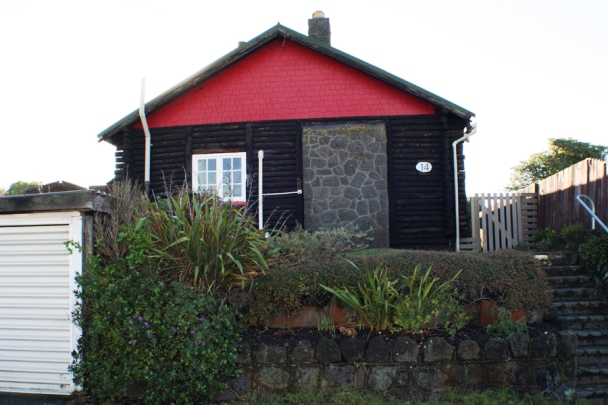
This historic place was registered under the Historic Places Act 1993. The following text is from the original Recommendation for Registration considered by the NZHPT Board at the time of registration. Architectural This unusual house was constructed in 1931 entirely from whole larch logs. The house has a boxlike plan, with a simple gabled roof and shingled gable ends. Most of the windows are multi-light casements. These features give the house something of the feel of a bungalow. In architectural terms, the house is distinguished only by the novelty of its materials and construction.

Detail Of Assessed Criteria

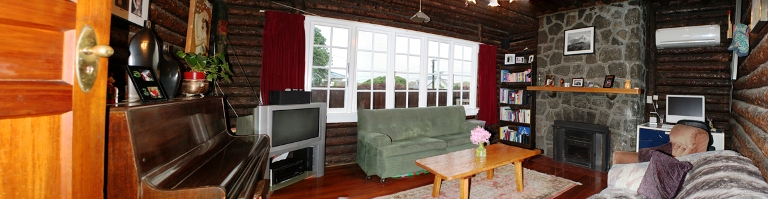
This historic place was registered under the Historic Places Act 1993. The following text is from the original Recommendation for Registration considered by the NZHPT Board at the time of registration. The following comments are made in relation to the criteria identified under S.23(2) of the Historic Places Act 1993. (g) The Technical accomplishment or value, or design of the place: Constructed entirely of larch logs, this house also has an attached log garage. The house was the first to be constructed entirely from timber from the State forestry Department's plantation in North Canterbury. Interior and exterior walls have retained their larch bark cladding, and the gable walls have been filled with single-cut shingles. The house is boxlike in plan, with a simple gabled roof, and has something of the feel of a bungalow to it. (j) The importance of identifying rare types of historic places: As a log building this is certainly a rare structure. The house is distinguished by its unusual material and method of construction. Conclusion: The House at North Beach is recommended for registration as a Category II as a place of historical and cultural heritage significance and value. Though undistinguished in design terms, this house has rarity value as a log house. It also illustrates, indirectly, something of the social development of New Brighton from a holiday settlement to a permanent suburb.

Construction Details

Start Year

1931

Type

Original Construction

Reference

Information Sources

New Zealand Historic Places Trust (NZHPT)

New Zealand Historic Places Trust

Report Written By

A copy of the original report is available from the NZHPT Southern region office Please note that entry on the New Zealand Heritage List/Rarangi Korero identifies only the heritage values of the property concerned, and should not be construed as advice on the state of the property, or as a comment of its soundness or safety, including in regard to earthquake risk, safety in the event of fire, or insanitary conditions.

Further Information

Current Usages

Uses: Accommodation

Specific Usage: House

Former Usages

General Usage:: Accommodation

Specific Usage: House

Themes

Web Links

Overview

Status

Listed

List Entry Status

Historic Place Category 2

Access

Private/No Public Access

List Number

7322

Date Entered

6th September 1996

Date of Effect

6th September 1996

City/District Council

Christchurch City

Region

Canterbury Region

Legal description

Lot 2 & 3 DP 18122 pt Rural Sec 17573, City of Christchurch

Status

Listed

List Entry Status

Historic Place Category 2

Access

Private/No Public Access

List Number

7322

Date Entered

6th September 1996

Date of Effect

6th September 1996

City/District Council

Christchurch City

Region

Canterbury Region

Legal description

Lot 2 & 3 DP 18122 pt Rural Sec 17573, City of Christchurch

Significance

Why is this place significant?

Cultural Significance

This historic place was registered under the Historic Places Act 1993. The following text is from the original Recommendation for Registration considered by the NZHPT Board at the time of registration. Social The house forms part of a social landscape, illustrating something of the development of the New Brighton area from holiday accommodation to a permanent suburban area of Christchurch. Its significance as a response to the Depression of the early 1930s is interesting.

Physical Significance

This historic place was registered under the Historic Places Act 1993. The following text is from the original Recommendation for Registration considered by the NZHPT Board at the time of registration. Architectural This unusual house was constructed in 1931 entirely from whole larch logs. The house has a boxlike plan, with a simple gabled roof and shingled gable ends. Most of the windows are multi-light casements. These features give the house something of the feel of a bungalow. In architectural terms, the house is distinguished only by the novelty of its materials and construction.

Why is this place Category 1 / Category 2?

Detail Of Assessed Criteria

This historic place was registered under the Historic Places Act 1993. The following text is from the original Recommendation for Registration considered by the NZHPT Board at the time of registration. The following comments are made in relation to the criteria identified under S.23(2) of the Historic Places Act 1993. (g) The Technical accomplishment or value, or design of the place: Constructed entirely of larch logs, this house also has an attached log garage. The house was the first to be constructed entirely from timber from the State forestry Department's plantation in North Canterbury. Interior and exterior walls have retained their larch bark cladding, and the gable walls have been filled with single-cut shingles. The house is boxlike in plan, with a simple gabled roof, and has something of the feel of a bungalow to it. (j) The importance of identifying rare types of historic places: As a log building this is certainly a rare structure. The house is distinguished by its unusual material and method of construction. Conclusion: The House at North Beach is recommended for registration as a Category II as a place of historical and cultural heritage significance and value. Though undistinguished in design terms, this house has rarity value as a log house. It also illustrates, indirectly, something of the social development of New Brighton from a holiday settlement to a permanent suburb.

Why is this place significant?

Cultural Significance

This historic place was registered under the Historic Places Act 1993. The following text is from the original Recommendation for Registration considered by the NZHPT Board at the time of registration. Social The house forms part of a social landscape, illustrating something of the development of the New Brighton area from holiday accommodation to a permanent suburban area of Christchurch. Its significance as a response to the Depression of the early 1930s is interesting.

Physical Significance

This historic place was registered under the Historic Places Act 1993. The following text is from the original Recommendation for Registration considered by the NZHPT Board at the time of registration. Architectural This unusual house was constructed in 1931 entirely from whole larch logs. The house has a boxlike plan, with a simple gabled roof and shingled gable ends. Most of the windows are multi-light casements. These features give the house something of the feel of a bungalow. In architectural terms, the house is distinguished only by the novelty of its materials and construction.

Why is this place Category 1 / Category 2?

Detail Of Assessed Criteria

This historic place was registered under the Historic Places Act 1993. The following text is from the original Recommendation for Registration considered by the NZHPT Board at the time of registration. The following comments are made in relation to the criteria identified under S.23(2) of the Historic Places Act 1993. (g) The Technical accomplishment or value, or design of the place: Constructed entirely of larch logs, this house also has an attached log garage. The house was the first to be constructed entirely from timber from the State forestry Department's plantation in North Canterbury. Interior and exterior walls have retained their larch bark cladding, and the gable walls have been filled with single-cut shingles. The house is boxlike in plan, with a simple gabled roof, and has something of the feel of a bungalow to it. (j) The importance of identifying rare types of historic places: As a log building this is certainly a rare structure. The house is distinguished by its unusual material and method of construction. Conclusion: The House at North Beach is recommended for registration as a Category II as a place of historical and cultural heritage significance and value. Though undistinguished in design terms, this house has rarity value as a log house. It also illustrates, indirectly, something of the social development of New Brighton from a holiday settlement to a permanent suburb.

Construction Information

Construction Details

Start Year

1931

Type

Original Construction

Construction Details

Start Year

1931

Type

Original Construction

Reference

Historical and Associated Iwi / Hapū / Whānau

Information Sources

New Zealand Historic Places Trust (NZHPT)

New Zealand Historic Places Trust

Other Information

A copy of the original report is available from the NZHPT Southern region office Please note that entry on the New Zealand Heritage List/Rarangi Korero identifies only the heritage values of the property concerned, and should not be construed as advice on the state of the property, or as a comment of its soundness or safety, including in regard to earthquake risk, safety in the event of fire, or insanitary conditions.

Historical and Associated Iwi / Hapū / Whānau

Information Sources

New Zealand Historic Places Trust (NZHPT)

New Zealand Historic Places Trust

Other Information

A copy of the original report is available from the NZHPT Southern region office Please note that entry on the New Zealand Heritage List/Rarangi Korero identifies only the heritage values of the property concerned, and should not be construed as advice on the state of the property, or as a comment of its soundness or safety, including in regard to earthquake risk, safety in the event of fire, or insanitary conditions.

Further Information

Current Usages

Uses: Accommodation

Specific Usage: House

Former Usages

General Usage: Accommodation

Specific Usage: House

Current Usages

Uses: Accommodation

Specific Usage: House

Former Usages

General Usage: Accommodation

Specific Usage: House

Location

Loading
Sign up to hear more

Get the latest heritage news, features and events delivered
straight to your inbox.

Subscribe