

List Entry Information
Status
Listed
List Entry Status
Historic Place Category 2
Access
Private/No Public Access
List Number
7348
Date Entered
25th October 1996
Date of Effect
25th October 1996
City/District Council
Hastings District
Region
Hawke's Bay Region
Extent of List Entry
Extent of registration is part of the land described as Pt Kohurau 2B State Forest Kaweka State Forest Park, Hawkes Bay Land District and the building known as Lumsden Lodge (Former Robson's Lodge) thereon, and its fittings and fixtures.
Legal description
Pt Kohurau 2B State Forest Kaweka State Forest Park (NZ Gazette 1950 p. 1744, NZ Gazette 1974 pp. 155-156), Hawkes Bay Land District
Status
Listed
List Entry Status
Historic Place Category 2
Access
Private/No Public Access
List Number
7348
Date Entered
25th October 1996
Date of Effect
25th October 1996
City/District Council
Hastings District
Region
Hawke's Bay Region
Extent of List Entry
Extent of registration is part of the land described as Pt Kohurau 2B State Forest Kaweka State Forest Park, Hawkes Bay Land District and the building known as Lumsden Lodge (Former Robson's Lodge) thereon, and its fittings and fixtures.
Legal description
Pt Kohurau 2B State Forest Kaweka State Forest Park (NZ Gazette 1950 p. 1744, NZ Gazette 1974 pp. 155-156), Hawkes Bay Land District
Why is this place significant?
Historic Significance
Historical Significance or Value This historic place was registered under the Historic Places Act 1993. The following text is from the original Recommendation for Registration considered by the NZHPT Board at the time of registration. Robson's Lodge was built in 1908 for David Lumsden, who had acquired the property two years earlier. The Lumsdens extended the farm over time, eventually selling it in 1950 to the New Zealand Forest Service, which used the building to house a ranger and his wife. In 1978 after lying empty for some years, the old house became Robson's Lodge, an accommodation house for school parties and other groups. Since 1987 it has been owned by the Department of Conservation.
Physical Significance
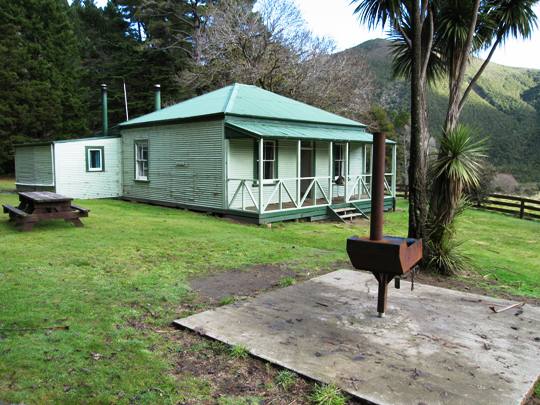
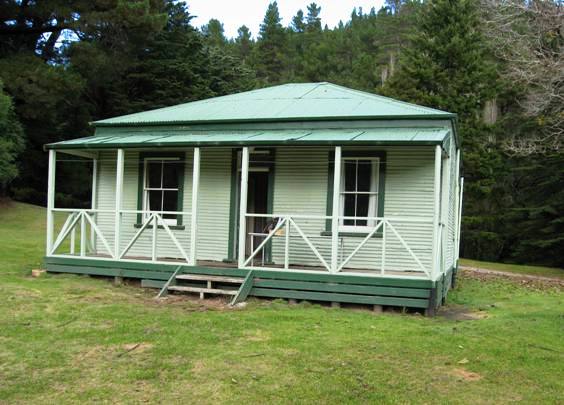
This historic place was registered under the Historic Places Act 1993. The following text is from the original Recommendation for Registration considered by the NZHPT Board at the time of registration. Architectural: Robson's Lodge is a conventional Victorian/Edwardian Combined Box House or Cottage built in a style that was common throughout our colonial era. The Lodge is constructed on timber framing, and is completely clad in corrugated iron, as were subsequent additions at the rear of the place. This unusual method of cladding is rare for a house of this period although the use of corrugated iron in general for all forms of building was not.
Why is this place Category 1 / Category 2?
Detail Of Assessed Criteria
This historic place was registered under the Historic Places Act 1993. The following text is from the original Recommendation for Registration considered by the NZHPT Board at the time of registration. The following comments are made in relation to the criteria identified under S.23(2) of the Historic Places Act 1993. a) The extent to which the place reflects important or representative aspects of New Zealand history: The history of Robson's Lodge, Kuripapango neatly illustrates the history of the eastern Kawekas on the western boundary of Hawkes Bay. In 1984 Forest Service historian Mathew Wright, who was examining human influence on the district's ecology, identified four phases of human activity: 1. The pre-European period saw little human influence apart from the presence of hunting parties and some deliberately lit fires. 2. The arrival of the colonists. The first farmers burned the vegetation and ran sheep on the regrowth. By the beginning of this century this form of farming was becoming uneconomic; overgrazing had drained the soil of nutrients and rabbits were competing for food with the sheep. 3. As a consequence of this, in the third phase sheep were mustered off. Apart from a few isolated attempts at farming, the ranges were largely left alone. From the 1950s on, larger areas of former farming land were brought into the state forest network. In 1956 the first ten year plan provided for the management of the forest in such way as to ensure that damage to the landscape was minimised. 4. The fourth phase has continued the process begun in 1956, first through the Forest Service and more recently through DOC and forestry operators. The Lumsdens began farming somewhat later than their near neighbours in the eastern Kawekas, but the withdrawal from farming in the 1950s and the sale of the property to the Forest Service fits the Wright model. The sequencing of Robson's Lodge's history matches a pattern that has been repeated elsewhere in New Zealand, overgrazing of marginal high country land followed by the replacement of sheep by more sustainable activities such as forestry, tourism and conservation research. b) The association of the place with events, persons or ideas of importance in New Zealand history: Robson Lodge is associated with European attempts to farm marginal hill country. Its history of establishment, failure and replacement by activities more suited to the land, typifies the history of many similar places elsewhere in New Zealand. g) The technical accomplishment or value, or design of the place: The main part of Robson's Lodge is a hip-roofed structure measuring 8.8 x 12.1 metres. This contains a central hall and two bedrooms across the front (north) side, and a large dining/living room that was previously two rooms across the back. A lean-to at the back of the house, probably part of the original building, contains a small bedroom and a kitchen...The structure of the building is standard timber framing on timber piles. The walls are fully sheathed with corrugated iron, fixed horizontally on the walls...There are two outbuildings, both similar to the lodge in being timber framed with corrugated iron sheathing; both are unlined inside. One was apparently a garage and is now a wood shed, and the other is a generator shed... (Cochran, p. 4) The basic integrity of the place has not been interfered with the retention of a large proportion of original fabric, although the Department of Conservation has removed walls and a chimney in the dining/living room, and has erected bunks in the front bedrooms. The Lodge is typical of its time although its corrugated iron cladding is unusual. The use of corrugated iron - always regarded as a "poor man's building material" - has traditionally been reserved for areas of architecture that are not on show. Its use has consistently been relegated in past years to roofs, farm buildings, factory buildings, and the invisible side walls of nineteenth century houses, shops, and public buildings. There is also a garden dating from 1908 with "some of the trees" planted by the original owner, David Lumsden. Conclusion: Robson's Lodge, Kuripapango, Kaweka Forest Park, Hawke's Bay, is recommended for registration as a Category II as a place of historical and cultural heritage significance and value. The building, erected in 1908, has provided accommodation for farmers, the NZ Forest Service, school parties and, recently, the Department of Conservation. It is an example of conventional housing from the colonial era but is unusual in terms of the corrugated iron cladding.
Why is this place significant?
Historic Significance
Historical Significance or Value This historic place was registered under the Historic Places Act 1993. The following text is from the original Recommendation for Registration considered by the NZHPT Board at the time of registration. Robson's Lodge was built in 1908 for David Lumsden, who had acquired the property two years earlier. The Lumsdens extended the farm over time, eventually selling it in 1950 to the New Zealand Forest Service, which used the building to house a ranger and his wife. In 1978 after lying empty for some years, the old house became Robson's Lodge, an accommodation house for school parties and other groups. Since 1987 it has been owned by the Department of Conservation.
Physical Significance
This historic place was registered under the Historic Places Act 1993. The following text is from the original Recommendation for Registration considered by the NZHPT Board at the time of registration. Architectural: Robson's Lodge is a conventional Victorian/Edwardian Combined Box House or Cottage built in a style that was common throughout our colonial era. The Lodge is constructed on timber framing, and is completely clad in corrugated iron, as were subsequent additions at the rear of the place. This unusual method of cladding is rare for a house of this period although the use of corrugated iron in general for all forms of building was not.
Why is this place Category 1 / Category 2?
Detail Of Assessed Criteria
This historic place was registered under the Historic Places Act 1993. The following text is from the original Recommendation for Registration considered by the NZHPT Board at the time of registration. The following comments are made in relation to the criteria identified under S.23(2) of the Historic Places Act 1993. a) The extent to which the place reflects important or representative aspects of New Zealand history: The history of Robson's Lodge, Kuripapango neatly illustrates the history of the eastern Kawekas on the western boundary of Hawkes Bay. In 1984 Forest Service historian Mathew Wright, who was examining human influence on the district's ecology, identified four phases of human activity: 1. The pre-European period saw little human influence apart from the presence of hunting parties and some deliberately lit fires. 2. The arrival of the colonists. The first farmers burned the vegetation and ran sheep on the regrowth. By the beginning of this century this form of farming was becoming uneconomic; overgrazing had drained the soil of nutrients and rabbits were competing for food with the sheep. 3. As a consequence of this, in the third phase sheep were mustered off. Apart from a few isolated attempts at farming, the ranges were largely left alone. From the 1950s on, larger areas of former farming land were brought into the state forest network. In 1956 the first ten year plan provided for the management of the forest in such way as to ensure that damage to the landscape was minimised. 4. The fourth phase has continued the process begun in 1956, first through the Forest Service and more recently through DOC and forestry operators. The Lumsdens began farming somewhat later than their near neighbours in the eastern Kawekas, but the withdrawal from farming in the 1950s and the sale of the property to the Forest Service fits the Wright model. The sequencing of Robson's Lodge's history matches a pattern that has been repeated elsewhere in New Zealand, overgrazing of marginal high country land followed by the replacement of sheep by more sustainable activities such as forestry, tourism and conservation research. b) The association of the place with events, persons or ideas of importance in New Zealand history: Robson Lodge is associated with European attempts to farm marginal hill country. Its history of establishment, failure and replacement by activities more suited to the land, typifies the history of many similar places elsewhere in New Zealand. g) The technical accomplishment or value, or design of the place: The main part of Robson's Lodge is a hip-roofed structure measuring 8.8 x 12.1 metres. This contains a central hall and two bedrooms across the front (north) side, and a large dining/living room that was previously two rooms across the back. A lean-to at the back of the house, probably part of the original building, contains a small bedroom and a kitchen...The structure of the building is standard timber framing on timber piles. The walls are fully sheathed with corrugated iron, fixed horizontally on the walls...There are two outbuildings, both similar to the lodge in being timber framed with corrugated iron sheathing; both are unlined inside. One was apparently a garage and is now a wood shed, and the other is a generator shed... (Cochran, p. 4) The basic integrity of the place has not been interfered with the retention of a large proportion of original fabric, although the Department of Conservation has removed walls and a chimney in the dining/living room, and has erected bunks in the front bedrooms. The Lodge is typical of its time although its corrugated iron cladding is unusual. The use of corrugated iron - always regarded as a "poor man's building material" - has traditionally been reserved for areas of architecture that are not on show. Its use has consistently been relegated in past years to roofs, farm buildings, factory buildings, and the invisible side walls of nineteenth century houses, shops, and public buildings. There is also a garden dating from 1908 with "some of the trees" planted by the original owner, David Lumsden. Conclusion: Robson's Lodge, Kuripapango, Kaweka Forest Park, Hawke's Bay, is recommended for registration as a Category II as a place of historical and cultural heritage significance and value. The building, erected in 1908, has provided accommodation for farmers, the NZ Forest Service, school parties and, recently, the Department of Conservation. It is an example of conventional housing from the colonial era but is unusual in terms of the corrugated iron cladding.
Historical and Associated Iwi / Hapū / Whānau
Information Sources
Chapple, 1983
G Chapple, Maynard. Mitchell & Viscoe. Corrugated Iron in New Zealand. Reed 1983
Wright, 1984
M Wright, The History of Farming at Kuripapango, Napier, 1984
Conservation Plan
Conservation Plan
Other Information
A copy of the original report is available from the NZHPT Central region office Please note that entry on the New Zealand Heritage List/Rarangi Korero identifies only the heritage values of the property concerned, and should not be construed as advice on the state of the property, or as a comment of its soundness or safety, including in regard to earthquake risk, safety in the event of fire, or insanitary conditions.
Historical and Associated Iwi / Hapū / Whānau
Information Sources
Chapple, 1983
G Chapple, Maynard. Mitchell & Viscoe. Corrugated Iron in New Zealand. Reed 1983
Wright, 1984
M Wright, The History of Farming at Kuripapango, Napier, 1984
Conservation Plan
Conservation Plan
Other Information
A copy of the original report is available from the NZHPT Central region office Please note that entry on the New Zealand Heritage List/Rarangi Korero identifies only the heritage values of the property concerned, and should not be construed as advice on the state of the property, or as a comment of its soundness or safety, including in regard to earthquake risk, safety in the event of fire, or insanitary conditions.
Former Usages
General Usage: Accommodation
Specific Usage: House
General Usage: Commemoration
Specific Usage: Accommodation House
General Usage: Forestry
Specific Usage: Forestry/mill camp/settlement/housing
Former Usages
General Usage: Accommodation
Specific Usage: House
General Usage: Commemoration
Specific Usage: Accommodation House
General Usage: Forestry
Specific Usage: Forestry/mill camp/settlement/housing
Location
Stay up to date with Heritage this month
