Quick links


Quick links
Quick links
Quick links
Quick links
Quick links
Jackson Street, Petone, LOWER HUTT
Private
Historic Area
List No. 7369
List Entry Information
Status
Listed
List Entry Status
Historic Area
Access
Private/No Public Access
List Number
7369
Date Entered
13th December 1996
Date of Effect
13th December 1996
City/District Council
Hutt City
Region
Wellington Region
Extent of List Entry
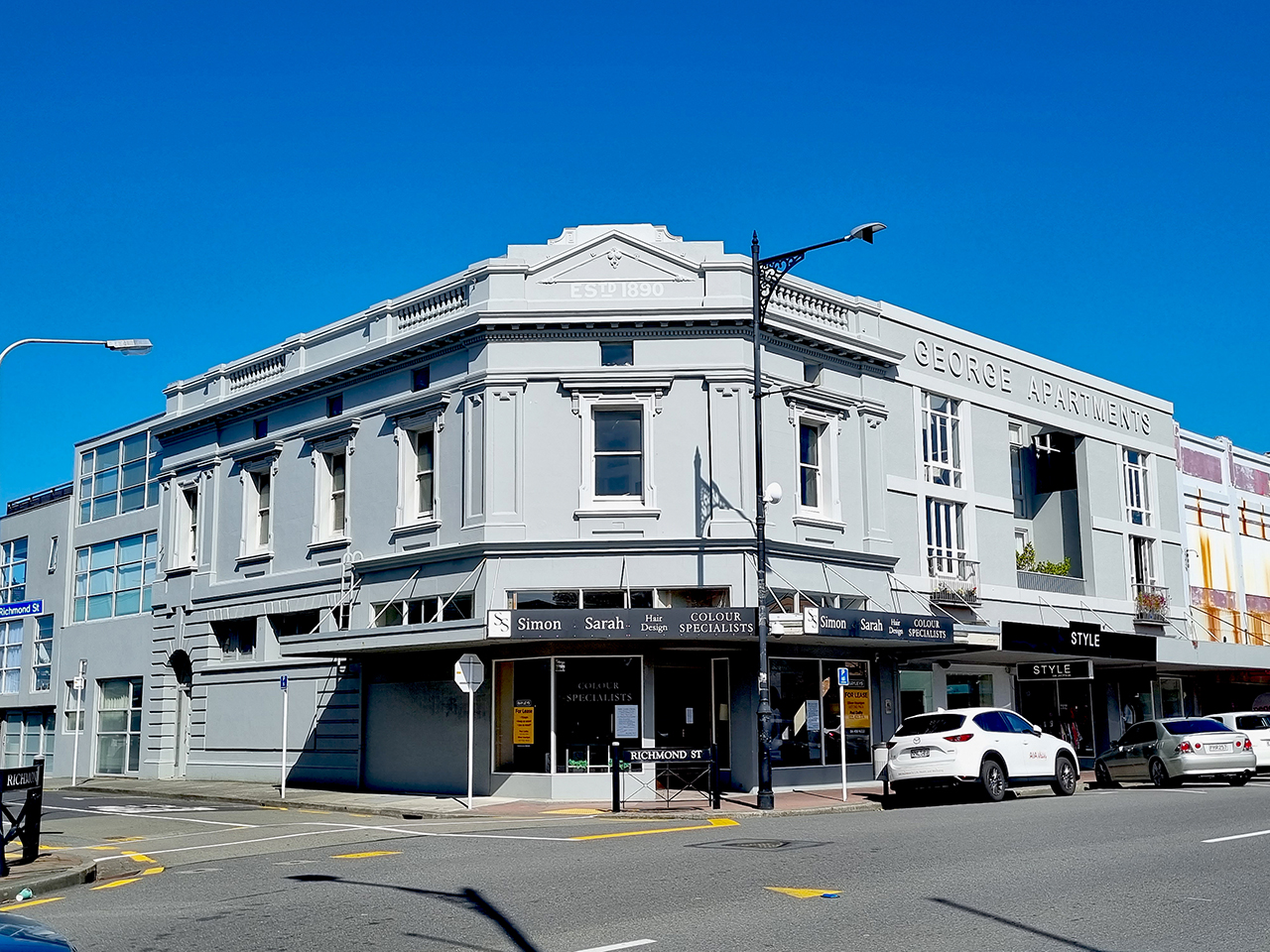
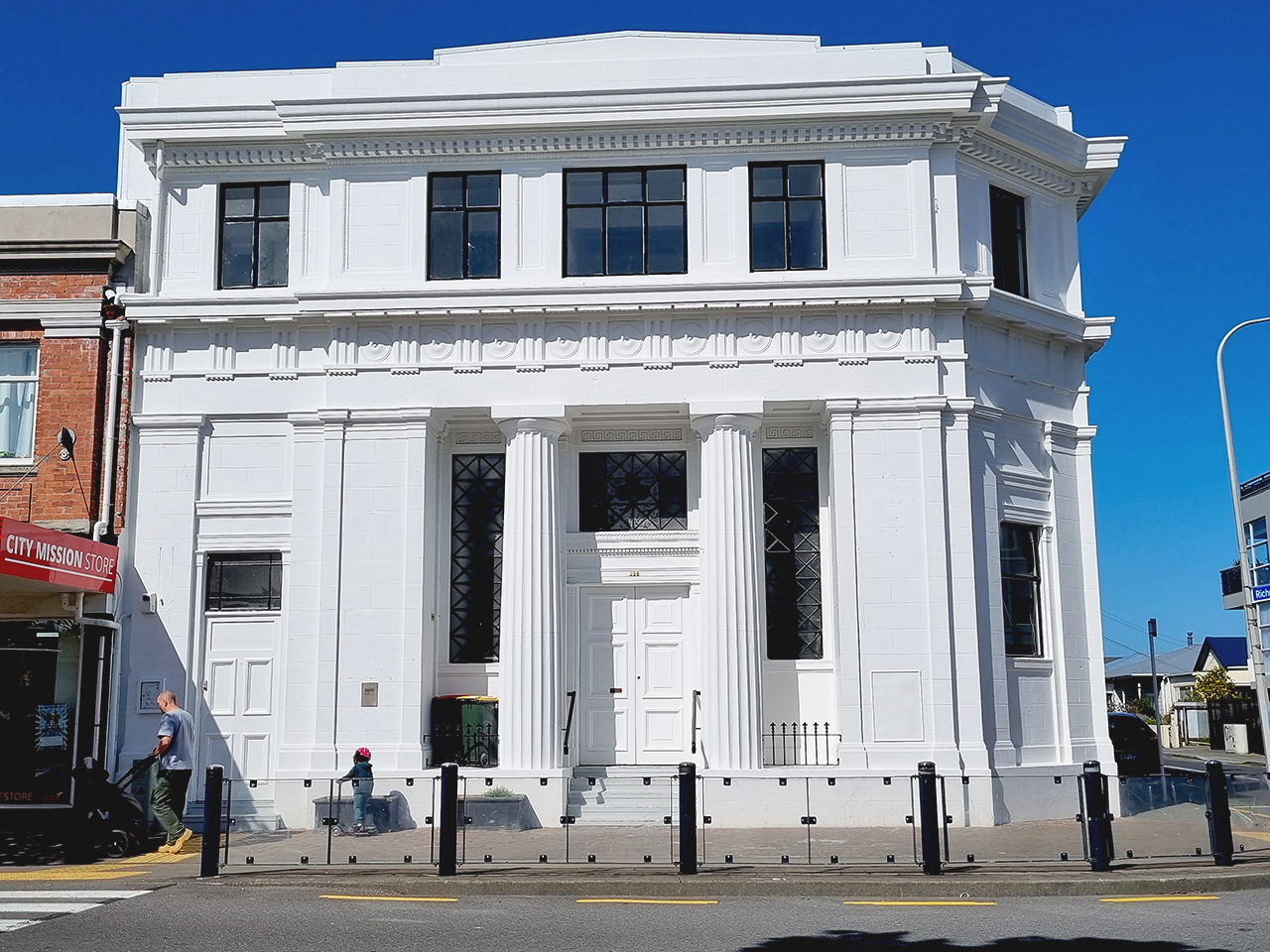
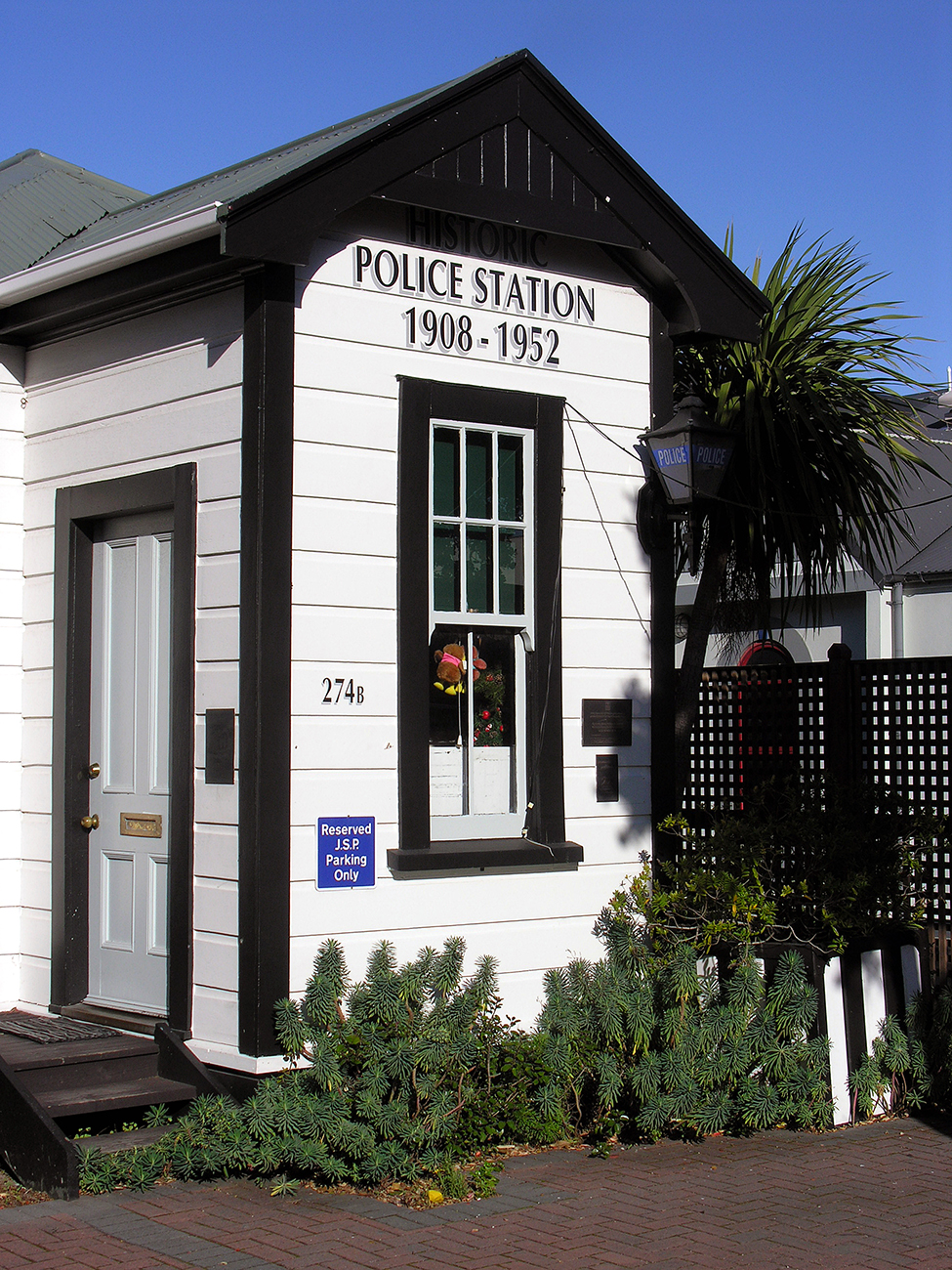
Area consists of the buildings located along both sides of Jackson St, between the intersection with Victoria St in the West & Cuba St in the East. The Street numbers of the buildings on both sides of Jackson Street run between numbers 87 to 376. Commercial Building (87 Jackson St) Commercial Building (89 Jackson St) Commercial Building (91 Jackson St) Self Help Building (109 Jackson St) Gaynor Buildings (115-117 Jackson St) Commercial Building (121-123 Jackson St) Commercial Building (125-127 Jackson St) Commercial Building (129 Jackson St) Commercial Building (131-141 Jackson St) Commercial Building (146 Jackson St) Commercial Building (161-163 Jackson St) The Evening Post Building (166-170 Jackson St) Commercial Building (173 Jackson St) The Empire Hotel (175 Jackson St) Commercial Building (176-178 Jackson St) Commercial Building (177-179 Jackson St) Commercial Building (180 Jackson St) Commercial Building (182 Jackson St) Commercial Building (184 Jackson St) Commercial Building (185-191 Jackson St) Commercial Building (186 Jackson St) Commercial Building (195-197 Jackson St) The Alexandra Building (188-202 Jackson St) The Petone Post Office (205 Jackson St) Commercial Building (207 Jackson St) Commercial Building (216 Jackson St) Commercial Building (218 Jackson St) Commercial Building (219 Jackson St) George and George Building (220-222 Jackson St) Commercial Building (224 Jackson St) Commercial Building (226 Jackson St) Commercial Building (228 Jackson St) Commercial Building (229-231 Jackson St) Commercial Building (230 Jackson St) Commercial Building (233-235 Jackson St) Britannia Buildings (237-245 Jackson St) U.F.S.D Building (249-251 Jackson St) Commercial Building (254 Jackson St) Commercial Building (258-260 Jackson St) Commercial Building (257-263 Jackson St) Commercial Building (262-264 Jackson St) Commercial Building (266 Jackson St) Commercial Building (268 Jackson St) Commercial Building (274 Jackson St) Former Police Station (274B Jackson St) Commercial Building (276-278 Jackson St) Commercial Building (278-280 Jackson St) Commercial Building (284-286 Jackson St) Commercial Building (287 Jackson St) Commercial Building (288 Jackson St) Commercial Building (291-293 Jackson St) Commercial Building (295-297 Jackson St) Commercial Building (296 Jackson St) Commercial Building (299-303 Jackson St) Lothian Court (307 Jackson St) New Central Hotel (311-323 Jackson St) Commercial Building (320-326 Jackson St) Commercial Building (328 Jackson St) Commercial Building (330-334 Jackson St) Commercial Building (336-338 Jackson St) Commercial Building (350-352 Jackson St) Commercial Building (328-360 Jackson St) Commercial Building (362-364 Jackson St) Commercial Building (376 Jackson St)
Status
Listed
List Entry Status
Historic Area
Access
Private/No Public Access
List Number
7369
Date Entered
13th December 1996
Date of Effect
13th December 1996
City/District Council
Hutt City
Region
Wellington Region
Extent of List Entry
Area consists of the buildings located along both sides of Jackson St, between the intersection with Victoria St in the West & Cuba St in the East. The Street numbers of the buildings on both sides of Jackson Street run between numbers 87 to 376. Commercial Building (87 Jackson St) Commercial Building (89 Jackson St) Commercial Building (91 Jackson St) Self Help Building (109 Jackson St) Gaynor Buildings (115-117 Jackson St) Commercial Building (121-123 Jackson St) Commercial Building (125-127 Jackson St) Commercial Building (129 Jackson St) Commercial Building (131-141 Jackson St) Commercial Building (146 Jackson St) Commercial Building (161-163 Jackson St) The Evening Post Building (166-170 Jackson St) Commercial Building (173 Jackson St) The Empire Hotel (175 Jackson St) Commercial Building (176-178 Jackson St) Commercial Building (177-179 Jackson St) Commercial Building (180 Jackson St) Commercial Building (182 Jackson St) Commercial Building (184 Jackson St) Commercial Building (185-191 Jackson St) Commercial Building (186 Jackson St) Commercial Building (195-197 Jackson St) The Alexandra Building (188-202 Jackson St) The Petone Post Office (205 Jackson St) Commercial Building (207 Jackson St) Commercial Building (216 Jackson St) Commercial Building (218 Jackson St) Commercial Building (219 Jackson St) George and George Building (220-222 Jackson St) Commercial Building (224 Jackson St) Commercial Building (226 Jackson St) Commercial Building (228 Jackson St) Commercial Building (229-231 Jackson St) Commercial Building (230 Jackson St) Commercial Building (233-235 Jackson St) Britannia Buildings (237-245 Jackson St) U.F.S.D Building (249-251 Jackson St) Commercial Building (254 Jackson St) Commercial Building (258-260 Jackson St) Commercial Building (257-263 Jackson St) Commercial Building (262-264 Jackson St) Commercial Building (266 Jackson St) Commercial Building (268 Jackson St) Commercial Building (274 Jackson St) Former Police Station (274B Jackson St) Commercial Building (276-278 Jackson St) Commercial Building (278-280 Jackson St) Commercial Building (284-286 Jackson St) Commercial Building (287 Jackson St) Commercial Building (288 Jackson St) Commercial Building (291-293 Jackson St) Commercial Building (295-297 Jackson St) Commercial Building (296 Jackson St) Commercial Building (299-303 Jackson St) Lothian Court (307 Jackson St) New Central Hotel (311-323 Jackson St) Commercial Building (320-326 Jackson St) Commercial Building (328 Jackson St) Commercial Building (330-334 Jackson St) Commercial Building (336-338 Jackson St) Commercial Building (350-352 Jackson St) Commercial Building (328-360 Jackson St) Commercial Building (362-364 Jackson St) Commercial Building (376 Jackson St)
Why is this place significant?
Cultural Significance
This historic area was registered under the Historic Places Act 1993. The following text is from the original Historic Area Assessment Under Section 23 Criteria report considered by the NZHPT Board at the time of registration. Social. The one characteristic Petone has that distinguishes it apart from other main centres, is that its CBD, Jackson Street, has no new city immediately surrounding it, a development which would have relegated Jackson Street forever to the edge of a new city centre. In this respect although Petone's previous political independence and isolation was a factor which inhibited its economic and social growth when the big industries left, it can be said that this stagnation ironically preserved the historic CBD as a desirable social and economic centre. Under the stimulus of a main street programme Jackson Street has become a place which clearly defines Petone's identity, a factor which is perhaps more significant to the locals than ever before now that Petone is amalgamated with Lower Hutt. The fact that the character and quality of a small town with strong historical traditions has survived in this new situation is a good indication that the appeal of Petone extends beyond its historical borders. Thanks to this, its noted popularity today as an interesting place for Wellingtonians to go and shop at, and to see a bit of colourful local history to boot in the form of the restored Police Station and Lock-up in Jackson Street for example, or at the Museum or old historic churches nearby, will undoubtedly ensure the continued preservation of the Jackson Street Historic Area for future generations.
Historic Significance
Historical Significance or Value This historic area was registered under the Historic Places Act 1993. The following text is an extract from the original Historic Area Assessment Under Section 23 Criteria report considered by the NZHPT Board at the time of registration. Historical: Susan Butterworth's 1988 history of Petone provides a competent overview of the former borough's history. The first era, Maori settlement in Pito-one, was followed by the first wave of European settlement in 1839/40 when the area was briefly the site of the Wakefields' new settlement. Flooding in the river put paid to that intention, after which Petone was almost abandoned, being left to begin a long and slow recovery in the 1850s and 1860s. Petone's first shop opened in 1876, followed two years later by the post office. In the latter part of the 19th Century the borough attracted major manufacturing enterprises such as the railway workshops (1878-79, moved to Woburn 1828-29), the Wellington Woollen Mfg Co.'s mill and the Gear Freezing Works (1882), sited within easy reach of the rail line (though obtaining a station that suited local aspirations took time) and the wharf (the present one dates from 1907). Manufacturing and distribution received a further boost during the early part of this century with the arrival of industries such as automobile assembling (General Motors 1926, Todds 1935) and soap manufacturing (Levers, 1919). Since the 1980s Petone has had to cope with a shrinking industrial base [the woollen mill closed 1968, Gear Meat 1981, NZ Motor Corp 1983, General Motors 1984 - only partly compensated for by new distribution industries (IBM 1987)], the loss of local political autonomy and the drift of retail and servicing businesses to the nearby Lower Hutt Queensgate and associated developments. This latter development has probably done much to ensure the survival of a Jackson Street building stock that presents the visual homogeneity noted by the NZHPT team. The Jackson Street historic area illustrates aspects of Petone's history, which for the last hundred years has been dominated by its manufacturing and distribution industries. While they are probably less significant than the remains of the larger industries and the wharf, the shops and hotels along Jackson Street played a valuable supporting role throughout this period and the alterations made to the shop fronts does indicate the tardy way in which the borough council addressed issues such as road improvement. The notes on the individual buildings devote more space to aesthetic considerations than to the history of the buildings, so it is not always possible to assess their historical significance. They do, however, show that the buildings were designed and built to suit the local needs either of petty proprietors or to serve as branch offices for larger businesses (i.e., 166-170 Jackson, the 1927 Evening Post branch office, 205 Jackson, the post office, 226 Jackson, the National Bank, 230 Jackson, McKenzies' and 268 Jackson, the BNZ). It is perhaps a measure of Petone's decline that so few of these premises host representatives from the second category today. The records relating to the buildings show evidence both of change and continuity. Change can be seen in the procession of owners and tenants where these have been recorded, as well as the recent retreat of national operators (Hannahs from 254 Jackson Street after 70 years on-site, McKenzies from 230 Jackson). There is also evidence of continuity; (109 Jackson, used by Self Help from ca 1923 to 1965, 249- 251 Jackson Street, leased or owned by UFS use since 1924, 177-79 Jackson, used as a butchery since 1937 and 186 Jackson, which has been used by Chinese fruiterers since the turn of the century).
Physical Significance
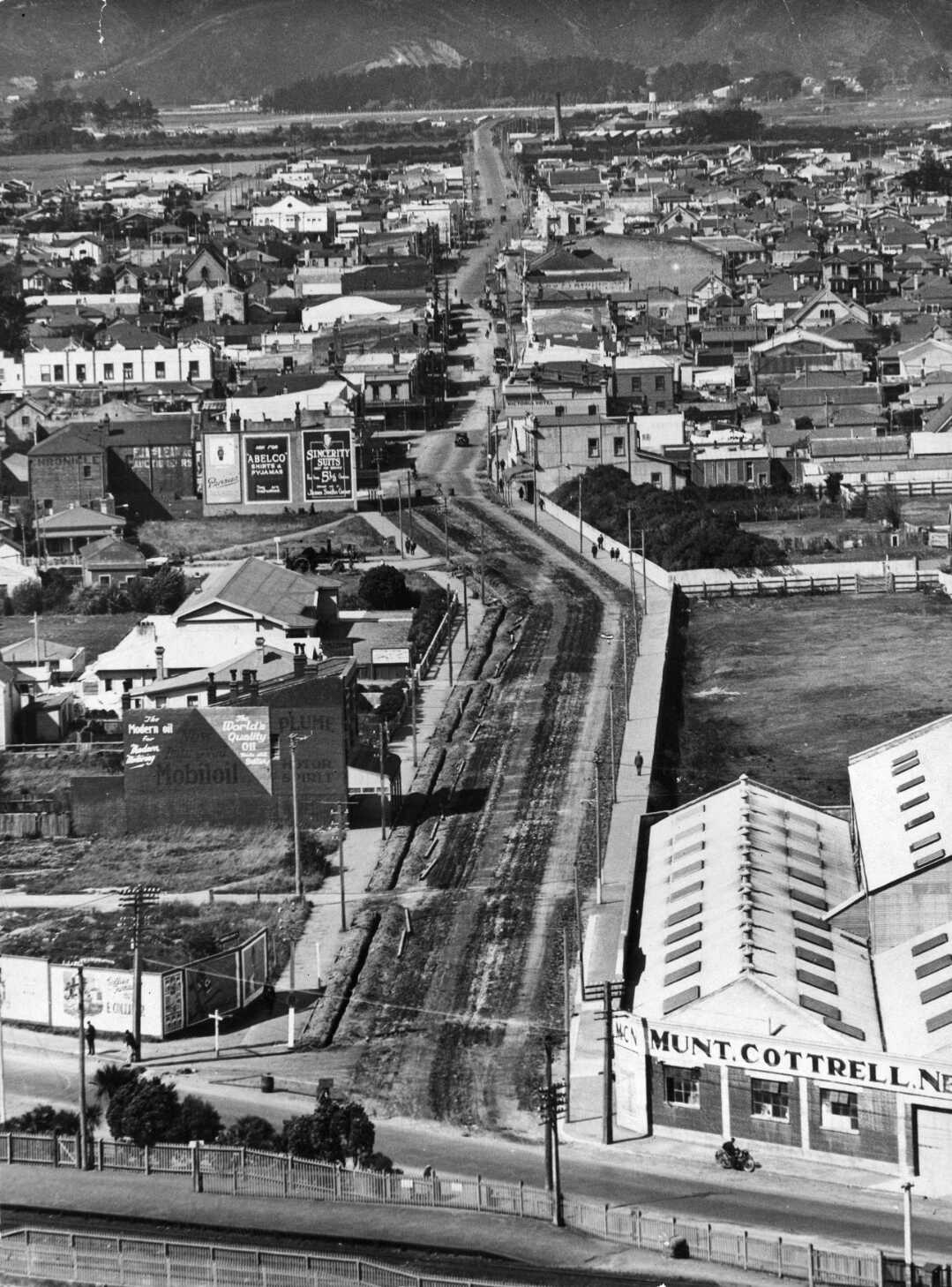
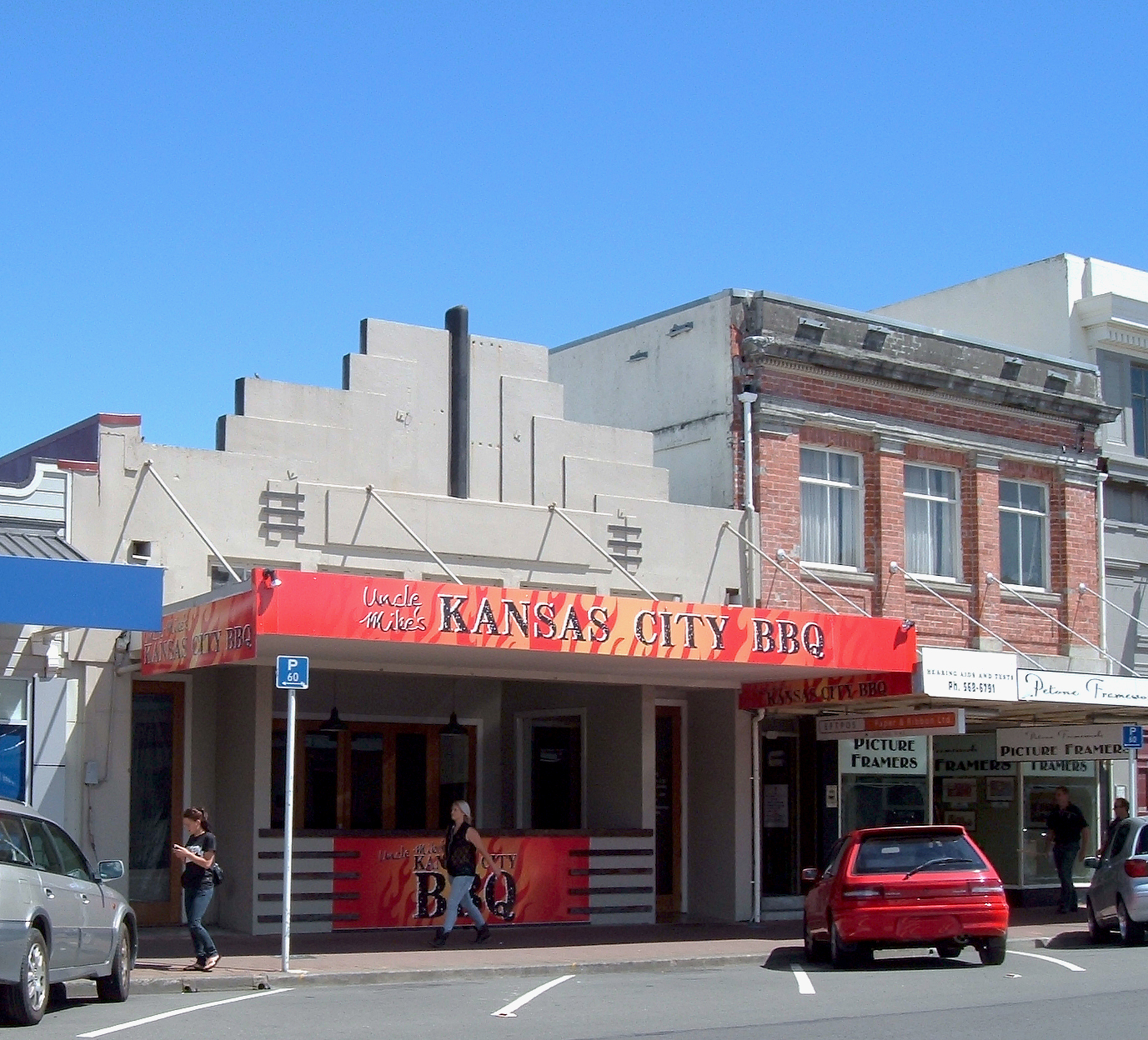
This historic area was registered under the Historic Places Act 1993. The following text is from the original Historic Area Assessment Under Section 23 Criteria report considered by the NZHPT Board at the time of registration. Architectural: The registration proposal states:- "By the turn of the century it (Petone) had taken on the appearance of a Wild West town centre. Today a number of late Victorian and Edwardian buildings remain extant". In fact only 17 out of the 64 buildings identified in the historic area proposal are Victorian/Edwardian. Although these earlier buildings were designed in eclectic Classical style, the main architectural character of the Jackson Street historic area is rather Inter-war Stripped Classicism with some notable examples of Inter-war styles by certain big-name architects of the period. There is a difference in appearance between the two styles notwithstanding their common background in terms of scale and detailing. The earlier buildings do indeed look Wild West, like those in the Pollen Street Shops historic area, Thames, whereas the Stripped Classical style buildings do not. The difference is most telling in the character imparted to the area by its architectural heritage; Jackson Street, Petone, has the character and ambience of a place where time stopped still between the First and Second World wars. As noted, a comparative area is the proposed Pollen Street Shops historic area, Thames. Pollen Street is essentially a collection of Victorian/Edwardian timber shops with original turn-of-the-century false fronts. Verandahs are the rule with only one place having a suspended awning, and this contrasts with Jackson Street where awnings are the rule and only eight buildings have verandahs. If one takes the 1899 photograph of Jackson Street which appears in Susan Butterworth's history of Petone as a basis for comparison, it becomes apparent that the comparison is best made between Petone at the turn of the century and Pollen Street, Thames to-day, so that Pollen Street reminds us how Jackson Street looked before 1926 and before the majority of the old timber false front buildings were demolished. The changes brought about to Jackson Street by its being widened and straightened after 1926 were not, however, detrimental to the architectural stock and character of the place which has survived to-day. On the contrary, as suggested, the place has a very interesting Inter-War quality in terms of its architectural heritage and it can be argued that it is one of the most complete collections of styles from this period that we have in this country. The few surviving Victorian/Edwardian buildings add to this character and quality, particularly when the fact is appreciated that some of the best architects who ever practiced in New Zealand in both periods have examples of their work in Jackson Street. Other notable architects are represented in Jackson Street, namely John Sydney Swan (1874-1936) and the firm of King and Dawson. Swan's career covered the late Victorian and Inter-War periods, and during this time he designed several buildings of outstanding significance, these being St Gerard's Monastery Church in Wellington, 1906-1910, (Cat.I); the Erskine Chapel of the Sacred Heart, 1929-30, (Cat.I); and the Karori Cemetery Chapel and Crematorium, 1909, (Cat.I), Swan was the architect of the New Central Hotel, 1931, at 311-323 Jackson Street. The firm of King and Dawson has spanned the Inter-War, Modernist, and post-Modernist periods. J.M. Dawson (1877-1956) the senior and founding partner of the firm was responsible for the Hope Gibbons Building, Wellington, 1925, (Cat II). Since 1929 (the year Dawson went into partnership) the firm of King and Dawson has been responsible for the design of the Lower Hutt Town Hall & Administration Block, 1953-57, (a Modernist building, NR); and the Freyberg Pool, Wellington, 1963 (NR). King and Dawson are identified as the architects of the low-scale commercial building at 177-179 Jackson Street, dated 1927, although the pre-1929 date suggests that the building may have been the work of J.M, Dawson alone. The buildings in Petone by Swan and King and Dawson are not outstanding like the others listed above, but the remarkable fact is that in terms of the small-scale central business district which Jackson Street, Petone, was and is, the overall number of buildings designed by outstanding architects is proportionally much higher than those found in other CBD historic areas such as the Cuba Street Historic Area, Wellington, or the High Street, Christchurch, proposed historic area.
Why is this place significant?
Cultural Significance
This historic area was registered under the Historic Places Act 1993. The following text is from the original Historic Area Assessment Under Section 23 Criteria report considered by the NZHPT Board at the time of registration. Social. The one characteristic Petone has that distinguishes it apart from other main centres, is that its CBD, Jackson Street, has no new city immediately surrounding it, a development which would have relegated Jackson Street forever to the edge of a new city centre. In this respect although Petone's previous political independence and isolation was a factor which inhibited its economic and social growth when the big industries left, it can be said that this stagnation ironically preserved the historic CBD as a desirable social and economic centre. Under the stimulus of a main street programme Jackson Street has become a place which clearly defines Petone's identity, a factor which is perhaps more significant to the locals than ever before now that Petone is amalgamated with Lower Hutt. The fact that the character and quality of a small town with strong historical traditions has survived in this new situation is a good indication that the appeal of Petone extends beyond its historical borders. Thanks to this, its noted popularity today as an interesting place for Wellingtonians to go and shop at, and to see a bit of colourful local history to boot in the form of the restored Police Station and Lock-up in Jackson Street for example, or at the Museum or old historic churches nearby, will undoubtedly ensure the continued preservation of the Jackson Street Historic Area for future generations.
Historic Significance
Historical Significance or Value This historic area was registered under the Historic Places Act 1993. The following text is an extract from the original Historic Area Assessment Under Section 23 Criteria report considered by the NZHPT Board at the time of registration. Historical: Susan Butterworth's 1988 history of Petone provides a competent overview of the former borough's history. The first era, Maori settlement in Pito-one, was followed by the first wave of European settlement in 1839/40 when the area was briefly the site of the Wakefields' new settlement. Flooding in the river put paid to that intention, after which Petone was almost abandoned, being left to begin a long and slow recovery in the 1850s and 1860s. Petone's first shop opened in 1876, followed two years later by the post office. In the latter part of the 19th Century the borough attracted major manufacturing enterprises such as the railway workshops (1878-79, moved to Woburn 1828-29), the Wellington Woollen Mfg Co.'s mill and the Gear Freezing Works (1882), sited within easy reach of the rail line (though obtaining a station that suited local aspirations took time) and the wharf (the present one dates from 1907). Manufacturing and distribution received a further boost during the early part of this century with the arrival of industries such as automobile assembling (General Motors 1926, Todds 1935) and soap manufacturing (Levers, 1919). Since the 1980s Petone has had to cope with a shrinking industrial base [the woollen mill closed 1968, Gear Meat 1981, NZ Motor Corp 1983, General Motors 1984 - only partly compensated for by new distribution industries (IBM 1987)], the loss of local political autonomy and the drift of retail and servicing businesses to the nearby Lower Hutt Queensgate and associated developments. This latter development has probably done much to ensure the survival of a Jackson Street building stock that presents the visual homogeneity noted by the NZHPT team. The Jackson Street historic area illustrates aspects of Petone's history, which for the last hundred years has been dominated by its manufacturing and distribution industries. While they are probably less significant than the remains of the larger industries and the wharf, the shops and hotels along Jackson Street played a valuable supporting role throughout this period and the alterations made to the shop fronts does indicate the tardy way in which the borough council addressed issues such as road improvement. The notes on the individual buildings devote more space to aesthetic considerations than to the history of the buildings, so it is not always possible to assess their historical significance. They do, however, show that the buildings were designed and built to suit the local needs either of petty proprietors or to serve as branch offices for larger businesses (i.e., 166-170 Jackson, the 1927 Evening Post branch office, 205 Jackson, the post office, 226 Jackson, the National Bank, 230 Jackson, McKenzies' and 268 Jackson, the BNZ). It is perhaps a measure of Petone's decline that so few of these premises host representatives from the second category today. The records relating to the buildings show evidence both of change and continuity. Change can be seen in the procession of owners and tenants where these have been recorded, as well as the recent retreat of national operators (Hannahs from 254 Jackson Street after 70 years on-site, McKenzies from 230 Jackson). There is also evidence of continuity; (109 Jackson, used by Self Help from ca 1923 to 1965, 249- 251 Jackson Street, leased or owned by UFS use since 1924, 177-79 Jackson, used as a butchery since 1937 and 186 Jackson, which has been used by Chinese fruiterers since the turn of the century).
Physical Significance
This historic area was registered under the Historic Places Act 1993. The following text is from the original Historic Area Assessment Under Section 23 Criteria report considered by the NZHPT Board at the time of registration. Architectural: The registration proposal states:- "By the turn of the century it (Petone) had taken on the appearance of a Wild West town centre. Today a number of late Victorian and Edwardian buildings remain extant". In fact only 17 out of the 64 buildings identified in the historic area proposal are Victorian/Edwardian. Although these earlier buildings were designed in eclectic Classical style, the main architectural character of the Jackson Street historic area is rather Inter-war Stripped Classicism with some notable examples of Inter-war styles by certain big-name architects of the period. There is a difference in appearance between the two styles notwithstanding their common background in terms of scale and detailing. The earlier buildings do indeed look Wild West, like those in the Pollen Street Shops historic area, Thames, whereas the Stripped Classical style buildings do not. The difference is most telling in the character imparted to the area by its architectural heritage; Jackson Street, Petone, has the character and ambience of a place where time stopped still between the First and Second World wars. As noted, a comparative area is the proposed Pollen Street Shops historic area, Thames. Pollen Street is essentially a collection of Victorian/Edwardian timber shops with original turn-of-the-century false fronts. Verandahs are the rule with only one place having a suspended awning, and this contrasts with Jackson Street where awnings are the rule and only eight buildings have verandahs. If one takes the 1899 photograph of Jackson Street which appears in Susan Butterworth's history of Petone as a basis for comparison, it becomes apparent that the comparison is best made between Petone at the turn of the century and Pollen Street, Thames to-day, so that Pollen Street reminds us how Jackson Street looked before 1926 and before the majority of the old timber false front buildings were demolished. The changes brought about to Jackson Street by its being widened and straightened after 1926 were not, however, detrimental to the architectural stock and character of the place which has survived to-day. On the contrary, as suggested, the place has a very interesting Inter-War quality in terms of its architectural heritage and it can be argued that it is one of the most complete collections of styles from this period that we have in this country. The few surviving Victorian/Edwardian buildings add to this character and quality, particularly when the fact is appreciated that some of the best architects who ever practiced in New Zealand in both periods have examples of their work in Jackson Street. Other notable architects are represented in Jackson Street, namely John Sydney Swan (1874-1936) and the firm of King and Dawson. Swan's career covered the late Victorian and Inter-War periods, and during this time he designed several buildings of outstanding significance, these being St Gerard's Monastery Church in Wellington, 1906-1910, (Cat.I); the Erskine Chapel of the Sacred Heart, 1929-30, (Cat.I); and the Karori Cemetery Chapel and Crematorium, 1909, (Cat.I), Swan was the architect of the New Central Hotel, 1931, at 311-323 Jackson Street. The firm of King and Dawson has spanned the Inter-War, Modernist, and post-Modernist periods. J.M. Dawson (1877-1956) the senior and founding partner of the firm was responsible for the Hope Gibbons Building, Wellington, 1925, (Cat II). Since 1929 (the year Dawson went into partnership) the firm of King and Dawson has been responsible for the design of the Lower Hutt Town Hall & Administration Block, 1953-57, (a Modernist building, NR); and the Freyberg Pool, Wellington, 1963 (NR). King and Dawson are identified as the architects of the low-scale commercial building at 177-179 Jackson Street, dated 1927, although the pre-1929 date suggests that the building may have been the work of J.M, Dawson alone. The buildings in Petone by Swan and King and Dawson are not outstanding like the others listed above, but the remarkable fact is that in terms of the small-scale central business district which Jackson Street, Petone, was and is, the overall number of buildings designed by outstanding architects is proportionally much higher than those found in other CBD historic areas such as the Cuba Street Historic Area, Wellington, or the High Street, Christchurch, proposed historic area.
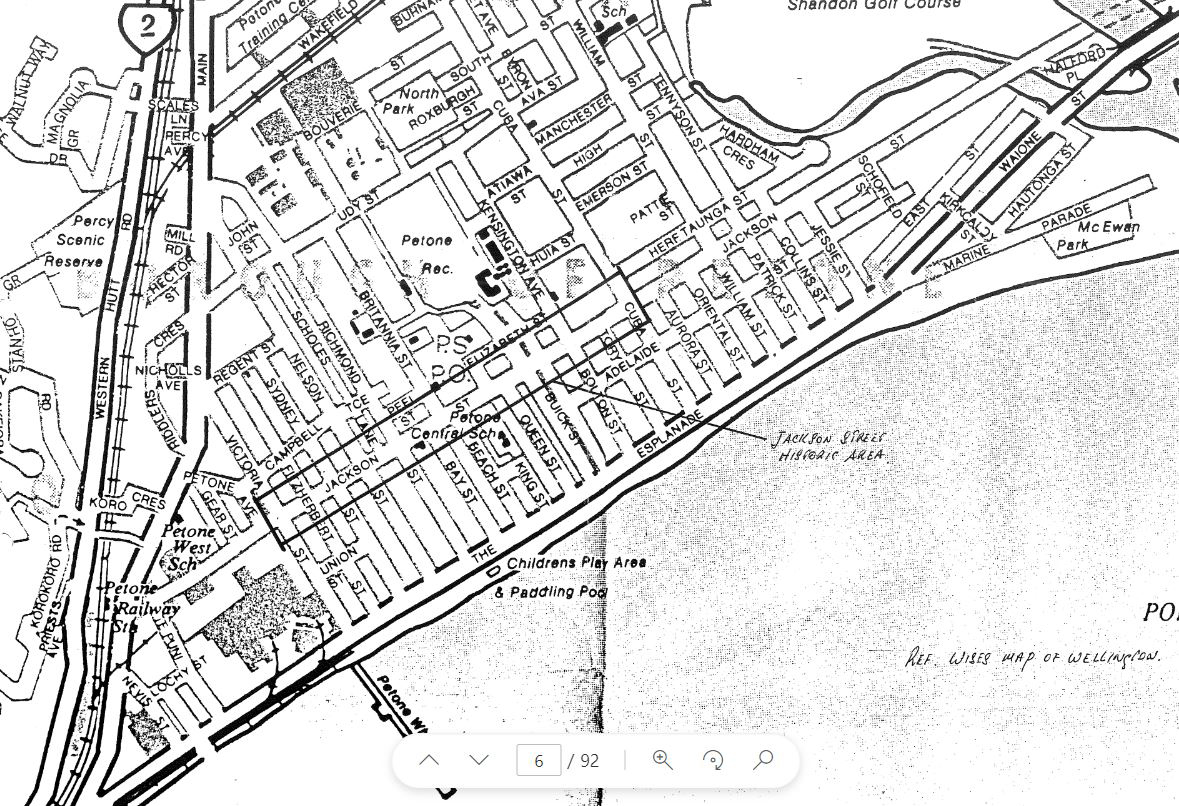
This historic area was registered under the Historic Places Act 1993. The following text is from the original Historic Area Assessment Under Section 23 Criteria report considered by the NZHPT Board at the time of registration. Description: The area proposed here for registration consists of buildings located along the length of, and on both sides of, Jackson Street, Petone, between the intersection with Victoria and Jackson Streets in the West, and the intersection with Jackson Street and Cuba Street in the East. The Street numbers of the buildings on both sides of Jackson Street run between numbers 87 to 376. Please see the attached maps. The numbers which appear on the aerial photograph maps are the street numbers of the buildings, and these numbers correspond with the street numbers for each individual building photograph appended along with the maps.
This historic area was registered under the Historic Places Act 1993. The following text is from the original Historic Area Assessment Under Section 23 Criteria report considered by the NZHPT Board at the time of registration. Description: The area proposed here for registration consists of buildings located along the length of, and on both sides of, Jackson Street, Petone, between the intersection with Victoria and Jackson Streets in the West, and the intersection with Jackson Street and Cuba Street in the East. The Street numbers of the buildings on both sides of Jackson Street run between numbers 87 to 376. Please see the attached maps. The numbers which appear on the aerial photograph maps are the street numbers of the buildings, and these numbers correspond with the street numbers for each individual building photograph appended along with the maps.
Historical and Associated Iwi / Hapū / Whānau
Other Information
A copy of the original report is available from the NZHPT Central region office Please note that entry on the New Zealand Heritage List/Rarangi Korero identifies only the heritage values of the property concerned, and should not be construed as advice on the state of the property, or as a comment of its soundness or safety, including in regard to earthquake risk, safety in the event of fire, or insanitary conditions.
Historical and Associated Iwi / Hapū / Whānau
Other Information
A copy of the original report is available from the NZHPT Central region office Please note that entry on the New Zealand Heritage List/Rarangi Korero identifies only the heritage values of the property concerned, and should not be construed as advice on the state of the property, or as a comment of its soundness or safety, including in regard to earthquake risk, safety in the event of fire, or insanitary conditions.
Former Usages
General Usage: Accommodation
Specific Usage: Complex of flats
General Usage: Accommodation
Specific Usage: Hotel
General Usage: Communication
Specific Usage: Post Office
General Usage: Law Enforcement
Specific Usage: Police station
General Usage: Trade
Specific Usage: Shop
Former Usages
General Usage: Accommodation
Specific Usage: Complex of flats
General Usage: Accommodation
Specific Usage: Hotel
General Usage: Communication
Specific Usage: Post Office
General Usage: Law Enforcement
Specific Usage: Police station
General Usage: Trade
Specific Usage: Shop
Location
Get the latest heritage news, features and events delivered
straight to your inbox.
