DonateSupporterVisit Heritage
  • Tūrangawaewae
    Places
  • Tira Māori
    Māori Heritage
  • Poutairangahia
    Archaeology
  • Rauemi
    Resources
  • Mō Tātou
    About Us
  • New Zealand Heritage List
  • Nominate and submit
  • Explore the List
  • National Historic Landmarks
  • Plaques
  • Rainbow List Project
  • Lost heritage
  • Visit Heritage
  • Our properties
  • Turnbull House Project
  • Collections
  • Shop
  • Tohu Whenua
  • Tira Māori
  • Conserving Māori heritage
  • Marae built heritage
  • Māori heritage on the List
  • Hinemihi—Te Hokinga Mai
  • What is archaeology?
  • Is there a site on my property?
  • What are my legal requirements?
  • Affecting an archaeological site
  • Declaring an archaeological site
  • Archaeology FAQs
  • Archaeology Digital Library
  • Archaeology guidelines and templates
  • Resources
  • Funding
  • Publications
  • Sustainable management guides
  • Disaster recovery
  • Podcasts & digital resources
  • Education Hub
  • Conservation plans
  • About
  • Board
  • Māori Heritage Council
  • Senior Staff
  • Offices
  • Contact us
  • Careers
  • Covenants
  • Fast-track
  • Corporate documents
  • Currently consulting on
  • Our submissions
  • News
Quick links
Rārangi Kōrero | The List
Explore the List
National Historic Landmarks
Ngā Manawhenua o Aotearoa me ōna Kōrero Tūturu
Quick links
Tapuwae
A Vision for Places of Māori Heritage
Funding for Māori Heritage
Resources
Quick links
Archaeological Authority Portal
Applying for an archaeological authority
Archaeology FAQs
Browse the most frequently asked questions about archaeological authorities and the archaeological process.
Quick links
Quick links
Contact us
Offices
DonateSupporterVisit Heritage
  • Tūrangawaewae
    Places
  • Tira Māori
    Māori Heritage
  • Poutairangahia
    Archaeology
  • Rauemi
    Resources
  • Mō Tātou
    About Us
  • New Zealand Heritage List
  • Nominate and submit
  • Explore the List
  • National Historic Landmarks
  • Plaques
  • Rainbow List Project
  • Lost heritage
  • Visit Heritage
  • Our properties
  • Turnbull House Project
  • Collections
  • Shop
  • Tohu Whenua
  • Tira Māori
  • Conserving Māori heritage
  • Marae built heritage
  • Māori heritage on the List
  • Hinemihi—Te Hokinga Mai
  • What is archaeology?
  • Is there a site on my property?
  • What are my legal requirements?
  • Affecting an archaeological site
  • Declaring an archaeological site
  • Archaeology FAQs
  • Archaeology Digital Library
  • Archaeology guidelines and templates
  • Resources
  • Funding
  • Publications
  • Sustainable management guides
  • Disaster recovery
  • Podcasts & digital resources
  • Education Hub
  • Conservation plans
  • About
  • Board
  • Māori Heritage Council
  • Senior Staff
  • Offices
  • Contact us
  • Careers
  • Covenants
  • Fast-track
  • Corporate documents
  • Currently consulting on
  • Our submissions
  • News
Quick links
Rārangi Kōrero | The List
Explore the List
National Historic Landmarks
Ngā Manawhenua o Aotearoa me ōna Kōrero Tūturu
Quick links
Tapuwae
A Vision for Places of Māori Heritage
Funding for Māori Heritage
Resources
Quick links
Archaeological Authority Portal
Applying for an archaeological authority
Archaeology FAQs
Browse the most frequently asked questions about archaeological authorities and the archaeological process.
Quick links
Quick links
Contact us
Offices
  • Places
  • Nominate and submit
  • National Historic Landmarks
  • Places
  • Nominate and submit
  • National Historic Landmarks
  • Tira Māori
  • Conserving Māori heritage
  • Marae built heritage
  • Tira Māori
  • Conserving Māori heritage
  • Marae built heritage
  • Archaeological authorities
  • Archaeology Digital Library
  • Archaeological authorities
  • Archaeology Digital Library
  • All resources
  • Publications
  • Funding
  • All resources
  • Publications
  • Funding
  • FAQs
  • FAQs
Follow us on:
Places
  • Places
  • Nominate and submit
  • National Historic Landmarks
Tira Māori
  • Tira Māori
  • Conserving Māori heritage
  • Marae built heritage
Archaeology
  • Archaeological authorities
  • Archaeology Digital Library
Resources
  • All resources
  • Publications
  • Funding
FAQs
  • FAQs
Follow us on
HomePrivacyTerms and conditionsAbout this site
© Heritage New Zealand Pouhere Taonga 2026.
 
United Manawatu Lodge

186 Broadway Avenue, PALMERSTON NORTH

Private

Historic Place Category 2

List No. 7378

Quick links:
List GalleryLocationDetails
United Manawatu Lodge | Heritage New Zealand Pouhere Taonga

List Entry Information

Overview

Status
Listed

List Entry Status
Historic Place Category 2

Access
Private/No Public Access

List Number
7378

Date Entered
24th April 1997

Date of Effect
24th April 1997

City/District Council
Palmerston North City

Region
Horizons (Manawatū-Whanganui) Region

Legal description

pt SEc 26, Township of Palmerston North

Detailed List Entry
Significance

Cultural Significance

This historic place was registered under the Historic Places Act 1993. The following text is from the original Historic Place Assessment Under Section 23 Criteria report considered by the NZHPT Board at the time of registration. Cultural: The United Manawatu Lodge, No. 1721, E.C. provided a meeting place for Palmerston North freemasons for over 50 years. Social: An indication of the importance of Freemasonry to Palmerston North is provided by the fact that a lodge was opened in 1877, the year the population of 800 achieved borough status. Freemasonry dates back to the late 16th century and is believed to have developed from even earlier guild practices. In Palmerston North, as well as elsewhere in colonial New Zealand, Freemasonry played an important role in developing social, business and political networks for European males. The lodge's role in caring for dependents of dead members was important in the pre Welfare State era.

Historic Significance

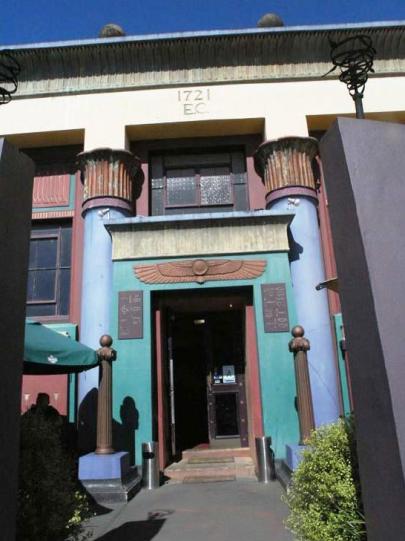
Historical Significance or Value This historic place was registered under the Historic Places Act 1993. The following text is from the original Historic Place Assessment Under Section 23 Criteria report considered by the NZHPT Board at the time of registration. Historical: The United Manawatu Lodge, No. 1721, E.C. was founded in Palmerston North in 1877. The first in the Manawatu, is regarded as the 'mother' lodge for the region. The present Broadway building, with its Egyptian motifs, was completed in 1931 on a site obtained in 1891/92, The Lodge sold the building in 1988 and it is now a café.

Physical Significance

This historic place was registered under the Historic Places Act 1993. The following text is from the original Historic Place Assessment Under Section 23 Criteria report considered by the NZHPT Board at the time of registration. Architectural: The only substantial extant feature of this Masonic 'temple' is its front facade upon which striking elements of an Inter War Egyptian Masonic style can be seen. Style indicators are: - large, bell-cap engaged columns; - hieroglyphics; - plain parapet; - twin globes.

Detail Of Assessed Criteria

This historic place was registered under the Historic Places Act 1993. The following text is from the original Historic Place Assessment Under Section 23 Criteria report considered by the NZHPT Board at the time of registration. (a) The extent to which the place reflects important or representative aspects of New Zealand history: The history of the United Manawatu Lodge, No, 1721, E.C. shows that it is of considerable regional significance. It was the first lodge founded in the Manawatu and even today is regarded as the 'mother' lodge. Its members included many civic and business leaders, reflecting the colonial trend for lodges and societies such as the Freemasons to provide European males with valuable business, social and political networks and their dependents with social support. (b) The association of the place with events, persons, or ideas of importance in New Zealand history: Events: No events are known to be associated with the building apart from the expected ones of construction and change of ownership; between 1931 and 1988, however, it would have housed the Lodge and been the venue for Masonic events and practices. Persons: The Lodge membership included many prominent businessmen and local authority politicians. Ideas: Freemasonry is shrouded in myth and mystique. It is first recorded in the late 16th century and is believed to have developed from even earlier guild practices. In New Zealand it provided mutual support for members and a charitable role for sick members and dependents.

Reference

Report Written By

A copy of the original report is available from the NZHPT Central region office Please note that entry on the New Zealand Heritage List/Rarangi Korero identifies only the heritage values of the property concerned, and should not be construed as advice on the state of the property, or as a comment of its soundness or safety, including in regard to earthquake risk, safety in the event of fire, or insanitary conditions.

Further Information

Current Usages

Former Usages

General Usage:: Civic Facilities

Specific Usage: Masonic Lodge

Themes

Web Links

Overview

Status

Listed

List Entry Status

Historic Place Category 2

Access

Private/No Public Access

List Number

7378

Date Entered

24th April 1997

Date of Effect

24th April 1997

City/District Council

Palmerston North City

Region

Horizons (Manawatū-Whanganui) Region

Legal description

pt SEc 26, Township of Palmerston North

Status

Listed

List Entry Status

Historic Place Category 2

Access

Private/No Public Access

List Number

7378

Date Entered

24th April 1997

Date of Effect

24th April 1997

City/District Council

Palmerston North City

Region

Horizons (Manawatū-Whanganui) Region

Legal description

pt SEc 26, Township of Palmerston North

Significance

Why is this place significant?

Cultural Significance

This historic place was registered under the Historic Places Act 1993. The following text is from the original Historic Place Assessment Under Section 23 Criteria report considered by the NZHPT Board at the time of registration. Cultural: The United Manawatu Lodge, No. 1721, E.C. provided a meeting place for Palmerston North freemasons for over 50 years. Social: An indication of the importance of Freemasonry to Palmerston North is provided by the fact that a lodge was opened in 1877, the year the population of 800 achieved borough status. Freemasonry dates back to the late 16th century and is believed to have developed from even earlier guild practices. In Palmerston North, as well as elsewhere in colonial New Zealand, Freemasonry played an important role in developing social, business and political networks for European males. The lodge's role in caring for dependents of dead members was important in the pre Welfare State era.

Historic Significance

Historical Significance or Value This historic place was registered under the Historic Places Act 1993. The following text is from the original Historic Place Assessment Under Section 23 Criteria report considered by the NZHPT Board at the time of registration. Historical: The United Manawatu Lodge, No. 1721, E.C. was founded in Palmerston North in 1877. The first in the Manawatu, is regarded as the 'mother' lodge for the region. The present Broadway building, with its Egyptian motifs, was completed in 1931 on a site obtained in 1891/92, The Lodge sold the building in 1988 and it is now a café.

Physical Significance

This historic place was registered under the Historic Places Act 1993. The following text is from the original Historic Place Assessment Under Section 23 Criteria report considered by the NZHPT Board at the time of registration. Architectural: The only substantial extant feature of this Masonic 'temple' is its front facade upon which striking elements of an Inter War Egyptian Masonic style can be seen. Style indicators are: - large, bell-cap engaged columns; - hieroglyphics; - plain parapet; - twin globes.

Why is this place Category 1 / Category 2?

Detail Of Assessed Criteria

This historic place was registered under the Historic Places Act 1993. The following text is from the original Historic Place Assessment Under Section 23 Criteria report considered by the NZHPT Board at the time of registration. (a) The extent to which the place reflects important or representative aspects of New Zealand history: The history of the United Manawatu Lodge, No, 1721, E.C. shows that it is of considerable regional significance. It was the first lodge founded in the Manawatu and even today is regarded as the 'mother' lodge. Its members included many civic and business leaders, reflecting the colonial trend for lodges and societies such as the Freemasons to provide European males with valuable business, social and political networks and their dependents with social support. (b) The association of the place with events, persons, or ideas of importance in New Zealand history: Events: No events are known to be associated with the building apart from the expected ones of construction and change of ownership; between 1931 and 1988, however, it would have housed the Lodge and been the venue for Masonic events and practices. Persons: The Lodge membership included many prominent businessmen and local authority politicians. Ideas: Freemasonry is shrouded in myth and mystique. It is first recorded in the late 16th century and is believed to have developed from even earlier guild practices. In New Zealand it provided mutual support for members and a charitable role for sick members and dependents.

Why is this place significant?

Cultural Significance

This historic place was registered under the Historic Places Act 1993. The following text is from the original Historic Place Assessment Under Section 23 Criteria report considered by the NZHPT Board at the time of registration. Cultural: The United Manawatu Lodge, No. 1721, E.C. provided a meeting place for Palmerston North freemasons for over 50 years. Social: An indication of the importance of Freemasonry to Palmerston North is provided by the fact that a lodge was opened in 1877, the year the population of 800 achieved borough status. Freemasonry dates back to the late 16th century and is believed to have developed from even earlier guild practices. In Palmerston North, as well as elsewhere in colonial New Zealand, Freemasonry played an important role in developing social, business and political networks for European males. The lodge's role in caring for dependents of dead members was important in the pre Welfare State era.

Historic Significance

Historical Significance or Value This historic place was registered under the Historic Places Act 1993. The following text is from the original Historic Place Assessment Under Section 23 Criteria report considered by the NZHPT Board at the time of registration. Historical: The United Manawatu Lodge, No. 1721, E.C. was founded in Palmerston North in 1877. The first in the Manawatu, is regarded as the 'mother' lodge for the region. The present Broadway building, with its Egyptian motifs, was completed in 1931 on a site obtained in 1891/92, The Lodge sold the building in 1988 and it is now a café.

Physical Significance

This historic place was registered under the Historic Places Act 1993. The following text is from the original Historic Place Assessment Under Section 23 Criteria report considered by the NZHPT Board at the time of registration. Architectural: The only substantial extant feature of this Masonic 'temple' is its front facade upon which striking elements of an Inter War Egyptian Masonic style can be seen. Style indicators are: - large, bell-cap engaged columns; - hieroglyphics; - plain parapet; - twin globes.

Why is this place Category 1 / Category 2?

Detail Of Assessed Criteria

This historic place was registered under the Historic Places Act 1993. The following text is from the original Historic Place Assessment Under Section 23 Criteria report considered by the NZHPT Board at the time of registration. (a) The extent to which the place reflects important or representative aspects of New Zealand history: The history of the United Manawatu Lodge, No, 1721, E.C. shows that it is of considerable regional significance. It was the first lodge founded in the Manawatu and even today is regarded as the 'mother' lodge. Its members included many civic and business leaders, reflecting the colonial trend for lodges and societies such as the Freemasons to provide European males with valuable business, social and political networks and their dependents with social support. (b) The association of the place with events, persons, or ideas of importance in New Zealand history: Events: No events are known to be associated with the building apart from the expected ones of construction and change of ownership; between 1931 and 1988, however, it would have housed the Lodge and been the venue for Masonic events and practices. Persons: The Lodge membership included many prominent businessmen and local authority politicians. Ideas: Freemasonry is shrouded in myth and mystique. It is first recorded in the late 16th century and is believed to have developed from even earlier guild practices. In New Zealand it provided mutual support for members and a charitable role for sick members and dependents.

Reference

Historical and Associated Iwi / Hapū / Whānau

Other Information

A copy of the original report is available from the NZHPT Central region office Please note that entry on the New Zealand Heritage List/Rarangi Korero identifies only the heritage values of the property concerned, and should not be construed as advice on the state of the property, or as a comment of its soundness or safety, including in regard to earthquake risk, safety in the event of fire, or insanitary conditions.

Historical and Associated Iwi / Hapū / Whānau

Other Information

A copy of the original report is available from the NZHPT Central region office Please note that entry on the New Zealand Heritage List/Rarangi Korero identifies only the heritage values of the property concerned, and should not be construed as advice on the state of the property, or as a comment of its soundness or safety, including in regard to earthquake risk, safety in the event of fire, or insanitary conditions.

Further Information

Former Usages

General Usage: Civic Facilities

Specific Usage: Masonic Lodge

Former Usages

General Usage: Civic Facilities

Specific Usage: Masonic Lodge

Location

Loading
Sign up to hear more

Get the latest heritage news, features and events delivered
straight to your inbox.

Subscribe