

List Entry Information
Status
Listed
List Entry Status
Historic Place Category 2
Access
Able to Visit
List Number
7467
Date Entered
31st March 2000
Date of Effect
31st March 2000
City/District Council
Christchurch City
Region
Canterbury Region
Legal description
RS 38025
Status
Listed
List Entry Status
Historic Place Category 2
Access
Able to Visit
List Number
7467
Date Entered
31st March 2000
Date of Effect
31st March 2000
City/District Council
Christchurch City
Region
Canterbury Region
Legal description
RS 38025
Why is this place significant?
Cultural Significance
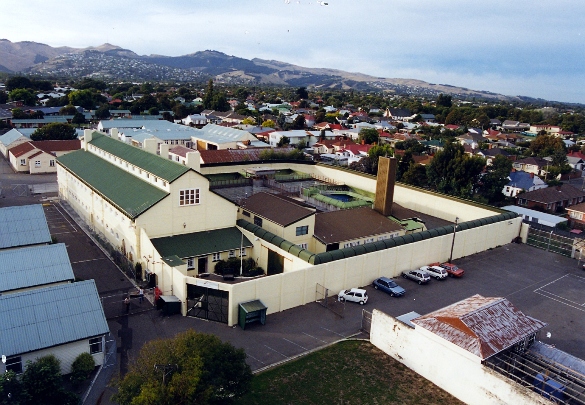
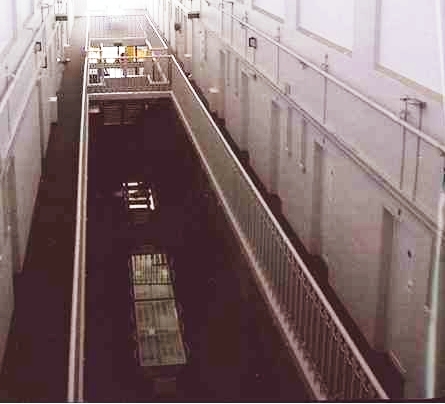
This historic place was registered under the Historic Places Act 1993. This report includes text from the original Historic Place Assessment Under Section 23 Criteria report considered by the NZHPT Board at the time of registration. Cultural: The prison serves as a built example of the changing notions of criminality and as an indication of the values of the colonists who managed to erect a prison before they had completed their Cathedral. It is symbolic of the transportation of British institutions to a new country. Social: Victorian penal theory believed that rehabilitation could be achieved through close monitoring with the prisoners being aware that they were under constant and unremitting observation and supervision. Prisons designed to these principles were to effect a long term modification of the inmate's behaviour. The design also reflects contemporary thinking on the place of work in society with provision for prisoners to undertake laundry work. Traditional: While it has no traditional values for Maori culture Addington obviously continued the European tradition of isolation and incarceration for those who transgressed social, moral or political norms.
Historic Significance
Historical Significance or Value This historic place was registered under the Historic Places Act 1993. This report includes text from the original Historic Place Assessment Under Section 23 Criteria report considered by the NZHPT Board at the time of registration. Historical: The early erection and the survival of this important public institution give it a historical uniqueness that is detailed under the other headings.
Physical Significance
This historic place was registered under the Historic Places Act 1993. This report includes text from the original Historic Place Assessment Under Section 23 Criteria report considered by the NZHPT Board at the time of registration. Aesthetic: Although an austere building as befits its function the industrial appearance is enlivened by the gothic (see details on architect) arching of the windows. Ornate internal landing bracketing and the rhythmic detailing of the corbels provide further small but significant embellishments. Architectural: The building is significant, as it is NZ's only prison built on the radial or 'panopticon' Model. Thus the 1874-76 cellblock is representative of Victorian penal theory and practice. Most particularly the layout of cells and gallery reflects the strong influence of standard British models. The architect, B.W. Mountfort was an important figure in Gothic Revival architecture especially in Canterbury. He is probably best known for his work on the Canterbury Provincial Council buildings. While long known to those with an interest in architecture his reputation is enhanced by the recent publication, 'A Dream of Spires', by Ian Lochhead. The gothic detailing may be seen as the 'signature' of Mountfort and a feature of Canterbury architecture of this period. Scientific: The manifestation of penal theory in the built form of radial prisons reflects the emergence and application of the new social sciences such as sociology, anthropology and criminology that emerged during the mid to late Victorian period. Technological: Addington Prison is an early example of concrete construction in New Zealand. The material was chosen for reasons of cost and the ability to be used by unskilled labour (the prisoners). The perimeter walls of the 1871-72 female gaol (cells now demolished) are among the oldest remaining concrete structures in Canterbury. They possibly were the first in the country to use a form of concrete block. Mountfort built other public structures in concrete about this time, namely Sunnyside Mental Hospital's West wing and the Lyttelton Gaol.
Why is this place Category 1 / Category 2?
Detail Of Assessed Criteria
This historic place was registered under the Historic Places Act 1993. This report includes text from the original Historic Place Assessment Under Section 23 Criteria report considered by the NZHPT Board at the time of registration. a) The extent to which the place reflects importance or representative aspects of New Zealand history: Addington Prison until its closure [in 1999] was [one of the older] surviving places of confinement for both men and women in NZ and serves as an example of Victorian colonial attitudes and practices as well as a reminder of changing attitudes towards criminals and the justice and correction systems. It is the direct application of an imported model with few references to local conditions. The prison was developed in two stages as funds permitted. This is indicative of the financial uncertainties and the demographic dynamism of the period. The location of the prison is reflective of the change in urban emphasis from Lyttelton, the site of the earlier prison, to Christchurch. The remnants of the women's gaol of 1871-72 not only attest to Victorian morality and the role of women but also to the fragility of the colonial economy. Only a portion of the original design was completed and part of what was constructed was essentially a temporary structure. It should be noted that other New Zealand public buildings (e.g. Parliament and the National Museum) were also never completed to their intended size. b) The association of the place with events, persons or ideas of importance in New Zealand history: It is likely that the decision to establish a female reformatory at Addington in 1870 was made in direct response to the Contagious Diseases Act of 1869. Introduced by a Christchurch group in an attempt to suppress the 'social evil' of prostitution it allowed for prostitutes to be jailed and treated in prison. Christchurch was the first district to be proclaimed a Contagious Diseases Area under the Act. The radial design (never completed) was the product of contemporary penal architectural Philosophy. The noted architect, B.W. Mountfort, called the plan a 'Panopticon' and said it was 'based on the most efficient system and after the latest and most approved examples'. Inmates were monitored from the 'hub' and three classifications of inmates were kept separate to avoid 'contamination'. That such a system, developed in Europe/America, was directly transposed to New Zealand is indicative of the country's status as an intellectual as well as an economic colony. Prison labour (for which they were paid) was used in the construction of the 1874-76 Cellblock. In the incorporation of three yards with day rooms and wash houses Mountfort provided for contemporary ideas on the place of work in prisons. Prisoners made and washed their own clothes and bedding and those for Lyttelton gaol, the emigration barracks and the orphanage. c) The potential of the place to provide knowledge of New Zealand history: Addington provides knowledge on the architectural, social, cultural and technological aspects of New Zealand history. d) The importance of the place to tangata whenua: It is not considered that Addington has a special importance for tangata whenua. e) The Community association with, or public esteem for the place: Public perception is strong although usually couched in negative terms because of the function and the severity of the building. It is a significant local landmark being the most prominent building in what was once predominately an area of worker's housing and industry. f) The potential of the place for public education: At present its potential is confined to the exterior but it is to be noted the there are good examples of Victorian jails used for tourism and public education (Melbourne Gaol, another Panopticon [for example]). g) The technical accomplishment or design or value of the place. See 'Technological'. h) The symbolic or commemorative value of the place: Addington Prison commemorates the many prisoners who spent time in its cells from the prostitutes of the 1870's to protestors of the 1981 Tour. i) The importance of identifying historic places known to date from early periods in New Zealand settlement. The early 1870's could be best described as 'late' early settler but it is of note that within twenty years of mass European settlement in Canterbury another reasonably substantial prison was considered necessary in addition to the Lyttelton Gaol. j) The importance of identifying rare types of historic places: Addington is [notable as a long-]surviving prison in New Zealand in substantially original form. ]Napier Prison (List No. 181), begun in 1862, is considered to be the most complete, purpose-built prison from the provincial government era (1853-1876).] . k) The extent to which the place forms part of a wider historical and cultural complex or historical or cultural landscape: Addington Prison is a landmark on the Southern or 'poorer' side of Christchurch, Thus its situation is safely away from the living and working areas of the middleclass who would have been the upper-level functionaries of the police, justice and penal systems. RECOMMENDATION: Category 2*, S23 (2) a, b, f, g: The Mountfort cell block and remaining portions of the original walls are the only original historic fabric with the newer administration/entrance areas not being of such importance even though they are now part of the history of the building. It is not intended that the registration cover the associated mostly prefab buildings and lean-to structures that are located adjacent to the main block or attached to the walls.
Why is this place significant?
Cultural Significance
This historic place was registered under the Historic Places Act 1993. This report includes text from the original Historic Place Assessment Under Section 23 Criteria report considered by the NZHPT Board at the time of registration. Cultural: The prison serves as a built example of the changing notions of criminality and as an indication of the values of the colonists who managed to erect a prison before they had completed their Cathedral. It is symbolic of the transportation of British institutions to a new country. Social: Victorian penal theory believed that rehabilitation could be achieved through close monitoring with the prisoners being aware that they were under constant and unremitting observation and supervision. Prisons designed to these principles were to effect a long term modification of the inmate's behaviour. The design also reflects contemporary thinking on the place of work in society with provision for prisoners to undertake laundry work. Traditional: While it has no traditional values for Maori culture Addington obviously continued the European tradition of isolation and incarceration for those who transgressed social, moral or political norms.
Historic Significance
Historical Significance or Value This historic place was registered under the Historic Places Act 1993. This report includes text from the original Historic Place Assessment Under Section 23 Criteria report considered by the NZHPT Board at the time of registration. Historical: The early erection and the survival of this important public institution give it a historical uniqueness that is detailed under the other headings.
Physical Significance
This historic place was registered under the Historic Places Act 1993. This report includes text from the original Historic Place Assessment Under Section 23 Criteria report considered by the NZHPT Board at the time of registration. Aesthetic: Although an austere building as befits its function the industrial appearance is enlivened by the gothic (see details on architect) arching of the windows. Ornate internal landing bracketing and the rhythmic detailing of the corbels provide further small but significant embellishments. Architectural: The building is significant, as it is NZ's only prison built on the radial or 'panopticon' Model. Thus the 1874-76 cellblock is representative of Victorian penal theory and practice. Most particularly the layout of cells and gallery reflects the strong influence of standard British models. The architect, B.W. Mountfort was an important figure in Gothic Revival architecture especially in Canterbury. He is probably best known for his work on the Canterbury Provincial Council buildings. While long known to those with an interest in architecture his reputation is enhanced by the recent publication, 'A Dream of Spires', by Ian Lochhead. The gothic detailing may be seen as the 'signature' of Mountfort and a feature of Canterbury architecture of this period. Scientific: The manifestation of penal theory in the built form of radial prisons reflects the emergence and application of the new social sciences such as sociology, anthropology and criminology that emerged during the mid to late Victorian period. Technological: Addington Prison is an early example of concrete construction in New Zealand. The material was chosen for reasons of cost and the ability to be used by unskilled labour (the prisoners). The perimeter walls of the 1871-72 female gaol (cells now demolished) are among the oldest remaining concrete structures in Canterbury. They possibly were the first in the country to use a form of concrete block. Mountfort built other public structures in concrete about this time, namely Sunnyside Mental Hospital's West wing and the Lyttelton Gaol.
Why is this place Category 1 / Category 2?
Detail Of Assessed Criteria
This historic place was registered under the Historic Places Act 1993. This report includes text from the original Historic Place Assessment Under Section 23 Criteria report considered by the NZHPT Board at the time of registration. a) The extent to which the place reflects importance or representative aspects of New Zealand history: Addington Prison until its closure [in 1999] was [one of the older] surviving places of confinement for both men and women in NZ and serves as an example of Victorian colonial attitudes and practices as well as a reminder of changing attitudes towards criminals and the justice and correction systems. It is the direct application of an imported model with few references to local conditions. The prison was developed in two stages as funds permitted. This is indicative of the financial uncertainties and the demographic dynamism of the period. The location of the prison is reflective of the change in urban emphasis from Lyttelton, the site of the earlier prison, to Christchurch. The remnants of the women's gaol of 1871-72 not only attest to Victorian morality and the role of women but also to the fragility of the colonial economy. Only a portion of the original design was completed and part of what was constructed was essentially a temporary structure. It should be noted that other New Zealand public buildings (e.g. Parliament and the National Museum) were also never completed to their intended size. b) The association of the place with events, persons or ideas of importance in New Zealand history: It is likely that the decision to establish a female reformatory at Addington in 1870 was made in direct response to the Contagious Diseases Act of 1869. Introduced by a Christchurch group in an attempt to suppress the 'social evil' of prostitution it allowed for prostitutes to be jailed and treated in prison. Christchurch was the first district to be proclaimed a Contagious Diseases Area under the Act. The radial design (never completed) was the product of contemporary penal architectural Philosophy. The noted architect, B.W. Mountfort, called the plan a 'Panopticon' and said it was 'based on the most efficient system and after the latest and most approved examples'. Inmates were monitored from the 'hub' and three classifications of inmates were kept separate to avoid 'contamination'. That such a system, developed in Europe/America, was directly transposed to New Zealand is indicative of the country's status as an intellectual as well as an economic colony. Prison labour (for which they were paid) was used in the construction of the 1874-76 Cellblock. In the incorporation of three yards with day rooms and wash houses Mountfort provided for contemporary ideas on the place of work in prisons. Prisoners made and washed their own clothes and bedding and those for Lyttelton gaol, the emigration barracks and the orphanage. c) The potential of the place to provide knowledge of New Zealand history: Addington provides knowledge on the architectural, social, cultural and technological aspects of New Zealand history. d) The importance of the place to tangata whenua: It is not considered that Addington has a special importance for tangata whenua. e) The Community association with, or public esteem for the place: Public perception is strong although usually couched in negative terms because of the function and the severity of the building. It is a significant local landmark being the most prominent building in what was once predominately an area of worker's housing and industry. f) The potential of the place for public education: At present its potential is confined to the exterior but it is to be noted the there are good examples of Victorian jails used for tourism and public education (Melbourne Gaol, another Panopticon [for example]). g) The technical accomplishment or design or value of the place. See 'Technological'. h) The symbolic or commemorative value of the place: Addington Prison commemorates the many prisoners who spent time in its cells from the prostitutes of the 1870's to protestors of the 1981 Tour. i) The importance of identifying historic places known to date from early periods in New Zealand settlement. The early 1870's could be best described as 'late' early settler but it is of note that within twenty years of mass European settlement in Canterbury another reasonably substantial prison was considered necessary in addition to the Lyttelton Gaol. j) The importance of identifying rare types of historic places: Addington is [notable as a long-]surviving prison in New Zealand in substantially original form. ]Napier Prison (List No. 181), begun in 1862, is considered to be the most complete, purpose-built prison from the provincial government era (1853-1876).] . k) The extent to which the place forms part of a wider historical and cultural complex or historical or cultural landscape: Addington Prison is a landmark on the Southern or 'poorer' side of Christchurch, Thus its situation is safely away from the living and working areas of the middleclass who would have been the upper-level functionaries of the police, justice and penal systems. RECOMMENDATION: Category 2*, S23 (2) a, b, f, g: The Mountfort cell block and remaining portions of the original walls are the only original historic fabric with the newer administration/entrance areas not being of such importance even though they are now part of the history of the building. It is not intended that the registration cover the associated mostly prefab buildings and lean-to structures that are located adjacent to the main block or attached to the walls.
Construction Professional
Name
Mountfort, Benjamin Woolfield
Type
Architect
Biography
Benjamin Woolfield Mountfort (1825-98) trained as an architect in England, in the office of Richard Cromwell Carpenter, a member of the Cambridge Camden Society (later the Ecclesiological Society). He arrived in Canterbury in 1850. Mountfort was New Zealand's pre-eminent Gothic Revival architect and, according to architectural historian Ian Lochhead, 'did most to shape the architectural character of nineteenth-century Christchurch.' The buildings he designed were almost exclusively in the Gothic Revival style. During his career he designed many churches and additions to churches; those still standing include the Trinity Congregational Church in Christchurch (1874), St Mary's Church in Parnell, Auckland and the Church of the Good Shepherd in Phillipstown, Christchurch (1884). In 1857 he became the first architect to the province of Canterbury. He designed the Canterbury Provincial Council Buildings in three stages from 1858 to 1865. The stone chamber of this building can be considered the greatest accomplishment of his career. He was involved in many important commissions from the 1870s, including the Canterbury Museum (1869-82) and the Clock-tower Block on the Canterbury College campus (1876-77). He was also involved in the construction of Christchurch's Cathedral and made several major modifications to the original design. Mountfort introduced a number of High Victorian elements to New Zealand architecture, such as the use of constructional polychromy, probably first used in New Zealand in the stone tower of the Canterbury Provincial Government Buildings (1859). Overall, his oeuvre reveals a consistent and virtually unerring application of Puginian principles including a commitment to the Gothic style, honest use of materials and picturesque utility. The result was the construction of inventive and impressive buildings of outstanding quality. He died in Christchurch in 1898. A belfry at the Church of the Good Shepherd in Phillipstown, the church he attended for the last ten years of his life, was erected in his honour.
Construction Details
Start Year
1874
Type
Original Construction
Construction Professional
Name
Mountfort, Benjamin Woolfield
Type
Architect
Biography
Benjamin Woolfield Mountfort (1825-98) trained as an architect in England, in the office of Richard Cromwell Carpenter, a member of the Cambridge Camden Society (later the Ecclesiological Society). He arrived in Canterbury in 1850. Mountfort was New Zealand's pre-eminent Gothic Revival architect and, according to architectural historian Ian Lochhead, 'did most to shape the architectural character of nineteenth-century Christchurch.' The buildings he designed were almost exclusively in the Gothic Revival style. During his career he designed many churches and additions to churches; those still standing include the Trinity Congregational Church in Christchurch (1874), St Mary's Church in Parnell, Auckland and the Church of the Good Shepherd in Phillipstown, Christchurch (1884). In 1857 he became the first architect to the province of Canterbury. He designed the Canterbury Provincial Council Buildings in three stages from 1858 to 1865. The stone chamber of this building can be considered the greatest accomplishment of his career. He was involved in many important commissions from the 1870s, including the Canterbury Museum (1869-82) and the Clock-tower Block on the Canterbury College campus (1876-77). He was also involved in the construction of Christchurch's Cathedral and made several major modifications to the original design. Mountfort introduced a number of High Victorian elements to New Zealand architecture, such as the use of constructional polychromy, probably first used in New Zealand in the stone tower of the Canterbury Provincial Government Buildings (1859). Overall, his oeuvre reveals a consistent and virtually unerring application of Puginian principles including a commitment to the Gothic style, honest use of materials and picturesque utility. The result was the construction of inventive and impressive buildings of outstanding quality. He died in Christchurch in 1898. A belfry at the Church of the Good Shepherd in Phillipstown, the church he attended for the last ten years of his life, was erected in his honour.
Construction Details
Start Year
1874
Type
Original Construction
Historical and Associated Iwi / Hapū / Whānau
Other Information
A copy of the original report is available from the NZHPT Southern region office Please note that entry on the New Zealand Heritage List/Rarangi Korero identifies only the heritage values of the property concerned, and should not be construed as advice on the state of the property, or as a comment of its soundness or safety, including in regard to earthquake risk, safety in the event of fire, or insanitary conditions.
Historical and Associated Iwi / Hapū / Whānau
Other Information
A copy of the original report is available from the NZHPT Southern region office Please note that entry on the New Zealand Heritage List/Rarangi Korero identifies only the heritage values of the property concerned, and should not be construed as advice on the state of the property, or as a comment of its soundness or safety, including in regard to earthquake risk, safety in the event of fire, or insanitary conditions.
Former Usages
General Usage: Law Enforcement
Specific Usage: Prison
Web Links
description:
Former Usages
General Usage: Law Enforcement
Specific Usage: Prison
Web Links
description:
