

List Entry Information
Status
Listed
List Entry Status
Historic Area
Access
Private/No Public Access
List Number
7510
Date Entered
31st May 2002
Date of Effect
31st May 2002
City/District Council
Wellington City
Region
Wellington Region
Extent of List Entry
The five baches occupy an area of land between the legal road and the base of the hill to the rear as indicated in the registration report and on the accompanying aerial map. King bach Grey's bach Boshier bach Stevenson bach (rear) Stevenson bach (front) - demolished in 2015.
Legal description
The five baches at Mestanes Bay are part of Lot 1 DP 26 786 54.3290.
Status
Listed
List Entry Status
Historic Area
Access
Private/No Public Access
List Number
7510
Date Entered
31st May 2002
Date of Effect
31st May 2002
City/District Council
Wellington City
Region
Wellington Region
Extent of List Entry
The five baches occupy an area of land between the legal road and the base of the hill to the rear as indicated in the registration report and on the accompanying aerial map. King bach Grey's bach Boshier bach Stevenson bach (rear) Stevenson bach (front) - demolished in 2015.
Legal description
The five baches at Mestanes Bay are part of Lot 1 DP 26 786 54.3290.
Why is this place significant?
Cultural Significance
This historic area was registered under the Historic Places Act 1993. The following text is from the original Historic Area Assessment Under Section 23 Criteria report considered by the NZHPT Board at the time of registration. CULTURAL SIGNIFICANCE: The baches at Mestanes Bay and Red Rocks form an important part of Wellington's south coast history, with a number of owners who are regularly in residence. There are strong social links between the bach owners in Mestanes Bay and those owners at Red Rocks. There is also a close association with local fishermen and divers and with other people who walk the coast for recreation.
Historic Significance
Historical Significance or Value This historic area was registered under the Historic Places Act 1993. The following text is from the original Historic Area Assessment Under Section 23 Criteria report considered by the NZHPT Board at the time of registration. HISTORICAL SIGNIFICANCE: Unlike a number of baches around the coastline in other parts of New Zealand, those at Mestanes Bay and at Red Rocks, a short distance away to the west, have retained their originality. Four of the baches have an early history associated with land use on the rugged south Wellington coast, and one (King bach) has historical associations with coastal defence. As the population of Seatoun, Lyall Bay, Island Bay and Owhiro Bay in Wellington grew, urban development pushed its way to the remote bays along the coastline. Subdivision turned these communities into suburbs and the simple bach was either extended for use as a family home, or demolished to build a modern villa. This has not happened at Mestanes Bay or at Red Rocks, thus preserving the unique character of these baches. Paul Thompson, in his book, 'The Bach,' published in 1985 says: 'The humble nature of the (Wellington) region's baches suggests that the owners, when building or buying, made a deliberate decision to accept simplicity, to have a place, free of pretensions, which they could escape to.' The King bach, formerly Bilby's bach (1928) like the bach at Red Rocks owned by Ross and Adele Perkins, was taken by the Army during WWll and used as a supply depot for a fortified observation post on the cliff above Sinclair Point. Provisions and armaments were trucked to this bach at what was then road end, packed on foot, or taken by horse and dray the three kilometres to Beadles bach, now Perkins bach, where they were stored and hoisted to the fort above.
Physical Significance
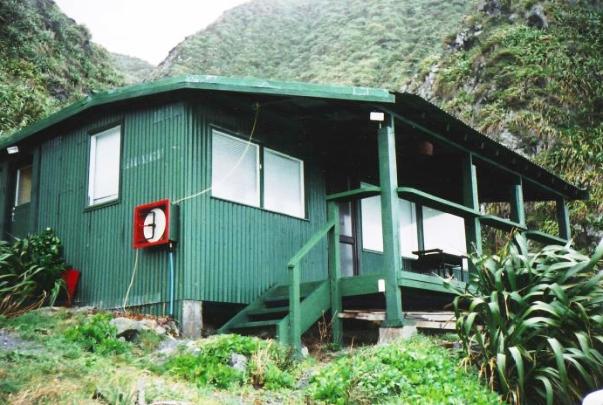
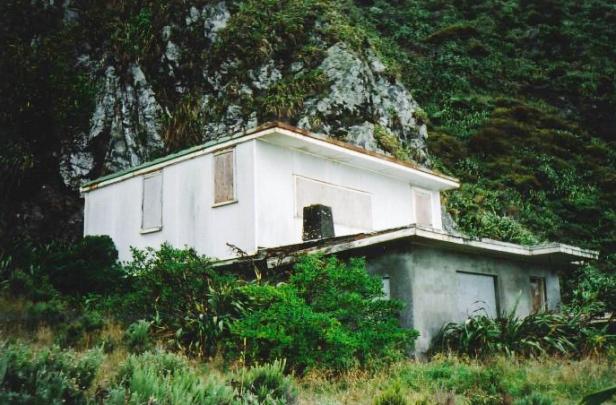
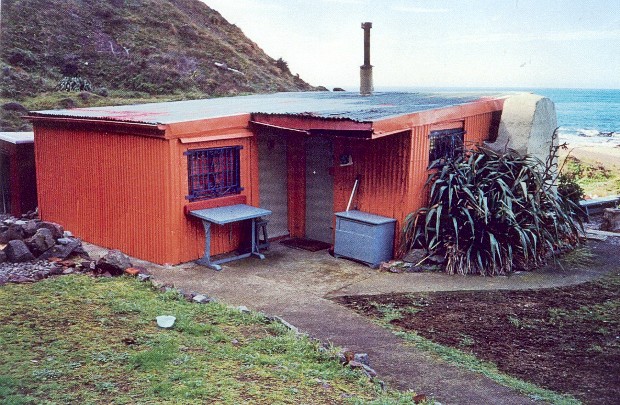
This historic area was registered under the Historic Places Act 1993. The following text is from the original Historic Area Assessment Under Section 23 Criteria report considered by the NZHPT Board at the time of registration. ARCHITECTURAL (PHYSICAL) SIGNIFICANCE: The baches at Mestanes Bay, like Red Rocks, have no outstanding architectural merit. However, they reflect a style of construction for the period they were built in. The King bach was built by Max Boshier. It is of concrete construction with a low slung roof, almost flat on both sides. Very little is known about the Grey Bach, owned by Terry Grey, circa 1960. It is said to have been built by two brothers, surname Usher, and was the last of the baches built in this Bay. The Stevenson bach (front) c.1910 owned by Chris Stevenson has grown out of what was the stables for the quarry operation. Chris Stevenson's rear bach, also 1910, is said to have been built by the original quarry owners on the south coast, Tonks and Andrews, as a lunch room and shelter for staff. It is timber framed with a stucco finish. Extensions have been added over the years. The Frontin - Rollet families owned the bach for many years.
Why is this place significant?
Cultural Significance
This historic area was registered under the Historic Places Act 1993. The following text is from the original Historic Area Assessment Under Section 23 Criteria report considered by the NZHPT Board at the time of registration. CULTURAL SIGNIFICANCE: The baches at Mestanes Bay and Red Rocks form an important part of Wellington's south coast history, with a number of owners who are regularly in residence. There are strong social links between the bach owners in Mestanes Bay and those owners at Red Rocks. There is also a close association with local fishermen and divers and with other people who walk the coast for recreation.
Historic Significance
Historical Significance or Value This historic area was registered under the Historic Places Act 1993. The following text is from the original Historic Area Assessment Under Section 23 Criteria report considered by the NZHPT Board at the time of registration. HISTORICAL SIGNIFICANCE: Unlike a number of baches around the coastline in other parts of New Zealand, those at Mestanes Bay and at Red Rocks, a short distance away to the west, have retained their originality. Four of the baches have an early history associated with land use on the rugged south Wellington coast, and one (King bach) has historical associations with coastal defence. As the population of Seatoun, Lyall Bay, Island Bay and Owhiro Bay in Wellington grew, urban development pushed its way to the remote bays along the coastline. Subdivision turned these communities into suburbs and the simple bach was either extended for use as a family home, or demolished to build a modern villa. This has not happened at Mestanes Bay or at Red Rocks, thus preserving the unique character of these baches. Paul Thompson, in his book, 'The Bach,' published in 1985 says: 'The humble nature of the (Wellington) region's baches suggests that the owners, when building or buying, made a deliberate decision to accept simplicity, to have a place, free of pretensions, which they could escape to.' The King bach, formerly Bilby's bach (1928) like the bach at Red Rocks owned by Ross and Adele Perkins, was taken by the Army during WWll and used as a supply depot for a fortified observation post on the cliff above Sinclair Point. Provisions and armaments were trucked to this bach at what was then road end, packed on foot, or taken by horse and dray the three kilometres to Beadles bach, now Perkins bach, where they were stored and hoisted to the fort above.
Physical Significance
This historic area was registered under the Historic Places Act 1993. The following text is from the original Historic Area Assessment Under Section 23 Criteria report considered by the NZHPT Board at the time of registration. ARCHITECTURAL (PHYSICAL) SIGNIFICANCE: The baches at Mestanes Bay, like Red Rocks, have no outstanding architectural merit. However, they reflect a style of construction for the period they were built in. The King bach was built by Max Boshier. It is of concrete construction with a low slung roof, almost flat on both sides. Very little is known about the Grey Bach, owned by Terry Grey, circa 1960. It is said to have been built by two brothers, surname Usher, and was the last of the baches built in this Bay. The Stevenson bach (front) c.1910 owned by Chris Stevenson has grown out of what was the stables for the quarry operation. Chris Stevenson's rear bach, also 1910, is said to have been built by the original quarry owners on the south coast, Tonks and Andrews, as a lunch room and shelter for staff. It is timber framed with a stucco finish. Extensions have been added over the years. The Frontin - Rollet families owned the bach for many years.
This historic area was registered under the Historic Places Act 1993. The following text is from the original Historic Area Assessment Under Section 23 Criteria report considered by the NZHPT Board at the time of registration. Description: The five baches at Mestanes Bay are part of Lot 1 DP 26786 54.3290 and occupy an area of land between legal road and the base of the hill to the rear, being approximately 3 metres to the north of each batch and, extending from approximately 5 metres west of the Stevenson bach to 3 metres east of the King bach. Mestanes Bay, also known as Messimes Bay and Mestons Bay originally had eight baches. Only five remain. The baches are as follows: 1. King bach - 1928 2. Boshier bach - 1933 3. Grey's bach - 1960. Owned by Terry Grey. Formerly known as King's bach. 4. Stevenson bach (rear) c.1910 owned by Chris Stevenson. Formerly known as the Frontin - Rollet bach. 5. Stevenson bach (front) c.1910 - Formerly the Stables bach. Also owned by Chris Stevenson.
This historic area was registered under the Historic Places Act 1993. The following text is from the original Historic Area Assessment Under Section 23 Criteria report considered by the NZHPT Board at the time of registration. Description: The five baches at Mestanes Bay are part of Lot 1 DP 26786 54.3290 and occupy an area of land between legal road and the base of the hill to the rear, being approximately 3 metres to the north of each batch and, extending from approximately 5 metres west of the Stevenson bach to 3 metres east of the King bach. Mestanes Bay, also known as Messimes Bay and Mestons Bay originally had eight baches. Only five remain. The baches are as follows: 1. King bach - 1928 2. Boshier bach - 1933 3. Grey's bach - 1960. Owned by Terry Grey. Formerly known as King's bach. 4. Stevenson bach (rear) c.1910 owned by Chris Stevenson. Formerly known as the Frontin - Rollet bach. 5. Stevenson bach (front) c.1910 - Formerly the Stables bach. Also owned by Chris Stevenson.
Historical and Associated Iwi / Hapū / Whānau
Completion Date
20th February 2003
Report Written By
Helen McCracken
Other Information
A copy of the original report is available from the NZHPT Central region office Please note that entry on the New Zealand Heritage List/Rarangi Korero identifies only the heritage values of the property concerned, and should not be construed as advice on the state of the property, or as a comment of its soundness or safety, including in regard to earthquake risk, safety in the event of fire, or insanitary conditions. This historic area was registered under the Historic Places Act 1993. The following text is from the Board Minutes 3 May 2002, Proposal for registration, considered by the NZHPT Board at the time of registration.
Historical and Associated Iwi / Hapū / Whānau
Completion Date
20th February 2003
Report Written By
Helen McCracken
Other Information
A copy of the original report is available from the NZHPT Central region office Please note that entry on the New Zealand Heritage List/Rarangi Korero identifies only the heritage values of the property concerned, and should not be construed as advice on the state of the property, or as a comment of its soundness or safety, including in regard to earthquake risk, safety in the event of fire, or insanitary conditions. This historic area was registered under the Historic Places Act 1993. The following text is from the Board Minutes 3 May 2002, Proposal for registration, considered by the NZHPT Board at the time of registration.
Current Usages
Uses: Accommodation
Specific Usage: Bach/crib
Former Usages
General Usage: Accommodation
Specific Usage: Bach/crib
Current Usages
Uses: Accommodation
Specific Usage: Bach/crib
Former Usages
General Usage: Accommodation
Specific Usage: Bach/crib
Location
Sign up to hear more
Get the latest heritage news, features and events delivered
straight to your inbox.
