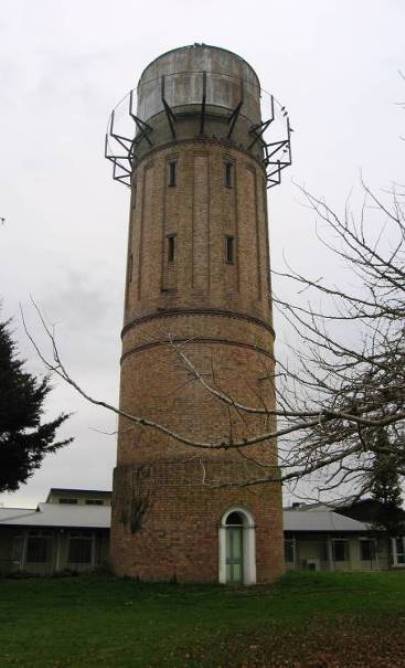
The Cambridge Water Tower is a rare example of a brick water tower designed to provide a high pressure town water supply. There had been public meetings about developing a municipal water supply as far back as 1881, but a combination of problems around the sourcing of supply, cost, and the lack of resident voting support meant the project did not get underway until the following century; by which time the town's population was over 1000. Built in 1902,1903, providing water supplied from Moon's Spring (as first suggested in 1882), the Water Tower is also a rare example of the civil engineer Ashley John Hunter's design work, being both decorative and functional. The water supply was quickly followed by the formation of the much needed Cambridge Fire Brigade, which in turn lowered insurance premiums in the town. The supply opened up greater opportunities for those involved in the plumbing business, softened the impact of drought and is likely to have improved public health.
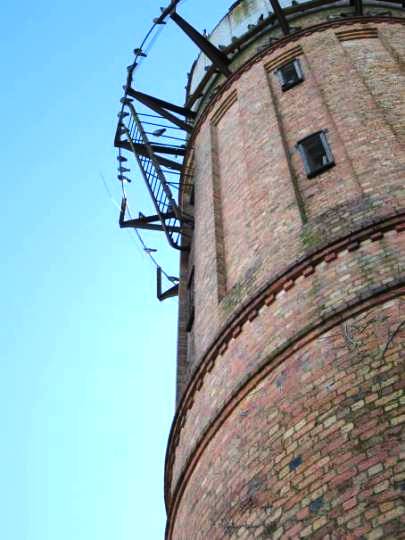
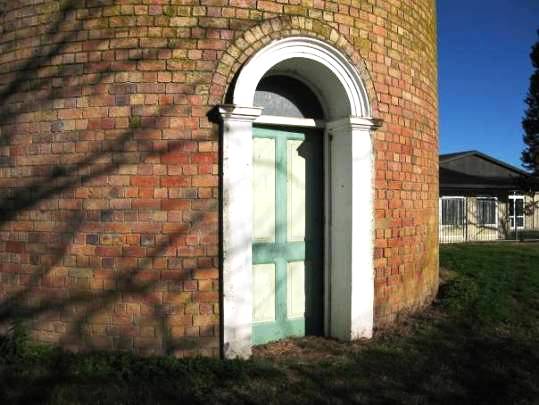
Despite involving a large number of suppliers and construction workers from all over the Auckland province, the water supply project went very smoothly under Hunter's direction. Constructed with handmade bricks, the 21 meter circular structure dwarfs other buildings in the town at a height of 24 metres supported by a lower wall over half a metre thick. The bricks were laid in the English bond pattern, renowned for its strength, with decorative features that included a regular pattern of bluestone topped ventilation windows and several horizontal rows of brick dentil pattern. The tower is topped by a brick-lined metal tank topped by a lead roof that held 90922 litres (20,000 gallons): a volume intended to cater for the town's growth.
The growth of the town and its associated pressures for improved services infrastructure resulted in the tower being operative for only a short period (20-23 years). It was decommissioned c1926 when it was found that the springs it drew from were being polluted as the town's population grew. Despite it no longer having a practical purpose, the Water Tower had in its relatively short life, already become a local icon and landmark, it is a tribute to its community and Council that it has survived.
Little appears to have been done to the tower since, apart from the lead roof being repaired before the Second World War. A risk assessment report was compiled in 1997 by the Hamilton architecture and engineering firm Stiles and Hooker. By 2009 it appears to be suffering from benign neglect, having lost the tank's roof and almost the entire outer walkway around the top of the tower. Nonetheless, it is an impressive landmark greeting those arriving in Cambridge from the north west on State Highway One and it has been incorporated into the logo of the Resthaven retirement complex next door.
Internationally, Water Towers are being increasingly recognised as important heritage landmarks that are rapidly disappearing. The only other registered example of a brick municipal water tower in the online Register is in Invercargill (Record No. 394, Category I). The Cambridge Water Tower is featured in a number of heritage trails, was featured in a Waipa Heritage Inventory and is listed in the Waipa District Plan as a Category A building. The tower was a significant step forward in Mayor Buckland's determined efforts to set Cambridge up with the amenities of a prosperous and growing town. Hunter took part in many engineering projects in the upper North Island, including supervising the construction of the Hamilton Railway Bridge (Record. No. 4201, Category II), the construction of new railway and road routes as well as coal mining developments. The tower is the most eye catching example of Hunter's design and supervisory work identified at this time. Cambridge remains a rural support town and its buildings do not rise above two stories, making the 24 metre Water Tower a strong local landmark. It's location on a Payne Park recreation reserve and rest area alongside a busy section of State Highway One provides an excellent opportunity to educate about the tower's construction, the people behind it and its use.