Located on Forest Road in Parewanui, the Memorial to Bess commemorates a horse that served in the Wellington Mounted Rifles Regiment in the First World War. At the commencement of the First World War in 1914, the New Zealand Parliament sent a Mounted Rifles Brigade of three regiments composed of three squadrons each. The strength of the force was: 354 officers, 7412 other ranks, and 3753 horses When the Wellington Mounted Rifles Regiment was formed on 8 August 1914, the horse commemorated by the 'Memorial to Bess' was presented to the Regiment. The horse was allocated to Captain Charles Guy Powles, who renamed it 'Bess'. In October 1914, Powles and Bess left New Zealand with the Main Body of the New Zealand Mounted Rifles and 3817 other horses. They served together in Egypt (1915), Sinai (1916), Palestine (1917-1918), France (1918), Germany (1919) and England (1920).
Of the 3817 New Zealand horses that served during the war, Bess was one of a very small number of horses to return home. On her death in 1934, Powles erected the small stone memorial over her grave. A unique and important memorial, the structure is the only one in the country to commemorate the horses that served New Zealand during the First World War. It is also one of the very few to commemorate the role of horses in war in the world. The best-known other example is now located in Albany in Australia. It is a statue of Bess and NZMR Brigade Trooper Clutha MacKenzie and commemorates the war-time contribution of mounted troops. The Memorial to Bess reminds New Zealanders of the strategic role played by horses in the war, and of the strong bonds created between soldiers and their horses, who became 'part of the soldier's very life'. In the absence of other memorials commemorating their contribution, the private Memorial to Bess has become a memorial to all New Zealand's horses that served during the war and has significant commemorative value for the soldiers who were unable to bring their horses back to New Zealand. It is held in high esteem both locally and nationally.
Of the 3817 New Zealand horses that served during the war, Bess was one of a very small number of horses to return home. On her death in 1934, Powles erected the small stone memorial over her grave. A unique and important memorial, the structure is the only one in the country to commemorate the horses that served New Zealand during the First World War. It is also one of the very few to commemorate the role of horses in war in the world. The best-known other example is now located in Albany in Australia. It is a statue of Bess and NZMR Brigade Trooper Clutha MacKenzie and commemorates the war-time contribution of mounted troops. The Memorial to Bess reminds New Zealanders of the strategic role played by horses in the war, and of the strong bonds created between soldiers and their horses, who became 'part of the soldier's very life'. In the absence of other memorials commemorating their contribution, the private Memorial to Bess has become a memorial to all New Zealand's horses that served during the war and has significant commemorative value for the soldiers who were unable to bring their horses back to New Zealand. It is held in high esteem both locally and nationally.
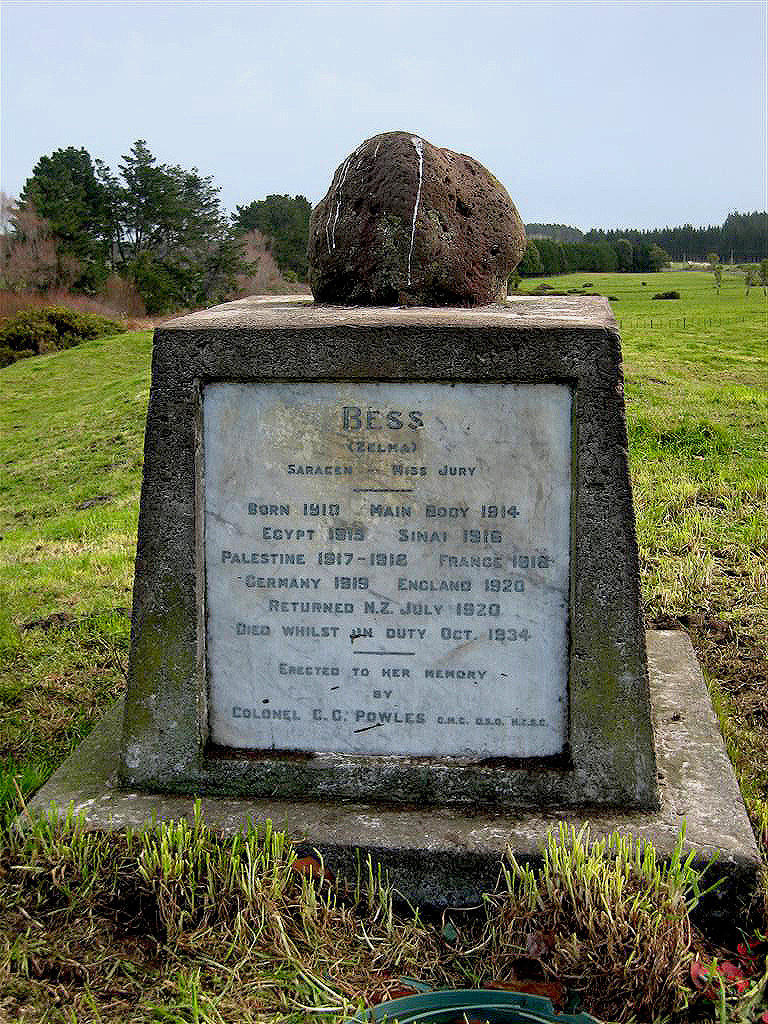
Memorial to Bess, Bulls. 2004 | R O'Brien | Heritage New Zealand Pouhere Taonga
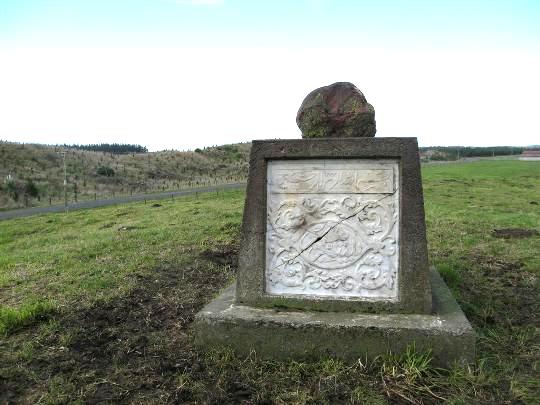
Memorial to Bess, Bulls | Heritage New Zealand Pouhere Taonga
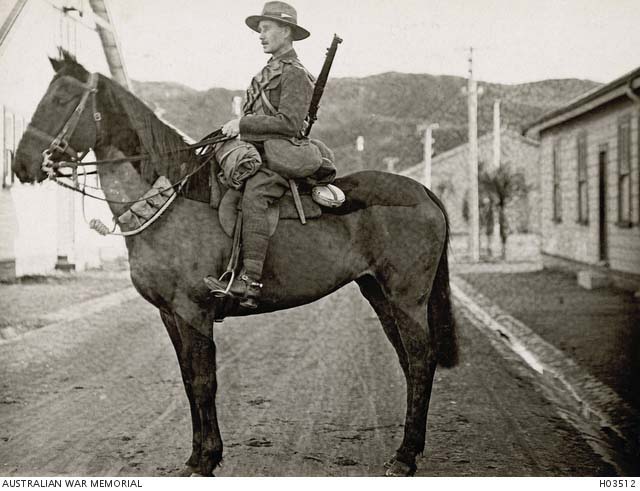
Memorial to Bess, Bulls. A New Zealand mounted rifleman with full equipment. The horse he is riding is 'Bess', mount of Colonel Guy Powles, and the only New Zealand horse to return from the First World War. Part of Australian War Memorial Photograph Collection Ref # H03512 | Public Domain
Memorial to Bess, Bulls. 2004 | R O'Brien | Heritage New Zealand Pouhere Taonga
Memorial to Bess, Bulls | Heritage New Zealand Pouhere Taonga
Memorial to Bess, Bulls. A New Zealand mounted rifleman with full equipment. The horse he is riding is 'Bess', mount of Colonel Guy Powles, and the only New Zealand horse to return from the First World War. Part of Australian War Memorial Photograph Collection Ref # H03512 | Public Domain