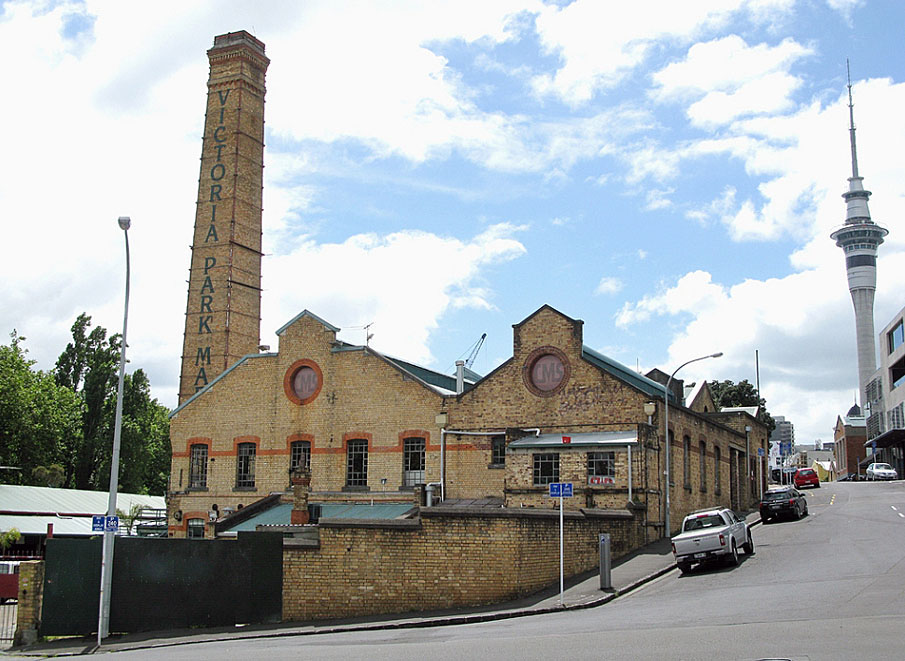
The Freemans Bay foreshore and reclamation works
The site of the former Auckland Municipal Destructor and Depot was originally part headland and part foreshore of Freemans Bay. Freemans Bay was incorporated in the initial 1212 ha (3000 acre) block sold to the Crown by Ngati Whatua in 1840, after which industrial activity such as saw milling and boat construction began. In 1851 New Zealand's first steamship, the Governor Wynyard, was built and launched in the bay. Traditionally associated with working- class activity, the land immediately adjacent to the Destructor and Depot site, between Union Street and College Hill, was occupied in the 1850s by squatters who built huts out of tin, canvas and other materials. In 1865, the squatters were removed and the site was cleared. Freemans Bay continued to contain many of the poorest homes in Auckland until the late twentieth century.
Charles Heaphy provided a detailed description of the headland from the 1840s to 1867, having surveyed Drake Street (today the southern boundary of the Destructor and Depot site) in 1852 and 1858. Heaphy stated that there was originally a small pathway across the headland, which people used to traverse Freemans Bay. After 1861, a carriageway was constructed and a guardhouse (blockhouse) was built alongside it.
The blockhouse and another small building on its western side were probably built before 1863. It was one of ten blockhouses designed to protect Auckland from an attack by the Waikato tribes. Military tensions were high in Auckland in the late 1850s following the emergence of the Kingitanga movement, a pan - tribal movement which asserted Maori independence and resisted land sales to Europeans. War broke out in the Waikato in 1863, lasting until the following year. Militia from the blockhouse apparently patrolled the clay roads from Freemans Bay to Ponsonby and Point Chevalier.
The land was formally reserved as a site for a blockhouse in August 1874. Less than a year later, in March 1875, the Crown granted the Mayor, Councillors and Citizens of the City (now Auckland City Council) the headland north of Drake Street including the blockhouse for municipal purposes. The blockhouse was demolished and the foreshore north of Drake Street was reclaimed sometime between 1875 and 1879, forming the site of the former Auckland Municipal Destructor and Depot, and also creating Patteson Street (now called Victoria Street West). Part of the headland is likely to have been pushed into the foreshore during reclamation work, leaving a steep slope between Drake Street and the reclaimed land below. It is possible that rubble from the blockhouse formed part of the reclamation material as well.
Extensive land reclamation was planned for Auckland from the very beginning of its development. Felton Matthew's 'Original Plan of Auckland' in 1840 showed Freemans Bay reclaimed and divided into allotments, as were other bays in the new town of Auckland. Critics at the time claimed that reclamation would be too costly for the local community to carry out. However, over the next 50 years extensive reclamation was undertaken, providing the local authorities with a leasehold income and enabling the Harbour Board to finance extensive facilities and docks.
In 1880, the Harbour Board leased the land between Drake Street and Patteson Street to Auckland City Council. A few months later, the Council began sub-tenanting several small allotments on the site, except a piece of land on the corner of Union and Drake Street, which it leased to 'Aucklanders'. Records from the 1880s to 1905 show that the site was settled by a combination of industrial, retail and residential tenants, who occupied both single and double -storey timber buildings. By 1903 there were about 26 occupants listed.
J. Billington and Son, grocers, had a particularly long association with the site, leasing land on the corner of Union and Drake Street from 1880 to 1898. The earliest occupant of the Patteson Street frontage was Michael Cook, a glasswork manufacturer, who was listed in the 1882 Auckland Directory and continued operating on the site until 1900 or 1901. Photographs of the area show a brick chimney, which is thought to have been part of the glassworks factory. Another notable occupant of the site was the Kauri Timber Company, which first occupied part of the land (lot c8025) in 1888. The company is listed as having stables on the site from 1891. These, were still operating when the Destructor opened in 1905. The rest of the site was also densely populated with commercial and residential properties.
Urban waste disposal and construction of the Destructor Building
In the late 1800s, Auckland rubbish was disposed of unsystematically, as was waste in other emerging cities around New Zealand. During this period, the Auckland City Council contracted the Auckland Sanitary Company to collect rubbish. The Company ran eight carts a day around the city, depositing the rubbish in various waste-grounds around and outside the city, including on reclaimed land in Freemans Bay in 1876, and in Grey Lynn at a later date. Individuals also used vacant allotments and unfenced properties as dumping grounds, particularly in the 1890s, when residents were required to pay for the disposal of rubbish themselves.
In the late -1800s, public health was the biggest issue facing the local council. Established in the early 1870s, the Ccouncil attempted to address concern by establishing a water supply from Western Springs and building an abattoir in the same locality, but its oscillating financial strategies resulted in little public confidence in its ability to provide basic necessities for Auckland. In the early 1900s the Council experienced a period of strong leadership, under which it carried out a number of landmark achievements, including the construction of the Destructor and Power Generator Building as well as the construction of Grafton Bridge (1907-1910) and other projects. This occurred at a broadly similar time to New Zealand's transformation from a colony to Dominion in 1907, when local authorities were eager to demonstrate their capabilities as responsible guardians of the British Imperial project.
By 1900 the rat population was unprecendently high and there were concerns about possible out-breaks of typhoid and the bubonic plague, as had recently happened in Sydney. In the same year, the Council debated the possibility of building a refuse destructor which could separate and process all the various components of the rubbish into profitable assets. In 1901, the Council planned to embark on a £100,000 expansion plan for Auckland and held a poll to determine public priorities for services. The Destructor was voted third priority and the Council allocated £10,000 for its construction.
Following the poll, the Council commissioned Mr R. W. Richards, a Civil Engineer from Sydney, to make recommendations on a suitable refuse destructor for Auckland. In 1897, Richards had been commissioned by Sydney City Council to visit destructors in Europe. Destructors were being built at this time throughout the industrialised world. Richards recommended to the Auckland authorities a Goddard Massey and Warner destructor called the 'Perfectus', a model recently built in Sydney. He enclosed plans and a quote from the recommended company.
In 1903, the Council selected the Freemans Bay site for the location of the destructor. The Harbour Board had turned down the Council's initial selection at Mechanics Bay, but accepted the Freemans Bay site as its leases were due to expire there following year. The Harbour Board exchanged the site for the Council's financial interest in a site in Emily Place (the site of Admiralty House). The Council recommended that the buildings on the Freemans Bay site be demolished. The chosen site was evidently unpopular with Freemans Bay residents as a number of petitions and letters protesting against the decision to locate the destructor there were received by the Council.
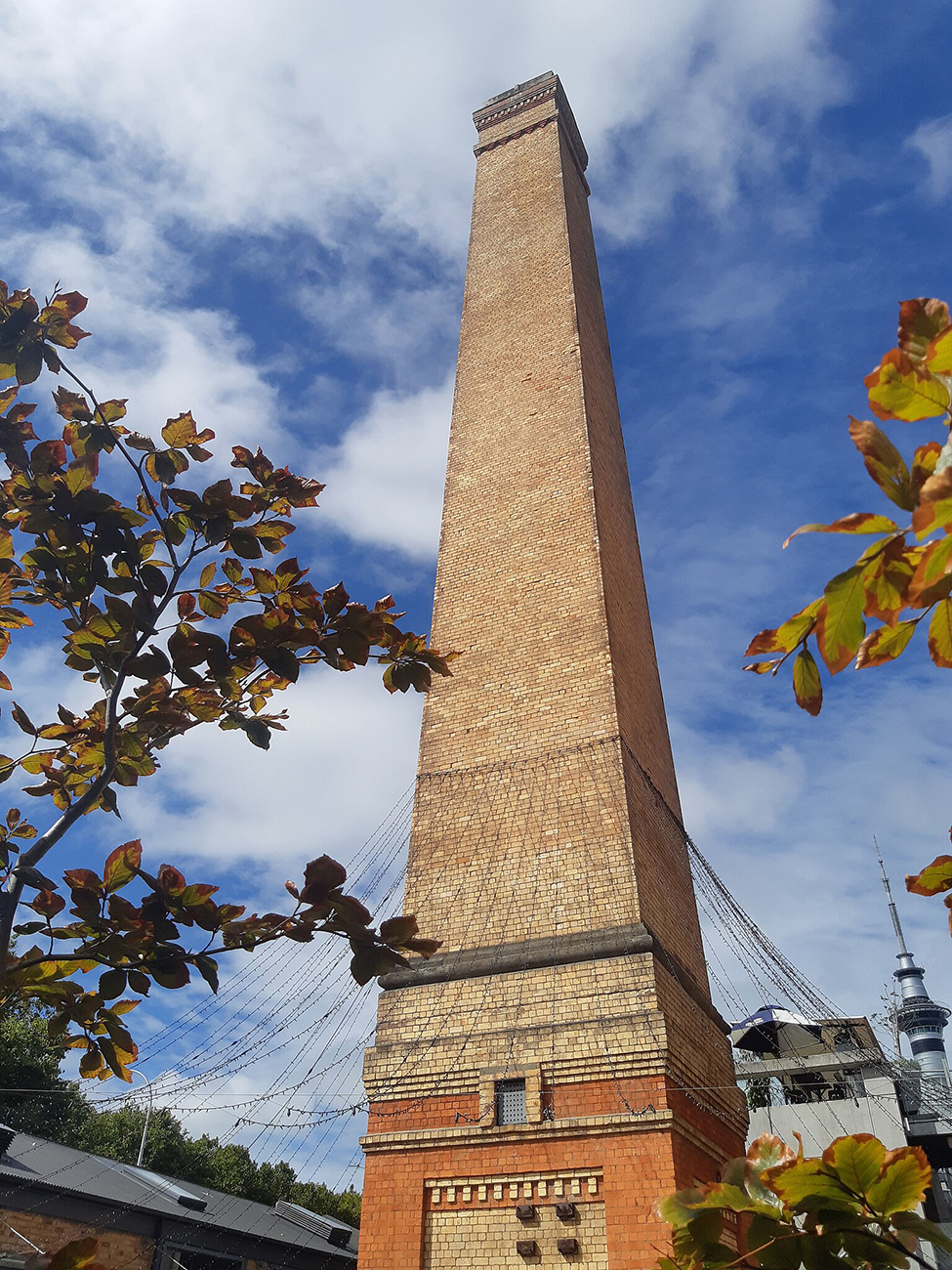
The Council went against Richard's recommendations and selected a 'Meldrum Four Grate Simplex Destructor', designed by the Meldrum Brothers of England. The Council accepted the £16,840 tender of the Sydney firm, J. Barre Johnson & Co. for its installation. The Meldrum Brothers provided the designs for the machinery components as well as the building itself. These were signed by J. Barre Johnson & Co. and the City Engineer, Alfred Wrigg in 1904. The contract was let on 28 November 1904. The construction of the destructor and an associated chimney was undertaken by Mr Featherstone under the supervision of Mr Forsyth. At 38 m high, the chimney was to be a prominent Auckland landmark and a visible sign of progress.
The Destructor Building was opened on 22 June 1905, although it was July before it began operating. The Auckland Mayor, Mr Arthur Myers, was hauled up the inside the chimney in a bosun's chair to lay its last brick. Mr J. B. Meldrum attended the opening ceremony as a representative of J. Barre, Johnson & Co. He commented that the destructor was the most up to date in the world.
It was one of three Destructor Buildings built in New Zealand. The Christchurch Destructor and Power Generator complex, also designed by the Meldrum Brothers, was built in 1903. An early destructor erected in Wellington in 1888 was replaced by a larger operation in 1908.
The Auckland destructor was built with a capacity to burn 60 tons of rubbish daily. Initially, the destructor complex comprised the Destructor Building, its Chimney, a weighbridge and adjacent Weighbridge Office adjoining Union Street, and a Clinker and Screening plant. It was designed so that rubbish carts arriving at the complex first stopped at the weighbridge to record the weight of the load. The carts then proceeded to Drake Street where they accessed the building via a ramp and tipped the rubbish on to a tipping platform. The rubbish was then tipped into two large hoppers, where it was raked over and sorted by workers. Pulp and decayed fruit passed into a combustion chamber, alongside the ovens, and entered the ovens once it was dry. All other material dropped from the hoppers through chutes into the rear of the ovens below, where it dried before it was propelled into the furnaces. Maximum heat in the furnaces was maintained by a forced draught from steam generated in two Babcock & Wilcox boilers, which were heated by the burning rubbish. Prior to construction of the power generator, water from the boilers was used for bathing facilities for staff and possibly members of the general public as well.
The residue from the ovens consisted of clean ashes and tin ware, and was drawn off for use by the Council for constructing footpaths. The residue also contained clinker, the low quality remnants from the ovens, which was removed in hoppers via a tramway to the clinker and screening plant where it was crushed using a motor mill and taken to a separate dump. The clinker building was not used for long, because the Council decided to take the clinker straight to the tip.
The grounds in front of the Destructor were divided into two areas, according to their purpose. The western part, known as the destructor yard, was used for transporting the clinker to the clinker and screening plant. The eastern part, known as the cart yard, was used to store the rubbish carts.
Representatives of the Meldrum Brothers operated the Destructor for a year, before the Council took over operations. In August 1905, the Council recommended that a brick wall be constructed around the building. In 1906, after it had been operating for a year, the destructor was burning 20 tons of rubbish daily and was found to be operating efficiently.
Electricity generation and construction of the Power Generator Building
The Power Generator Building began operating in combination with the destructor on 10 February 1908. The Council had been investigating possibilities for installing a generator since 1880 but had delayed implementing a scheme while it investigated ways to prevent a private company gaining a monopoly on the rights to supply electricity, as had happened with the supply of gas. Gas had been available in Auckland since 1865, but remained expensive and only provided lighting and cooking fuel for a small number of customers. Public impatience for an electricity supply was reflected in the media at the time. The New Zealand Herald commented in 1888 that '"'More light'" has been the cry of the citizens of Auckland for a long time past'. Lighting was particularly required for illuminating public places as a safety issue.
By 1900, the Council had granted itself exclusive rights over electricity production, when it passed the Auckland Electric Lighting Act 1900. In 1903, the Tramways Company provided a small amount of electric power to lights in Queen Street and a few private customers. In 1902, the Council commissioned Mr W. G. T. Goodman of Noyes Brothers, Sydney, to investigate the options for providing an electricity supply for Auckland. Goodman recommended that the Council continue to purchase electricity supplies from the Tramway Company.
Auckland remained exclusively reliant on gas for longer than many other towns in New Zealand. By this time, both Christchurch and Wellington had power generators. The Christchurch plant was a combined destructor and generator plant, which used the hot gases from the furnaces to generate electricity. Combined plants were a new concept at this time. Before the turn of the century, only two such plants had been constructed, but by 1906 over 60 had been constructed around the world.
The Council considered commissioning a combined plant right up to the time that it let the contract for the construction of the destructor. In 1904 it had commissioned John Henry, an electrical engineer, to report on possibilities for generating electricity in Auckland including a combined destructor and power generator. But the Council decided to go ahead with the destructor, perhaps influenced by the opinion of R.W. Richards who, in his 1902 report, had considered combined plants to be 'over-rated'.
By the time the destructor had been constructed, the Council had changed its mind. During the construction period, the Council commissioned Mr. W. Goodman of Noyes Brothers to report on the generative possibilities of the Patteson Street destructor. Goodman was the Chief Electrical Engineer in Dunedin from 1903 until 1907, when he became Chief Engineer and then Manager of the Municipal Tramways Trust of South Australia. He was knighted in 1932. In his March 1906 report, Mr Goodman commented that it was unfortunate that the Council had not included a power generator in the original plans for the destructor as it was not laid out suitably for a power generator and the site was not suitable either. Mr Goodman had requested that the chimney flue be enlarged before it was constructed, but the contractors had refused to take any responsibility for a change to its plans.
Mr Goodman recommended building a power generator against the east side of the destructor. Goodman recommended an initial instillation of two 225- kilowatt generators, one boiler and one storage battery. The local media was critical of the scheme, describing it as 'a wretched makeshift'.
In early 1907, the Council accepted the tender of Turnbull and Jones Limited for the construction of the plant at a cost of £11,808. Goodman was employed as the consulting engineer. By this time, estimates for the demand had already increased so much that additions to the generator were needed before construction had been completed. To do this, the Council required additional funds to the £25,000 already approved for the plant. The Council held a public poll to sanction loans for public works around the city, including the completion of the destructor at £8,000 and the construction of the power generator at £25,000. The loans were approved and construction continued.
The Power Generator Building consisted of a boiler room, a generator room and a battery room. The boiler room was built against the east external wall of the Destructor Building. Its north elevation was constructed in timber with corrugated steel cladding. The building had a very high (about 6 metres) single space at ground level, with a mezzanine floor at its northern end. The first floor was accessed from Drake Street and had a concrete floor, supported by a grid of steel columns. The generator room was in the middle of the Power Generator Building. It had a single, triple-height space, over 12.5 m high, with access from courtyard level. The battery room was a single-storey structure on the eastern side of the Building. A condenser water-cooling tower was attached to the southern side of the battery room, with its suspended tank located over the pavement on Drake Street.
The first consumers were 12 private individuals, but by the end of the first year there were about 200 customers. Within a few months, coal was added to the furnaces because the steam supply from the refuse was inadequate and unsatisfactory. It soon became clear that the power generator was inadequate. The Council admitted shortly after it had been constructed that Auckland would now be the worst-lit city in the Dominion 'were it not that in the principal business streets the shop fronts are generally so brilliantly illuminated with gas lamps of large power'. By 1912, the inner city streets were still not all lit.
In 1913, the Council opened the Kings Wharf Station and closed down the Patteson Street power generator. The King's Wharf Station was better equipped to deal with the demands of Auckland. It was soon supplying power to approximately 1500 consumers, with surplus power going to the Tramways Company.
Construction of stables and other municipal depot buildings
In 1915, the Stables Buildings opened. They were situated 30 metres east of the Power Generator Building, on land that had been dug out from the steep slope land between Drake and Patteson Streets.
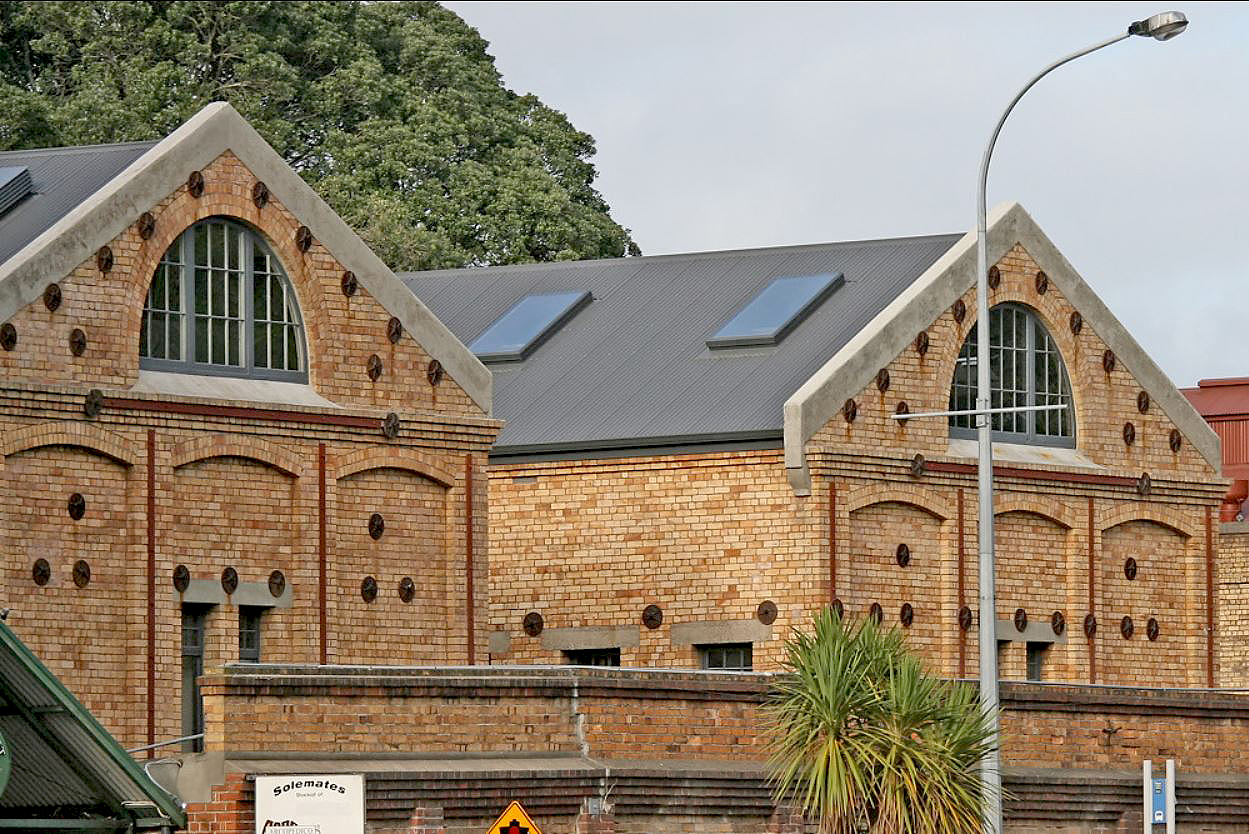
The Stables Buildings comprised of twin, three-level brick buildings with concrete floors. The ground and first floor levels could collectively accommodate 94 horses, containing a series of timber stalls lit by small windows which ran along each of the long walls. Three slightly boxeslarger stalls may have been used as loose boxes for sick or resting horses. Access for horses at ground level was by way of entrances at the north end of both buildings, while access to the first floor was provided by a cobbled ramp between the two buildings, which rose to a landing near the southern end of the buildings. Underneath the ramp were two lavatories and a manure pit - the latter to contain waste from the stalls. The top floor, accessible from Drake Street, provided storage for fodder and gear, and was lit by skylights in the roof.
Internationally, double- and multi-storey stabling was a largely urban phenomenon, symptomatic of growing industrialization. In Britain, it was particularly associated with large carriers such as the Road Car Company - London's second-largest omnibus firm - and railway companies, including the Great Western Railway. At Paddington Station, London, a multi-storey stable provided accommodation for about 600 horses on four levels. Double-storey stabling was, however, extremely unusual in New Zealand, where space was at less of a premium than in Northern Hemisphere cities, and transport companies generally smaller in scale.
The Council had been planning to erect stables on this site for a number of years. At the time the stables opened, horse transport was at its height, although its popularity began to decline in the following decade due to the increased affordability of motorised vehicles. In his 1902 report, R.W. Richards had recommended that the Council include stabling in the destructor plan, as other destructor plants in major cities around the world had done. In 1910, the Council had plans drawn up for a different layout for the stables, alongside public pools which were designed to use steam from the Destructor Building (as with the Christchurch Tepid Baths, which had opened in 1908). The tepid baths plans never eventuated. The Council allocated the stables site in 1911 and approved the plans in 1914. Construction may have begun towards the end of the year.
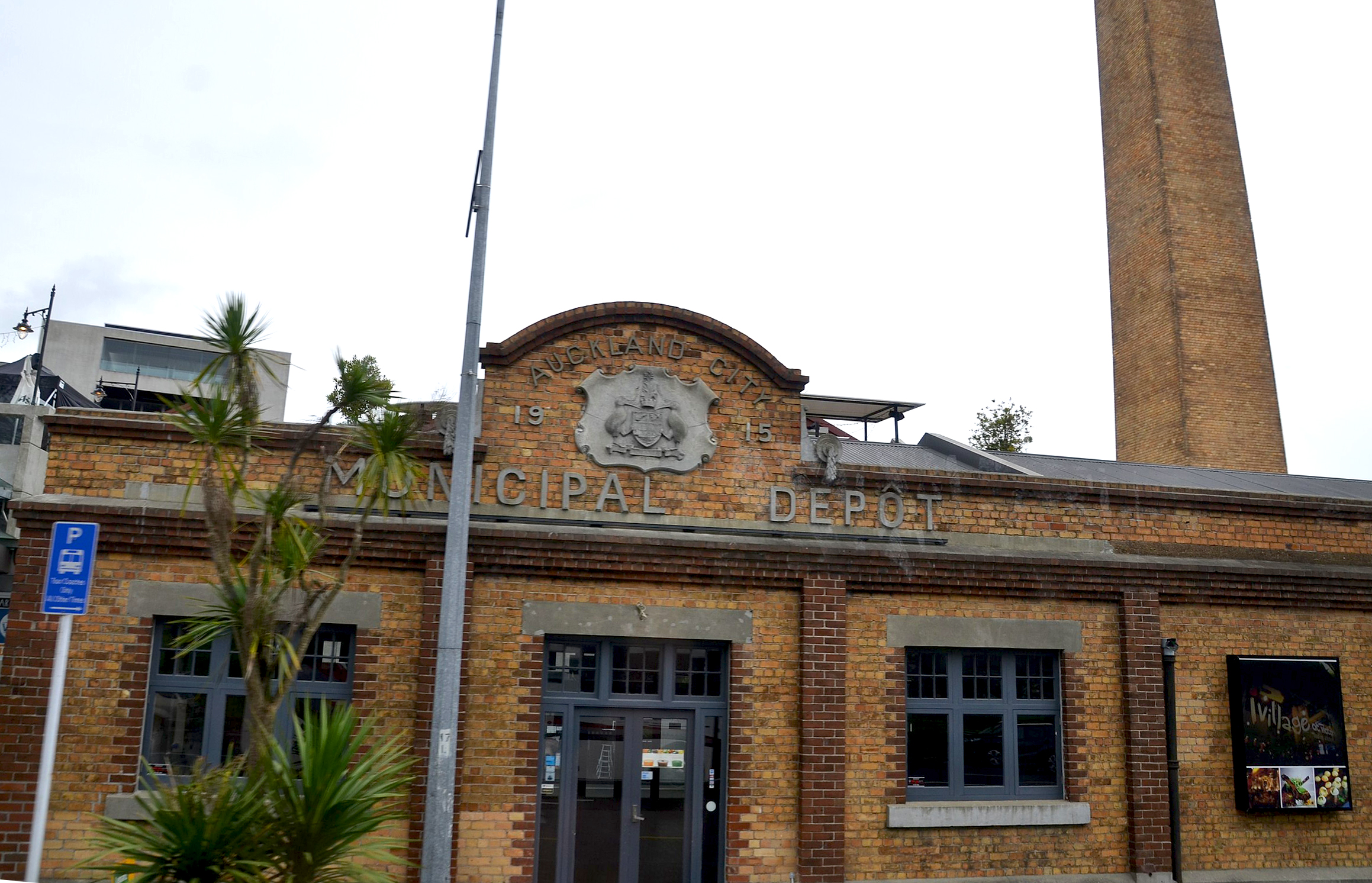
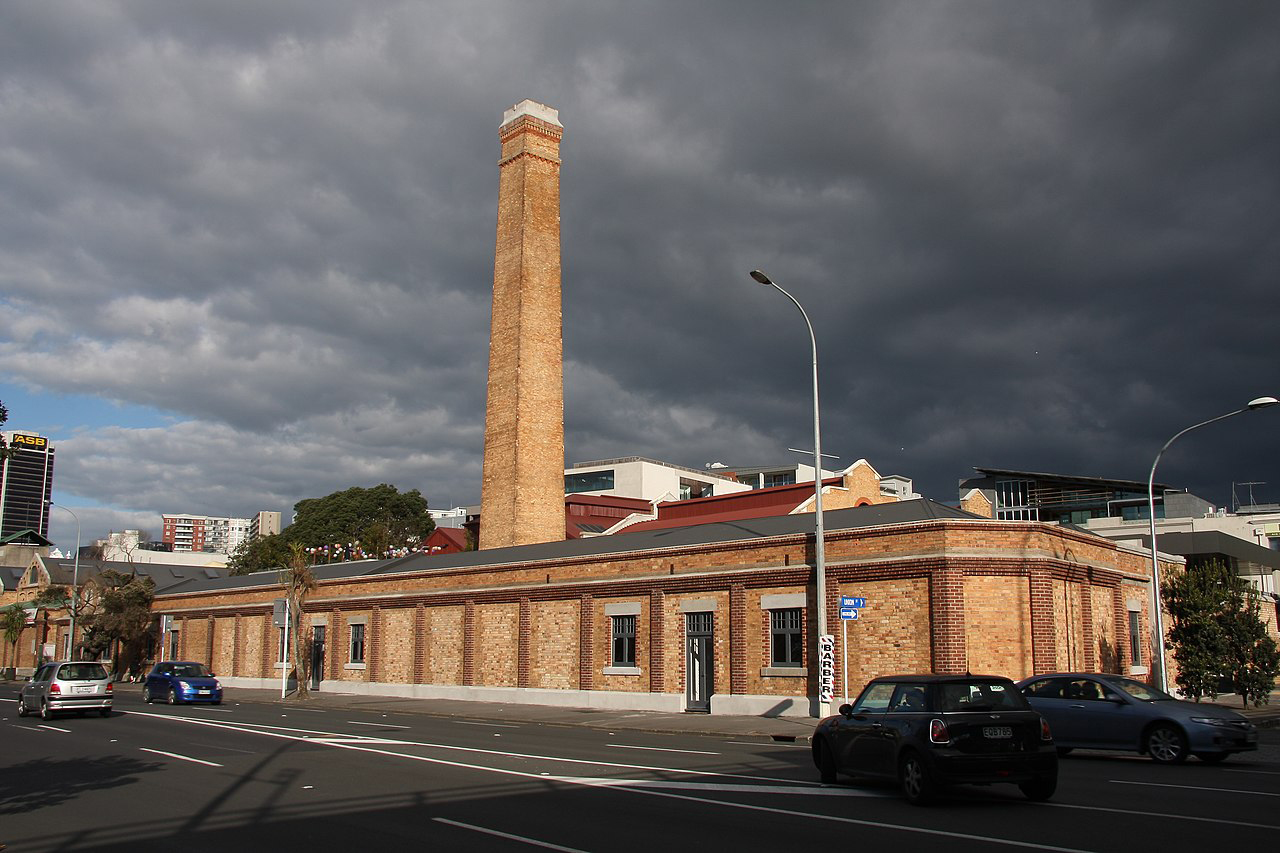
In 1918, the Council opened the Depot Buildings on the Patteson Street site. Prior to this, work depots had been scattered throughout the city. The Depot Buildings comprised two single-storey brick buildings which ran almost the length of the Patteson Street entrance, with an entry from the street separating them.
The West Depot was used for council administration offices while the East Depot was used for garaging the refuse wagons and for storage. A 1921 photo of the East Depot shows there were stable doors on the southern façade, indicating that they were used as additional shelter for the horses.
The Depot Buildings were relatively unadorned, reflecting their utilitarian function. At the time of construction the length of the north elevation had a series of brick piers along the Victoria Street façade. There were very few openings on the northern façade, with windows on the east end of the west building only. Soon afterwards, a series of matching, six-lights, rectangular windows were inserted.
Subsequent use and modifications
The Power Generator Building was the first compenent in the Complex to cease operating, closing down in 1913. The Stables were used for their original purpose until 1952 and the depot continued operating until 1968. When the destructor closed down in 1972, the Auckland City Council closed down its operations on the site.
In its early years of operation, the destructor operated very efficiently. By 1910 it was burning 10,000 tons of rubbish every year. Rubbish was collected twice weekly from securely covered metal bins outside people's homes. Rubbish from the City, Parnell, Grey Lynn and Eden Terrace was burned in the destructor, while rubbish from Remuera and Epsom was tipped, limed and covered with earth at a site in Meadowbank Road.
After the power generator ceased operation in 1913, the building was converted into Council workshops. The boiler room was used for the storage of materials and in later years the upper storey was used as the Council garage and an abandoned car pound. The generator room was used by coach builders, carpenters and painters, while the Battery Room was converted into a blacksmith and farrier shop.
In the late 1910s, concerns about public health were high. As a result of an influenza epidemic, a 'cleanse the city' campaign was carried out for one week a year, between 1919 and 1922. During these weeks, extra loads of rubbish were carted to the destructor, with particular effort made to kill and destroy rats. During these years, the Council also systematically inspected every building for its sanitary conditions.
In 1921, fears arose again over a possible bubonic plague outbreak. This prompted the Minister of Health to instruct the Auckland Council to make additions to the destructor and to make plans to construct a new one. At the same time, the Minister recommended that Dunedin build a destructor, a recommendation that was never carried out. By this time, the Patteson Street destructor was working at nearly full capacity, burning 35-40 tons daily plus an additional 12 tons weekly from private sources, such as commercial waste and confidential material. Rubbish was collected by twelve, two-horse wagons and two single teams which operated from 7 am to 5 pm.
In 1922 the Destructor Building was extended towards Drake Street, in a similar architectural style to the original building. Four additional ovens were built, almost doubling the capacity of the destructor, from 60 to 100 tons daily. The existing boilers were used to supply hot water to the depot toilet facilities and the public showers which bordered Union Street.
By the 1930s there were 13 employees at the destructor, working one week on and one week off. There were concerns about the effects of the work on the health of the employees, which Councillors admitted was 'not of the most pleasing character'. By this time, new lorries had been purchased for the collection of rubbish.
Sometime in the 1930s, the name Patteson Street was changed to Victoria Street and the the Complex became known at the Victoria Street Depot.
In the mid -1930s, the destructor was struggling to keep up, its work load having increased 40 percent between 1927 and 1937. The City Engineer recommended enlarging the Destructor, but the plans were never carried out. By this time, other rubbish disposal methods were becoming more widely used. Controlled tips were opened at Grey Lynn Park and Garnet Road in 1937, and a pilot composting plant using sludge heaps was opened in Point England in 1949.
In 1947 the destructor was burning 30 tons of rubbish per day. Throughout the 1940s and 1950s, day-to-day maintenance was carried out on the destructor, including repairing the roof and the boilers but its overall condition continued to deteriorate.
The stables closed in 1952, when it was decided that horses would no longer be used to collect rubbish. By this time, the main form of transport was the motor car. The top floor of the stables may well have been used for garaging cars since the 1930s. No further stables were allowed to be built in Auckland from 1942, to try and curb the spread of mosquitoes and flies. At the time stables closed, the stall partitions were removed.
After the stables closed, they were adapted for use for repairing vehicles, manufacturing joinery and for storage. Changes included the laying of a concrete floor and the installation of kitchen and toilet facilities in a corner of the building.
In 1960, the City Engineer reported that the destructor was at the end of its economic life and that parts of it were on the point of collapse. He recommended building a new destructor as well as extending controlled tipping and building a compost plant. By this time, the destructor was only burning 10 percent of the daily total of 115 tons being disposed of, most of it paper, because of its state of disrepair. Major repairs were carried out on the burning chambers in 1968.
In the same year, the Council moved out of the Depot Buildings, transferring to the new Cook Street property. The buildings were then leased to private tenants.
Up until the 1960s, a group of timber buildings occupied the eastern corner of the Auckland Municipal Destructor and Depot site. It is possible that these were the Billington Buildings, which had first been recorded on this site in 1882
The Destructor Building finally closed down on 2 October 1972. Apart from the rising maintenance costs, the destructor now broke the new smoke emission regulations and people were less receptive to the noise and pollution it emitted.
Conversion into a retail market
In 1974, the Council sought to demolish the buildings on the site, but a stay of execution was granted. The Council attempts to demolish the buildings galvanized the Freemans Bay community, who formed a committee headed by the Reverend Bruce Hucker, which fought for the conservation of the site and the revival of the local community.
Freemans Bay was still largely a working class area at this time. Much of the housing stock had been cleared in about 1950, as part of a Council scheme to revitalize the area. However, most of the area was still undeveloped almost 20 years later, when the scheme was stopped. In 1968, the Northern Motorway was built a short distance to the west of the Destructor Complex.
In 1979 the Council passed the Old Victoria Street Depot Empowering Act, which gave it special powers to negotiate with developers over the site. One of the main opponents of the bill was Councillor Jim Anderton. That same year, the Council invited proposals for the development of the site.
By this time, the buildings were in a dilapidated state. The Destructor and Power Generator Buildings were largely unused and only the upper floor of the West Stables Building was used by a cabinetmaker. The central courtyard (formerly the cart yard) was leased to a panelbeater who also had a workshop in the West Depot. The destructor yard continued to be used by the Council as the street cleaning department base until 1981. Rubbish was deposited at the base and subsequently removed in bulk bins.
In 1983 the Council sold the site to a private company, Victoria Park Market Limited, for $1,025,000. The Company opened a market on the site at the end of 1983, with a focus on arts and crafts, clothing, souvenirs and cafés.
The Company carried out major structural upgrading and restoration works on the site, which it completed in several stages. In 1984, the Stables and the East Depot were upgraded and refurbished. The stables renovation involved structural upgrading, leveling of the floor screed and the opening of a 'Celebrity Walk' on the ramp, which includes the hand and footprints of notable New Zealanders such as Billy T. James (1948-1991), Sir Robert Muldoon (1921-1992), Dame Whina Cooper (1895-1994), Possum Bourne (1956-2003) and Sir Peter Blake (1948-2002). The East Depot renovation involved structural upgrading, the addition of internal walls, the rebuilding of the roof structure and the addition of a conservatory.
In 1990 the West Depot was upgraded, followed by the upgrading of the Destructor and Power Generator Building. The destructor renovation involved the demolition of the concrete hoppers and the installation of a new mezzanine floor at a lower level than the tipping platform. The Power Generator Building renovation involved re-cladding the north façade of the boiler and generator rooms with plywood and the battery room with fibre- cement sheets. It also involved re-sheathing the roofs and constructing a first and second floor in the generator room. A concrete deck was also constructed along the face of the Destructor and Power Generator Buildings at this time.
The Complex was purchased by the Kitchener Group in 2003, for a reported $14,000,000. The site continues to operate as a market in 2006.