

The site was the centre of a family-based flour mill and associated activities since the early 1850s. The archaeological remains associated with these activities have potential to provide information on the activities associated with the Somerville family and their commercial activities. The Mill Race and Wheel Pit provide insight into the flour mill technologies associated with the Somerville Mill.
The sites together provide a description of the way of life in a small family based settlement. The Somervilles' extensive flour milling, agricultural and store-keeping activities formed the social and community nucleus around which the wider settlement at Waitepeka developed. They were a pivotal family in the South Otago area.
List Entry Information
Status
Listed
List Entry Status
Historic Place Category 2
Access
Private/No Public Access
List Number
7723
Date Entered
23rd November 2007
Date of Effect
23rd November 2007
City/District Council
Clutha District
Region
Otago Region
Extent of List Entry
Registration includes the land described as Allotments 1-4 Deeds Plan 269 (part of RT OT264/16 and RT OT262/287), Otago Land District, and the buildings and structures associated with Somerville Park thereon, and their fittings and fixtures. (Refer to Extent of Registration Map in Appendix 1 of the Registration Report for further information).
Legal description
Allotments 1-4 Deeds Plan 269 (part of RT OT264/16 and RT OT262/287), Otago Land District.
Status
Listed
List Entry Status
Historic Place Category 2
Access
Private/No Public Access
List Number
7723
Date Entered
23rd November 2007
Date of Effect
23rd November 2007
City/District Council
Clutha District
Region
Otago Region
Extent of List Entry
Registration includes the land described as Allotments 1-4 Deeds Plan 269 (part of RT OT264/16 and RT OT262/287), Otago Land District, and the buildings and structures associated with Somerville Park thereon, and their fittings and fixtures. (Refer to Extent of Registration Map in Appendix 1 of the Registration Report for further information).
Legal description
Allotments 1-4 Deeds Plan 269 (part of RT OT264/16 and RT OT262/287), Otago Land District.
Why is this place significant?
Historic Significance
Historical Significance or Value Somerville Park has historical significance. The Somerville family's occupation of the area goes back to the early 1850s, and is part of the history of the earliest organised European settlement in the South Otago area. The Somervilles' extensive flour milling, agricultural and store-keeping activities formed the social and community nucleus around which the wider settlement at Waitepeka developed. They were a pivotal family in the South Otago area.
Physical Significance
Archaeological Significance or Value Somerville Park has archaeological significance. The site was the centre of a family-based flour mill and associated activities since the early 1850s. The archaeological remains associated with these activities have potential to provide information on the activities associated with the Somerville family and their commercial activities. The Mill Race and Wheel Pit provide insight into the flour mill technologies associated with the Somerville Mill. The sites together provide a description of the way of life in a small family based settlement.
Why is this place Category 1 / Category 2?
Detail Of Assessed Criteria
Section 23 (2) Assessment (a) The extent to which the place reflects important or representative aspects of New Zealand history The history of Somerville Park is representative of the experience of pioneering European settlers establishing their business enterprises which provided essen-tial services to the fledgling settlements in provincial areas of New Zealand. The history of this place also illustrates the experience of settlers when their ven-tures were not always successful, where a flourishing potential centre of the community failed to develop. (i) The importance of identifying historic places known to date from early periods of New Zealand settlement. Somerville Park relates to the 1850s onwards, which is the early period of European settler occupation of this part of South Otago. The story of the Somerville family is one which has its roots in the pioneering period of Otago's European history. Summary of Significance or Values This place was assessed against, and found it to qualify under the following criteria: a and i. Conclusion It is considered that this place qualifies as a Category II historic place.
Why is this place significant?
Historic Significance
Historical Significance or Value Somerville Park has historical significance. The Somerville family's occupation of the area goes back to the early 1850s, and is part of the history of the earliest organised European settlement in the South Otago area. The Somervilles' extensive flour milling, agricultural and store-keeping activities formed the social and community nucleus around which the wider settlement at Waitepeka developed. They were a pivotal family in the South Otago area.
Physical Significance
Archaeological Significance or Value Somerville Park has archaeological significance. The site was the centre of a family-based flour mill and associated activities since the early 1850s. The archaeological remains associated with these activities have potential to provide information on the activities associated with the Somerville family and their commercial activities. The Mill Race and Wheel Pit provide insight into the flour mill technologies associated with the Somerville Mill. The sites together provide a description of the way of life in a small family based settlement.
Why is this place Category 1 / Category 2?
Detail Of Assessed Criteria
Section 23 (2) Assessment (a) The extent to which the place reflects important or representative aspects of New Zealand history The history of Somerville Park is representative of the experience of pioneering European settlers establishing their business enterprises which provided essen-tial services to the fledgling settlements in provincial areas of New Zealand. The history of this place also illustrates the experience of settlers when their ven-tures were not always successful, where a flourishing potential centre of the community failed to develop. (i) The importance of identifying historic places known to date from early periods of New Zealand settlement. Somerville Park relates to the 1850s onwards, which is the early period of European settler occupation of this part of South Otago. The story of the Somerville family is one which has its roots in the pioneering period of Otago's European history. Summary of Significance or Values This place was assessed against, and found it to qualify under the following criteria: a and i. Conclusion It is considered that this place qualifies as a Category II historic place.
Construction Details
Start Year
1860
startYearCirca
Finish Year
1870
finishYearCirca
Type
Original Construction
Description
Construction of flour mill, General Store and John Somerville's House
Type
Addition
Description
Water Reservoir constructed, Oatmeal Kiln constructed
Period
By 1870s
Type
Addition
Description
Construction of Mill Manager's House
Period
1880s
Start Year
1902
Type
Demolished - Other
Description
Flour Mill ceased operation. James Somerville's House shifted
Type
Original Construction
Description
Current residence constructed
Period
1930s
Type
Other
Description
General Store ceased operation
Period
1960s
Construction Materials
Construction Materials Houses and general store - timber with corrugated iron roofs Water Reservoir - Concrete with corrugated iron roof Oatmeal Kiln - brick with concrete render
Construction Details
Start Year
1860
startYearCirca
Finish Year
1870
finishYearCirca
Type
Original Construction
Description
Construction of flour mill, General Store and John Somerville's House
Type
Addition
Description
Water Reservoir constructed, Oatmeal Kiln constructed
Period
By 1870s
Type
Addition
Description
Construction of Mill Manager's House
Period
1880s
Start Year
1902
Type
Demolished - Other
Description
Flour Mill ceased operation. James Somerville's House shifted
Type
Original Construction
Description
Current residence constructed
Period
1930s
Type
Other
Description
General Store ceased operation
Period
1960s
Construction Materials
Construction Materials Houses and general store - timber with corrugated iron roofs Water Reservoir - Concrete with corrugated iron roof Oatmeal Kiln - brick with concrete render
The land where Somerville Park sits was taken up by the Somerville family in the mid-1850s. John Somerville (1828-1904) was born at Edgehead, Midlothian, Scotland. He came to New Zealand on the Blundell, along with his parents and extended family, arriving on 21 September 1848. The family took up residence at Andersons Bay in Dunedin and set up the first stone flour mills in Otago, supplying the whole of Dunedin for a time. The Somervilles took up land at the east end of the Warepa Bush, with John Somerville building his first house, later moving to the Chester Hill area. In 1854 both John and James purchased land at Warepa and Waitepeka in South Otago. In 1854 John moved south and built a bark cottage at Warepa Bush. In 1855 John married Margaret Oughton Brown, and walked from Dunedin to Clutha on their honeymoon. John purchased additional land in 1858, and in 1859 along with his brothers bought further blocks, giving the family holdings of about 1,200 acres in one block. Only John and James settled on the land. The flour mill was first erected at Warepa, bullock-driven initially, and then by a water-wheel using stones from the Andersons Bay mill. The Warepa mill burnt down and another was built at Waitepeka, using new 2 ft. 6 inch (76cm) stones. The Somervilles supplied a wide area, even taking supplies to the gold diggings in Central Otago. The general store business developed alongside, and by the late 1860s both John and James had moved from Warepa to the mill site at Waitepeka. A list of government employees notes J. Somerville as post master at Waitepeka, with the length of service recorded as over five years at this time. By the 1870s their venture had developed into a large business employing a large number of staff. They had, in addition to the general store and flour mill business, an oatmeal mill and kiln, flax mill, bunkrooms and huts for men, smithy, and operated a post office in the general store. Family historian Lenore Somerville cites the Clutha Leader: 'The block of buildings which go to make up Messrs. Somervilles' premises now suggests the idea of being the nucleus of a probable flourishing rural township in the fertile locality.' A photograph dated 1870 shows a large cluster of buildings centred on largely cleared farmland. These are described in a family history as the implement shed, grain store and general store (now known as the barn), flour and oatmeal mill, John Somerville's house, James Somerville's house, John Somerville's glasshouse and the water reservoir. A mill manager's cottage was built in the mid-1880s, on raised land overlooking the site of the mill and the general store. Waitepeka was the centre of the developing district at this time. John Somerville was civic minded, and took active interest in public affairs, was clerk and engineer to the Warepa Road Board, on the Warepa and Waitepeka School Committees, and was one of the first local councillors once the county system began operation. He was a locally significant figure, held in high esteem. John and James Somerville worked in partnership until about 1890-1892. The business was suffering from a shortage of capital: the expense of the new buildings, high wage costs, and much of the trade being carried out on a barter basis weighed heavily on the brothers. The partnership was wound up and the plant and goods sold by auction. John took over the general store and James the flour mill. Two of John's sons (John Aitken and George) took over the leases of their father's property and that of William. James' three sons, John, James and Robert took over their father's farm. One source records that the flour mill ceased operation in 1902 after the dam failed following a flood. John Somerville worked the general store with his daughter Margaret. There was still sufficient traffic on the road to Owaka to support the business, but on a small scale. John died in March 1904, and his cortege was said to have been the longest seen in the district, some 63 traps as well as horsemen. Members of the next two generations of Somervilles led by John's son John Aitken (1863-1946), carried on the various businesses associated with the property: the flaxmill, sawmill, carrying business and general store under the name of J.A. Somerville and Sons. The grounds were extensively planted, and other features added including a glasshouse, summerhouse and fountain (now in a ruined state). A newspaper article from 1990 identifies that there used to be four houses and a smithy as well as the general store and flourmill, and the family were engaged in many activities in the wider district. John Aitken's three sons managed the farm, farm contracting, shop and road transport. The first three commercial concerns were sold in the mid-1930s. The general store operated until around 1950. The next generation from the brothers went into the transport industry, which turned into Somerville Transport Company, later merged with the South Otago Transport Company. For some years the current owners, descendants from the original Somerville family, have been collecting artefacts and information associated with the Somerville family and displaying them in two buildings on the property (the Hut adjoining the Truck Shed, and the former Mill Manager's House).
The land where Somerville Park sits was taken up by the Somerville family in the mid-1850s. John Somerville (1828-1904) was born at Edgehead, Midlothian, Scotland. He came to New Zealand on the Blundell, along with his parents and extended family, arriving on 21 September 1848. The family took up residence at Andersons Bay in Dunedin and set up the first stone flour mills in Otago, supplying the whole of Dunedin for a time. The Somervilles took up land at the east end of the Warepa Bush, with John Somerville building his first house, later moving to the Chester Hill area. In 1854 both John and James purchased land at Warepa and Waitepeka in South Otago. In 1854 John moved south and built a bark cottage at Warepa Bush. In 1855 John married Margaret Oughton Brown, and walked from Dunedin to Clutha on their honeymoon. John purchased additional land in 1858, and in 1859 along with his brothers bought further blocks, giving the family holdings of about 1,200 acres in one block. Only John and James settled on the land. The flour mill was first erected at Warepa, bullock-driven initially, and then by a water-wheel using stones from the Andersons Bay mill. The Warepa mill burnt down and another was built at Waitepeka, using new 2 ft. 6 inch (76cm) stones. The Somervilles supplied a wide area, even taking supplies to the gold diggings in Central Otago. The general store business developed alongside, and by the late 1860s both John and James had moved from Warepa to the mill site at Waitepeka. A list of government employees notes J. Somerville as post master at Waitepeka, with the length of service recorded as over five years at this time. By the 1870s their venture had developed into a large business employing a large number of staff. They had, in addition to the general store and flour mill business, an oatmeal mill and kiln, flax mill, bunkrooms and huts for men, smithy, and operated a post office in the general store. Family historian Lenore Somerville cites the Clutha Leader: 'The block of buildings which go to make up Messrs. Somervilles' premises now suggests the idea of being the nucleus of a probable flourishing rural township in the fertile locality.' A photograph dated 1870 shows a large cluster of buildings centred on largely cleared farmland. These are described in a family history as the implement shed, grain store and general store (now known as the barn), flour and oatmeal mill, John Somerville's house, James Somerville's house, John Somerville's glasshouse and the water reservoir. A mill manager's cottage was built in the mid-1880s, on raised land overlooking the site of the mill and the general store. Waitepeka was the centre of the developing district at this time. John Somerville was civic minded, and took active interest in public affairs, was clerk and engineer to the Warepa Road Board, on the Warepa and Waitepeka School Committees, and was one of the first local councillors once the county system began operation. He was a locally significant figure, held in high esteem. John and James Somerville worked in partnership until about 1890-1892. The business was suffering from a shortage of capital: the expense of the new buildings, high wage costs, and much of the trade being carried out on a barter basis weighed heavily on the brothers. The partnership was wound up and the plant and goods sold by auction. John took over the general store and James the flour mill. Two of John's sons (John Aitken and George) took over the leases of their father's property and that of William. James' three sons, John, James and Robert took over their father's farm. One source records that the flour mill ceased operation in 1902 after the dam failed following a flood. John Somerville worked the general store with his daughter Margaret. There was still sufficient traffic on the road to Owaka to support the business, but on a small scale. John died in March 1904, and his cortege was said to have been the longest seen in the district, some 63 traps as well as horsemen. Members of the next two generations of Somervilles led by John's son John Aitken (1863-1946), carried on the various businesses associated with the property: the flaxmill, sawmill, carrying business and general store under the name of J.A. Somerville and Sons. The grounds were extensively planted, and other features added including a glasshouse, summerhouse and fountain (now in a ruined state). A newspaper article from 1990 identifies that there used to be four houses and a smithy as well as the general store and flourmill, and the family were engaged in many activities in the wider district. John Aitken's three sons managed the farm, farm contracting, shop and road transport. The first three commercial concerns were sold in the mid-1930s. The general store operated until around 1950. The next generation from the brothers went into the transport industry, which turned into Somerville Transport Company, later merged with the South Otago Transport Company. For some years the current owners, descendants from the original Somerville family, have been collecting artefacts and information associated with the Somerville family and displaying them in two buildings on the property (the Hut adjoining the Truck Shed, and the former Mill Manager's House).
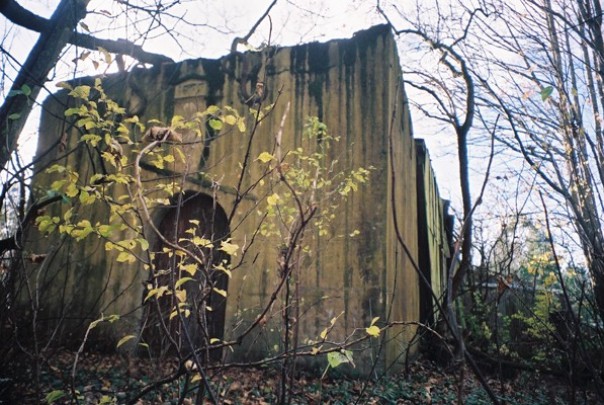
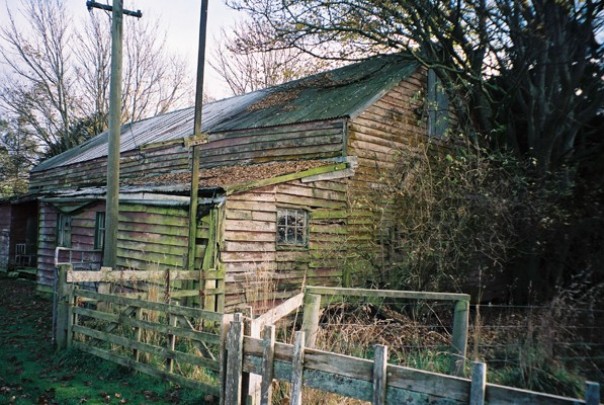
Somerville Park is located in the rural hinterland of town of Balclutha in South Otago. Somerville Park is on Waitepeka Road, a small country back road some 10 kilometres south west of the town. Somerville Park is located at the end of gravelled drive. The group of buildings, structures and archaeological remains sit on a sloping section amidst an overgrown garden, mature trees and undergrowth. On the right of the drive is the former general store, a large timber building. Across the drive are the Hut (museum), Truck Shed and Oatmeal Kiln, which are located on the site of the former Somerville Flour Mill. The small Hut now used as a small museum was originally the Somerville Transport drivers and labourers sleepout at Waiwera South Railway Station. It is a single room weatherboard structure with a single door and window. The roof is corrugated iron. Alongside the Hut are the small office and truck sheds associated with the transport business. The shed is large timber -framed structure divided into bays. The building is located on the site of the flour mill. The remains of the wheel pit and associated race are located behind the Sheds. The now dry Mill Race runs from a dam to the south east. The remains of the Oatmeal Kiln sits next to the Truck Sheds. This is a brick structure with concrete render. The former general store, which houses the post office, is located on the right side of the driveway. This is a large timber structure, clad in weatherboard. The main body of the building is a single gable structure, with an open interior space. There is a lean-to addition on the west elevation which houses the post office. There is an open porch adjoining the post office, and providing a covered entrance area. The building is in poor condition. To the east of the general store are the ruins of John Somerville's 1860s residence. This was a substantial two-storey timber residence. The house is in a derelict state, in partial collapse. It was last occupied in the 1940s. To the north west of the 1860s House is the Mill Manager's House built in the 1880s. This is a standard single storey villa style residence set above the mature orchard and gardens. The Mill Manager's House is currently used as a museum, bringing together items from the Bannerman and Somerville families, and other ephemera, from the Balclutha area. To the south west of the Mill Manager's House is the current residence built in the 1930s. This is a single storey timber building clad in weatherboard. To the south of the 1930s house is the in-ground water reservoir, dating from at least the 1870s. It is six feet deep, and constructed of concrete with a corrugated iron roof. The reservoir is still in use. There are other archaeological remnants of the Somervilles' occupation, including a ruined summer house, covered in vegetation, the foundation of the glass house, and the associated orchard and gardens dating from the early occupation. The owner notes that there are various rubbish pits on the property, and remains of the mill, such as mill stones, on site.
Somerville Park is located in the rural hinterland of town of Balclutha in South Otago. Somerville Park is on Waitepeka Road, a small country back road some 10 kilometres south west of the town. Somerville Park is located at the end of gravelled drive. The group of buildings, structures and archaeological remains sit on a sloping section amidst an overgrown garden, mature trees and undergrowth. On the right of the drive is the former general store, a large timber building. Across the drive are the Hut (museum), Truck Shed and Oatmeal Kiln, which are located on the site of the former Somerville Flour Mill. The small Hut now used as a small museum was originally the Somerville Transport drivers and labourers sleepout at Waiwera South Railway Station. It is a single room weatherboard structure with a single door and window. The roof is corrugated iron. Alongside the Hut are the small office and truck sheds associated with the transport business. The shed is large timber -framed structure divided into bays. The building is located on the site of the flour mill. The remains of the wheel pit and associated race are located behind the Sheds. The now dry Mill Race runs from a dam to the south east. The remains of the Oatmeal Kiln sits next to the Truck Sheds. This is a brick structure with concrete render. The former general store, which houses the post office, is located on the right side of the driveway. This is a large timber structure, clad in weatherboard. The main body of the building is a single gable structure, with an open interior space. There is a lean-to addition on the west elevation which houses the post office. There is an open porch adjoining the post office, and providing a covered entrance area. The building is in poor condition. To the east of the general store are the ruins of John Somerville's 1860s residence. This was a substantial two-storey timber residence. The house is in a derelict state, in partial collapse. It was last occupied in the 1940s. To the north west of the 1860s House is the Mill Manager's House built in the 1880s. This is a standard single storey villa style residence set above the mature orchard and gardens. The Mill Manager's House is currently used as a museum, bringing together items from the Bannerman and Somerville families, and other ephemera, from the Balclutha area. To the south west of the Mill Manager's House is the current residence built in the 1930s. This is a single storey timber building clad in weatherboard. To the south of the 1930s house is the in-ground water reservoir, dating from at least the 1870s. It is six feet deep, and constructed of concrete with a corrugated iron roof. The reservoir is still in use. There are other archaeological remnants of the Somervilles' occupation, including a ruined summer house, covered in vegetation, the foundation of the glass house, and the associated orchard and gardens dating from the early occupation. The owner notes that there are various rubbish pits on the property, and remains of the mill, such as mill stones, on site.
Historical and Associated Iwi / Hapū / Whānau
Completion Date
12th September 2007
Report Written By
Heather Bauchop
Information Sources
Dix Family Collection
Dix Family Collection, Somerville Park, Waitepeka
Wilson, 1912
John Wilson, Reminiscences of the Early Settlement of Dunedin and South Otago: Dealing in the main with Clutha and Neighbouring Districts. Compiled from Information Supplied to the Clutha Pioneers' Association by Early Settlers, and Matters Taken from Other Sources, J. Wilkie and Co, Dunedin, 1912
Petchey, 2006 (2)
Peter Petchey, Site Plan Somerville Park August 2006
Somerville,1972
Lenore Somerville, The Otago Somervilles: A Brief Record of the Early Days, Family Reunion Committee, Coulls Somerville Wilkie Ltd, Dunedin 1972
Thomson, 1998
Jane Thomson, (ed)., Southern People: A Dictionary of Otago Southland Biography, Dunedin: Longacre Press/Dunedin City Council, 1998.
Waite, 1948
F. Waite, Pioneering in South Otago, Otago Centennial Historical Publications, Dunedin, 1948
Other Information
A fully referenced registration report is available from the NZHPT Otago/Southland Area Office Please note that entry on the New Zealand Heritage List/Rarangi Korero identifies only the heritage values of the property concerned, and should not be construed as advice on the state of the property, or as a comment of its soundness or safety, including in regard to earthquake risk, safety in the event of fire, or insanitary conditions.
Historical and Associated Iwi / Hapū / Whānau
Completion Date
12th September 2007
Report Written By
Heather Bauchop
Information Sources
Dix Family Collection
Dix Family Collection, Somerville Park, Waitepeka
Wilson, 1912
John Wilson, Reminiscences of the Early Settlement of Dunedin and South Otago: Dealing in the main with Clutha and Neighbouring Districts. Compiled from Information Supplied to the Clutha Pioneers' Association by Early Settlers, and Matters Taken from Other Sources, J. Wilkie and Co, Dunedin, 1912
Petchey, 2006 (2)
Peter Petchey, Site Plan Somerville Park August 2006
Somerville,1972
Lenore Somerville, The Otago Somervilles: A Brief Record of the Early Days, Family Reunion Committee, Coulls Somerville Wilkie Ltd, Dunedin 1972
Thomson, 1998
Jane Thomson, (ed)., Southern People: A Dictionary of Otago Southland Biography, Dunedin: Longacre Press/Dunedin City Council, 1998.
Waite, 1948
F. Waite, Pioneering in South Otago, Otago Centennial Historical Publications, Dunedin, 1948
Other Information
A fully referenced registration report is available from the NZHPT Otago/Southland Area Office Please note that entry on the New Zealand Heritage List/Rarangi Korero identifies only the heritage values of the property concerned, and should not be construed as advice on the state of the property, or as a comment of its soundness or safety, including in regard to earthquake risk, safety in the event of fire, or insanitary conditions.
Current Usages
Uses: Accommodation
Specific Usage: House
Uses: Civic Facilities
Specific Usage: Museum
Former Usages
General Usage: Accommodation
Specific Usage: House
General Usage: Trade
Specific Usage: Shop
Current Usages
Uses: Accommodation
Specific Usage: House
Uses: Civic Facilities
Specific Usage: Museum
Former Usages
General Usage: Accommodation
Specific Usage: House
General Usage: Trade
Specific Usage: Shop
Location
Sign up to hear more
Get the latest heritage news, features and events delivered
straight to your inbox.
