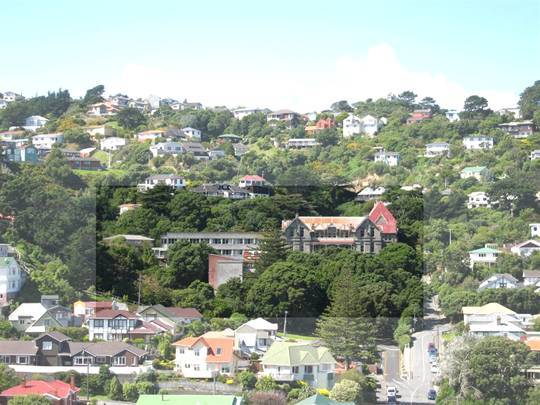
Erskine College Main Block and Chapel of the Sacred Heart were built as part of the Catholic girls' boarding school, Convent of the Sacred Heart (Sacré Coeur). The secondary school was founded by the Society of the Sacred Heart of Jesus, an institution of religious women devoted in particular to the work of education. Founded in Paris in 1800 by Madeleine-Sophie Barat, the Society was formed as part of a reaction to the suppression of religious orders during the French Revolution. Focusing on the education of the girls, the convents the society instituted eventually spread throughout Europe and North America, Algeria, Chile and Australasia.
The Society of the Sacred Heart came to New Zealand in 1880 from the St Louis vicariate in the USA. Many of the Society's initial convents in Europe had lately closed due to unstable political environments, and this encouraged their efforts to extend their institutions overseas. The Society extended itself to New Zealand at the invitation of Bishop Francis Redwood, who had four years earlier also brought brothers of the French Marist teaching order to Wellington to set up primary schools for boys. New Zealand's Education Act of 1877 had introduced free, compulsory and secular primary education, removing government support for Catholic parish-based schools and forcing religious schools to rely on their own means and seek other support. Bishop Redwood became very involved in finding ways to institute quality Catholic education in his diocese.
The first contingent of Sacré Coeur nuns was sent to Timaru, and in 1880 opened New Zealand's first convent of the Sacred Heart there. By the 1890s Bishop Redwood, by now Archbishop, expressed interest in assisting the Society to found a convent school in Wellington - a boarding school in order to provide for the Catholic education of country girls - and offered for use a property he had recently inherited. This plan fell through, however, and was postponed until 1902, when the Archbishop again renewed his efforts to have a girls' boarding school of the Sacred Heart in his diocese.
Island Bay was, at the turn of the twentieth century, somewhat of a seaside resort for Wellington residents, with scattered houses, two hotels and a large Chinese market garden along the western side of the valley. The southernmost suburb of Wellington, it was named after the island of Tapu te Ranga (Wahi Tapu, Record no. 7654) just off the coast, which had been an important Ngati Ira pa until the 1820s. Caves along the headland were also said to have sheltered tangata whenua from marauding war parties in times of conflict, and terraces, middens and other sites of Maori occupation have also been recorded in the areas along the coastline. In the 1880s farmland in the area had been subdivided for settlement, and the tram network reached the suburb in 1905, furthering its appeal as the location for the new school.
A two-hectare (20,000m2) site on the eastern side of the valley in Island Bay was chosen by nuns from the Timaru convent and purchased from landowner Samuel Wright in July 1902 for £1000, but for a while it seemed the plans would be postponed in order to establish a school in Sydney instead. The organising clergy then aimed towards a day school, but were finally granted permission to build a new boarding school house on the Island Bay site. While excavation and construction of the new building was carried out an eight-roomed house was rented in Avon Street, and was a small convent and boarding school from 1905-1906. Founding sisters were Mother Spadaccini, Mother Bourdeaux, Mother Maude Lennon and Sister Cullen - women who came from Europe, Ireland and Australia and brought their own international cultural influences to the education they provided.
The new four-storey building was designed by noted Wellington architect John Sydney Swan, who had until then been working in partnership with Frederick de Jersey Clere. The Sacred Heart convent at Island Bay was the earliest in a series of major solo commissions for the Catholic Church for which Swan became well known, including St Gerard's Church on Mt Victoria in 1908-10 (Record no. 226, Category I historic place), Our Lady of Compassion Convent, Island Bay (1908-21), St Mary's Presbytery (1913, Record no. 7756) and Sacred Heart Convent in Wanganui (1911), and St Bede's School in Christchurch (designed with his brother in 1919). In partnership with various others John Swan was also responsible for the design of a number of other significant commercial, educational and domestic buildings, making him one of the more important Wellington architects of the early 20th century.
Builder H. Ranson began work on the convent in December 1904, the contract being worth an estimated £15,588. Archbishop Redwood laid a commemorative marble plaque next to the front door in May 1905. The new building was ready to receive its first pupils in February 1906, but construction was not fully completed until 1909. These final stages of construction were carried out in two stages, in 1907 and 1909, but for the first three years of the building's life the unfinished top floor was appreciated by staff and students as an excellent covered sports venue. At its opening, the convent school became the first Catholic girls' boarding school in Wellington, and only the second Catholic girls' college in the region.
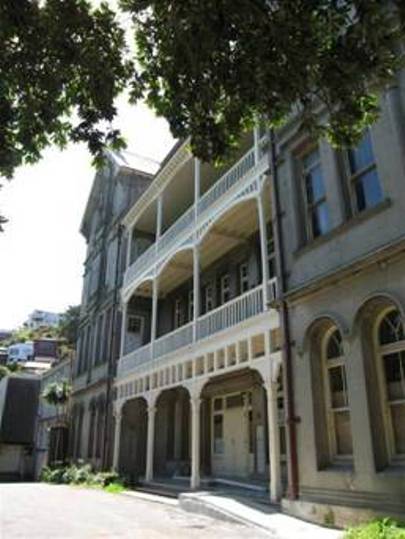
The main building shows influences of Gothic, Tudor, Edwardian and Romanesque architectural styles, adapted to include a New Zealand colonial touch - for example the wooden verandahs which feature on the main west elevation. The interior makes extensive use of native and imported timbers and the banisters of the main stairwell feature cross motifs carried through from exterior of building. All windows on the south face of the building were glazed with double-sash windows, as extra protection against the southerlies blowing in from Island Bay. However, alumnae still remember the biting cold of winter and how they made their way down the corridors by running from one gas heater to the next. The character of the building design also made an impression on generations of its inhabitants, many of whom have fond memories of its grand scale while others recall the school building as being a 'stern' 'Peaked Grey Fortress', perhaps associating it with their homesickness or the general discipline of boarding school life.
The Convent of the Sacred Heart at Island Bay followed the standardised education plan that was drawn up by Mother Barat as early as 1805, and in this way was linked to all Sacred Heart schools worldwide. The plan of studies was periodically revised but remained in worldwide use until 1958, when national requirements and cultural variations saw its role reduce to more of a spiritual influence rather than educational prescription. However, the hallmarks of a Sacred Heart education were consistent at the Island Bay college from its beginnings, with an emphasis on religion and character and classes in logic, ethics, history of art and architecture, philosophy, astronomy and ontology offered in addition to the standard academic subjects. The French cultural influence was strong, even in the everyday vocabulary of school life, and music and drama 'played such a large part in the life of the school that justice cannot really be done in words.' As well, physical education was provided for and encouraged, with the cricket pitch playing ‘a vital part in school life.'
Boarders and day pupils also made good use of the surrounding environment, regularly making climbing expeditions around the gorse-covered hills of Island Bay and swimming at the beach. The Society eventually obtained all of the land in the block now formed by Melbourne Road and Mace, Avon and Volga streets. Early photographs show the convent building (with the associated primary school of St Madeleine Sophie adjacent to the west) surrounded by undeveloped hills, and over time the nuns developed the grounds to incorporate large gardens and a farmyard area for the cows and other animals kept help to support the school. Students of the college, which was a private school, came from affluent families from all around New Zealand, and the farm surrounding helped to assuage some of the homesickness of children from rural areas.
Many past pupils have especially vivid and fond memories of the many feast day celebrations, including the processions to Our Lady of Lourdes Grotto in the school grounds, the feast of the Society's own Madonna, Mater Admirabilis, who was honoured with her own chapel in the college, and the Procession of the Lanterns on the Feast of the Sacred Heart. The feast of Christ the King was one on a grand scale, involving the wider community from parishes and Catholic schools all over Wellington, who would process around the Sacred Heart grounds attending Benedictions at three altars prepared by the children. Throughout its operation at Island Bay the Society of the Sacred Heart maintained a strong relationship with the Wellington Marist community. School chaplains were Marist priests who split their chaplaincy with that of St Patricks Catholic boys' boarding school, and the two boarding schools also maintained an intercollegiate bond.
The original convent building has been added to over the years. The first addition to the building was a two-storey extension to the north façade, known as St Anthony's Block. Completed in 1916, this area was used mainly for recreation, with the upper floor containing a series of cells for students to practise the piano in. An earthquake in the early 1940s reportedly ‘shook the piano rooms block off the main building by about one foot.' Parents gave generously for other additions, such as a two-storey addition to the east side of the convent building in 1921 (which later had another story added to it), and as the school grew the facilities were expanded further by the addition of a wooden accommodation block, known as the Lisieux Wing, in 1949; a gymnasium and classroom block in 1957; and the Coen Wing of accommodation, science laboratories and kitchen/laundry was added in 1967. A cage lift was installed in the main building in 1927 and is still in operation today.
Perhaps the most significant addition to the school complex, and certainly the most celebrated, occurred in 1929-30. From the founding days of the school, a large chapel space had been included in the main building, as well as a smaller chapel dedicated to Mater Admirabilis. However, in the late 1920s a much larger chapel was designed to adjoin the original school building to the south east, with access only through the corridors of the main convent building. The foundation stone was once more laid by Archbishop Redwood, on 5 May 1929, and the Opening Mass was celebrated by Archbishop O'Shea on 26 October 1930.
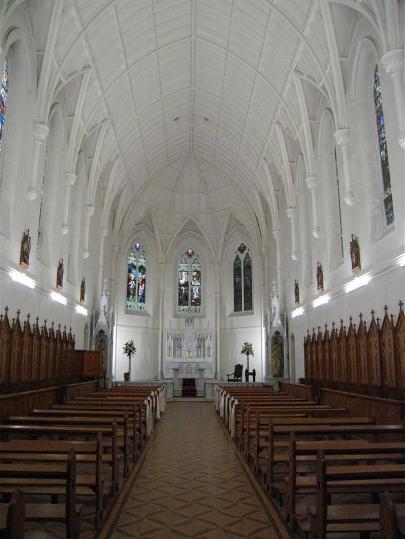
John Sydney Swan was again called upon to design the new chapel, and his design was reportedly influenced by the Sacré Coeur Sisters who were ‘steeped in the knowledge and love of French Gothic architecture as a fitting temple of God.' The finished structure today still has a deserved reputation as ‘one of the finest Gothic spaces in New Zealand.' The soaring vaulted ceiling forms a high ribbed canopy over a light and airy space of undeniable beauty, the impact enhanced by the elongated stringers and slender half columns spaced along the walls. The twelve stained glass windows along each side were brought out from Mayers in Munich over several years, once donations were raised for each. John Sydney Swan himself donated the central window, above the magnificent white Carrara marble altar, demonstrating his attachment to a complex which he had designed much of over the years.
The altar is finely detailed, its high quality Gothic-styled carving crafted in Italy, and houses relics of several saints, including St Madeleine Sophie. The gilded tabernacle door is inset with rubies, diamonds and moonstones, and finely carved marble shrines, Gothic-style timber panelling, pews and stalls, and statuary from Mayer of Munich add to the awe-inspiring and elegant richness of the chapel's interior decoration. The immaculate proportions of the interior have created a space still widely renowned for its acoustic excellence, with many noted performers, including the Vienna Boys Choir, appreciating the ‘extraordinary clarity and long reverberant time' of the space over the years. As well as being the location for countless First Communions and other individual and collective celebrations, the chapel spaces have also been witness to ceremonies celebrating two members of the Sacré Coeur order: foundress St Madeleine-Sophie Barat was beatified in 1908 and canonised in 1925, as was St Philippine Duchesne (beatified 1940, canonised 1988).
The 1960s heralded a change in the Sacré Coeur school culture. One of the changes proposed by the Second Vatican Council (Vatican II, 1963-1965) called for more collaboration with lay people, and at the Island Bay convent school this was reflected in increased numbers of lay staff. Increasing confusion with Sacred Heart College in Lower Hutt led to the change in name for the school, and in the late 1960s ‘Erskine College' was chosen in honour of former Superior General of the Society, Mother Janet Erskine Stuart, who had visited the Island Bay campus in 1914 and planted a Norfolk pine, which still flourishes in the Reverend Mother's Garden today alongside other well established trees planted in the early days of the school.
From this time onwards, Erskine College became more integrated into the state schooling system. Reflecting the winds of change, the Society of the Sacred Heart also became more open, with the relaxing of the nun's lifestyle of enclosure (which previously had rarely seen them leave the confines of the school grounds), and eventually granting permission to wear ordinary dress instead of the traditional nun's habit. Financial strains were beginning to become more serious, however, and although school fees were not cheap, being a private school meant that the school was largely dependent on funding from these and donations. Declining rolls added to the pressure.
The first announcement of Erskine's closure came in 1970; a strategic decision not lightly made by the Society of the Sacred Heart, due to lack of resources to maintain the teacher's college, three independent schools and two parish schools they were at that time maintaining in New Zealand. However, in a precursor to the massive community support that would be later demonstrated in the battle to save the Erskine convent building from demolition, a large community of parents, college staff, alumnae and friends rallied in a show of ‘incredible dedication' to keep the school running. This was achieved through the formation of an Incorporated Society (Erskine College Inc.), managed by a Board of Governors, which ran the school for another 15 years until its final closure in 1985.
The catalyst for the ultimate closure of Erskine College was apparently the proposed cost of strengthening the main college building against earthquakes, which was considered to be insurmountable. Thus ended the 79-year operation of a college that, at its time of opening, had been one of the few secondary schools in Wellington, and in which nearly 3000 girls had been educated - many of whom had become prominent in the community after their graduation. A 1993 feasibility study for the future of the convent building expressed that ‘Erskine College has played a leading role in the education of many New Zealand women - including members of some of the nation's most prominent families - whose combined, cultural, economic, social and artistic contribution to the development of Aotearoa is inestimable.'
Today the scale and stateliness of the Erskine College complex stands as a lasting reminder of the community of Sacré Coeur girls' boarding schools in New Zealand. The original Timaru convent had closed its doors in 1933 and has since been demolished; Cottesmore College in Christchurch was only in operation between 1963 and 1976; and today the Society's educational work is only continued in New Zealand by Baradene College in Auckland, which closed its boarding section in 1985. All of the founding buildings of Wellington's other historic secondary schools have since been demolished, leaving the Erskine College main convent building to now be the oldest surviving purpose-built secondary school building in Wellington. A reunion of Erskine alumnae held in 1998 was attended by 800 old girls and resulted in the publication of two books, both of which include reminiscences arranged by room or areas of the college, demonstrating the depth of their emotional connection to the fabric and spaces of the complex. Kennedy writes that:
‘The dramatically successful reunion of religious, staff and alumnae in June 1998 confirmed the enduring legacy of Erskine College/Sacre Coeur...[celebrating] friendship, shared memories, certainly, as well as customs and traditions, within a great Tradition. Most of all, though, we celebrate an education that encouraged us to think and question, to look beyond the immediate fact or event for a deeper and broader meaning.'
Walsh also records alumna Claudia Wysocki's Reunion Address, in which she expresses the continuing attachment of many to the place: ‘I feel too, that since the closure of Erskine in 1985, perhaps our sense of belonging to the school has grown stronger, often it is those things in life that we no longer have that we come to appreciate the more.'
Post-Erskine College
The Erskine complex was purchased by the New Zealand Hibernian Australasian Catholic Benefit Society in 1986, which parcelled off land around the edges of the site and sold it for residential housing. The Hibernian Society planned to eventually develop the Erskine site as a retirement village. In the meantime the chapel was used by the Pope Pius X society, the Lisieux block was rented as accommodation, and various tenants made use of the main convent building, most of whom had a common focus on the creative and performing arts. By 1992 the Erskine complex was being regularly used as studio and performance space by a large number of artists, dance and theatre companies, puppeteers, film makers (the convent building featured as a location in Peter Jackson's film The Frighteners), musicians and as a venue for high profile events such as the International Festival of the Arts and the Shakespeare Society's Globe tapestries exhibition, which brought thousands of people to the buildings.
In 1992, however, the Hibernian Society submitted an application for resource consent to strengthen the chapel walls, which would be needed if the other part of the proposed work was carried out: the demolition of the main convent building. This proposal stirred up a huge amount of feeling amongst the community, and local Island Bay residents, heritage professionals, college alumnae, users of the convent and chapel buildings and other appreciators of the heritage of the Erskine complex banded together to advocate for the retention of the convent building and preservation of the Erskine site. Conservation architect Ian Bowman argued that:
‘The removal of one of the main elements of the design would seriously compromise the design of the whole complex of buildings on the site...The removal of the college will sever physical, historical and architectural links which have great significance to the college and will greatly reduce the significance of the chapel. The demolition will remove a building of rare design in New Zealand and by a significant architect of the period.'
Esteem for the main building and whole complex was so strong that a group called Save Erskine College Trust (SECT) was formed, and successfully applied to become the first non-government heritage protection authority under s188 of the Resource Management Act 1991. SECT has since had a heritage protection order placed upon the site, prohibiting the alteration, modification, damage, removal or demolition of any of the buildings, structures or trees, shrubs or natural growth within the grounds, by anyone without their authority. In response to the public notification of this application, 66 submissions were received in support of the heritage order and only two in opposition, again illustrating the huge value the community places on the Erskine College site. The main building remains in situ.
The perceived financial viability of the Erskine site has been demonstrated by the interest shown by prospective purchasers over the years. In 1994 local businessman Victor Cattermole attempted to purchase the Erskine complex, but the transaction was not completed. In 1996 another group of interested individuals, including Jonathan Milne of The Learning Connexion International School of Art and Creativity, also proposed to buy the complex, but could not raise the necessary funds. However, The Learning Connexion leased the college (apart from the Chapel) from 1996 until 2009, utilising the entire campus for a creative arts institution with some accommodation.
Property developer Ian Cassels and his company Property Link (Developments) Ltd have owned the Erskine College site since 2000, and have refurbished the entrance and associated spaces of the Chapel, creating a venue with a large reception room, new bathroom and kitchen facilities suitable for hosting weddings, funerals and other functions. A new main entrance to the Chapel complex - now used separately from the rest of the college buildings - was installed to the south side of the buildings. The main convent building is still in need of refurbishment and maintenance, and it and the Chapel are yet to be earthquake-strengthened, but the future of the Erskine complex is currently in limbo following the end of The Learning Connexion's tenancy.