Quick links


Quick links
Quick links
Quick links
Quick links
Quick links
St Bride's Church (Anglican)
Findlay Road, MAUKU
Private
Historic Place Category 1
List No. 81
Quick links:
List GalleryLocationDetails
Findlay Road, MAUKU
Private
Historic Place Category 1
List No. 81
List Entry Information
Status
Listed
List Entry Status
Historic Place Category 1
Access
Private/No Public Access
List Number
81
Date Entered
15th February 1990
Date of Effect
15th February 1990
City/District Council
Auckland Council
Region
Auckland Council
Legal description
Pt Allot E98 Parish of Waiuku East (RT NA757/283), North Auckland Land District
Status
Listed
List Entry Status
Historic Place Category 1
Access
Private/No Public Access
List Number
81
Date Entered
15th February 1990
Date of Effect
15th February 1990
City/District Council
Auckland Council
Region
Auckland Council
Legal description
Pt Allot E98 Parish of Waiuku East (RT NA757/283), North Auckland Land District
Why is this place significant?
Historic Significance
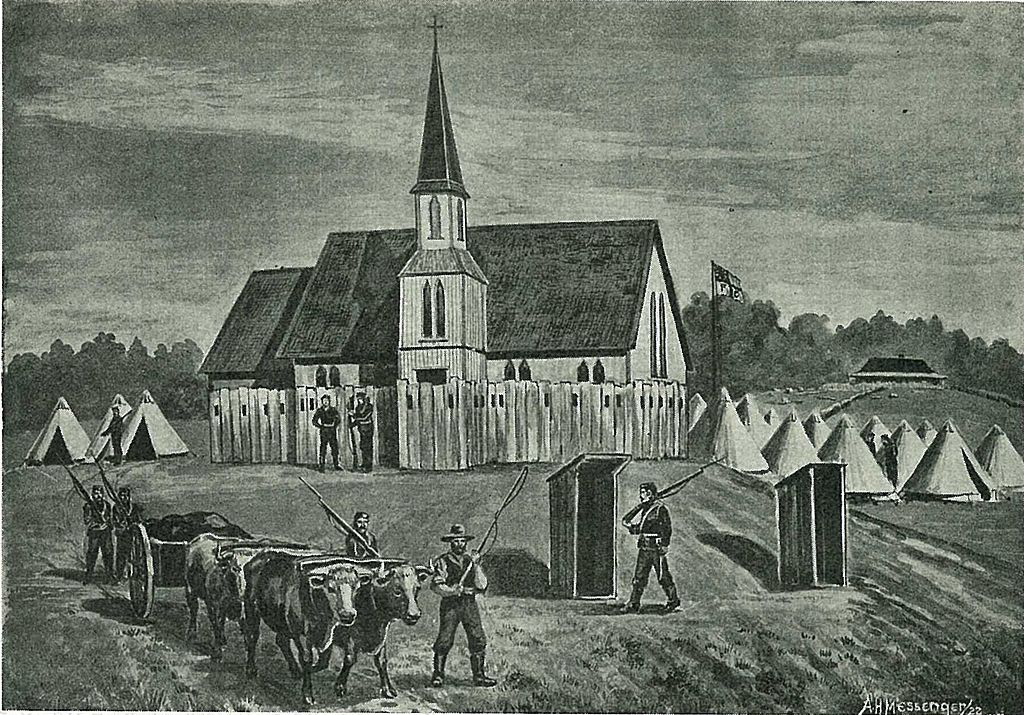
Historical Significance or Value St Bride's, at Mauku is historically significant because of its use as a refuge for local settlers, and as a stockade and camp site for soldiers during the wars which began in the Waikato in 1863.
Physical Significance
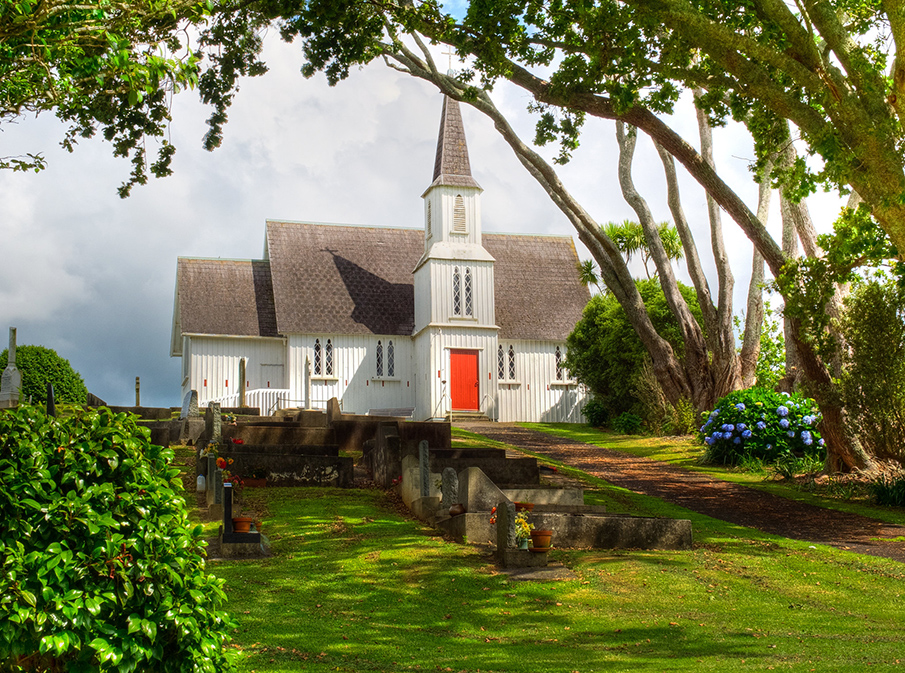
ARCHITECTURAL QUALITY: St Bride's reflects ecclesiological canons of church design. The fundamental structures of the church are exposed and there are no ceilings to conceal the rafters and trusses. It eschewed plaster and stucco although the exterior was painted white. The church was faithful to other ecclesiological precepts relating to the presence, proportions and placement of the nave, chancel porch and vestry, and the pitch of the roof. LANDSCAPE: St Bride's with its tall spire, dominates the surrounds from its elevated site. It presents a fine view from the main approach. Links between the church and others with which Purchas was associated can be seen. It has been suggested that Purchas designed Holy Trinity, Otahuhu (1863). Its design closely resembles that of St Bride's in the placement of the entrance porch with the tower over it. Purchas favoured the tower detached from the nave, and altered St Peter's, Onehunga, to achieve this effect.
Why is this place significant?
Historic Significance
Historical Significance or Value St Bride's, at Mauku is historically significant because of its use as a refuge for local settlers, and as a stockade and camp site for soldiers during the wars which began in the Waikato in 1863.
Physical Significance
ARCHITECTURAL QUALITY: St Bride's reflects ecclesiological canons of church design. The fundamental structures of the church are exposed and there are no ceilings to conceal the rafters and trusses. It eschewed plaster and stucco although the exterior was painted white. The church was faithful to other ecclesiological precepts relating to the presence, proportions and placement of the nave, chancel porch and vestry, and the pitch of the roof. LANDSCAPE: St Bride's with its tall spire, dominates the surrounds from its elevated site. It presents a fine view from the main approach. Links between the church and others with which Purchas was associated can be seen. It has been suggested that Purchas designed Holy Trinity, Otahuhu (1863). Its design closely resembles that of St Bride's in the placement of the entrance porch with the tower over it. Purchas favoured the tower detached from the nave, and altered St Peter's, Onehunga, to achieve this effect.
Construction Professional
Name
Purchas, Arthur Guyon
Type
Architect
Biography
The Rev. Dr Arthur Guyon Purchas (1821-1906), who was born in England, settled permanently in Auckland in 1846. Although his father was an architect, Purchas himself had no formal training in architecture, having graduated in medicine. Nevertheless, he left an indelible mark on the early ecclesiastical building of New Zealand. Bishop Selwyn, Purchas and another clerical architect, Frederick Thatcher, devised the style of building known as the 'Selwyn Churches' and created the distinctive chapels which are renowned for their architectural quality as well as for their historical association. While the Ecclesiologists in England imposed their standards on the design of the parish church, it was Selwyn, Purchas and Thatcher who transplanted their ideas in New Zealand. Purchas gained building experience with Selwyn's architects at St Johns College, and in particular, with the temporary chapel at St Andrews, Epsom in 1846. He designed the original church for St Peter's at Onehunga 1847-48 and was also responsible for enlarging the nave and moving the tower. The design of the stone church of St James at Mangere (1857) has been attributed to Purchas and it is also possible that he was the architect of Holy Trinity Church, Otahuhu. Later in his life he designed a block of shops erected in Karangahape Road. Purchas' interest and talents also extended to music. He also invented a surgical instrument and the first machine for the preparation of New Zealand flax.
Construction Details
Start Year
1863
Type
Modification
Description
Fifty-four loopholes for rifles cut into exterior walls.
Start Year
1884
Type
Modification
Description
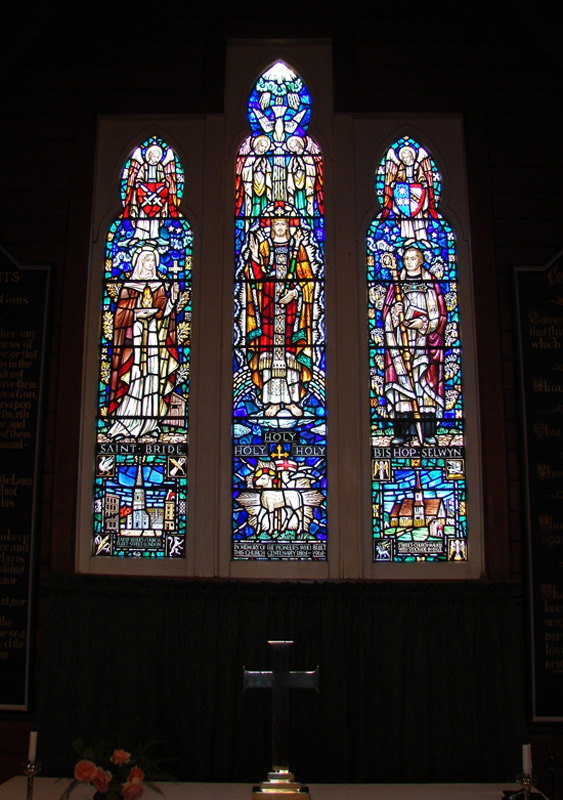
Interior clad with horizontal boarding. Clear glass windows in chancel replaced with stained glass windows for church centenary. Pulpit and font installed.
Start Year
1961
Type
Modification
Description
Wooden shingles on roof replaced by fibro-cement shingles.
Start Year
1861
Type
Original Construction
Construction Materials
Original puriri block foundations replaced in 1953 by concrete blocks. Totara framing with kauri joists and flooring. Roof structure of scissor trusses and kauri sarking. Roof and spire shingled. Exterior cladding of kauri vertical board and batten. Interior originally unlined, but later clad with horizontal kauri boarding.
Notable Features
Two original oil lamps (now wired for electricity); rifle loopholes; stained glass windows in chancel.
Construction Professional
Name
Purchas, Arthur Guyon
Type
Architect
Biography
The Rev. Dr Arthur Guyon Purchas (1821-1906), who was born in England, settled permanently in Auckland in 1846. Although his father was an architect, Purchas himself had no formal training in architecture, having graduated in medicine. Nevertheless, he left an indelible mark on the early ecclesiastical building of New Zealand. Bishop Selwyn, Purchas and another clerical architect, Frederick Thatcher, devised the style of building known as the 'Selwyn Churches' and created the distinctive chapels which are renowned for their architectural quality as well as for their historical association. While the Ecclesiologists in England imposed their standards on the design of the parish church, it was Selwyn, Purchas and Thatcher who transplanted their ideas in New Zealand. Purchas gained building experience with Selwyn's architects at St Johns College, and in particular, with the temporary chapel at St Andrews, Epsom in 1846. He designed the original church for St Peter's at Onehunga 1847-48 and was also responsible for enlarging the nave and moving the tower. The design of the stone church of St James at Mangere (1857) has been attributed to Purchas and it is also possible that he was the architect of Holy Trinity Church, Otahuhu. Later in his life he designed a block of shops erected in Karangahape Road. Purchas' interest and talents also extended to music. He also invented a surgical instrument and the first machine for the preparation of New Zealand flax.
Construction Details
Start Year
1863
Type
Modification
Description
Fifty-four loopholes for rifles cut into exterior walls.
Start Year
1884
Type
Modification
Description
Interior clad with horizontal boarding. Clear glass windows in chancel replaced with stained glass windows for church centenary. Pulpit and font installed.
Start Year
1961
Type
Modification
Description
Wooden shingles on roof replaced by fibro-cement shingles.
Start Year
1861
Type
Original Construction
Construction Materials
Original puriri block foundations replaced in 1953 by concrete blocks. Totara framing with kauri joists and flooring. Roof structure of scissor trusses and kauri sarking. Roof and spire shingled. Exterior cladding of kauri vertical board and batten. Interior originally unlined, but later clad with horizontal kauri boarding.
Notable Features
Two original oil lamps (now wired for electricity); rifle loopholes; stained glass windows in chancel.
ARCHITECTURAL DESCRIPTION: St Bride's is an example of a Gothic Revival church in the Selwyn style. It adheres to the principles laid down by the Ecclesiological Society which believed that a building should be truthful and without pretence. The most influential architect of the Victorian Gothic Revival, A.W.N. Pugin (1812-1852) desired a return to medieval order, and more ritualistic and symbolic forms of worship for which he believed Gothic buildings were best suited. The ecclesiologists followed his teachings. Pugin based his architecture on the precept that there should be no features about a building which were not necessary for convenience, construction or propriety and that ornamentation should consist of enrichment of the essential construction of the building. Today, the building is lined with horizontal kauri boarding, but it is probable that, in conformity with Ecclesiological precepts, it was originally unlined with the timber framing and trusses exposed. The church is dominated by its broach spire which is directly above the entrance porch. The steeply gabled roof over the chancel, nave and vestry was originally clad with wooden shingles. The building has cusped windows with trefoils, arranged in twos, or, on the chancel, in threes. The louvered windows of the belfry also have trefoils. These windows and vents, tower and steep roof together with the vertical board and batten sheathing of the exterior, contribute to the impression of verticality, in keeping with the Gothic ideal that a Christian building should express 'upwardness'. The external walls still have the loopholes cut in during the military scare of 1863.
ARCHITECTURAL DESCRIPTION: St Bride's is an example of a Gothic Revival church in the Selwyn style. It adheres to the principles laid down by the Ecclesiological Society which believed that a building should be truthful and without pretence. The most influential architect of the Victorian Gothic Revival, A.W.N. Pugin (1812-1852) desired a return to medieval order, and more ritualistic and symbolic forms of worship for which he believed Gothic buildings were best suited. The ecclesiologists followed his teachings. Pugin based his architecture on the precept that there should be no features about a building which were not necessary for convenience, construction or propriety and that ornamentation should consist of enrichment of the essential construction of the building. Today, the building is lined with horizontal kauri boarding, but it is probable that, in conformity with Ecclesiological precepts, it was originally unlined with the timber framing and trusses exposed. The church is dominated by its broach spire which is directly above the entrance porch. The steeply gabled roof over the chancel, nave and vestry was originally clad with wooden shingles. The building has cusped windows with trefoils, arranged in twos, or, on the chancel, in threes. The louvered windows of the belfry also have trefoils. These windows and vents, tower and steep roof together with the vertical board and batten sheathing of the exterior, contribute to the impression of verticality, in keeping with the Gothic ideal that a Christian building should express 'upwardness'. The external walls still have the loopholes cut in during the military scare of 1863.
Historical and Associated Iwi / Hapū / Whānau
Information Sources
Lownsborough, 1961
I J Lownsborough. 1961 A History of St Brides Church, Waiuku
Other Information
This historic place was registered under the Historic Places Act 1980. This report includes the text from the original Building Classification Committee report considered by the NZHPT Board at the time of registration. Please note that entry on the New Zealand Heritage List/Rarangi Korero identifies only the heritage values of the property concerned, and should not be construed as advice on the state of the property, or as a comment of its soundness or safety, including in regard to earthquake risk, safety in the event of fire, or insanitary conditions.
Historical and Associated Iwi / Hapū / Whānau
Information Sources
Lownsborough, 1961
I J Lownsborough. 1961 A History of St Brides Church, Waiuku
Other Information
This historic place was registered under the Historic Places Act 1980. This report includes the text from the original Building Classification Committee report considered by the NZHPT Board at the time of registration. Please note that entry on the New Zealand Heritage List/Rarangi Korero identifies only the heritage values of the property concerned, and should not be construed as advice on the state of the property, or as a comment of its soundness or safety, including in regard to earthquake risk, safety in the event of fire, or insanitary conditions.
Current Usages
Uses: Religion
Specific Usage: Church
Former Usages
General Usage: Religion
Specific Usage: Church
Current Usages
Uses: Religion
Specific Usage: Church
Former Usages
General Usage: Religion
Specific Usage: Church
Location
Get the latest heritage news, features and events delivered
straight to your inbox.
