Quick links


Quick links
Quick links
Quick links
Quick links
Quick links
9 Pungarehu Road, PUNGAREHU
Private
Historic Place Category 2
List No. 818
List Entry Information
Status
Listed
List Entry Status
Historic Place Category 2
Access
Private/No Public Access
List Number
818
Date Entered
1st September 1983
Date of Effect
1st September 1983
City/District Council
South Taranaki District
Region
Taranaki Region
Extent of List Entry
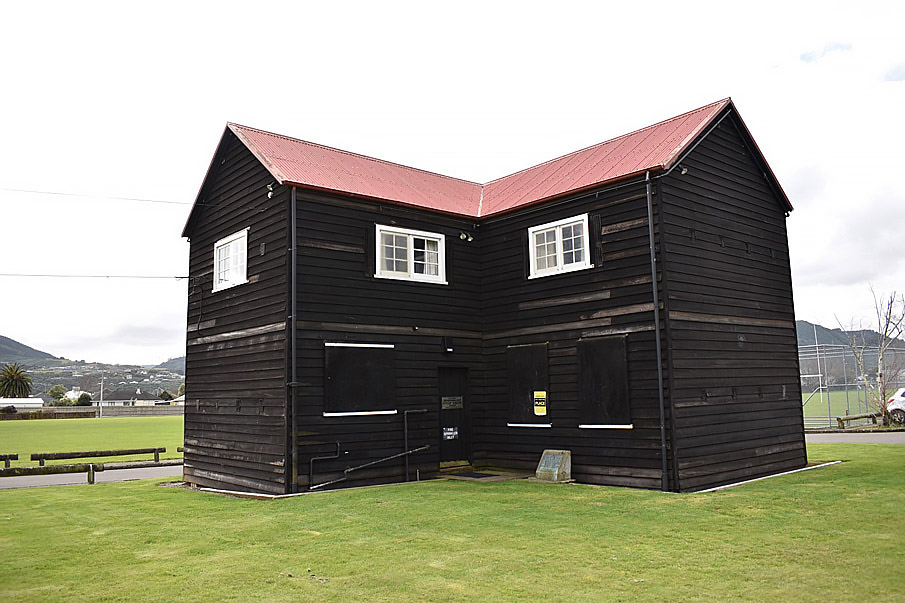
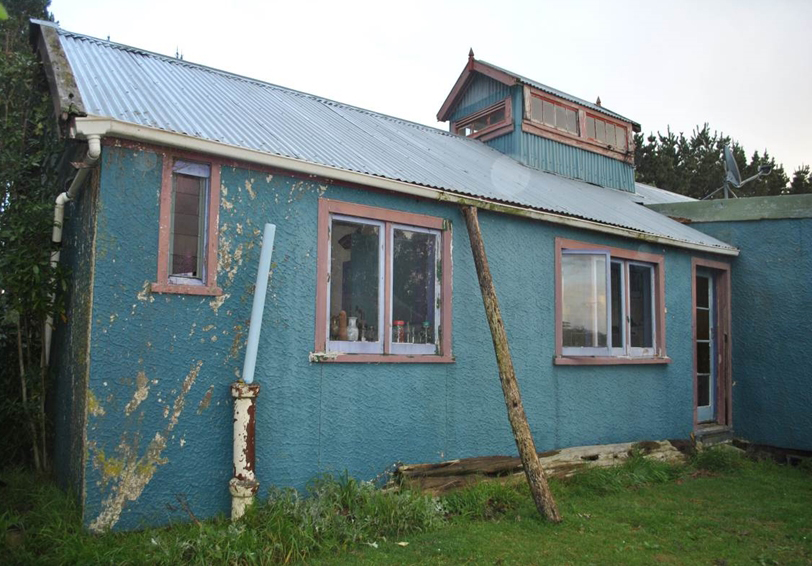
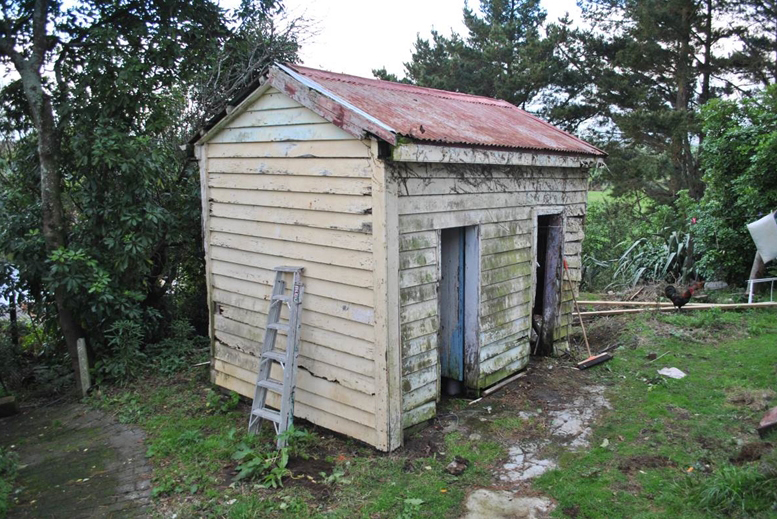
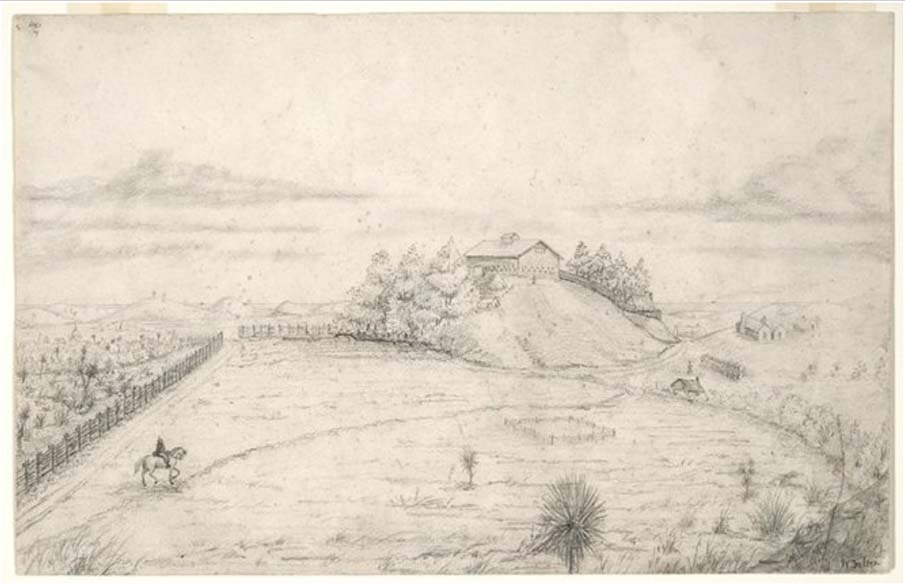
Extent includes the land described as Lot 1 DP 13833 (RT TNF3/1299), Taranaki Land District and the building known as Pungarehu Blockhouse thereon, and the former jail cell. Extent does not include the other buildings on the property.
Legal description
Lot 1 DP 13833 (RT TNF3/1299), Taranaki Land District
Status
Listed
List Entry Status
Historic Place Category 2
Access
Private/No Public Access
List Number
818
Date Entered
1st September 1983
Date of Effect
1st September 1983
City/District Council
South Taranaki District
Region
Taranaki Region
Extent of List Entry
Extent includes the land described as Lot 1 DP 13833 (RT TNF3/1299), Taranaki Land District and the building known as Pungarehu Blockhouse thereon, and the former jail cell. Extent does not include the other buildings on the property.
Legal description
Lot 1 DP 13833 (RT TNF3/1299), Taranaki Land District
Construction Professional
Name
Opunake Armed Constabulary Sergeant Forbes and Constable J Lyle
Type
Builder
Biography
No biography is currently available for this construction professional
Construction Details
Start Year
1881
Type
Original Construction
Type
Modification
Description
Removal of exterior walls with rifle slits; removal of shingle from the cavity; recladding in weatherboard; addition of windows to the walls; lean-to added to western end; interior walls and ceiling were match-lined; fireplace added on the south western side.
Period
Post-1885
Type
Modification
Description
Division of interior space, removal of attic-level windows
Period
Pre-1950
Type
Modification
Description
Exterior re-clad with stuccoed fibrolite; interior match-lining overlaid with Pinex board; lean-to replaced with larger kitchen addition; partial repiling.
Construction Professional
Name
Opunake Armed Constabulary Sergeant Forbes and Constable J Lyle
Type
Builder
Biography
No biography is currently available for this construction professional
Construction Details
Start Year
1881
Type
Original Construction
Type
Modification
Description
Removal of exterior walls with rifle slits; removal of shingle from the cavity; recladding in weatherboard; addition of windows to the walls; lean-to added to western end; interior walls and ceiling were match-lined; fireplace added on the south western side.
Period
Post-1885
Type
Modification
Description
Division of interior space, removal of attic-level windows
Period
Pre-1950
Type
Modification
Description
Exterior re-clad with stuccoed fibrolite; interior match-lining overlaid with Pinex board; lean-to replaced with larger kitchen addition; partial repiling.
Historical and Associated Iwi / Hapū / Whānau
Completion Date
3rd April 2018
Report Written By
Ivan Bruce
Information Sources
New Zealand Archaeological Association (NZAA)
New Zealand Archaeological Association
Taranaki Herald
Taranaki Herald
PhD Thesis
Peter Richardson, ‘Building the Dominion: Government Architecture in New Zealand 1840-1922’ PhD Thesis, Unversity of Canterbury, 1988
Other Information
This place was identified as significant under previous legislation with different information requirements. It remains significant under the current legislation. There is opportunity under our legislation and policies to add to this information. Further information about this place may be available from the Central Regional Office of Heritage New Zealand Pouhere Taonga. Please note that entry on the New Zealand Heritage List/Rarangi Korero identifies only the heritage values of the property concerned, and should not be construed as advice on the state of the property, or as a comment of its soundness or safety, including in regard to earthquake risk, safety in the event of fire, or insanitary conditions. A fully referenced upgrade report is available on request from the Central Regional Office of Heritage New Zealand
Historical and Associated Iwi / Hapū / Whānau
Completion Date
3rd April 2018
Report Written By
Ivan Bruce
Information Sources
New Zealand Archaeological Association (NZAA)
New Zealand Archaeological Association
Taranaki Herald
Taranaki Herald
PhD Thesis
Peter Richardson, ‘Building the Dominion: Government Architecture in New Zealand 1840-1922’ PhD Thesis, Unversity of Canterbury, 1988
Other Information
This place was identified as significant under previous legislation with different information requirements. It remains significant under the current legislation. There is opportunity under our legislation and policies to add to this information. Further information about this place may be available from the Central Regional Office of Heritage New Zealand Pouhere Taonga. Please note that entry on the New Zealand Heritage List/Rarangi Korero identifies only the heritage values of the property concerned, and should not be construed as advice on the state of the property, or as a comment of its soundness or safety, including in regard to earthquake risk, safety in the event of fire, or insanitary conditions. A fully referenced upgrade report is available on request from the Central Regional Office of Heritage New Zealand
Current Usages
Uses: Accommodation
Specific Usage: House
Uses: Accommodation
Specific Usage: Shed/store - Residential out-building
Former Usages
General Usage: Defence
Specific Usage: Blockhouse
General Usage: Defence
Specific Usage: Military Camp
General Usage: Law Enforcement
Specific Usage: Cell
General Usage: Law Enforcement
Specific Usage: Gaol/Lock-up
General Usage: Law Enforcement
Specific Usage: Police station
Current Usages
Uses: Accommodation
Specific Usage: House
Uses: Accommodation
Specific Usage: Shed/store - Residential out-building
Former Usages
General Usage: Defence
Specific Usage: Blockhouse
General Usage: Defence
Specific Usage: Military Camp
General Usage: Law Enforcement
Specific Usage: Cell
General Usage: Law Enforcement
Specific Usage: Gaol/Lock-up
General Usage: Law Enforcement
Specific Usage: Police station
Location
Get the latest heritage news, features and events delivered
straight to your inbox.