Lunacy in New Zealand:
Seacliff Asylum, built in the early 1880s and largely demolished in the early 1970s, towered over those incarcerated within and in the imagination of the ‘sane’, a symbol of control and a warning against transgression from ‘normality’ for nearly 100 years. In the nineteenth century a science grew up around ‘insanity’ with ‘control, care and cure’ at the centre of mental health policy. Sociologist Andrew Scull writes that the architecture (and landscape) of insanity of the nineteenth century housed a ‘particular and peculiar set of cultural assumptions about madness’ and continue to leave an imprint on the psyche of our society. Seacliff is such an imprint, many of the buildings removed, but the impression remaining in the mental and physical landscapes.
The ‘statutory foundations and organisational framework’ used to establish a mental health system in New Zealand had English roots. ‘Te taha hinengaro’, Maori notions of mental health, did not feature in public health policy until late in the twentieth century. Historian and policy analyst Warwick Brunton identifies three ‘foundational policies’ of nineteenth century mental health treatment: institutional care, state provision of care for the mentally ill, and ‘functional and administrative separatism of a social problem distinct from illness, crime or poverty.’
The colony’s first mental health legislation was the Lunatics Ordinance 1846 which allowed for the holding of a ‘lunatic’ (a person who had been legally certified as insane) to a gaol, house of correction or public hospital until they were discharged or sent to an asylum. Mentally ill behaviour was seen as a law and order problem, an upset of public peace, and dealt with accordingly.
Following English practice, a chain of public lunatic asylums was established. Wellington was the first to build an asylum: the Karori Lunatic Asylum opened in 1854. The colonial setting, however, created its own dynamic of madness and committal in asylums, as demonstrated by Catharine Coleborne in her writings on madness in Australia and New Zealand in the Victorian era. Poverty, ‘colonial dislocation and family separation’ set up different patterns in the colonies compared with European jurisdictions.
By the early 1860s policy favoured a network of provincial asylums, with the central government holding legislative responsibility. Brunton writes asylums remained the ‘cornerstone of psychiatric care and treatment’ throughout the nineteenth century and well into the twentieth century. The new institutions were built in rural areas, capturing what ‘the therapeutic value of rustic charm’, but also representing ‘a retreat before suburban encroachment and negative public opinion’ which saw mental illness as synonymous with ‘violence, failure and unpredictability.’ The idea of ‘moral management’ was central to treatment - a programme of manual work, church services and recreational programmes. Medical treatment would come to the forefront after a parliamentary inquiry in the early 1870s recommended that a medical officer should control and supervise all lunatic asylums. Insanity became more secluded and aberrant behaviour concealed, as reflected in the relocation of urban asylums - Dunedin Lunatic Asylum to Seacliff (1878) and Mount View (Wellington) to Porirua (1887), a ‘healthy’ distance from the population they were to serve, warn or protect.
Medical historian Edward Shorter writes that asylums started with good intentions but circumstance meant that good intentions were ‘relentlessly and repeatedly disappointed’ and asylums became ‘vast warehouses for the chronically insane and demented.’ In the minds of those with the precarious ‘normal’ label, the threat of insanity loomed in the form of the asylum building; each province had its own dark fear - be it incarceration in Sunnyside, Whau, Porirua, or Seacliff. Asylums were associated with ‘stereotypes of violence, detention and fear, closed institutions governed by strict rules, places of concealment.’
The first Dunedin Lunatic Asylum:
The Dunedin Lunatic Asylum opened on its central site in January 1863. The Asylum was seen as temporary until a permanent site was found. Almost immediately it was too small (leading to overcrowding), insecure (leading to escapes) and too public (nosy passers-by).
James Hume (who was to play a significant role in establishing the Seacliff Asylum) was lay keeper. Glasgow born Hume (1823-1896), who had worked in asylums in Scotland, arrived in Dunedin in 1863. In line with the idea of moral management, he believed work and diet were important to mental health, though overcrowding and the real inability to treat medical conditions limited his effectiveness. Committals grew with the development of other institutions: hospitals and charitable institutions were ready to commit elderly people they viewed as eccentric; compulsory education revealed ‘intellectual disability and multiple handicaps in children’, and the justice system brought ‘deviant’ behaviour to the public eye. The majority of those institutionalised were judged incurable until the mid-twentieth century when medical treatments and psychopharmacology advanced sufficiently to treat some previously untreatable disorders.
The Choice of Seacliff:
The coastal area to the north of Dunedin, around what is now known as Waikouaiti and Karitane, was a resource rich area for iwi, an area with strategic views from the cliff tops up and down the coast. In the nineteenth century the centre of the takiwa was at Puketeraki, along the coast from what would later become known as Seacliff. There were scattered small camps of people associated with Huriawa and Puketeraki for collecting shellfish, eels, and other sites at places like Te Awakoeo (Brinns Point - as the Seacliff area was first known by European settlers on the 1850s). A trail existed along the cliff top from what is now Evansdale, to Puketeraki. The Cyclopedia of New Zealand records that the area where the Seacliff Asylum was located was known as Turau Aruhe, and the Seacliff Creek was Waikoko. The bush at Seacliff was known as Potaerua. The area between Te Awakoeo and Puketeraki was set as a native reserve in the late 1840s as part of the 20,000,000 acre Kemp purchase. The reserve, surveyed again in the 1880s, before it was largely subdivided, shows its position immediately adjacent to the site set apart for an Asylum.
A Crown grant was issued for a ‘Lunatic Asylum and Industrial School’ in July 1876. In 1878 Hume sent suitable patients and attendants to work clearing the bush, putting up temporary buildings and establishing a farm. Tenders were advertised for clearing the site in August 1878, with the tenders for temporary buildings (designed by R.A. Lawson, of whom more will be heard) advertised in October 1878. The completion of the main trunk railway line from Dunedin to Hawkesbury (Waikouaiti) in May 1878, allowed building materials to be carried by rail.
The site at Seacliff was nearly 1000 fertile acres, an important consideration for a farm asylum. There were intentions to shift other institutions to this site, including the Industrial School and the Benevolent Asylum (though this never eventuated). Contractor William Mill erected the farm buildings, which were to accommodate 60-80 working patients. By March 1879 the buildings were nearly complete. The Otago Daily Times described the first facilities:
‘The main building and the two wings, which will enclose a court-yard with verandahs, are 132 x 90 feet [40 by 27 metres]. The foundations are of concrete, and the superstructures of sawn timber, roofed with iron. Underneath each wing there is a fine concrete cellar, 42 x 22 feet [12 by 6 metres]. The central portion of the main building is two storeys in height. A quantity of brick has just been made upon the ground, and is ready for the kiln. Patients are now engaged in cutting roads and clearing ground for the Asylum, but the precise spot for the building has not yet been selected, nor has it been determined of what material it will be constructed. There is, we believe, an abundance of bluestone upon the land, and there will be the choice between it and brick and concrete.’
The Seacliff Lunatic Asylum opened in 1879.
Asylum Architecture - Seacliff’s permanent buildings:
The contract for the permanent buildings was tendered in July 1879. Architect Robert Arthur Lawson was commissioned to design the building and was paid the largest commission up to that date in the colony. The Asylum was designed in Scottish Baronial style, Lawson’s own Scottish background influencing his architectural practice. Lawson later explained why he chose this style:
‘for a large building of this kind, I thought it extremely suitable, and because of the fact that it can be erected in plainest possible manner, and yet has a boldness suited to its purpose in every respect. I think from end to end of the building there are few mouldings of any kind, and only a touch here and there of anything like ornament introduced; the grouping of the parts of the building and its distinctive style, rather than any other attempt at ornament, conducing its whole effect...’
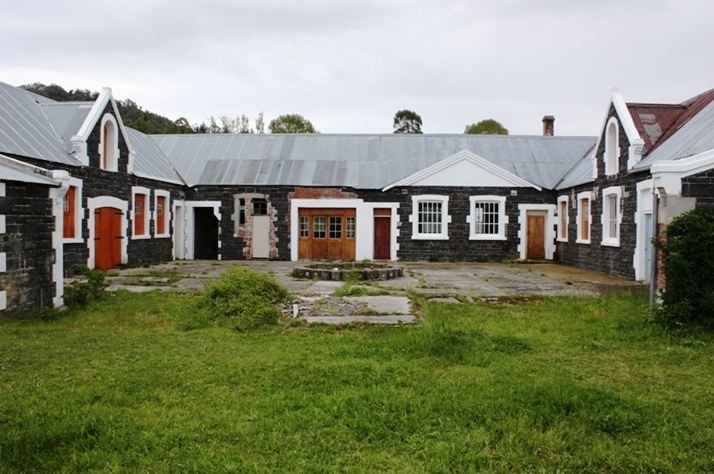
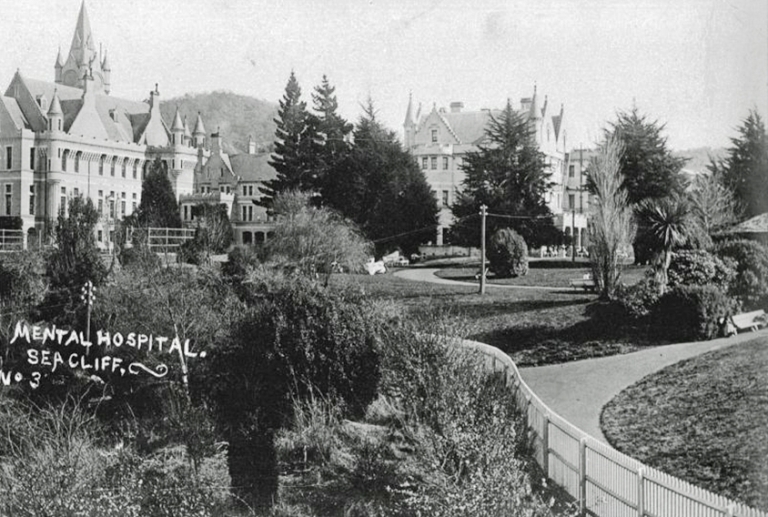
Seacliff Lunatic Asylum was the largest building in the colony on its completion: 750 feet long (228 metres) and 228 feet (70 metres) at its broadest point (and this being only a portion of the original design, the site precluding the over 314 metre long building first proposed). The contractor was James Gore (1835-1917). Liverpool-born Gore, who had come to Dunedin in 1861, was mayor of Dunedin 1881-1882, and went on to be a Member of Parliament 1884-1887. Ancillary buildings were also built, such as the bluestone Stable and Blacksmith Shop (later used as a general workshop), and the Morgue, both thought to date from the late 1880s or early 1890s.
Psychologist Peter Barham describes the main features of nineteenth century asylums, all of which apply to Seacliff. He writes that these institutions were:
‘the centrepieces of the Victorian asylum landscape: hierarchical, enclosed, largely self-sufficient communities of mental patients, on whose labour the asylum very largely depended...presided over by a medical superintendent who lived in commodious style, in a large house with open fires, with patient labour to fetch and carry coal for him.’
Asylums were seen as a ‘guarantor of the social order’ as well as ‘an important symbolic reminder of the awful consequences of nonconformity.’ The Seacliff site, with its remnant buildings and relict landscape strongly recall the stark history of the place. It is hard to conceptualise the scale of the building, and harder to imagine the effect on patients as they approached the asylum from the diminutive Seacliff Railway Station. Odd details indicate size and scale: there were, as one historian notes, 1,273 doors with ‘such a diversity of keys that they were an embarrassment to the staff.’
Seacliff Lunatic Asylum was an imposing building, emphasising incarceration, the architecture imposing a rational order on madness. Deputy Inspector Bradshaw wrote in 1884 that Seacliff resembled ‘...a prison for the confinement of evil doers [rather] than a place for the care and treatment of the insane….’ Art historian Jonathan Howard writes that institutional architecture adopted a ‘defensive façade to provoke fear of incarceration’, and that at Seacliff, the elevated site accentuated the defensive qualities of the design, symbolising hierarchy and authority, with sublime effect. Doctor McGregor, Inspector of Mental Hospitals, found Seacliff ‘forbidding’, ‘dreary and depressing.’
Unstable subsoil led to structural problems even before the building was completed. In 1887 a slip left the north wing uninhabitable; major controversy followed, which attracted national attention and resulted in a Royal Commission of Inquiry.
In March 1888 the report of the Royal Commission on the Seacliff Lunatic Asylum was released. The authors were critical and held Lawson and the contractor responsible. Lawson contested the findings but the damage to his career was done. Disgraced, he moved to Melbourne in 1890. When the dust had settled (but the Seacliff buildings still had not) he returned to Dunedin in 1900, dying suddenly at Pleasant Point in 1902. Historiography has swung back and forth about attributing blame. Later historians have been more sympathetic to Lawson’s plight.
Historian Michael King in his biography of Janet Frame, Wrestling with the Angel, writes that the problems associated with the hospital, put down to poor engineering were given a different explanation by Otago Maori. King writes that they believed that ‘the authorities had courted physical and psychic disaster by building the hospital over a tribal burial ground’ - the structural collapses, fire and ‘general air of terror said to prevail in wards holding the most disturbed patients were all consequences of a failure to respect the ethos and the tapu of the location.’
Frederic Truby King’s Seacliff (Superintendant 1889-1923):
In 1882 the government decided that all public asylums had to be superintended by doctors and Hume had to leave his post, and the new appointee was a medical doctor.
In 1889 Frederic Truby King was appointed medical superintendant of Seacliff Lunatic Asylum. Truby King lived in the main building until a residence was completed in 1892. Born in Taranaki he was trained in medicine at Edinburgh University before returning to New Zealand in 1887. Truby King’s involvement was hands on: he designed buildings, trained attendants, improved sanitation and treated inmates. He promoted fresh air, exercise and a good diet as treatments for mental illness (and other social ills). He developed separate facilities for inmates with different classes of illness, including villas for convalescents erected out of sight from the main block. Truby King was fighting against the built environment at Seacliff, from the poor construction, with the gases from the cracking pipes permeating the atmosphere, and the intimidating building, believing ‘the great enemy’ was ‘that institutional feeling.’ Truby King struggled against the massive corridor asylum, painting halls and rooms and putting art on the walls and flowers in the wards (though one rather imagines it was like a flea trying to paint an elephant).
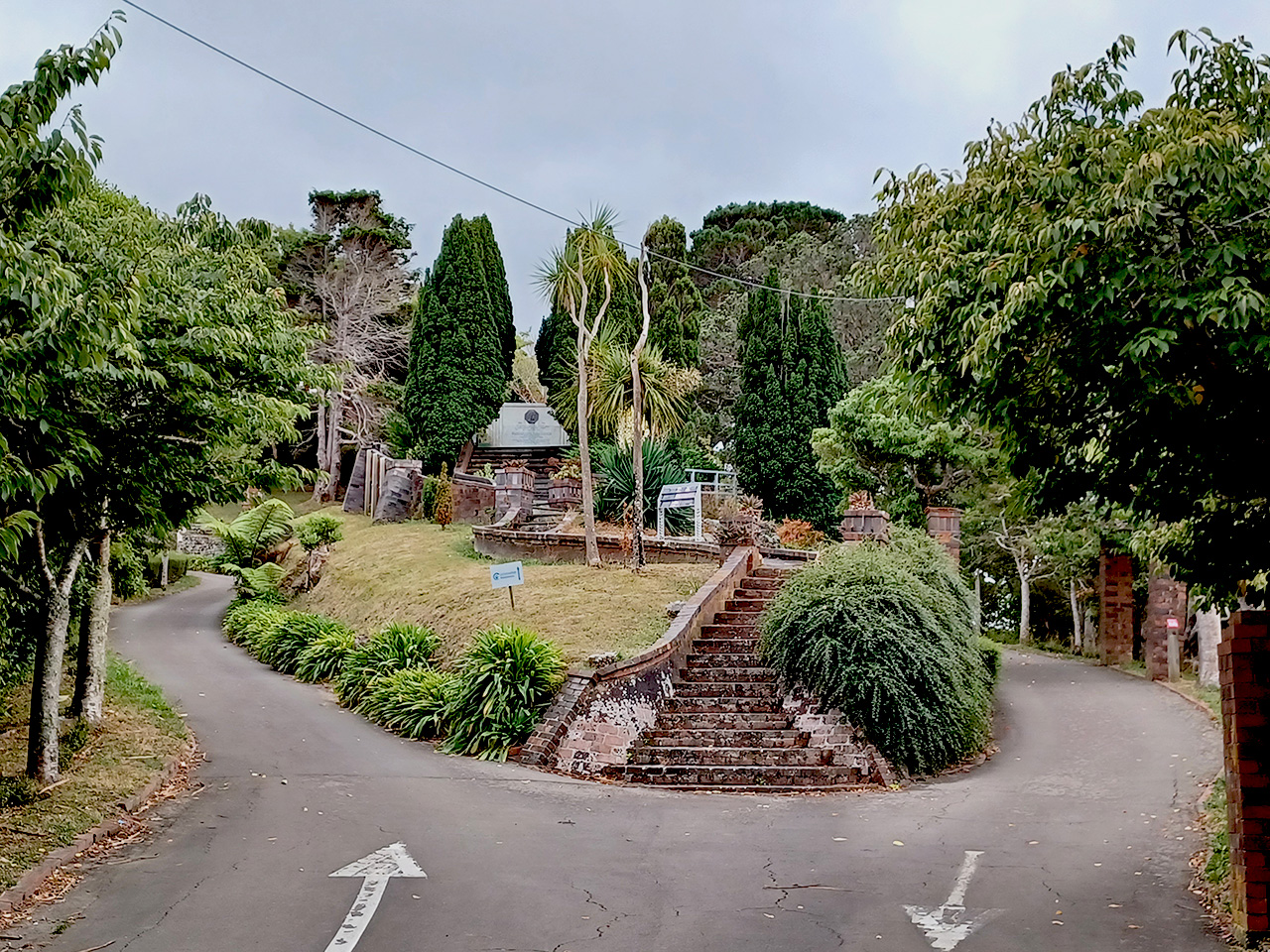
Truby King saw the grounds as part of the therapeutic environment, appointing a landscape gardener as a matter of importance (gardening would remain an obsession for the rest of his life) believing that fresh air and exercise was vital. The drive curved through the gardens rather than approaching the intimidating buildings directly, with the initial assessment of patients completed in an entry lodge.
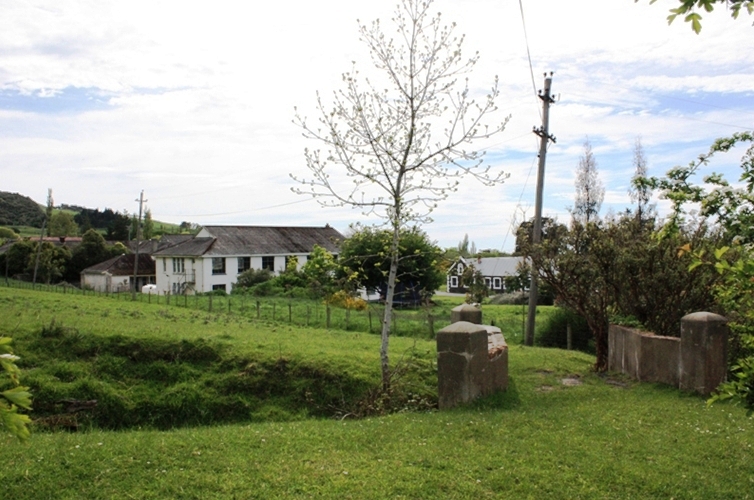
His daughter Mary’s biography of her father describes the Seacliff grounds as ‘a veritable dream garden’, ‘patients wandered through small woodlands of native trees, up and down narrow, undulating paths bordered by flowering shrubs, with unexpected vistas of aquilegia beds, rhododendron dells, rose gardens, pine walks...and orchards.’ Lawns were used for more formal recreation. The grounds included a ha ha, meandering paths and curved edges with extensive plantings of trees, shrubs and flowers.
While King improved the environment of Seacliff, some of the treatments are brutal to modern eyes and reflect contemporary beliefs about the basis of insanity, and also cultural norms of appropriate behaviour. The experience of most institutions, whatever the underlying good intentions was the ‘victory of custodial realities over rehabilitative good intentions.’ The locked door and the need to control the keys won. ‘Loose scattered madness’ was brought ‘under observation in vast warehouses of seemingly intractable lunatics’, and the role of social control, issues of class, gender and poverty are all intricately defined in the categorisation as ‘insane.’ The experiences of Annemarie Anon, outlined in The Book of New Zealand Women, provide a representative insight into the treatment practiced in the late nineteenth century. Originally a patient at Ashburn Hall, subject to periods of both excitement (which included masturbation) and withdrawal, Annemarie was committed to Seacliff when she ‘lapsed into profound melancholy.’ Annemarie’s family consulted their doctor who suggested that some improvement might follow if she were ’unsexed.’ In July 1890, Dr Ferdinand Batchelor, assisted by three other doctors, including Truby King, removed Annemarie’s fallopian tubes, ovaries and clitoris. She was discharged six months after the operation, apparently improved. There is no further information on the life she was able to live.
Women’s experiences in the asylum were different from that of the male patients. The therapeutic value of work saw the men in healthy outdoor pursuits, such as farming and gardening, which were not seen as appropriate for women. The women were largely confined to inside work, cleaning, laundry and kitchen work, a reflection of their limited role outside the home. Women’s behaviour was often seen as worse because they couldn’t participate in outside work.
Asylum to Hospital - the early twentieth century:
Seacliff was central to medical education, its staff being, from 1889 to 1948, almost the sole resources for teaching psychiatry at the University of Otago, and it was amongst the first of the psychiatric hospitals to start outpatient clinics at public hospitals. Seacliff developed with medical thinking.
In 1905 the term ‘mental hospital’ was officially adopted, replacing the outmoded ‘lunatic asylum.’ These hospitals, Brunton writes, came to ‘incorporate ‘reception homes’ and other residential facilities for early treatment’. A major change in the legal context of mental hospitals was the change of law which allowed voluntary admission. Prior to 1911 people came to the hospital only through a legal process: committal. In 1911 the law changed and enabled people to come informally, as voluntary boarders.
Villa-style accommodation, aspiring to a more domestic scale of accommodation, was a feature of mental hospitals built from the early twentieth century on. Community amenities, such as sports fields and halls were often added. Mental hospitals became identified with the medical specialty of psychiatry. Despite these changes the design of Victorian-era institutions limited their ability to adapt with changing treatment philosophies. There had been local experiments with cottages at Seacliff in the late 1890s. Truby King supported the idea of a series of detached buildings rather than large blocks, and this lead to the construction of separate more intimate buildings for inmates. The scale and environments were not well suited to the growing philosophy of the 1920s, such as the villa-system of accommodation. Nor were they designed to incorporate the move towards ‘intermediate facilities’ (such as the establishment of outpatient services) which would avoid the stigma of a stay in a mental hospital.
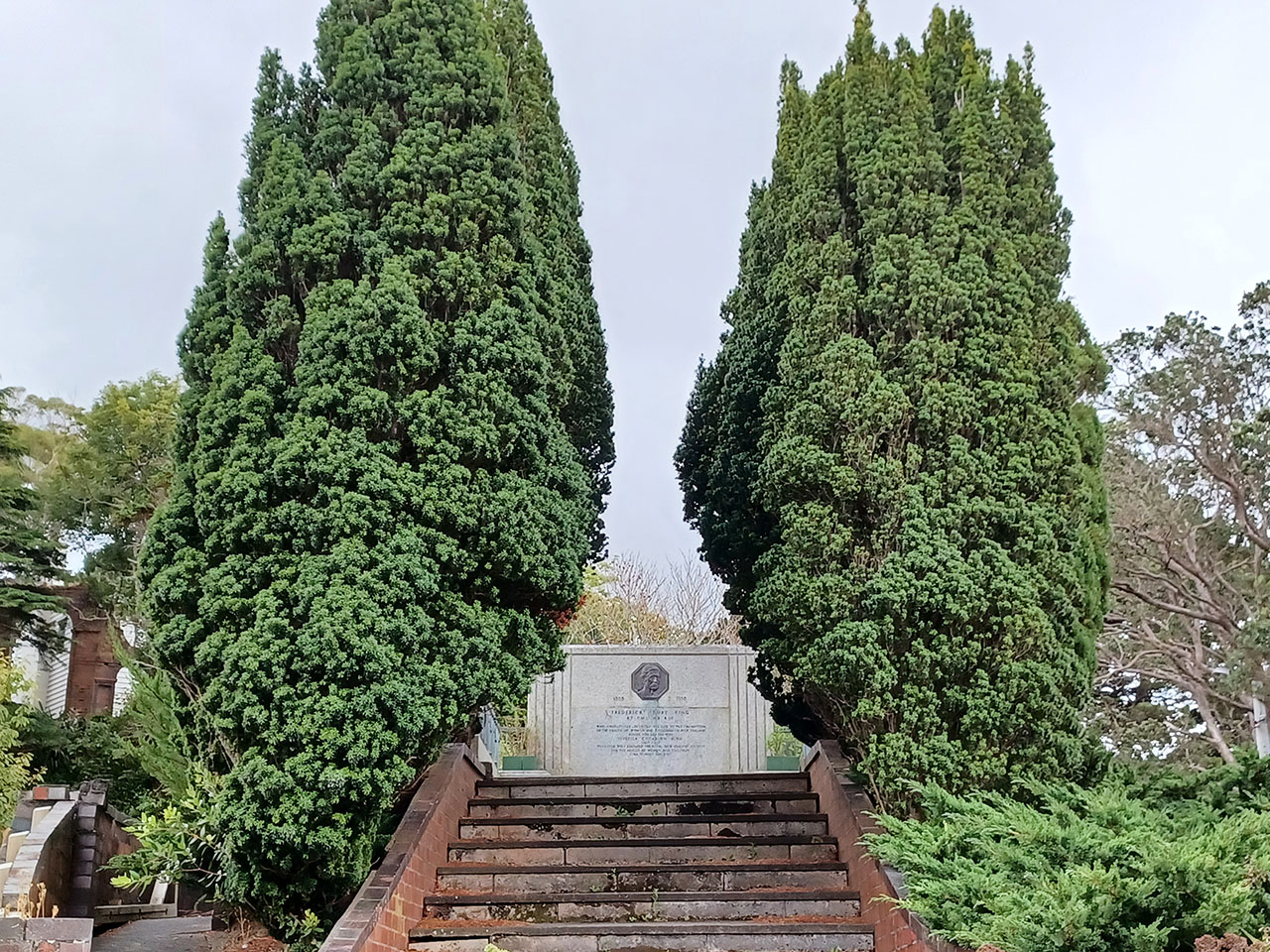
Truby King maintained an active role at Seacliff until the early 1920s when he was appointed Director of Child Welfare, and in 1924 Acting Inspector-General of Mental Defectives. He died at his home in Wellington in February 1938, after a long and influential career in medicine.
The experience of those incarcerated in the nineteenth century asylums has been one that has lived in the public imagination. Together with the site itself, the records of asylums like Seacliff are a vital part of its history. In the case of Seacliff the medical case books (from 1868-1916) provide a largely untapped source, a heart-breaking medical picture of lost lives.
While the mass of patients and their experiences have remained voiceless some of the inmates at Seacliff gained a national notoriety. Edward Lionel Terry was one. He came to public attention when he murdered Joe Kum Yung, an elderly Chinese man. Terry believed in racial segregation and his obsession drove him to kill. He was tried for the murder and sentenced to death, the sentence later being commuted to life imprisonment by reason of insanity. From 1914 he resided at Seacliff where he was given a suite of rooms, where he wrote poetry and painted. Terry’s privileges were later withdrawn and he spent the last twelve years of his life in solitary confinement. He died at Seacliff in August 1952.
The reaction to those respectably ill individuals being sent to Seacliff shows the wider stigma of mental illness. In 1917 Clifton House was built to house soldiers suffering from ‘shell shock’, what would probably be recognised now as Post Traumatic Stress Disorder, after serving during World War One. There was considerable disquiet about the accommodation of soldiers in an asylum and the stigma attached to the stay. The treatment of soldiers, which saw their illness treated through a range of talking cures, saw psychoanalysis and other allied therapies gaining a valid place in the psychiatric repertoire. Ultimately soldiers were treated at a specialist facility developed at St Mary’s Hospital at Hanmer, away from those tainted with insanity.
Seacliff’s significance went beyond the bounds of its walls, and it was a central element in this area of coastal Otago. Seacliff was the main employer for the Blueskin Bay area. Many attendants lived in the Seacliff/Warrington area. Seacliff was an important point of bicultural contact between Maori and Pakeha - whanau from Karitane and Pakeha both worked at Seacliff. These relationships have created lasting links with iwi at Puketeraki, recalling the major role Seacliff Hospital played in the community.
From the mid-1920s onward there was slow movement within the health system where some hospital boards allowed mental hospital staff to run outpatient clinics. This allowed for people to be treated without the label of committal or voluntary admission to a mental hospital. This would lead, in the late twentieth century, to a policy of deinstitutionalisation that would see the closure of the many of the large Victorian institutions.
In 1942 a tragic fire, the worst in New Zealand’s history to that date, broke out in Ward 5 at Seacliff, the horror amplified by the deaths in a locked ward. The fire swept through the ward, killing 37 female patients. Most of the windows were locked and could only be opened by a key from inside. The 39 women inmates of Ward 5 were either locked in single rooms, or in the 20-bed dormitory. Only two women escaped. The tragedy led to a commission of inquiry. Though the cause of the fire was never identified, the timber construction of Ward 5 was condemned. The locked windows and lack of fire protection was criticised. The commission recommended the installation of sprinklers in all mental hospitals.
The complex of buildings that made up the Seacliff Mental Hospital continued to develop and change through the 1920s to the 1960s. In the 1930s a new kitchen, laundry and stores block was built. Temporary buildings were shifted to Seacliff in the 1940s designed to be adjusted when the ground moved. Contractors started to demolish unsafe parts of the main building, including the tower, in 1945. Michael King writes that for those who ‘hated and feared the institution, the dismantling of Seaciff was analogous to the removal of a cancerous growth from the Otago landscape and the body politic.’
‘Therapeutic Communities’: Deinstitutionalisation:
In 1945 nearby Cherry Farm was chosen as the site for a new mental hospital, billed as a ‘therapeutic community’, the first of its kind in New Zealand. The change in the treatment for mental illness in the mid-twentieth century was profound: the introduction of insulin therapy, convulsive therapy, and the discovery of new drug treatments medicalised mental illness. Seen as enormous therapeutic advances, some of the new treatments also added a further layer of horror in the public mind. Electroconvulsive therapy and prefrontal leucotomy (lobotomy) in particular feature highly in the image of mental illness. It was originally thought that Seacliff could continue to house the more disturbed patients, but the buildings were becoming unsafe. Seacliff ceased taking admissions in 1964.
Popular portrayals in film, fiction and autobiography, such as Janet Frame’s Faces in the Water (1961), were accurate insights of institutionalisation in the 1940s and 1950s. Frame spent time both as a committed and a voluntary patient at Seacliff and Auckland’s Avondale Hospital in the late 1940s and early 1950s. Descriptions of treatments used at the hospital appear at Faces in the Water, while the gardens are described in An Angel at my Table. Misdiagnosed with schizophrenia, she was treated with electroconvulsive therapy (ECT) and insulin therapy. In her autobiography she claimed that winning the Hubert Church Memorial Award for The lagoon in 1952 persuaded the superintendent at Seacliff to forbid a prefrontal lobotomy. Her writing provides graphic insight into life behind the closed doors of Seacliff.
From the 1950s on there was further questioning of the institutional model of psychiatric care, a tension between the idea of the romantic idea of early asylums (with their farms and grounds and healthy work) and the reality of overcrowded, understaffed hospitals with the inmates little more than prisoners. Increasingly the idea of community care replaced institutionalisation, leading to the close of the institutions such as Seacliff.
Closure was a slow process. In 1959 the central block main building was demolished, the demolition programme taking eighteen months. Despite all the instability and cracking, the buildings proved difficult to dismantle, even resulting in a traction engine pulling itself in half, rather than destroying the building.
In 1963 the centenary of the establishment of the first asylum in Dunedin was celebrated at Seacliff. The celebrations included screening a film showing the demolition of the main building. There were 1,365 patients at Seacliff in 1965, an all-time high.
In 1970 [Seacliff ceased operating as a mental hospital], the reservation as a lunatic asylum and industrial school site was revoked in March 1974. Control of the land reverted to the Department of Lands and Survey.
The Deputy Director-General of Health (and former superintendent of Seacliff), Dr Blake-Palmer, indicated there was concern about the heritage buildings on the site and that buildings such as the blacksmith’s shop should be preserved. The Commissioner of Crown Lands was reluctant, indicating that the building was ‘a very small part of a very large building (37m2 of 371m2), which had housed the old carpentry, plumbing and metal training areas. He recognised the heritage of Seacliff, noting that the trees and the medical superintendent’s house were worth retaining, perhaps as a historic reserve, but also that for some people, Seacliff was a place of ‘many unhappy memories’ which ‘should be forgotten as soon as possible.’
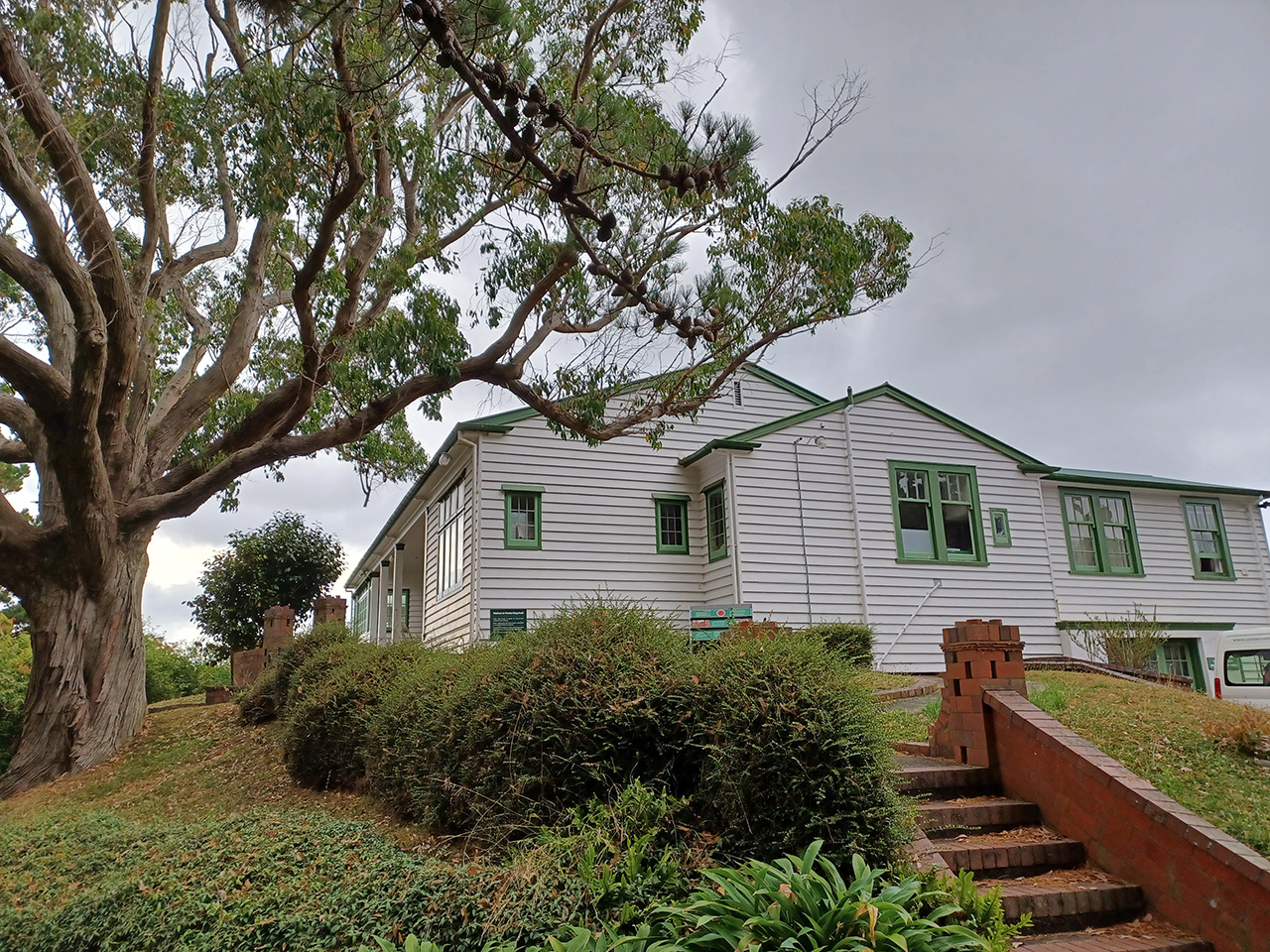
In 1974 the Seacliff site was leased by the Dunedin Museum of Transport and Technology Inc. By 1991 the Museum had closed. A site plan from that time indicates there were fifteen structures remaining – including the Boiler House, Laundry Building, Garage, Forge Building, Morgue and Administration building.
In 1991 the Department of Conservation (which had succeeded the Department of Lands and Survey as manager of the site) divested its responsibility for the reserve to the Dunedin City Council. In 1992 the last building within the bounds of the reserve, Clifton House, was demolished. The demolition of Seacliff was part of an international trend. Psychologist Peter Barham writes that ‘today we are inclined to view with ambivalence, if not disdain, expressions of aesthetic rapture over the spectacle of these magnificent estates in Victorian lunacy…preferring to regard them as the grandiose creations.’ This disaffection and changing focus of mental health policy led, like at Seacliff, to the demolition of most asylum buildings. The site still retains an aura, a sense of the forbidding past, where a visitor can imagine the experience of staff and patients, knowing that they can leave for the safety of their own minds.
In 1993 the Waikouaiti Coast Community Board asked the Seacliff Advisory Committee to manage the Truby King Recreation Reserve. The adjoining site, where the surviving hospital buildings were located was sold in 1996.
In 1998 the Dunedin City Council prepared a management plan for the Reserve which noted its historic values, the elements associated with the site’s original use as a hospital, including the tennis court, tracks and pathways, recognising that the story of the Seacliff Hospital its staff and patients was ‘an important part of the history of the Reserve’, and that it was of ‘high historic importance at a local, community city wide and national level’ because of Seacliff Hospital, the work of Truby King, the 1942 fire and Janet Frame’s stay at the hospital. The plan also states that the historical significance of the reserve is inadequately recognised. Much of the lower slopes of the reserve are covered by a woodland known as the ‘Enchanted Forest’, described as a historical and cultural landscape. It is managed as a ‘wild garden’ and park that ‘commemorates Sir Frederic [sic] Truby King and patients and staff at Seacliff Mental Hospital.’
In 2011 the remaining buildings are in private ownership and the reserve remains as a memorial to the history of the Seacliff Lunatic Asylum Site.