Early History
The Waitaki area is traditionally associated with the Kāhui-tipua, Te Rapuwai, Waitaha and Kāti Māmoe peoples. The Waitaki River was an ara tawhito (traditional travel route) for Kāi Tahu into the interior of Te Wai Pounamu and there are many kāika nohoka (seasonal settlements) and kāika mahika kai (food gathering sites) along the river. The land around the Waitaki River mouth shows evidence of extensive settlement, while Moeraki was one of the early cradles of knowledge for Waitaha and Kāti Māmoe histories. Key coastal settlements were at Moeraki, Shag Point, Waikouaiti, and Huriawa (the Karitane Peninsula). Kāi Tahu’s presence is shown through a range of archaeological sites from middens, ovens and urupā, to rock art. The Takiroa Historic Area (List No.7769), Maerewhenua Historic Area (List No.7770), Awamoko Rock Art Site (List No.5670) are some of the sites that are listed on the southern boundary of the Waitaki. Kāi Tahu named the area in the lee of the cape, Ōamaru or the place of Maru, making use of the resources of the area.
Birth of a new town
In 1858, the town was surveyed, and the first sections were opened up for sale the following year. These sections were between Tyne and Tees Streets (see Figure 8). Here, some of Ōamaru's earliest European buildings were erected among the first being H.C. Hertslet's accommodation house, Trail, Roxby and Company’s store, and the Northern Hotel. From the 1860s, as the town grew, serving the rich hinterland with its grain and wool, these buildings were replaced by the stone structures that survive today. The scale and elaborate design of the buildings in the area reflect the vigorous nature of the town’s economy during the rapid growth of the wider Otago region in the 1860s-1870s. In these very early days of settlement in Ōamaru, the local limestone had not yet been extensively exploited. The earliest mention of quarrying is from 1860. So, the fact that a house as large as Casa Nova was built using local limestone in 1861 is significant. In 1864 it was noted that approximately 12,000 cubic feet (340 cubic metres) of stone had been quarried for use in the district.
William H. Clayton, Colonial Architect, praised the limestone of the area in 1871, saying, ‘the stone from the best Kakanui quarries is superior to any other building stone I have met with in the Colonies during a practice of twenty years.’ By 1875 the quarrying of limestone had become an industry, aided by the development of shipping and rail, and supply routes were established. “The town of Oamaru is chiefly supplied from Cave Valley, and Dunedin and other southern districts from Kakaunui [sic]. The trade to Dunedin alone is sufficient to keep one or two vessels constantly trading to Moeraki.” Mr Perry’s famous Totara Tree Stone Company which was renowned for the ‘outstanding’ quality of its stone, wouldn’t be formed until the 1880s. In 1875 it was noted that 90% of the buildings were constructed using Ōamaru stone, and a few notable homes are mentioned, “In Oamaru, nine-tenths of the buildings are of this material, and several of them, such as the National Bank and the Star and Garter Hotel, are worthy of a place with the architecture of the old world. The private residences in that district can also be classed along with the country houses of England, notably Windsor Park, Elderslie, Moa, and Totara.” Those residences were part of large estate and post-dated Casa Nova by over a decade which may explain its absence from this list of notable homes.
By 1860, sheep runs were the ‘economic backbone of the colony’ with nearly all the land in Canterbury and Otago having been claimed for pastoral use and the main product being wool for the international market. This was the time of the Squatters, those cashed-up enough to occupy large tracts of Crown land to graze livestock. Known as the Squattocracy, this social class had more land, money, and beasts. Many were publicly educated and well connected within their class, and relied on the labour of a new working class. The owner of Casa Nova, Mark Noble, certainly fitted comfortably within this class.
Mark Noble Builds Casa Nova
English-born Mark Noble (1834-1868) was from Danett Hall in Leicester, England the only son of Joseph William Noble. His entry in the Cambridge alumni collection indicates he was born in 1834, educated at Brighton Collegiate, and Caius at Cambridge. He matriculated at Magdalen Hall in March 1855, six months after his wife’s death. He was admitted to Lincoln’s Inn in 1859. The following year he graduated with an M.A. (Oxford). Noble is recorded as having arrived in Auckland from London, via Melbourne on the Mermaid on 22 November 1860.
Mark Noble applied for rural land in Block I Ōamaru District in April 1861 and in December that year, applied for land in Block V. Roberts records Mark Noble as building Casa Nova that same year after having purchased the fourth house (the first built by an experienced carpenter, Robert Allen, for Dr Knowles King) in Ōamaru. The property on which Casa Nova was built came with 100 acres laid down in grass, and was (at that time) situated just north of the town boundary. It would have had unimpeded views across the plans to the sea in the east.
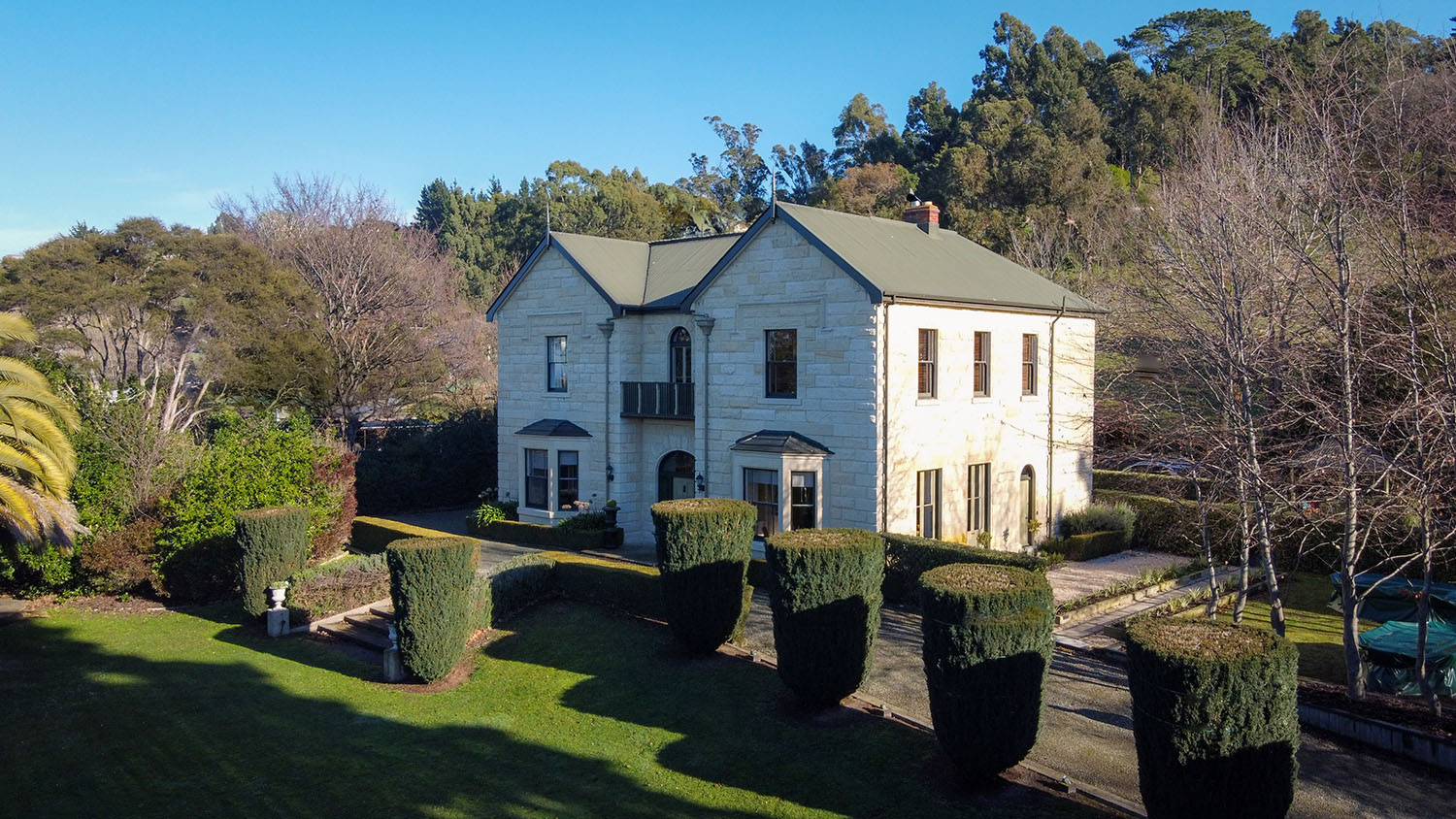
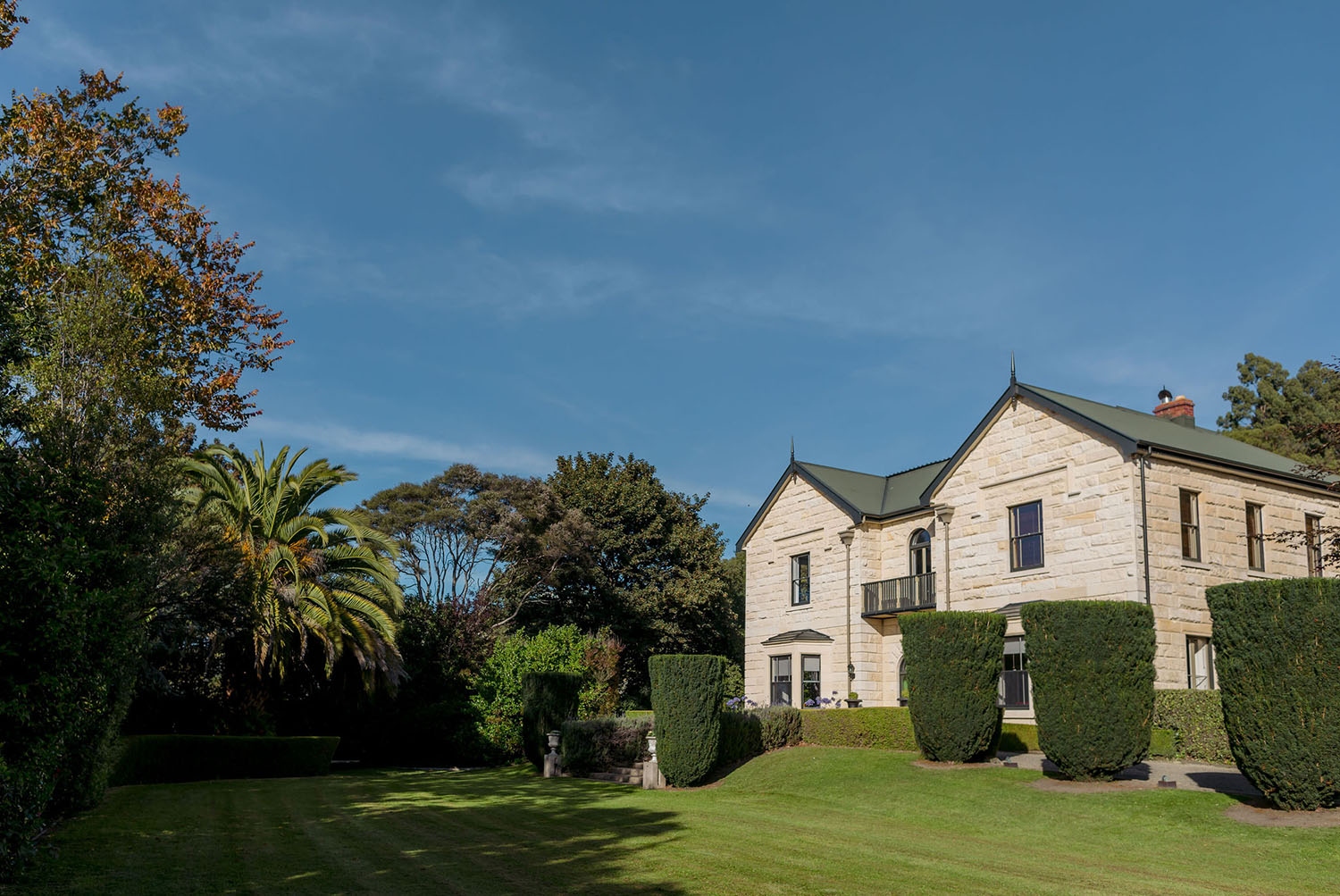
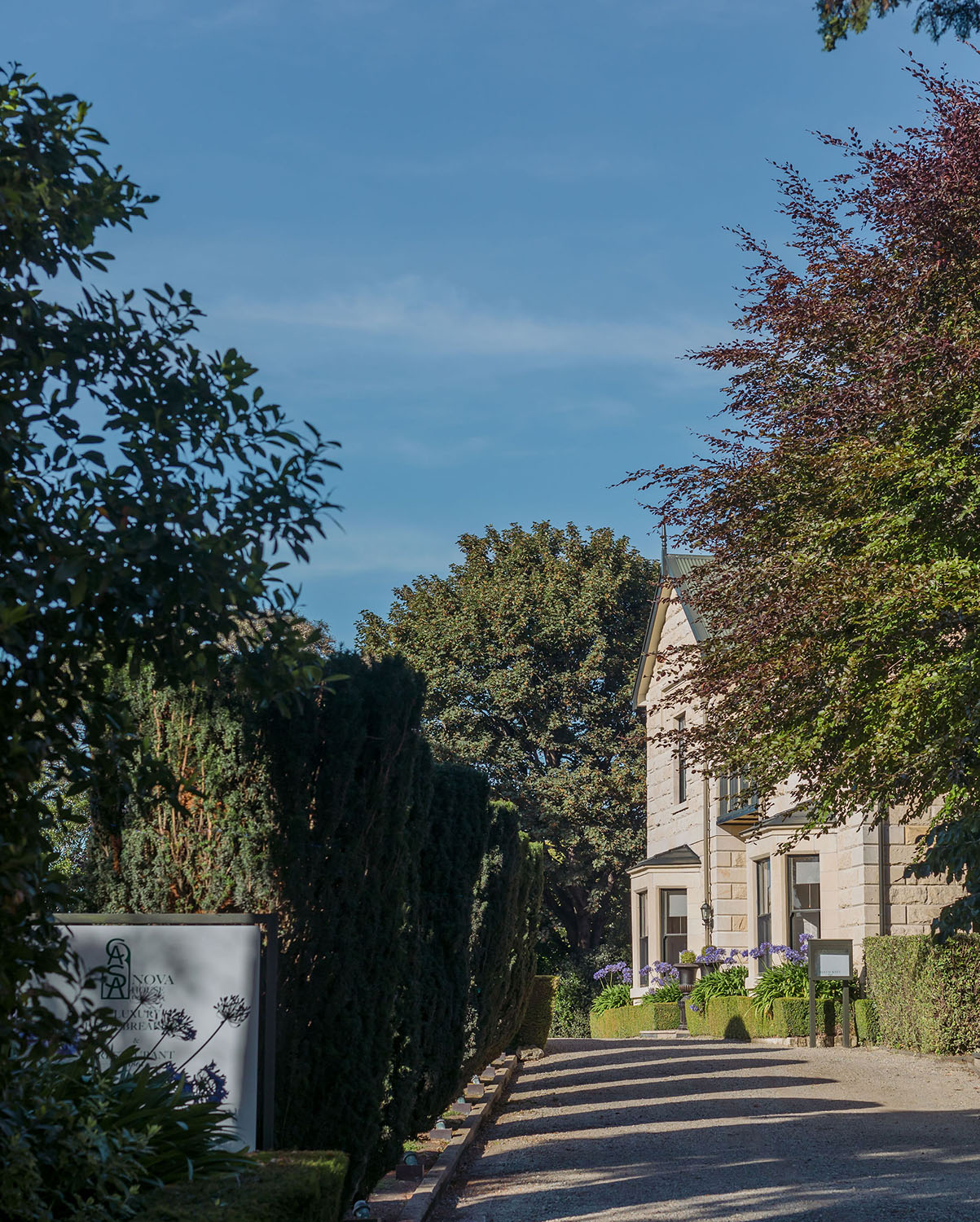
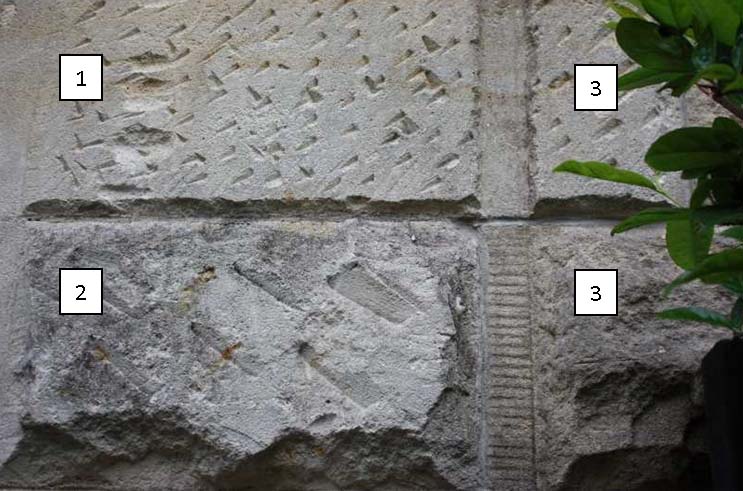
The imposing style of the house was thought to be inspired by that of Danett Hall, where Noble was raised, which had been demolished in 1861. A later newspaper article recalled that Noble built stables and men’s quarters on the site, followed by a ‘large square mansion in rough brown stone.’ The house was designed by Thomas Glass and Michael Grenfell, and was the town’s most substantial residence at that time. The stone is believed to have been transported by bullock teams from the Totara and Kakanui quarries where it was cut by hand. The house is built of bolstered (split) limestone in Georgian style, emphasising grace and formality.
An image (Figure 9), probably from the 1860s, shows the rear of the house, with the extensive gardens and outbuildings. The house overlooks the coast in what is a rural area, with only a couple of houses nearby. Brocklebank describes “Noble’s limestone, Baltic pine and kauri-built mansion, built in 1861, was certainly the first grand style whitestone dwelling in Oamaru.”
Even amongst the other early run holder’s estates, Casa Nova was a standout piece of architecture. While Dansey’s Hut (List No.2419) and the Otekaike Station Cookshop and Men’s Quarters (List No.2426) date from a similar time and are built of Ōamaru stone, they are humble dwellings compared with grandeur of Casa Nova. Filleul’s Windsor Park Estate Homestead (List No.2437) is similarly impressive but of an altogether different design.
Noble took on Run 99 when E.F. Rich dropped out of the partnership with his cousin W.H Teschmaker. He was involved in the beginnings of the horse racing industry, and was frequently reported as a steward at the Waitaki Races in the Otago Witness. Throughout 1862, Noble was advertised to be one of the stewards at “The First New Zealand Champion Race”, to be held in Dunedin in March 1863. His pursuits extended to billiards, winning a game worth £1000. The Champion Race was to be for 1000 sovereigns, with a sweepstake of 100 sovereigns. It was to be a grand affair and hope to attract owners of horses from Victoria, New South Wales and Tasmania to enter. Noble was involved in racing his horses as well. McDonald notes this period was “dominated by horses” – racing becoming a popular pastime, and notes the Oamaru Cup was won by Vension, ridden by Mark Noble. Breeding Clydesdales was a further pursuit of Noble’s and frequent advertisements in the papers speak to the availability of his Clydesdale horse, Champion, for the duration of the 1862 - 1865 seasons. Champion was reputed to be “one of the Purest Cart Stallions in the Colony.” Noble must have had many staff to manage his run and horse breeding as he appears to have spent 1863-1865 serving as Corporal in the 70th Surrey Regiment. He received the New Zealand Medal and served at: Waireka (28 March 1860) Warea pā, Waikato Campaign, Rangiaohia (21 Feb 1864), Ōrakau Campaign (30 March 1864), Taranaki and Wanganui Campaigns.
Noble did not spend much time at his new Ōamaru residence. On 24th August 1864 Noble advertised his furnished, “substantial two-storey stone house”, Casa Nova to let for 18 months. The house was advertised to let and was described as a,
substantial two-storey stone house, furnished, containing on the ground floor, drawing-room, dining-room, hall, kitchen, larder and bedroom. On the first floor there are five bedrooms and dressing room; also a bathroom. There are also a detached washhouse, wooden stables for 8 horses, coach-house were also on the property which included 1000 acres of land; 5 in lawn and vegetable gardens, two paddocks of 10 acres each in permanent English pasture; and 15 acres in crop. There is a permanent supply of water in the two paddocks. Also an excellent stock paddock of 60 acres, well watered and sheltered.
In early 1865 Noble was selling off his sheep and could be contacted at the Otago Club in Dunedin, perhaps indicating Casa Nova had, by this stage, been let. In May 1865 Noble’s extensive Kakanui property, sheep, dairy cows, bullocks and horses for sale by auction prior to his “departure for England”. A couple of months later his stock and implements were for sale including his celebrated Clydesale draught stallion, Champion.
Noble left New Zealand later in 1865. The reason why is uncertain as no discharge records exist. However, the Surrey Regiment was required for alternating home and abroad service between the years of 1865 and 1877. According to his will, he next resided at 13 Robertson Terrace, Hastings in the County of Sussex. Noble died in Malta on 5th April 1868. He may have been in Malta with his regiment which was stationed there at the time. He is buried at the cemetery in Bagni di Lucca in Italy with his wife Elizabeth Martha Baynes Noble (1834-1854).
Later Occupants
Run holder Charles Fenwick (1808-1875) and his family were tenants around 1868-1870. Originally from Denmark, the Fenwicks were a noble family with generations holding consular positions. They were significant in Otago’s history; the Fenwick brothers (William, Fairfax and Charles) were partners in pastoral concerns, including Otepopo and Kuriheka. Charles was Hanoverian consul in Elsinore until 1862. That same year he was allocated a Crown land grant in New Zealand.
Later tenants of Casa Nova included Frederick Every (1836-1892), probably later owner John Borton’s brother-in-law.
Later Owners
It was not until 1875 that Noble’s estate offered the property for sale. The sale notice describes the house as a ‘substantial stone mansion, with ten rooms, large entrance hall, pantry, and out-offices.’ It stood in ‘well laid-out grounds, with a large Kitchen Garden, well stocked with fruit trees. Forty acres had been subdivided off the holding.
In 1875 Casa Nova was sold to prominent Maerewhenua run holder John Borton (c.1826-1916). Borton, son of William Borton of Cottenham House near Banbury, trained as a civil engineer and surveyor, had arrived in Port Chalmers in 1849, before following gold to Victoria before settling in Otago. He built Ferntree Lodge in Halfway Bush (List No. 368, Category 1). Borton took up the 15,000 acre Maerewhenua run with Julian Jeffreys, later taking up additional land, acquiring some quarter of a million acres. Borton later went into partnership with Alexander McMaster, under the style of Borton and McMaster – one of the ‘best known and most prominent pastoral partnerships in New Zealand’ which, ‘apart from its success as a private business, it rendered valuable service to the colony by importing and breeding stock of the best quality, especially merino sheep.’ Borton and McMaster free-holded huge estates and were wealthy society figures. Borton and McMaster both lived in big Ōamaru houses – Borton at Casa Nova and McMaster at Waikaura (burnt down in 1904). In 1911 Borton sold the property to David Dunn. Borton died in 1916.
David Dunn, a former Mayor of Ōamaru, was a prominent citizen – a vice-chair of the Harbour Board and a board member of the Waitaki High Schools Board. The property was further subdivided in the 1920s. A 1924 plan shows part of the Casa Nova estate with its associated stable and a plantation and garden around the house. A timber addition was added to the rear around the turn of the century. Dunn and his family lived at Casa Nova until 1926.
In 1926, the house was bought by a Mr Parker, who sold it again in the 1930s to James (a goldminer working in Queenstown) and Helen McMullan, who lived there with their eight children until 1961.
The house was vacant for some years during which time its condition deteriorated. Christine and Dave Graham bought the property in 1966. The Grahams altered the house, including removing an interior stone wall to create a large reception room, opening the house as a reception venue. They turned the lounge and smoking room into a dining room to seat 80 people and built a new kitchen to cater for functions and weddings. By this time, an acre of land remained with the house. In the 1980s Brent and Lynn Twaddle carried on the catering and function business, the venue being a popular destination.
In 2000, Casa Nova was bought by ex-British Airways chief chef David Taylor who converted the premises to a restaurant and home, restoring many of the interior features and installing a commercial kitchen. The restaurant and lounge occupied the ground floor, the lounge being utilised for pre and post dinner drinks. The restaurant operated until 2007, closing when the property was sold (and apparently the most expensive property in Ōamaru at that time). Anabel Rea reported that Casa Nova was, “… one of the South Island’s few true fine dining restaurants … The height of chic at the time, the establishment was famous for waiting staff who wore white gloves and served meals on bone china dishes, with polished silver cutlery arranged on starched table cloths.” Taylor won an individual gold medal at the International Culinary Olympics, Internationale Kochkunst Ausstellung (IKA), Berlin.
The house sold again in July 2019 and the current owners are undertaking repairs and plan to continue to make the home a place of accommodation and hospitality.