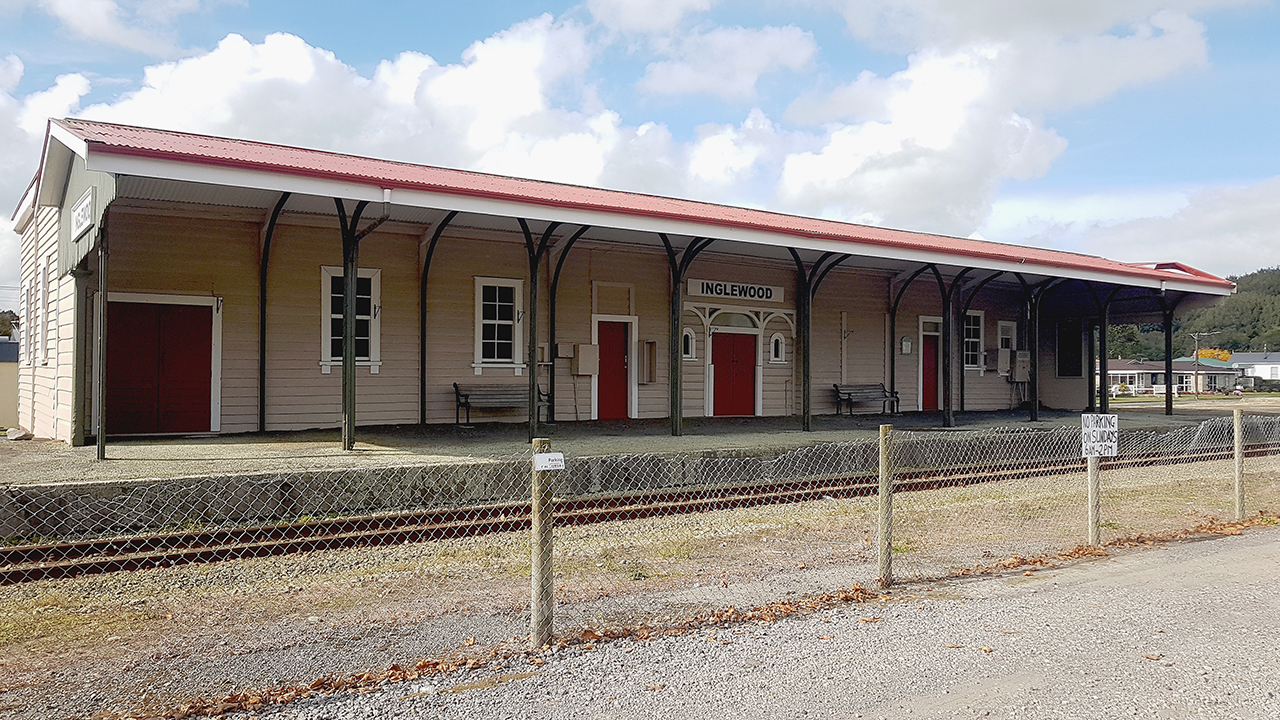
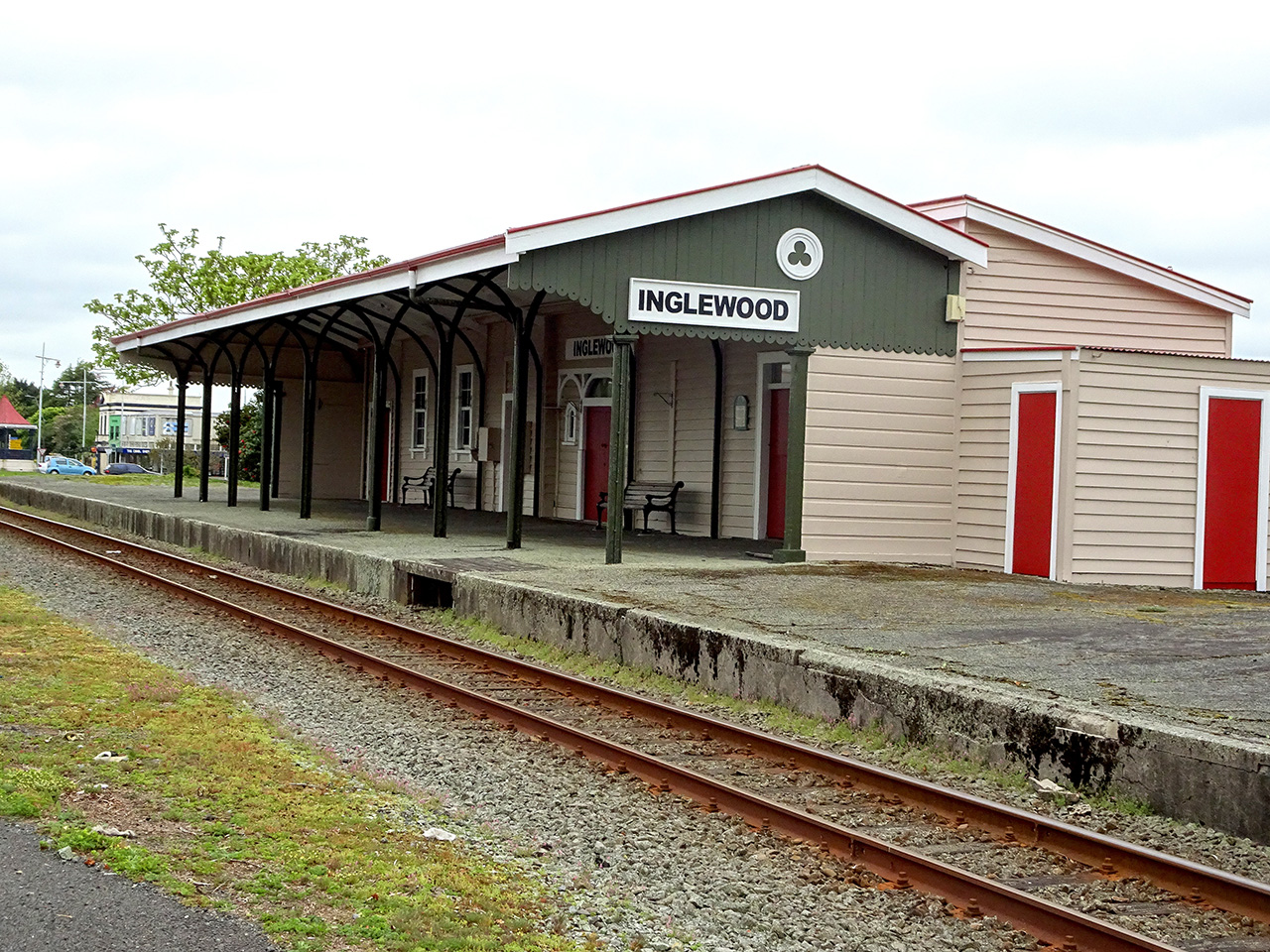
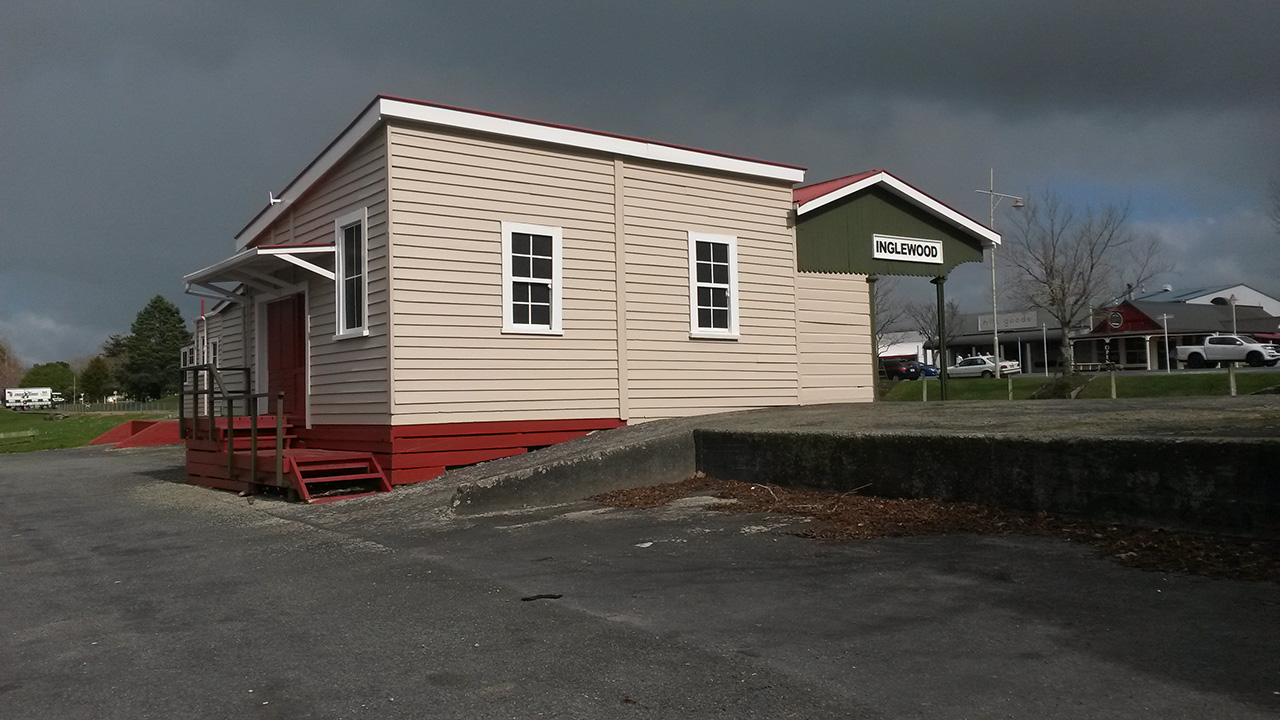
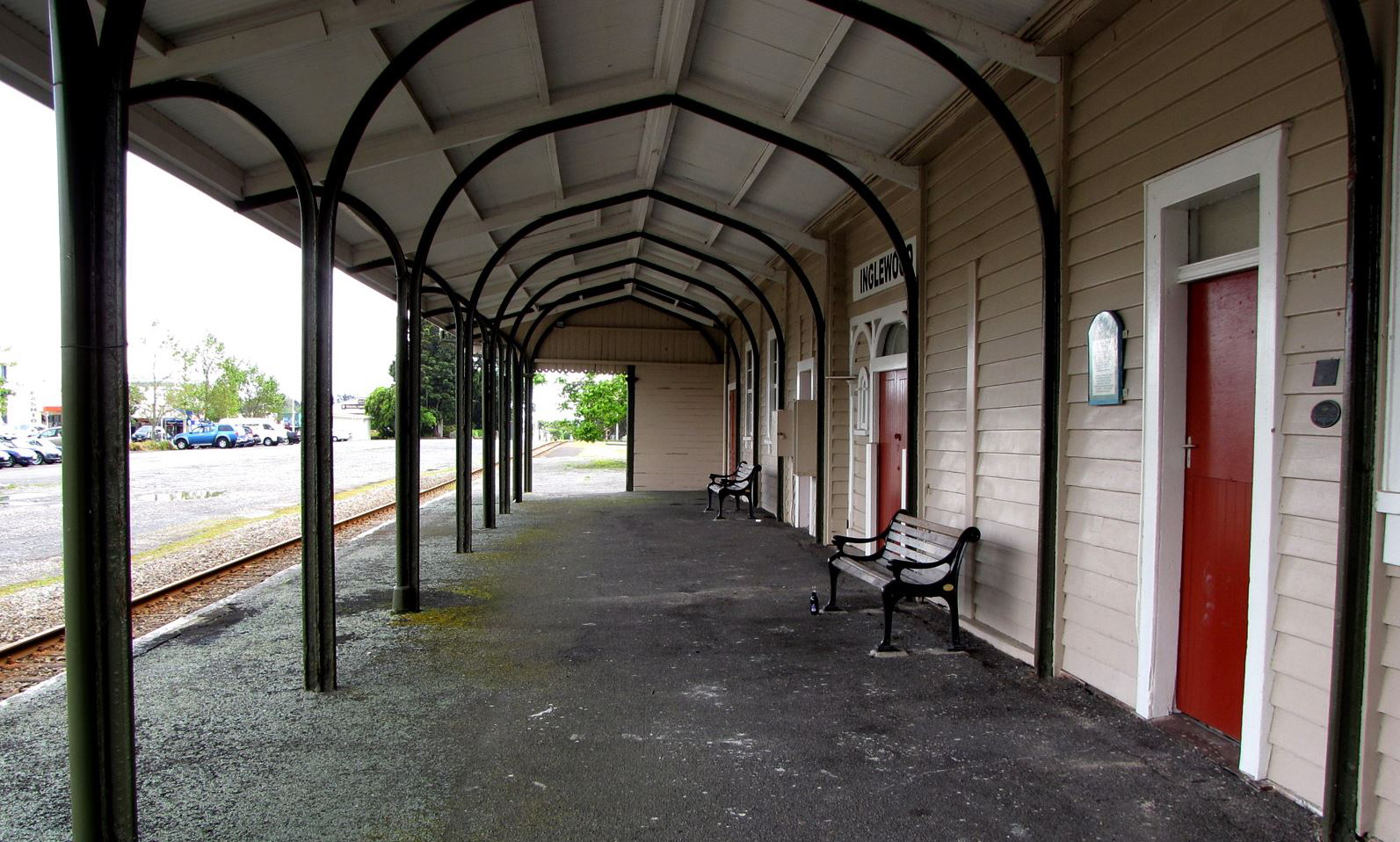
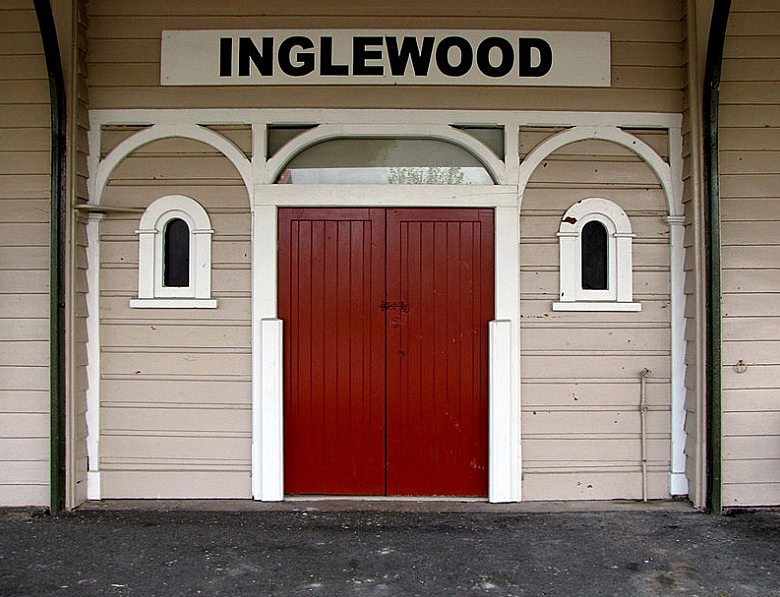
The Inglewood Railway Station and Yard is prominently located in the centre of the town of Inglewood, north-east of Mount Taranaki in the North Island. The railway station building and yard were constructed as part of the first extensive railway construction programme in the North Island and date from 1876. As such, the station building is regarded as the oldest railway station still on its original site in New Zealand.
The history of settlement in Taranaki is long and often fraught with periods of conflict. There is archaeological and traditional evidence of Maori settlement in South Taranaki dating back to the 14th century. Taranaki had a wealth of natural resources which made it an attractive area to settle and the resulting immigration to, and then migration within, the region meant that by the early nineteenth century there were several iwi present in Taranaki with what would become Inglewood being at the centre of Te Atiawa's rohe (district). European influence in the area began to be felt from the late 1820s with the arrival of small groups of whalers and traders. When the Plymouth Company was formed in early 1840 the potential for conflict between European settlers and authorities, and local iwi was heightened. Although the first few years of settlement at New Plymouth appear to have been relatively harmonious, by the end of the 1840s settlers were looking to extend their influence and the seeds of conflict between iwi and the Crown were well and truly sown.
The hostilities between some Taranaki iwi and the Crown around the mid nineteenth century, and the resultant land confiscations from the 1860s, have been a significant feature of the race relations and politics of the province for 150 years. Armed conflict between Te Atiawa and other local iwi, and the Crown from 1860, was the product of the strong opposition that these iwi expressed to land purchases in their area, such as the Waitara Block. The hostilities meant that under the New Zealand Settlement Act 1863 the Government was able to confiscate land from those who were deemed to be 'rebels' whether the individual hapu of the area taken were actively involved or not, and led to 185,000 acres of land within Te Atiawa's rohe being confiscated.
Railways were initiated in Taranaki only a few years after the abating of the wars in 1869, and were seen as a means of cementing European ascendency in the province. In the 1870s New Zealand was in the grip of its first surge of railway construction which was brought about by Julius Vogel's (1835-1899) public works and immigration policy. Vogel, then the Colonial Treasurer in William Fox's government, proposed a bold expansionist policy which was adopted by the House in 1870. As part of this plan it was intended that a railway in Taranaki would facilitate access to, and communication between it, and Wellington, and promote settlement which could support the railway and utilise the vast industrial and agricultural potential of the province. The anticipated spin-off of this for the Government would be the establishment of a permanent and unassailable hold on the region. The opinion that a railway was the means of achieving this seems to have been relatively common view and had been suggested to Government officials by a local European settler as early as 1864.
In Taranaki the first step was to construct a railway between New Plymouth and Waitara. The contract for this section was let to a London company, John Brogden & Sons, in 1873 and it opened for traffic on 14 October 1875. This was then extended inland to Inglewood from Sentry Hill, the route for which was surveyed by Charles Wilson Hursthouse (c.1841-1911). The construction of this section of the railway then proceeded between 1875 and 1877. Railway construction throughout New Zealand was close to its peak during the period when this section was being established, and 1876 was said to have seen 'a very large expenditure' on this infrastructure. In accordance with Vogel's policy, assisted immigrant workers were principally used to build the railway from Sentry Hill to Inglewood and also cleared the bush for settlement. Many of these immigrants were of Polish descent, but there were also German, Dutch, Swiss and British immigrants who did the work and resided in or around Inglewood. After the railway had reached Inglewood it continued steadily on and had arrived at Stratford in 1879 and Hawera by 1881.
When the railway through Taranaki, from New Plymouth to Foxton, was eventually completed in 1885 it became what has been called the 'first extensive section of railway in the North Island'. It connected to the Wellington & Manawatu Railway south of Longburn, the line between New Plymouth and Wellington totalling more than 450 miles of continuous route length. New Zealand's first public railway was created between Christchurch and Ferrymead in 1863, and the South Island was then quick to cement its lead in railway construction mostly through the ambitious efforts of the Canterbury Provincial Council and the resulting competition between it and its neighbours. Despite lagging behind its southern counterpart, public railways began to be built in the North Island from the early 1870s at places such as Auckland, Wellington, and Napier. However the Taranaki railway was a pioneering transport route in the North Island and laid the foundation for subsequent larger projects such as the North Island Main Trunk, which was only in its conceptual stage when the Taranaki railway was being completed.
By the time the railway line neared Inglewood in 1876, formal settlement had already begun. The first town lots were sold in early 1875 as a result of political agitation from New Plymouth which convinced the Government to sell over 100,000 acres of the inland Taranaki land which had been confiscated after the conflicts of the 1860s. The ‘dense mass of virgin bush' was quickly cleared and used for slab huts and the other rough architecture which characterised the town early on. The approach of the railway was the cause of much excitement among the existing settlers in Inglewood and surrounding district. People tracked its progression in letters and by April 1876 the railway is reported to have been close to Inglewood.
In preparation for the arrival of the railway a ‘Class 5' station was built at Inglewood in 1876, on land purchased for that purpose in 1873. The Public Works Department contracted the construction of the station building and a stationmaster's house to J. Gibb and G.B. Sealey for £410. The opening of the building was formally celebrated on 29 August 1877, and the section of the railway line that it served opened to public traffic on 30 November 1877. Also in 1877, the goods and engine sheds were constructed by different contractors which completed the initial complement of buildings at Inglewood Railway Station. This was to be a staffed station and in accordance with the standardised plans of the time, which were the result of the drive to construct railways in the most efficient and cost effective manner possible, it did not have a verandah but featured a central roofed shelter which acted as a vestibule and had the stationmaster's office on one side, and the ladies' waiting room on the other.
It is probable that the design for the set of standardised Vogel era railway stations was the work of the first and only Colonial Architect, William Henry Clayton (1823-1877). Through his appointment as Colonial Architect during the period of implementation of Vogel's expansionist schemes for public works and immigration, there is no doubt that Clayton contributed greatly to New Zealand architecture in the eight years he held this office. Crighton writes that Clayton, charged with the responsibility of providing the public facilities needed to support Vogel's policy, which included Customs houses, immigration barracks, court houses, post offices, railway stations, prisons, schools, offices, government employees' cottages and hospitals,
‘devised standard plans to answer the problem of quickly erecting numerous small wooden buildings throughout the colony, from the goldfields in the southern provinces to the north of Auckland. At least 80 post offices alone were constructed between 1870 and 1877. The standard-plan buildings were successful because of their appropriate simplicity, but their appearance belied the wealth of engineering and architectural experience which generated them.'
The standardised railway station designs from the Vogel era are commonly attributed to Clayton because he was the architect-in-chief, however, they may have been worked up by one of his staff, such as Pierre Finch Martineau Burrows (1842-1920), and then signed off by Clayton.
Because rail was the main means of transporting the mail, in smaller towns during the late nineteenth century it made sense to have the Post Office in the railway station building. Combining stationmaster duties with those of postmaster was also a common occurrence and Inglewood was no exception. The original Post Office in Inglewood was set up in the Government Store in 1875 and was then moved to another store before being incorporated into the railway station building in 1878. Prior to this there were a relatively large number of post offices which had been included in railway stations, mostly in Canterbury, but Inglewood was only the eighth instance of this in the North Island and was the second in Taranaki behind that in the Waitara station building. The Inglewood station building was expanded in 1891 and 1897 in order to enhance the passenger facilities, but also at the Post Office Department's request. By 1901 Inglewood had a population of over 700, and five years later this had risen to 1,152. With this increasing population to service a specialist Post Office was required, and as such a dedicated building was constructed opposite the railway reserve which enabled the Post Office to move out of the station building in 1902. The growth within, and then removal of the Post Office from, the station building is indicative of the development of Inglewood from a small tent settlement to a thriving town. This growth can be attributed to the economic stimulus and resulting population growth that stemmed from its proximity to a railway and associated station.
As discussed earlier, it was the prospect of the railway link from New Plymouth to Patea and onto Wellington, and the workforce this required, which first brought people to Inglewood, and once the railway was constructed it continued to do so. Until the mid twentieth century conveyance by train was the main form of passenger transport when travelling between towns and longer distances. As such the railway station was the main portal to and from Inglewood. The railway enabled entrepreneurs like Chew Chong (1827-1844? - 1920) to supervise his businesses in towns such as Eltham and Inglewood while being based in New Plymouth because he could easily make the return trip to these places in a day. The station was also a lifeline for seriously injured or ill people in the Inglewood area who required treatment at New Plymouth Hospital. Unfortunately, this meant that at least one person, Henry Conrad who was hurt while tree felling, died at the railway station while awaiting transportation. The railway also enabled politicians to travel to, and within Taranaki. On occasions when notable people, such as Premiers Richard Seddon and Joseph Ward, visited the town Inglewood Railway Station was the site of their formal greeting. On one visit Seddon even delivered his address standing on a chair on the platform.
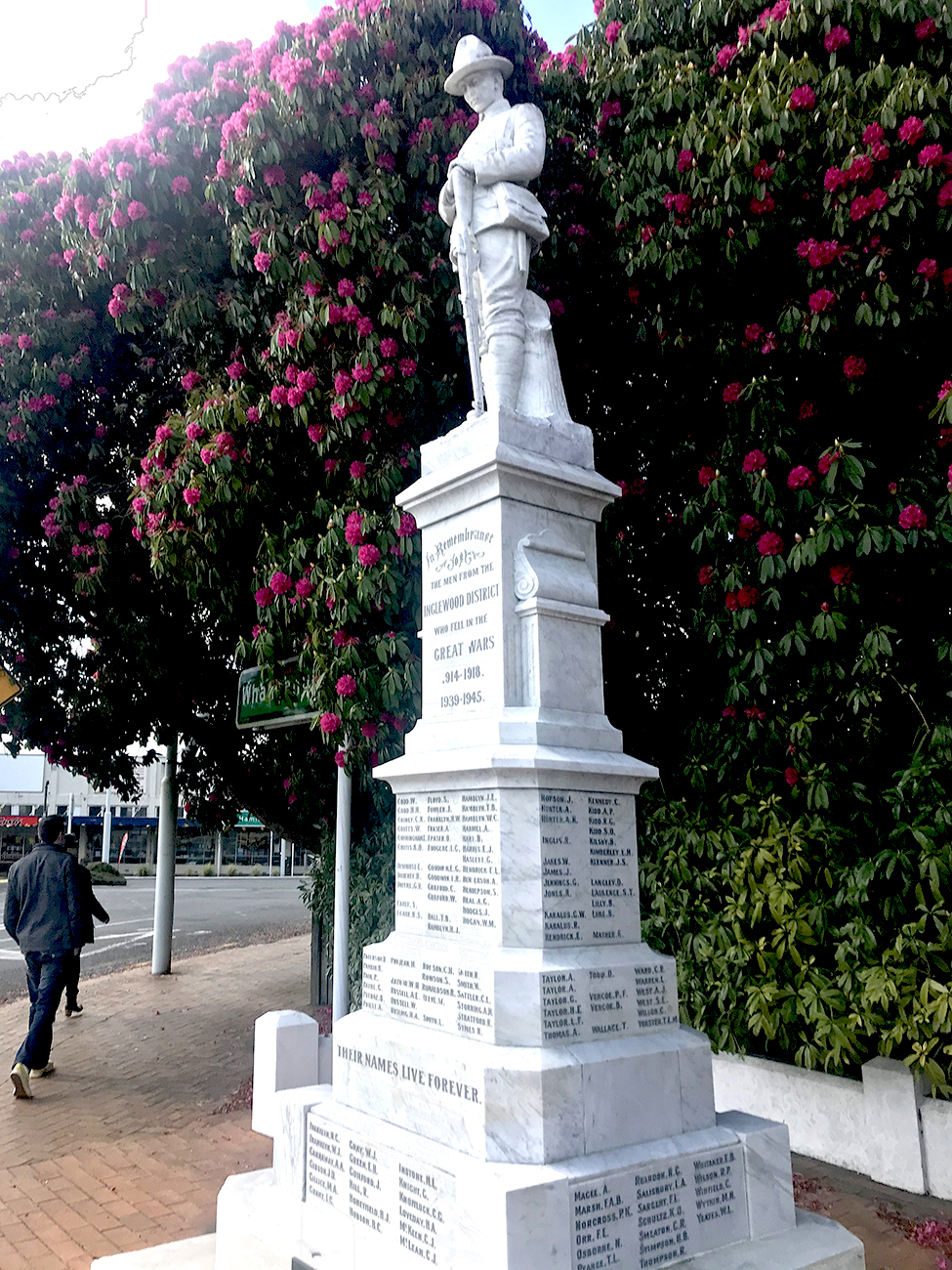
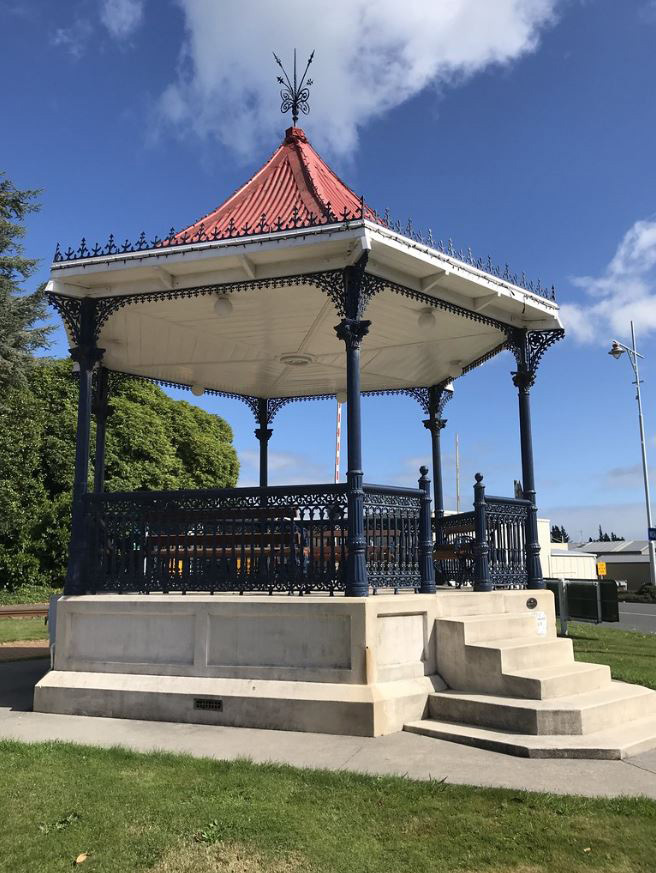
New Zealand railway stations facilitated travel and communications and therefore they were the ‘central community hub' of towns. By 1884 there were several passenger services running between Hawera and New Plymouth, and a twice-weekly service to Wellington was added to this in 1886. Therefore, when combined with the steamer service between New Plymouth and Onehunga, for two decades (until the opening of the North Island Main Trunk Line in 1908) Inglewood Station was a stop on the quickest route from Wellington to Auckland. Further travel opportunities became available in 1933 when the Stratford-Okahukura Line was completed, which connects Taranaki to the North Island Main Trunk and northern cities. The landmark status of the railway station within the community was also helped by its central locality, and the prominence of the railway reserve gained further standing in the early twentieth century when the northern portion was leased to the Town Board so that they could construct Inglewood's commemorative band rotunda in 1911. The civic focus of the railway reserve was again enhanced in 1924 when the Inglewood's war memorial was built on the northwest corner. These structures and other significant buildings close by, like the Post Office, meant that the area around the railway station became the civic centre of the Inglewood.
Rail was not only a primary means of transporting people, but the station and yard was also vital for the movement of freight and goods to, from, and through the town. For the first few years of its existence the station building and platform had a direct associated with incomes of some local people. It is recorded that many Polish immigrant women supplemented their families' meagre earnings while the men were away undertaking bush felling contracts, or if times were particularly tough, by going to the station and selling the wild fungus, known as ‘Taranaki wool,' to Chew Chong as he disembarked from the train. In this way Chong is said to have saved many Polish families from starvation. However, it was not only personal commerce that benefited from having a station in the vicinity. Local businesses depended on Inglewood Railway Station for the transport of their products. Despite being completed in 1876, the railway station building was only officially opened on 29 August 1877. The immediate worth of the station to the district is evident because on that day a consignment of timber from Colonel Trimble's mill was railed from Inglewood to New Plymouth for use in the construction of its government buildings. The importance of the railway link for industry is also demonstrated by the fact that Henry Brown, who was to become a prominent local businessman and personality, purposely built his timber mill close to the station soon after it was finished and connected to it with a private siding.
Aside from benefiting an early timber industry, the station also facilitated the growth of other local industries such as the dairy and other agricultural industries. By 1908 it is reported that ‘a large co-operative dairy factory' as well as a ‘large and successful bacon-curing factory' had been established close to Inglewood. As such timber, pigs, dairy products, and sheep were also listed as main exports out of the station. The construction of facilities for loading sheep at the station were completed in 1902, but only after a five year struggle and several petitions by locals which were driven by the opening of the Waitara Freezing Works. Despite most sheep being transported to Waitara by road by the 1930s, the yards were still used for the animals on their way to the Patea works. This consistent usage and an increasing amount of pig traffic in this period motivated another upgrading of the station yard facilities. In the early 1920s it was also necessary to extend the goods shed by 30ft.
In 1929 it was acknowledged that ‘Motor services on the main roads are now a formidable freight and passenger transport competitor with rail,' but it was asserted that ‘they can never replace the railways for the main classes of freight and passenger traffic.' However, by the mid 1960s this conviction was doubted and it was estimated that the opening of one road bridge per day was needed to keep up with demand. Consequently, the national rail network has experienced major change over the past 40 years. Just as the late nineteenth and early twentieth century was the peak of railway building in New Zealand, the mid twentieth century saw a focus on expanding and enhancing road infrastructure assets. The growth of competition in passenger traffic from road, and to a lesser extent air travel, by the mid twentieth century was exemplified by Queen Elizabeth II using a combination of these modes of travel during her coronation tour of New Zealand in late 1953 and early 1954, whereas earlier royal tours mainly depended on ship and train transportation. Although the Queen did not stop in Inglewood, like she did at Hawera, Stratford, and New Plymouth, the royal train used for this portion of the tour had to pass through Inglewood, and the station and yard would have been a coveted position for the crowds of locals hoping to glimpse the young queen as she waved from the carriage.
Because of greater competition from road transport, in smaller centres including Inglewood returns from rail passengers, and then freight, declined. Although New Zealand Railways (NZR) diversified into road services (New Zealand Railways Road Services were the country's biggest bus and coach operators, for example), in the mid to late twentieth century New Zealand Railways looked to streamline their operations, facilities, and resources throughout New Zealand's rail network. Taranaki was not immune to this, as rail services deemed to be uneconomic were discontinued. However, in the late 1950s Inglewood station still had many freight and several passenger services from, or stopping at, the station daily and as such requests for improved office facilities at the station were acceded to. It was reported that prior to this there had been no change to the office area since it was first expanded for the Post Office in the late nineteenth century. The alterations included the opening up of the public lobby in order to increase accessibility. Because the office area was then exposed to the public, provision was made for a separate stationmaster's office. However, the viability of the station continued to decline because passenger train services had been significantly reduced by 1970 and then remaining passenger train services from New Plymouth were stopped in 1983. New Zealand Railways Road Services continued to use the station for both passengers and parcels until the major changes of the early 1990s. This withdrawal made Inglewood's station building largely redundant aside from providing public toilets.
The drive for efficiency and modernisation also saw NZR instigate an extensive nation-wide programme of station replacements and closures. This programme seems to have been particularly comprehensive in Taranaki with modern station buildings constructed at Patea (c.1960), New Plymouth, (1961) Stratford (1961), Lepperton Junction (1965), Midhirst (c.1965) and Hawera (1968), and there were calls for the Inglewood's station building to be likewise substituted for a new one. There was possibly an element of wanting to ‘keep up with the Joneses' in the Borough Council's determination for this to happen, but for NZR Inglewood was a lower priority than the other stations. The station building and yard at Inglewood was still a useful asset which forestalled closure or demolition, and the facilities were also in a satisfactory condition so their modernising was not imperative. However, Inglewood Railway Station was also not deemed sufficiently important enough to justify any significant expenditure and the station building was left as it was. From a rail heritage perspective, the perceived mediocrity of Inglewood Railway Station was therefore a saving grace for the station building. However, by 1975 the use of the stock yards had diminished dramatically and accordingly they were removed. The Borough Council was happy with this and continued an unsuccessful campaign for the station building to be replaced.
The NZR programmes of station modernisation and rationalisation mean that the Inglewood Railway Station is now the only original station building and one of oldest structures remaining from the construction era of the railway through Taranaki. The programmes also extended to other stations around New Zealand, and resulted in the demolition of many buildings or their removal as in the case of station buildings like Onehunga Railway Station (1874) which was bought by the Auckland Railway Enthusiasts' Society in 1962 and moved off site. Therefore, because the core of the Inglewood Railway Station dates from 1876, it is now considered the oldest in situ station building in New Zealand.
By the mid 1990s Inglewood Railway Station had closed and the yard had been almost completely cleared. Because the land was surplus it was land banked during this period as part of the Waitangi Tribunal settlement process. This ushered in a period of inaction regarding the station while the future of the land was being decided. Since 2005 the station building was showing signs of neglect and by early 2009 had been vandalised. This resulted in a community-driven project to remedy problems which had accumulated due to the building's lack of use and maintenance. This focused on making the building weatherproof by replacing areas of the exterior cladding which were degraded, and also painting the exterior. All of the materials, and a majority of the labour required to do this, were donated by the local community. For years the condition of the station building had been a source of embarrassment locally, especially because of the prominent position it has in the townscape of Inglewood. However, local feedback since the completion of the exterior repair work suggests that the building, and the community's efforts in helping it, have become a source of civic pride. The long history of the use of the station building and this recent community activity lends weight to the assertion that within New Zealand the ‘railway station was one of the most important places in...cities and towns. It was something of a community institution.'